

Lesson 1261: An Overview of Borderline Personality Disorder
Duration:75 minutes
Topic Introduction:This course will introduce the basic concepts, symptoms, and diagnostic criteria of Borderline Personality Disorder (BPD). Participants will learn the clinical manifestations of BPD, how to identify and assess this disorder, and master the basic management and treatment methods.
○ Overview of Borderline Personality Disorder
- Symptoms:The main features of borderline personality disorder include extreme mood swings, excessive sensitivity to abandonment, unstable self-image, impulsive behavior, and instability in relationships with others.
- Diagnostic criteria:According to the criteria of the Diagnostic and Statistical Manual of Mental Disorders, Fifth Edition (DSM-5), people with BPD typically exhibit intense and unstable emotions, extreme behaviors, and self-identity issues.
- Evaluation Methodology:Through a combination of clinical interviews, psychological assessment tools, and symptom questionnaires, doctors can assess an individual's behavior and mood swings and determine whether they meet the criteria for borderline personality disorder.
▲ AI Interaction: How to Identify Symptoms of Borderline Personality Disorder
Understanding borderline personality disorder, often accompanied by extreme mood swings, strained relationships, and unstable self-image, is the first step toward recovery.
Please write down three significant emotional fluctuations you experienced today and record the circumstances at the time.
Write down how you would evaluate yourself in these situations, whether it was criticism or encouragement.
Prepare three small things to comfort yourself and use when the fluctuations come. They will act as your emotional guardrails.
Conclusion: Awareness is the beginning of understanding oneself, there is no need to rush to change.
Click the button below to discuss with AI how to identify the clinical manifestations of borderline personality disorder and learn how to help patients manage mood swings through psychological intervention.
○ Overview of Borderline Personality Disorder · Music Therapy
Borderline personality disorder is like a song with a melody that is sometimes fast and sometimes slow, full of contrasts, sometimes intense and sometimes soft.
Please play some gentle and inclusive music and write down three emotions you felt today.
Music will help you put these changes into a safe framework, so they are no longer just shocks.
Write down the sentence you most want to hear at this moment, and repeat it like a chorus.
Finally, write a gentle ending to today's emotions.
🍵 Keemun black tea
Recommended reasons:Keemun black tea, produced in Qimen, Anhui Province, is one of China's four major black teas. It boasts a unique floral and fruity aroma and a fresh, mellow flavor. Rich in tea polyphenols, caffeine, and amino acids, Keemun black tea offers stimulating, antioxidant, and digestive benefits. Its intense flavor, yet smooth texture, makes it ideal for those who enjoy a rich, full-bodied tea.
usage:Steep 1 teaspoon of Keemun black tea in 95°C (195°F) hot water for 5-7 minutes. Add honey or milk to taste. Drink 1-2 cups daily to boost energy, improve digestion, and relieve fatigue and stress.
○ Chestnut and Yam Porridge
Invigorating the spleen and replenishing Qi, complex carbohydrates and fiber work synergistically to provide longer-lasting satiety and stable energy. Trace minerals support physical recovery and emotional balance. Perfect for autumn and winter tonics and gentle nourishment during busy workdays.
Healing Recipes
/home2/lzxwhemy/public_html/arttao_org/wp-content/uploads/cookbook/ban-li-shan-yao-zhou.html(Please confirm that the following has been uploaded: ban-li-shan-yao-zhou.html)🎨 Psychological Mandala
Psychological Healing: Psychological Mandala - 18 Thoughts
Sometimes you suddenly feel empty, as if your whole being has been detached. You smile politely, but you can't feel your heart. That's a self-protective mechanism after long-term repression, a numb shell. Imagine that within this shell, there's a warm area, where your heart is still beating quietly, just waiting for safety to reappear.
Numbness is not cold-heartedness, but rather an unprotected sensitivity. Please watch this 3 times.

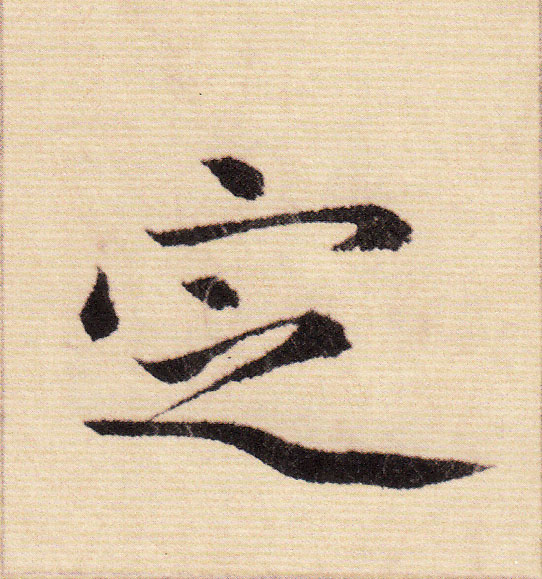
○ Chinese calligraphy – Running script
Running script lies somewhere between regular script and cursive script, boasting a fluid and dynamic structure, with continuous yet measured strokes. Its natural and unrestrained strokes, alternating between fast and slow, convey the writer's emotions and are well-suited for expressing inner thoughts. Practicing running script cultivates an inner sense of rhythm and emotional balance, helping the writer find peace of mind amidst the fluidity of the brushstrokes.
- Written words:
- Emotions surge in my heart and I am determined to return to my origin
- Emotions May Surge, Let Intention Return to Center
- Writing Tips:
- Borderline personality disorder is often accompanied by intense emotional fluctuations. When writing "Heart arouses, emotions surge, determination returns to its source," maintain a steady brushstroke, using the act of writing to soothe emotional turmoil and cultivate a sense of calm.







○ Overview of Borderline Personality Disorder: Suggestions for Drawing Therapy
This course uses drawing to visualize the core characteristics of borderline personality disorder (BPD), facilitating self-awareness and communication with healthcare professionals. It focuses on topics such as difficulty regulating emotions, sensitivity to abandonment, unstable relationships, unstable identity, and impulsive behavior—all presented in a gentle, non-judgmental manner.
1. Core Characteristics Four Quadrants (Emotional | Interpersonal | Self | Behavioral)
- Draw a large square and divide it into four quadrants: Emotions (strong fluctuations/emptiness), Interpersonal relationships (oscillations between intimacy and alienation/sensitivity to abandonment), Self (unstable sense of identity/fluctuations in sense of value), and Behavior (impulsive/self-protective behavior).
- Write down two recent real experiences you have had in each quadrant and mark the one you want to understand first with a ✓.
- Write a gentle reminder below the picture: "These reactions are mostly related to protection and survival, and do not define who I am."
2. Relationship Seesaw (Idealization ↔ Devaluation | Dependence ↔ Avoidance)
- Draw a seesaw with "Idealize/Approach" written on the left end and "Devalue/Distance" written on the right end; then draw a horizontal scale below that reads "Depend ↔ Avoid."
- Place a key relationship where it currently stands and note the triggers (e.g. text message delays/tone).
- Write the “Stable Connection Point” in the center of the seesaw and pair it with a practical statement or action (e.g., “I need 10 minutes to process my emotions before responding”).
3. Self-identity puzzle and boundary ring (Who am I | What do I allow/do not allow)
- Draw a central puzzle: interests/values/strengths/desires, and write 1-2 items of each (even if they are very small).
- Draw a "boundary ring" on the outer circle and write two If-Then boundary statements: such as "If I am ridiculed → then I will say 'I need to be respected, pause first'".
- Color the puzzle pieces that make you feel more stable and call them “Stability Anchors.”
Friendly reminder: Drawing is a tool for self-observation and expression, not a substitute for professional diagnosis and treatment. If you experience intense feelings of despair, high-risk impulsiveness, or thoughts of self-harm or others, please seek emergency support and professional help immediately; you deserve to be seen and supported.
Please log in before submitting your drawings and feelings.
○ 1261. Overview of Borderline Personality Disorder • Journal-Guided Suggestions
① Today’s emotional curve: Write down the three most obvious emotional ups and downs and the triggering situations.
② Relationship Review: Record a moment in an interpersonal interaction when you felt supported or hurt.
③ Self-evaluation: Write down one criticism and one affirmation you made of yourself today.
④ Safety list: List three small things that make you feel calm, such as drinking tea, taking a bath or taking deep breaths.
⑤ Regulation strategies: Buffering methods you are willing to try when emotions are too strong.
⑥ Conclusion: Being aware of ups and downs is the starting point for understanding oneself.
Please log in to use.
By studying this course, you will be able to better understand the overview of borderline personality disorder and learn how to regulate emotions through Eastern healing methods such as tea drinking, diet therapy, and calligraphy to help yourself and others better manage emotional fluctuations.