

Lesson 1543: Causes of Drug Dependence
Duration:70 minutes
Topic Introduction:This course systematically explains the multiple causes of drug dependence, including psychological, neurophysiological, social, and traumatic experiences. Participants will learn to distinguish the functional drivers of addiction and understand the needs underlying dependent behaviors.
○ The main causes of drug dependence
- Neural mechanism:Long-term drug use alters the brain's reward system, creating persistent cravings.
- Emotional trauma:Many codependent behaviors stem from unprocessed emotional trauma or early family instability.
- Social factors:Isolation, excessive stress, and social environments that encourage use can increase risk.
- Failure of self-regulation:Drugs have become a "shortcut" to alternative emotional management and anxiety control.
▲ AI interaction: What kind of emotional needs are hidden behind your dependence?
Causes may stem from genetic vulnerabilities, traumatic experiences, social pressures, or emotional difficulties.
Write down three reasons that you think are most relevant to you, and add the understanding that "I did the best I could at that time."
For each of these reasons, write an alternative form of support, such as relaxation training or talking.
Conclusion: When the cause and effect are sorted out, the path to healing will gradually emerge.
Click the button below to explore your underlying motivations for drug use with AI, and gradually transform dependence into understanding and care.
○ Causes of drug dependence· Music therapy
Accompanied by a low string music, it takes you to explore: genetics, trauma, environment or emotional difficulties may be the factors behind it.
Write down three reasons that you think are relevant and add a sentence for yourself: "At that time, I was looking for a way to survive."
Keep track of alternatives you'd like to try, such as music, exercise, or meditation, to shift your focus from dependency to gentle care.
Conclusion: When the cause is seen, the path to healing is illuminated.
○ Oriental healing tea
Recommended drinks:Orange Blossom Tea
Recommended reasons:Orange blossom has the effects of calming the mind, relieving anxiety and relieving insomnia. It is suitable for emotionally dependent people to regulate tension and irritability.
usage:3 grams of orange blossom, brewed with hot water for 5-7 minutes, drinking it at night can help you sleep better and stabilize your mood.
Japanese Food Therapy, Crab Meat and Tofu Soup (Kani Tofu Ankake)
This combination of seafood and tofu is low in fat, high in protein, and easily digestible. It's smooth, warming, and lightly filling, making it ideal for nighttime or recovery periods, where small portions can help with relaxation and physical recovery.
Healing Recipes
/home2/lzxwhemy/public_html/arttao_org/wp-content/uploads/cookbook/kani-tofu-ankake.html(Please confirm that kani-tofu-ankake.html has been uploaded)🎨 Freedom Mandala Healing
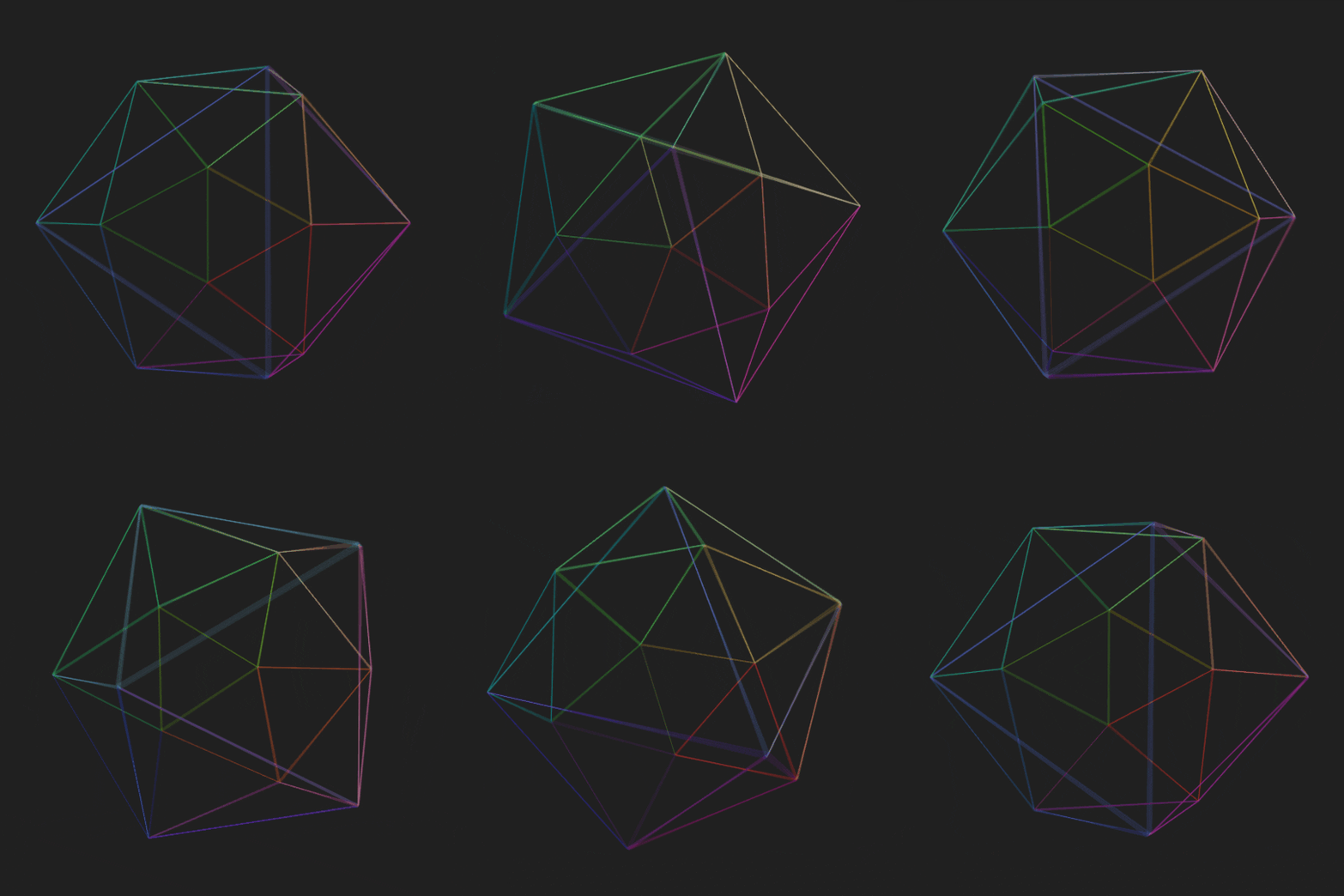
Image Healing: Free Mandala Stability Guidance 07
Some shapes bring you peace, while others cause you turmoil. Notice this difference; it reflects your current psychological state, not an illusion.
By observing different shapes, you are learning how to gently identify and name emotions.
Free mandalas have no fixed form, allowing the artist to express themselves freely based on their emotions. There are no rules for drawing free mandalas, encouraging individuals to express their inner world, and they are often used to help with emotional release and self-awareness.
○ Suggestions for seal carving calligraphy practice
The purpose of this course is to help you enhance your sense of self-control and emotional regulation through focused, every-stroke carving. This will help you understand the causes of drug addiction and promote emotional healing and inner awareness. Depending on your needs, you can try the following methods:
- Introduction to the characteristics of seal carving:
Seal carving emphasizes steady knife skills and rigorous composition. The carving process tempers the mind, enhancing patience and awareness. For those with drug dependence, seal carving training can help strengthen their sense of self-control, explore the emotions and psychological needs behind dependence, and promote a deeper understanding of the causes and emotional balance. - Written words:
Auspicious Talisman Appreciation
Auspicious Symbols · Joy of the Heart - Psychological Intention:
Drug dependence is often rooted in unmet psychological needs and deep emotional voids. The process of writing "Auspicious Symbols of Appreciation" enhances inner satisfaction, fosters a sense of self-worth, and reduces the need for alternative drug dependence. - Knife skills:
Stay focused during the carving process, slow down the pace of the movements, pay attention to the flow and force changes of the blade, and use meticulous carving to train the ability to delay gratification and enhance awareness of emotional triggers. - Emotional transformation:
Transform the feeling of desire and emptiness into the sculpting action, experience the inner fulfillment gained through the artistic process, strengthen the self-regulation path, and reduce the urge to rely on external drug stimulation.

○ Causes of drug dependence: Suggestions for guidance on painting therapy
This page uses drawings to organize the network of causes of drug dependence.Physiological susceptibility, psychological needs, life experiences, and environmental factorsDrawing these links helps identify control points and design alternative pathways. Drawing is for awareness and communication purposes only and does not replace medical diagnosis or prescription advice.
1. The Four Quadrants of Causes (Biological-Psychological-Experiential-Environmental)
- Draw a large square divided into four sections: ①Biological factors(nervous system sensitivity, genetic susceptibility, tolerance development), ②Psychological factors(relieve anxiety/depression needs, perfectionism, avoid conflict), ③Experience factors(trauma, major life events, early dependency experiences), ④Environmental factors(Availability of drugs, peer influence, social pressure).
- Write the three most relevant keywords for yourself in each box and mark the “adjustable points” in the corners.
- Use arrows to connect lines to indicate mutual amplification, such as "anxiety → relief from medication → increased tolerance → increased dosage".
2. Trigger Chains and Dependency Loops
- Draw a chain:Triggering Scenario(Stress/Insomnia/Conflict) → Desire("Needing medication to keep going") → use → Short-term relief → Long-term consequences(Tolerance/Withdrawal/Decrease in Function).
- Add a “rewrite box” below “desire”: For example, “I’m nervous → I can do 3 minutes of breathing or stretching first.”
- Draw an "Alternative Bridge" next to "Long-term Consequences" and write down three alternatives: exercise/social support/non-drug relaxation methods.
3. Risk and Protection Scale
- Draw a scale: write risk factors (insomnia, high stress, peer induction, high availability of medication) on the left, and protection factors (regular sleep and rest, emotional expression, healthy alternative strategies, support network) on the right.
- On the right side, write “Protective actions you can take this week,” such as “Write down three small things you are grateful for every night” and “Lock medicines in a fixed box to avoid casual use.”
- A "trend arrow" is drawn at the bottom of the scale to observe whether risk and protection are gradually balanced.
4. Review and Self-Reminder (Three Lines)
Write in the margins of your work:
- The most prominent square in the four quadrants is: ______; the step I can adjust is: ______
- In the dependency loop, the idea I'm going to rewrite is: ______ → ______
- Libra Right: One protective action I will add this week is: ______; Physical evaluation after completion (0-10): ______
Tip: Drug dependence often develops from multiple factors. Drawing can help identify patterns and control points, but if prescription medication adjustments or severe dependence are involved, consult a doctor promptly.
Please log in before submitting your drawings and feelings.
○ 1543. Causes of Drug Dependence: Journal-Based Guidance Suggestions
① Bio-psycho-social: genetic vulnerability, reward system, traumatic stress, peer culture, availability, etc. work together; understanding does not mean excuses, but is to find the key.
② Trigger terrain: Write down a high-risk point from the perspective of emotion/time/place, and write down “what can I do three minutes in advance”.
③ Alternative Function: What does the drug help you accomplish? Relaxation/pain relief/socializing? Match each function with a safer alternative strategy.
④ Rhythm repair: Record the relationship between sleep and craving intensity, and prioritize stabilizing waking and eating times.
⑤ Support commitment: Send a text message to a trustworthy person saying “You can contact me when needed” and save it.
⑥ Compassionate narrative: Rewrite “I destroyed myself” to “I am learning new ways to protect myself.”
⑦ Conclusion: When the chain of cause and effect is clear, the chain of change can also be established.
Please log in to use.
True freedom is not to suppress desire, but to understand it, illuminate it, and gently choose again.