

Lesson 1545: Treatment and Management of Drug Dependence
Duration:70 minutes
Topic Introduction:This course focuses on multifaceted treatment and long-term management strategies for drug dependence. These strategies include psychological intervention, medication substitution, behavioral modification, community support, and daily physical and mental well-being. The course will help participants develop a personal recovery plan and integrate Eastern healing practices as ongoing support tools.
○ Common treatment and management pathways
- Psychological therapy:Including cognitive behavioral therapy (CBT), motivational interviewing, mindfulness intervention, etc.
- Drug alternatives:Such as methadone, naltrexone, etc. are used for smooth withdrawal.
- Supported Systems:Participate in support groups (such as NA), family therapy, and connect with community resources.
- Physical and mental repair:Exercise, diet, and art therapy are used to assist in stable recovery.
▲ AI Interaction: Are you ready to start stabilization repair?
Treatment includes drug assistance, psychological support and mutual aid groups, and a combination of multiple approaches is more reliable.
Write down one change you would like to try, such as cutting back on one use or attending a support meeting.
Plan three alternatives for high-risk periods and carry reminders with you.
Conclusion: Healing does not happen overnight, but accumulates step by step.
Click the button below to create your recovery roadmap with AI and start taking action with the first step of actionable change.
○ Treatment and management of drug dependence · Music therapy
Use a bright melody to remind yourself that treatment is not a burden but a support. Methods may include medication, psychological counseling, and support groups.
Write down one small change you would like to try today, like using one less time or attending a support meeting.
Music will add light to this little persistence and make change no longer lonely.
Conclusion: Healing is a slow but steady song, and every note counts.
○ Oriental healing tea
Recommended drinks:Goji & Chrysanthemum Tea
Recommended reasons:Wolfberry nourishes the liver and protects the eyes, while chrysanthemum clears the liver and improves eyesight. They are suitable for assisting in regulating symptoms such as eye fatigue and emotional anxiety during the withdrawal period.
usage:Brew 10 wolfberries and 5 chrysanthemums with hot water for 5 to 7 minutes. Drink during the day to clear your mind and calm your liver.
○ Japanese food therapy, cold octopus slices (Tako Su)
Its refreshing, sour aroma stimulates appetite and refreshes the senses, while its low-fat, high-protein content helps stabilize blood sugar and promotes a light feeling. It's a great appetizer or a break from overwork, helping to stimulate appetite and maintain focus.
Healing Recipes
/home2/lzxwhemy/public_html/arttao_org/wp-content/uploads/cookbook/tako-su.html(Please confirm that tako-su.html has been uploaded)🎨 Freedom Mandala Healing
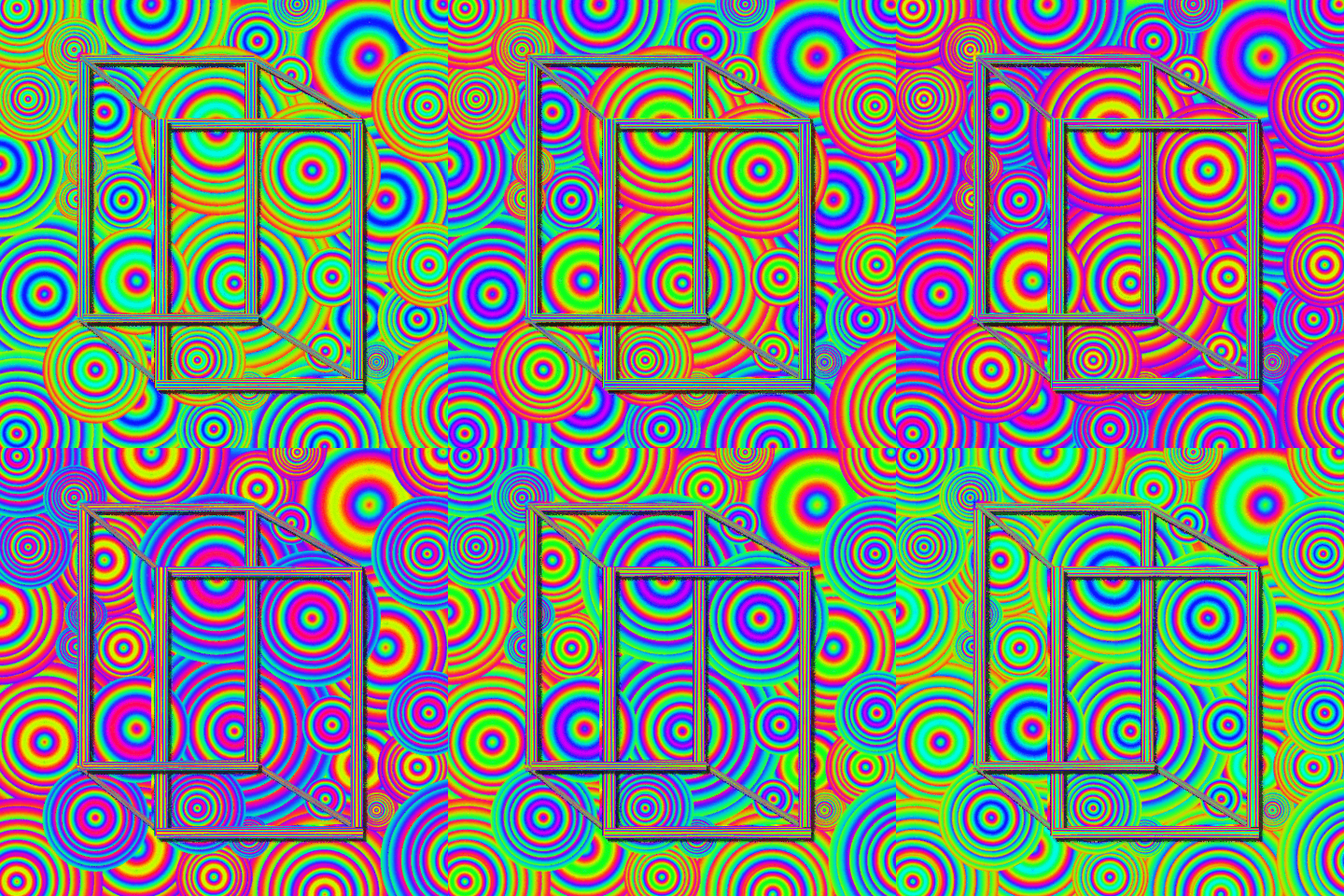
Image Healing: Free Mandala Stability Guidance 09
When you feel restless, first look at the outer outline, then slowly return to the center. This process is like taking a deep breath, allowing your consciousness to return from chaos to its core.
A gaze that moves from the edge to the heart helps you establish inner order and rhythm.
Free mandalas have no fixed form, allowing the artist to express themselves freely based on their emotions. There are no rules for drawing free mandalas, encouraging individuals to express their inner world, and they are often used to help with emotional release and self-awareness.
○ Suggestions for seal carving calligraphy practice
The purpose of this course is to help you improve your sense of self-control and emotional regulation through focused carving, assist in the treatment and management of drug dependence, and enhance your self-healing ability and emotional resilience. Depending on your needs, you can try the following methods:
- Introduction to the characteristics of seal carving:
Seal carving emphasizes precise knife techniques and balanced composition. Through slow carving, it cultivates the mind, strengthens patience, and enhances a sense of inner rhythm. During the treatment and management of drug dependence, seal carving helps cultivate stable self-regulation and promote long-term emotional balance and self-discipline. - Written words:
Pen complements nature · Heaven has no merit
The Brush Completes Nature · Heaven Claims No Merit - Psychological Intention:
During treatment, it's easy to develop a tendency to rely on others and seek quick results. While writing "Pen Repairs Nature; Heaven's Ineffectiveness," the process of engraving strengthens awareness of self-healing, allowing one to experience the gradual rebuilding of inner order through personal effort, reducing expectations for external "miracles," and strengthening the power of self-growth. - Knife skills:
Keep your breathing steady while carving, focus on observing the path of the blade on the seal surface, and strive to make each cut clear and smooth. This will help train your emotional stability and self-control, and enhance your sense of self-discipline. - Emotional transformation:
Transform the anxiety and urgency during treatment into the carving process, experience the inner sense of order through meticulous carving, enhance confidence in long-term management, cultivate patience and the ability to persist in investment, help to get rid of dependency patterns, and stabilize the emotional foundation.
○ Treatment and management of drug dependence: guidance and suggestions for painting therapy
This page presents the key points of treatment and management of drug dependence in a graphic form. Key points includeMedical intervention, psychological support, behavioral replacement, long-term maintenanceDrawing can help visualize paths and goals and enhance the sense of execution, but it cannot replace medical diagnosis and treatment; medication adjustments must follow the doctor's guidance.
1. Treatment Pathway (Medical-Psychological-Behavioral)
- Draw three parallel roads: ①Medical intervention(Doctor-prescribed dose reduction, alternative medications, withdrawal management), ②Psychological support(cognitive behavioral therapy, motivational interviewing, mindfulness practice), ③Behavioral substitution(Exercise, music, painting, healthy eating).
- Draw “road signs” along each path: what I’ve tried, what’s helped, and where I need to keep working.
- At the intersections, draw “support stations”: family, friends, peer groups, professional resources, to symbolize collaborative strength.
II. Intervention Toolbox (Cognition-Regulation-Substitution)
- Draw a three-tier toolbox: Tier 1 = Cognition Cards (rewrite thought: “I have to take medication” → “I can try another way to relax first”), Tier 2 = Regulation Cards (breathing exercises, progressive muscle relaxation, meditation), Tier 3 = Alternative Cards (walking, journaling, drawing, drinking water).
- Tick ✓ next to the card after each use to accumulate successful experience.
- Draw a "red warning box" on the outside of the toolbox: If withdrawal danger signs (convulsions, confusion, severe anxiety) appear, you need to contact a doctor immediately.
III. The Recovery Ladder (Small Steps—Persistence—Value Alignment)
- Draw three steps: Step 1 "1% Micro-steps" (reduce use/extend time by 10 minutes), Step 2 "Persist in repetition" (do it for more than two weeks and record it), Step 3 "Value alignment" (write down why you want to recover, such as "for health, for family").
- Draw “obstacle stones” (desire, social pressure, negative emotions) and “support hands” (friends’ reminders, family companionship, counselor’s support) on both sides of the stairs.
- Every time you complete a step of the goal, you draw a footprint on the ladder, symbolizing growth and accumulation.
IV. Review and Action (Three Lines)
Please write in the blank space of your entry:
- The path I most want to advance on the Treatment Pathway Map today is: ______; My next action is: ______
- The tool card I will use today is: ______; the physical feeling score after completion (0-10): ______
- The 1% micro-steps I will take on the “ladder of recovery” are: ______; the people/resources supporting me are: ______
Tip: Recovery is a gradual process, and small, cumulative steps are more reliable than a sudden breakthrough. If acute red flags (confusion, seizures, severe withdrawal symptoms) occur, seek medical attention immediately and keep records when communicating with your doctor.
Please log in before submitting your drawings and feelings.
○ 1545. Treatment and Management of Drug Dependence: Journal-Guided Recommendations
① Comprehensive approach: drug-assisted treatment (as prescribed by the doctor), psychotherapy, mutual aid groups, harm reduction strategies, and reconstruction of life rhythms. Multiple parallel tracks are more stable.
② Clear goals: prohibit/reduce dosage/use only within doctor's orders. Write down quantitative goals and executable steps for this week to avoid vague goals.
③ Contingency plan script: Design a three-step process of “substitution – exit – seeking help” for high-risk periods and place it on the top of the mobile phone’s sticky notes.
④ Environmental guardrails: clean up triggers, adjust pathways, and establish substance-free areas to reduce trigger exposure.
⑤ Relapse perspective: Rewrite “relapse = failure” as “information feedback” to trigger review and fine-tune the next step.
⑥ Progress review: Write three lines every night - what you have done today, what you have learned, and what you will do tomorrow.
⑦ Conclusion: Stability comes from persistence in small, repeatable steps.
Please log in to use.
All changes begin in the daily routine. May you have the gentle yet steadfast strength to continue on your road to recovery.