

Lesson 1562: Causes of Gambling Disorder
Duration:70 minutes
Topic Introduction:This course will delve into the causes of gambling disorder, including biological mechanisms, psychological motivations, social environment, and early experiences. Participants will understand the real needs behind gambling behavior and establish a path of "awareness-understanding-change."
○ Core causes of gambling disorder
- Neural mechanism:The dopamine system is strengthened and the anticipation of reward drives continued behavior.
- Failure of emotion regulation:Gambling is used to escape emotional pain or feelings of emptiness.
- Cognitive distortions:Such as "illusion of winning money" and "near-winning bid effect", which lead to wrong judgment.
- Social and family environment:Early exposure, stress, and loneliness are all potential triggers.
▲ AI interaction: What emotional needs drive your gambling behavior?
Gambling may be caused by stress, loneliness, excitement seeking or childhood experiences; it is not a single weakness.
Please write down the three situations that most often prompt you to gamble, and add a gentle note of understanding next to them: "I needed comfort at that time."
For each situation, write down an alternative behavior, such as taking a walk, writing, or talking to someone.
Allow yourself to believe that the possibility of change begins with understanding.
Conclusion: Once the causes are sorted out, the solution becomes clearer.
Click the button below to explore with AI the motivations and deep desires behind your gambling, and take the first step from "escaping" to "facing" it.
○ Causes of Gambling Disorder · Music Therapy
Choose a bass string instrument to calm your mind. Gambling can be caused by stress, loneliness, or a desire for excitement.
Write down the three situations that most often prompt you to gamble, and add a gentle note of understanding to each: "I was just trying to relax."
For each trigger, write an alternative action: take a walk, listen to music, write, or talk to someone. The melody will help you remember the new choice.
Conclusion: When you see the motivation behind it, you have the key to transformation.
○ Oriental healing tea
Recommended drinks:Goji Flower Tea
Recommended reasons:Wolfberry flowers have the effect of clearing the liver and improving eyesight, and relieving emotional fluctuations. They are suitable for reflection and relaxation after gambling.
usage:Take 3g of wolfberry flowers, brew with hot water, drink after 5 to 8 minutes, 1 to 2 times a day.
○ Japanese Food Therapy, Clam Miso Soup (Asari Miso Shiru)
Fermented miso and shellfish micronutrients work synergistically to provide warmth, hydration, and improved electrolyte balance. B12 and iron support hematopoiesis and vitality. The flavor is refreshing and not overpowering. Enjoy a bowl after a late night or during the changing seasons to soothe your stomach and focus.
Healing Recipes
/home2/lzxwhemy/public_html/arttao_org/wp-content/uploads/cookbook/asari-miso-shiru.html(Please confirm that asari-miso-shiru.html has been uploaded)🎨 Freedom Mandala Healing
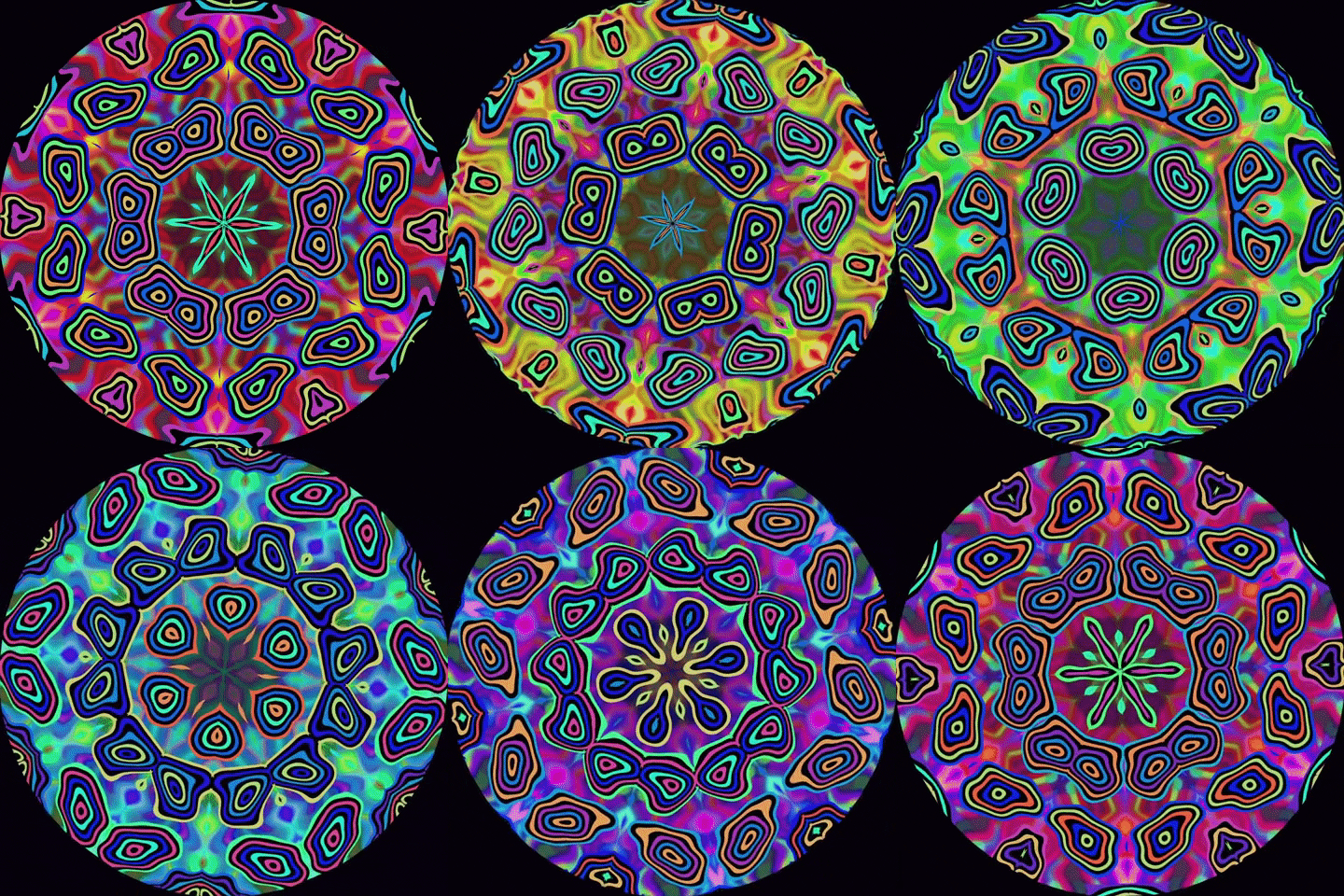
Image Healing: Free Mandala Stability Guidance 13
When you observe the changing rhythm in the image, pay attention to the inner response. Even amidst external chaos, you can still find that small sense of stability.
Free Mandala is a form of visual meditation that allows you to rebuild your egocentricity through observation.
Free mandalas have no fixed form, allowing the artist to express themselves freely based on their emotions. There are no rules for drawing free mandalas, encouraging individuals to express their inner world, and they are often used to help with emotional release and self-awareness.
○ Suggestions for seal carving calligraphy practice
The goal of this course is to help you, through focused, meticulous carving, enhance your sense of self-control and emotional regulation, help you understand the causes of gambling disorders, promote self-awareness, and strengthen cognitive control over impulsive behaviors. Depending on your needs, you can try the following:
- Introduction to the characteristics of seal carving:
Seal carving emphasizes rigorous composition and measured knife manipulation, requiring meticulous awareness and patience during the carving process. Addressing the causes of gambling disorder, such as heightened reward system sensitivity, cognitive biases, and emotional regulation deficits, seal carving training can help enhance self-awareness, strengthen the ability to delay gratification, and promote rational thinking and emotional balance. - Written words:
Gather the best
Gather and Expand Benefits - Psychological Intention:
Gambling disorders often stem from excessive expectations for quick gains and cognitive biases. When writing the character "集其广益," the process of engraving reinforces the value of long-term accumulation and gradual gains, helping to reshape cognitive patterns of gain and satisfaction and reduce obsession with short-term stimulation. - Knife skills:
During the carving process, keep the movements slow and steady, focus on the accumulation of each stroke and the coordination of the overall composition, and train patience and planning through delicate carving, enhance rational thinking ability, and reduce impulsive reactions. - Emotional transformation:
Transform the anxiety, greed or luck mentality caused by gambling into stable and meticulous carving movements, cultivate psychological identification with long-term accumulation and stable life, and help emotional balance and cognitive reconstruction.

○ Causes of Gambling Disorder: Suggestions for Drawing Therapy
This page uses drawings to explain gambling disorders.Multifactorial causesBiological susceptibility, psychological needs, social environment, and life pressures. Externalizing these elements in visual form can help clarify risk factors and modifiable protective factors. Drawing is intended for self-awareness only and does not replace medical or legal intervention.
1. Four Quadrants of Causes (Biological-Psychological-Social-Environmental)
- Draw a large square divided into four sections: ①biology(Sensitive reward system, impulsivity, genetic susceptibility), ②psychology(avoiding pressure, seeking excitement, fantasizing about getting rich), ③society(Peer influence, cultural atmosphere, family model), ④environment(High accessibility, online platform, advertising temptation).
- In each box, write three keywords that are most relevant to you; mark the adjustable points with asterisks.
- Use arrows to represent the amplification effect, such as "stress↑ → gambling urge↑ → short-term relief → long-term deterioration".
2. Induced Chain and Compensatory Cycle
- Draw a chain:Triggering Scenario(Insomnia/Loneliness/Financial Pressure) → Desire(Want to place a bet) → Behavior(Gambling) → Short-term relief(Excitement/Escapism) → Long-term results(debt/relationship strain/disappointment).
- Draw a circular arrow between "short-term relief" and "long-term results" and label it "compensatory gambling" (wanting to win back after losing and wanting to increase the bet after winning).
- Draw an "alternative bridge" outside the loop and write: exercise, socializing, art, journaling, and other alternatives.
Tip: Gambling disorder often results from a combination of factors. Drawing can help you see patterns and develop alternative pathways. If you're experiencing serious debt, risk of breaking the law, or thoughts of self-harm, seek professional help or emergency resources immediately.
Please log in before submitting your drawings and feelings.
○ 1562. Causes of Gambling Disorder: Journaling Guidance Suggestions
① Multi-dimensional lens: Write one possible factor from each of the four dimensions of emotion, relationship, environment, and temperament, and only describe the inconclusive theory.
② Trigger identification: List three high-risk preludes (loneliness, arguments, and emptiness after overtime work), and provide a “warning message + action” for each.
③ Need substitution: What does gambling provide me? Relaxation/belonging/control? Match each with a milder alternative practice.
④ Physiological care: Record the relationship between sleep, diet, exercise and impulse intensity, and prioritize stabilizing the anchor point of your daily routine.
Please log in to use.
When you are willing to see your true motivations, change has already begun. With gentleness and courage, continue to move forward.