

Lesson 71: Overcoming the Fear of Being Evaluated
Duration:70 minutes
Topic Introduction:
“"What do others think of me?" is one of the deepest chains of social anxiety.
When the brain is in a state of prolonged tension, any gaze, any expression, any pause can easily be misinterpreted as:
Am I weird? Am I bad? Am I disappointing?
This lesson will help you identify the root of this fear and learn how to shift your focus from "how others see me" to "how I see myself."
Why am I so afraid of other people's opinions?
- Evaluations are perceived by the brain as "danger signals":Even with just neutral observation, your brain will automatically go into defensive mode.
- Past experiences that were denied or ignored are activated:Past experiences can amplify current expressions as threatening.
- Reactions to giving one's "self-worth" to others:When evaluation determines your sense of self, fear is amplified.
Lesson 71: Overcoming the Fear of Being Evaluated (Click to listen to the reading)
The fear of being evaluated isn't because the evaluation itself is important, but because you've been trained to treat it as a survival signal. You might start rehearsing failure before you even open your mouth, worrying about being rejected, belittled, or negatively labeled. Your body tenses up prematurely, as if being evaluated will cause you to lose your position and sense of security. This reaction isn't overthinking; it's the brain repeating an old protective logic. In past experiences, evaluation may have indeed brought shame, punishment, or exclusion, so the nervous system has learned to defend itself immediately whenever evaluated. But what needs to be re-understood is that evaluation is neither fact nor conclusion; it's merely a reaction given by someone at a particular moment based on their own position, emotions, and limited perspective. Most evaluations are fleeting and fragmented; they don't last and certainly don't fully define you. The key to overcoming the fear of being evaluated isn't to make the evaluation disappear, but to deconstruct it from your self-worth. When evaluation occurs, you can first notice your body's contraction instead of immediately interpreting, correcting, or retaliating. You can remind yourself that this is information, not a judgment. When you stop rushing to exchange performance for safety, the influence of evaluation will begin to decrease. You can't control how others see you, but you can gradually practice not letting all eyes enter your core. Being judged won't destroy you; it's just a voice passing through your mind. When you stop seeing it as a threat, you regain the freedom to act.
▲ AI Interaction: When someone looks at you, what's the first thing that pops into your head?
Do you immediately assume that others are dissatisfied with you, disappointed in you, or think you are not good enough?
This automated idea is not a fact, but rather an old protective strategy of the brain.
Now tell the AI: What are you most afraid of how others perceive you?
Let's break it down together and see the logic behind this "fear of evaluation".
When being seen makes you nervous, music can help cool your body down first.
Deep instrument sounds can reduce internal tension and help you get back into your own rhythm.
○ Oriental Healing Tea - Osmanthus Oolong
Recommended drinks:Osmanthus Oolong
Recommended reasons:The light, sweet floral scent can soothe the tension in the body when being noticed, making one feel calmer and slowing down breathing.
practice:Use 90℃ hot water to quickly brew the tea. The first brew is to awaken the tea leaves, while the second brew is the most refreshing and soothing.
○ Stable Dietary Therapy: Onion and Potato Warm Soup (ID71)
After experiencing or worrying about being evaluated, the body is often in a state of tension and internal conflict. The warm sweetness of onions can help release suppressed emotions, while the soft texture of potatoes provides a solid and stable energy. This warm soup is suitable for consumption after emotional disturbances, allowing the body to slowly return to a feeling of safety and fullness. It's not meant to resist external noise, but rather to help you bring your energy back inward.
Stable central axis
Recover energy
Open Recipe
◉ Stable Dietary Therapy: Heartwarming Onion and Potato Soup (ID 71)
Onion and potato soup is a gentle, comforting soup with a truly homey feel: the sweetness of the onions and the creaminess of the potatoes gradually blend together during the simmering process, giving the soup a slightly thick but not overly viscous consistency. It evokes a simple, reassuring, and slowly relaxing sensation, like the kind of comforting home-cooked soup most often chosen on rainy days or when feeling tired. It's suitable for times of stress, when you have a sensitive stomach, or when you don't feel like eating heavy or oily foods, and it's also a good centerpiece for a light dinner.
Homemade Warm Soup Soft and smooth Light burden soothing
I. Recommended Dietary Therapy and Reasons
Recommended dishes:Heartwarming Onion and Potato Soup (ID 71)
Recommended reasons: Onions release their naturally sweet flavor when heated, creating a very relaxing sensation, while the starch in potatoes adds a delicate, enveloping texture to the soup. The combination makes this soup light, easy to digest, and possesses a comforting, "soft" quality. It can be served as a main soup or a side soup when you have a poor appetite, are tired after get off work, the weather is getting cooler, or you simply crave a touch of home-cooked warmth. It's not about satisfying a strong palate, but rather a very subtle and consistent sense of companionship.
2. Recipe and Method
Recipe (1–2 servings):
- 180–220 g potatoes (cut into small pieces)
- 1/2 onion (sliced)
- 5–8 g of butter or olive oil (optional)
- 700–900 ml of water or light broth
- salt to taste
- A pinch of white pepper (optional)
- Add a small amount of chopped scallions or parsley (for garnish).
practice:
- Wash and peel the potatoes, then cut them into small pieces; slice the onion and set aside.
- Add a small amount of butter or olive oil to a pan (optional), and sauté the onions over low heat until translucent and slightly sweet.
- Add the potato chunks and toss lightly a few times to allow the aromas to meld.
- Pour in water or light broth, bring to a boil over high heat, then reduce to a simmer and maintain a gentle boil.
- Cook for about 15–20 minutes until the potatoes are completely soft and the onions are tender.
- You can choose to keep the potatoes in chunks, or you can gently press them a few times with the back of a spoon to make the soup smoother.
- Add salt and a little white pepper to taste.
- After serving in a bowl, sprinkle with a little chopped green onion or parsley and enjoy.
3. Small rituals for body and mind
The process of sautéing onions is a time when it's easy to calm down: as the sweet aroma fills the air, it reminds you that "it's time to slow down."
The act of gently pressing down on a softened potato, without using force, has a symbolic feeling of "releasing the tension of the day."
When you take your first sip of soup, pay attention to the temperature of the soup as it lingers on your tongue, letting your body know, "I'm taking care of you."“
4. Dietary Therapy Experience Record
- Record the environment in which the food was consumed: rainy, at night, after work, or early morning.
- Observe the body's warmth and stomach comfort 10–20 minutes after drinking the soup.
- If you repeatedly choose this soup during periods of emotional fatigue, you can record its effects on feelings of calm and sleep.
V. Instructional Videos (approximately 3–5 minutes)
◉ Video Title:Onion and potato soup – a comforting, homely flavor that slows you down.
6. Precautions
- If you are not tolerant of dairy products, you can omit the butter or use olive oil instead.
- Those who need to control their starch intake can reduce the amount of potatoes or replace some with carrots.
- If the soup is too thick, add a small amount of hot water to adjust it to your preferred consistency.
hint:This soup recipe is for daily dietary reference only and should not be considered medical advice. If you have specific medical conditions or dietary restrictions, please consult a professional.
○ Modern Calligraphy · Lesson 71 Writing Practice Suggestions
In-depth analysis:
“The fear of being evaluated stems from our deeply ingrained mindset of "standard answers".
We always felt that only writing in a standard style, like a calligraphy model, was safe.
The core spirit of modern calligraphy is "breaking the rules".
It has no absolute baseline, allowing letters to bounce up and down.
Practicing this font is about reshaping my perception: I don't have to live in someone else's box; my rhythm itself is a style, not a mistake.
Writing Skills (Advanced Version):
- Bounce:The letters are intentionally made to rise and fall, no longer adhering to a straight line, to train tolerance for "crossing the line".
- Reject replicas:You don't have to be exactly the same as the template. The arc of each latte art can be different; your feel for it is the standard.
- Retaining flaws:If the lines are shaky or the ink has bled, don't rewrite it. Practice staring at that "imperfection" until you accept that it's also part of the artwork.
- Personalized slope:Unlike printed fonts, it doesn't need to be uniformly slanted; the font can be adjusted to suit one's mood.
- Self-definition:After you finish writing, you decide for yourself whether it's "good or bad" and reclaim the right to comment.
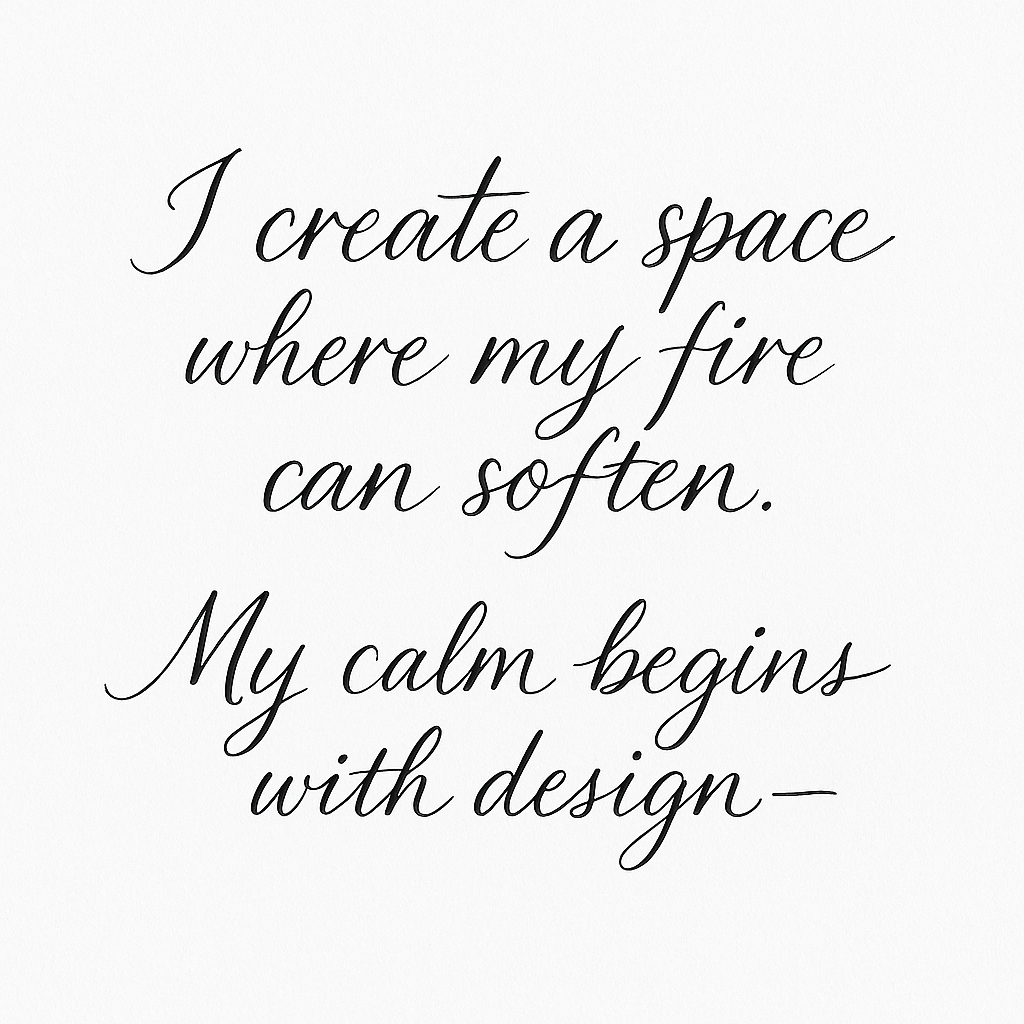
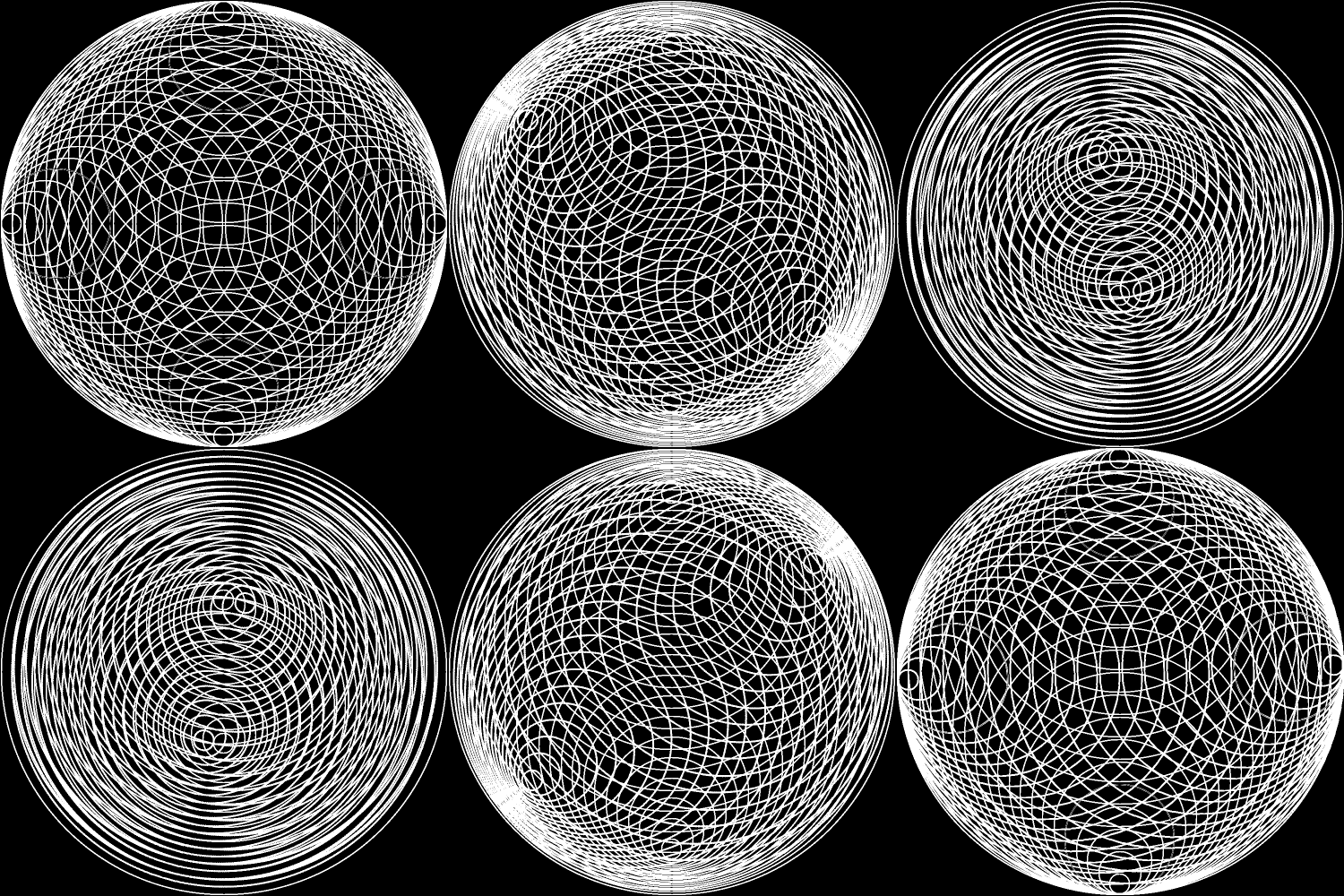
Image Healing: Mandala Stability Guidance 71
To those suffering from "fear of being judged," a round mandala can sometimes appear as a giant eye staring at them. Now, we're going to reverse that perspective.
Gazing at the center of the mandala, imagine it as a mirror. The intricate patterns on the periphery represent the chaotic evaluations (expectations, criticisms, misunderstandings) projected from the outside. But see, when they touch the central mirror, they are all reflected back. The evaluations belong to the evaluator, not to you. You are merely that bright mirror, reflecting reality as it is, but leaving no trace. You are not being "stared at"; you are "watching" them dissipate.
Traditional mandalas typically feature a harmonious and intricately varied circular structure, symbolizing the wholeness of the universe and the cycle of life. By viewing mandala images, individuals can perceive inner peace and strength, achieving psychological balance.
◉ Gaze at the mandala twice, while taking deep breaths.
Lesson 61: "Evaluating the Loosening of Fear"“
① Guiding drawing actions:Draw a dot symbolizing "self", and then draw outward lines as the gaze of the outside world, watching how these lines "pass by but do not touch the center".
② Guiding drawing actions:Use two colors: a dark color to represent "the real me" and a light color to represent "others' speculations about me," so that the two can coexist without overlapping.
Please log in before submitting your drawings and feelings.
○ 61. "Fear of Evaluation" - Suggestions for Journaling
① What moment today made me start to worry about others noticing me?
② What was the initial assessment that came to my mind? Was it fact or an automatic guess?
③ If interpreted in a more friendly way, what might the other person be thinking?
④ Write a sentence about "my self-evaluation," without relying on standards given by others.
⑤ Assess the intensity of your "fear of being evaluated" today using a scale of 0–10.
Please log in to use.
Only when you stop focusing on "how others see you" can you be free to be yourself.