

Lesson 73: Introduction to the Levels of Social Exposure Training
Duration:70 minutes
Topic Introduction:
Social exposure is not about "throwing yourself into a scary scenario and forcing yourself to stay calm," but about gradually practicing approaching your fears within a safe environment.
When exposure is properly categorized, you won't be "terrified," but rather you can gradually build confidence.
This course will guide you through the principles, grading methods, and common misconceptions of exposure training, so that social interaction is no longer a stressful exam that you must avoid.
○ Key mechanisms of graded exposure
- Progressive practice:Start by practicing in the mildest social situations, making sure each step is within your tolerance.
- The goals are clear and quantifiable:Each level has a clear action, such as "nodding to a stranger" or "saying thank you".
- Let the body relearn safety:Exposure training is not about proving you're brave, but about gradually teaching your nervous system to relax.
Lesson 73: Introduction to the Levels of Social Exposure Training (Click to listen to the reading)
Social exposure training isn't about pushing you into your most feared scenario all at once, but rather a gradual, physically acceptable learning process. Many people associate exposure with forced public speaking or being the center of attention, an understanding that inherently triggers resistance. Truly effective exposure training emphasizes grading—breaking down fear into levels of intensity, allowing the nervous system to gradually adapt within a manageable range. The first step usually begins with the lowest threat, such as imagining a mild social situation in a safe environment or briefly making eye contact with someone. The goal at this stage isn't to perform, but to remain still. Tension naturally decreases when the body realizes there's no danger. As the levels increase, you might practice brief responses, expressing opinions in small groups, or participating in interactions within a controlled timeframe. Each level builds upon the relative stability of the previous one. Psychologically, the core of graded exposure is providing the nervous system with enough non-catastrophic experiences to update its judgment, rather than using willpower to suppress fear. If the level jump is too large, the body will only reaffirm that social interaction equals danger, thus reinforcing avoidance. Importantly, you always have the option to repeat, pause, or revert to a previous level. Exposure training isn't about proving bravery, but about teaching the body a new safety map. When you respect the rhythm and practice consistently, fear will gradually recede from its dominant position into the background, and you will regain the freedom to act.
▲ AI Interaction: If you could only do one small social action today, which one would you choose?
Successful exposure training comes from small, incremental improvements, rather than a one-off breakthrough.
Tell the AI what social actions you can currently tolerate, and we'll customize your "exposure ladder" together.
Every step counts, every step forward is a success.
Music can "lower the alert level" before exposure training.
A slower pace helps lower your heart rate, allowing your body to be more stable for the next exercise.
First, let yourself be immersed in the sound, and then approach the situation you want to practice.
○ Oriental Healing Tea - Osmanthus Oolong
Recommended drinks:Osmanthus Oolong
Recommended reasons:Osmanthus relieves tension, while oolong tea regulates breathing, making it suitable for stabilizing the body before starting exposure practice.
practice:Steep in 90℃ hot water for 3 minutes; the floral fragrance can help the nervous system reach a "tolerable" state.
○ Stable Dietary Therapy: Celery and Apple Refreshing Salad (ID73)
After exposure exercises, the body often needs to clear away residual tension and over-excitement. The crispness of celery and the subtle sweetness of apples help the body regain a sense of fluidity, reducing internal pressure and stagnation. This refreshing salad is perfect for consumption after practice; it won't add burden and provides a gentle replenishment, helping the nervous system return to a balanced state. It symbolizes the cleanup and recovery after practice, ensuring a safe ending to every attempt.
Restore flow
Lightweight recovery
Open Recipe
◉ Stable Dietary Therapy: Celery and Apple Light Salad (ID 73)
Celery and apple salad is a refreshing, light, and naturally sweet and crunchy appetizer. The aroma of celery intertwines with the subtle sweetness of apples, gently stimulating the senses while providing a soothing "awakening" feeling. It's suitable for those with a weak appetite, needing a light afternoon snack, or feeling slightly tired but not wanting anything greasy. Crisp and naturally flavorful with a hint of fruitiness, it's a light salad that combines refreshingness and comfort.
refreshing salad Crisp, sweet, and light Light meals to stimulate appetite
I. Recommended Dietary Therapy and Reasons
Recommended dishes:Celery and Apple Light Salad (ID 73)
Recommended reasons: Celery, rich in moisture and aroma, is perfect as a "refreshing element" in light meals; apples offer natural sweetness, a soft yet crunchy texture, making the overall flavor more balanced and mellow. The combination is not only easy to eat and light, but also provides moderate energy and a sense of well-being, ideal for summer, a tired afternoon, or when you don't want a heavy meal. A drizzle of lemon juice or a light vinaigrette brightens the flavor and further enhances the refreshing taste, making it a perfect "moment-lifting snack."
2. Recipe and Method
Recipe (1–2 servings):
- 2–3 celery stalks (sliced thinly on a diagonal)
- One apple (cut into thin strips or slices with the peel on).
- 1–2 teaspoons of lemon juice
- 1 teaspoon olive oil (optional)
- A small amount of salt (just a very small amount).
- A pinch of black pepper (optional)
- Chopped nuts (walnuts/almonds, a small amount as a garnish)
practice:
- Wash the celery and slice it thinly on a diagonal to make it crisper and more tender.
- Wash the apples and cut them into thin slices or strips, then immediately mix in a little lemon juice to prevent oxidation.
- Place the celery and apple in a large bowl, add a little olive oil and a very small amount of salt, and gently mix.
- You can add a small amount of black pepper to enhance the aroma.
- Finally, sprinkle some chopped nuts on top for a nice texture, and it's ready to enjoy.
3. Small rituals for body and mind
When slicing an apple, you can deliberately slow down your movements and focus your attention on the subtle sounds between the knife and the fruit, allowing your mind to slightly escape from anxiety and busyness.
When mixing a salad, observe the color contrast: the interplay of green and light yellow is like adding a touch of brightness to your mood.
When you take your first bite, feel the crispness and tell yourself, "I can slow down." Let this light meal become a buffer for your emotions.
4. Dietary Therapy Experience Record
- Record the time of consumption (afternoon, light dinner, before or after exercise, etc.) and your current mental state.
- Observe the changes in lightness of body and stomach 10–20 minutes after consumption.
- If you repeatedly choose this salad on days when you are tired, irritable, or emotionally unstable, you can record how much it helps improve your mood.
V. Instructional video (approximately 2–3 minutes)
◉ Video Title:Celery and Apple Light Salad: A natural light meal to brighten your mood.
6. Precautions
- If you have a sensitive stomach, you can reduce your intake of raw celery or cut it into thinner slices to reduce irritation.
- Apples oxidize easily, so it is recommended to mix them with lemon juice and eat them as soon as possible after preparation.
- Those who want to control their sugar intake can choose apples with higher acidity, such as green apples.
hint:This salad is intended as a reference for daily light meals and mental well-being, and is not a substitute for professional medical advice.
○ Modern Calligraphy · Lesson 73 Writing Practice Suggestions
In-depth analysis:
Exposure therapy doesn't require you to immediately jump into an abyss.
Instead, it resembles the brushstrokes in modern calligraphy, with clear variations in pressure and speed.
The transition is from an extremely fine upward-moving spring (low anxiety zone) to a robust downward-moving pressure (high anxiety zone).
Each step forward requires the pen to stay on the paper, establishing a continuous sense of security.
Writing Skills (Advanced Version):
- Gradient pressure:The exercise gradually increases pressure from thin thread to thick thread, simulating the psychological resilience as the anxiety level gradually increases.
- Ligatures:The continuous lines connecting the letters symbolize extending the "comfort zone" little by little, connecting to the unknown.
- Staging (segmented practice):Pause once for each word you write, symbolizing that after completing each level of exposure task, you give yourself ample breathing room and reward space.
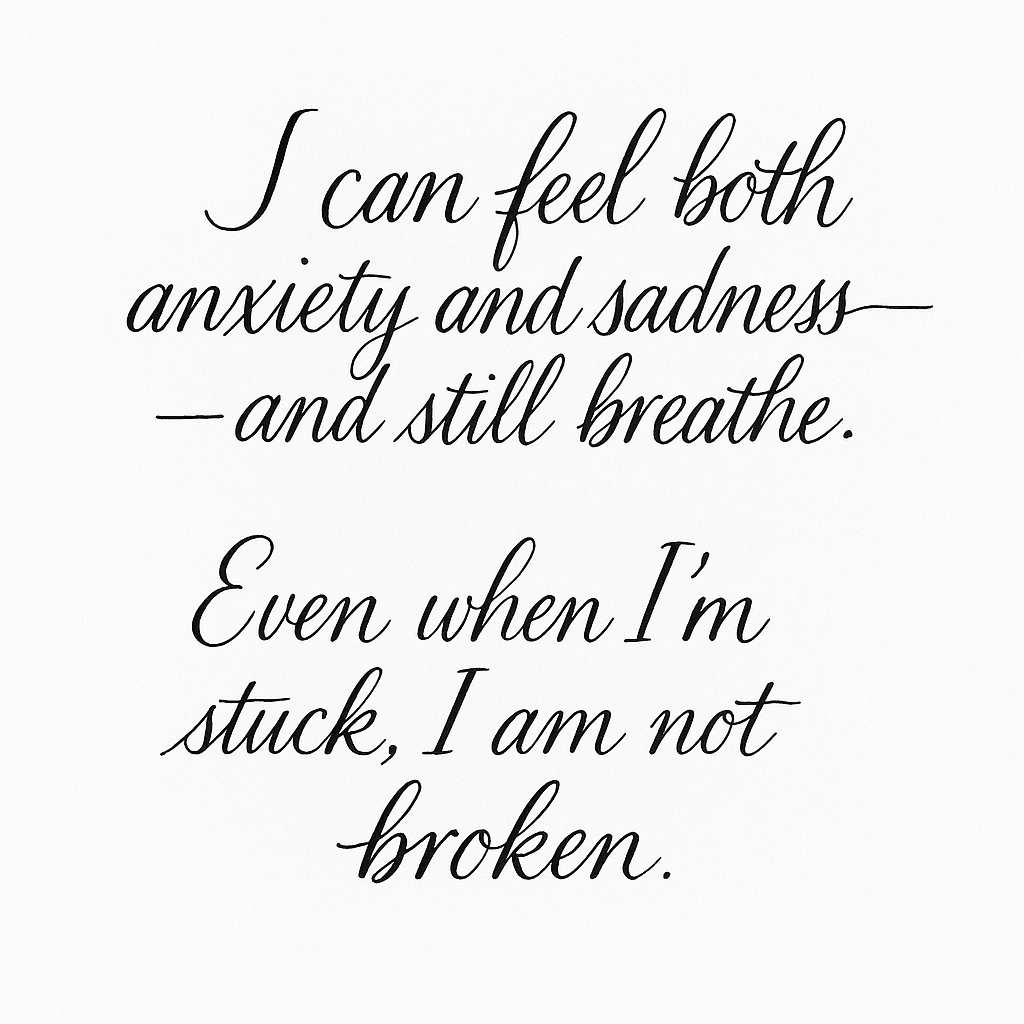
Image Healing: Mandala Stability Guidance 73
Imagine the mandala as your "map of courage" or "staircase." The center point is your safe haven (e.g., home or solitude). The first ring of patterns radiating outwards represents a slightly tense but tolerable challenge (e.g., smiling at a cashier). The next ring presents an increased challenge. When practicing, avoid looking directly at the dazzlingly complex outermost pattern. Focus only on the first ring, finding peace and breathing within that area until it becomes familiar and less jarring. Then try expanding your gaze outwards by just one millimeter. Your world expands gently, ring by ring.
Traditional mandalas typically feature a harmonious and intricately varied circular structure, symbolizing the wholeness of the universe and the cycle of life. By viewing mandala images, individuals can perceive inner peace and strength, achieving psychological balance.
◉ Gaze at the mandala twice, while taking deep breaths.

Lesson 73: Draw Your "Social Ladder"“
① Guiding drawing actions:Draw a three- to five-tiered staircase from bottom to top, with each tier having a higher and lighter line, symbolizing practice from easy to difficult.
② Guiding drawing actions:Mark the steps next to the stairs with a color that says "What I can do today," reinforcing small, manageable actions.
Please log in before submitting your drawings and feelings.
○ 73. Graded Exposure Exercise: Log-Guided Suggestions
① Which level am I most willing to try today? Why is this level feasible for me?
② What physical or emotional changes did you experience after completing the exercise?
③ Which part was "not as scary as I imagined"?
④ Tomorrow, would you like to stay on the same floor or move up to the next floor? Why?
Please log in to use.
Exposure training is not about pushing your limits, but about gradually regaining control of your social interactions at your own pace.