

Lesson 134: Panic Reactions to "Enclosed Spaces"
Duration:70 minutes
Topic Introduction:
Panic reactions occurring in enclosed spaces such as elevators, enclosed rooms, subways, restrooms, airplanes, and tunnels are among the most common triggers for panic.
What you fear is not "space itself," but rather:
—Unable to escape
Unable to seek help
—Unable to breathe
—Once it flares up, you'll be trapped inside.
This lesson will help you understand the physical mechanisms and psychological roots of panic in confined spaces, and teach you how to stay calm in small spaces.
Why are enclosed spaces more likely to trigger panic?
- Escape route blocked:When exits are limited, the brain's "survival system" immediately intensifies its scanning.
- The concepts of air and space are misunderstood:Normal changes in breathing can be misinterpreted as "not enough air".
- Triggers from past experiences of being trapped or suffocating:Trauma or early unpleasant experiences can be activated by a closed environment.
- Sense of environmental pressure:Confined spaces can easily cause feelings of tightness, dizziness, and other sensations of confinement, exacerbating the cycle of fear.
Lesson 134: Panic Reactions to "Enclosed Spaces" (Click to listen to the reading and view the content)
The panic reaction to enclosed spaces is often misunderstood as fear of elevators, subway cars, tunnels, or small rooms. But what truly triggers it is the experience of "I can't leave immediately, I can't open the exit, I can't control distance and airflow." The enclosed space pulls you out of the illusion of "being able to leave at any time," so the brain defines it as a high-risk scenario and begins to rehearse disaster: "I can't breathe, I'll suffocate, I'll go crazy, I'll be trapped." The more you mentally rehearse, the more your body prepares for stress—a rapid heartbeat, shallow breathing, chest tightness, and dizziness. These aren't signs of danger, but rather adrenaline preparing you to escape. The real difficulty in enclosed spaces isn't the lack of air, but rather your interpretation of "not being able to leave immediately" as "no safety." So you start monitoring the air, your chest, whether the door can be opened, and whether others will notice you acting strangely. This monitoring reinforces the brain's belief that something is wrong, thus constantly reinforcing the fear. Healing at this moment isn't about training yourself to be unresponsive, but about learning to maintain a degree of freedom within the enclosed experience. Freedom isn't about the door opening immediately, but about being able to breathe even when the door closes, still being able to focus your attention on your feet and body's points of contact, and still being able to allow your heartbeat to exist without interpreting it as an alarm. You can think of an enclosed space as a brief "container experience"—it limits how quickly you can leave but doesn't limit your sense of self. You'll find that the peak of fear is usually short-lived; it will subside on its own if you don't run away immediately. What you need to practice isn't proving you can hold on, but rather transforming "I must leave immediately" into "I can stay here for thirty seconds." Every time you allow yourself to linger a little, your nervous system learns new lessons: enclosure doesn't equal danger, and not being able to leave immediately doesn't equal being out of control. As these new experiences accumulate, the enclosed space transforms from a threat into a tolerable journey.
▲ AI Interaction: Which type of enclosed space makes you most uneasy?
Is it an elevator? A subway station? Or a room with the door closed?
We can work together to find your most sensitive trigger point and break it down step by step.
You're not afraid of "space," you're afraid of "not being able to escape."
Enclosed spaces make breathing shallow and chest tight; music can help you restore your "body rhythm."
Before entering an enclosed space, slow down and soften your pace.
○ Eastern Healing Tea: Oolong + Peppermint Leaves
Recommended reasons:Oolong tea stabilizes the central nervous system, while peppermint helps open up breathing and reduce chest tightness and pressure.
practice:Steep 3g of oolong tea with a pinch of mint at 85–90℃ for 2–3 minutes. The result is a refreshing and relaxing drink.
○ Tranquilizing and Nourishing Food: Taro and Red Date Soup for Calming the Mind and Nourishing the Heart (ID134)
After being in a confined space, the body is often in a state of alternating tension and dissipation. You need a warm, substantial, but non-irritating support. The smooth texture of taro is like a stable energy that can be grasped, helping the body return to a grounded state. The natural sweetness of red dates makes it easier to calm the mind. This heart-nourishing soup is suitable to drink after going out or when recovering at night. Through its warmth and smooth texture, it conveys a message to the nervous system: space may be closed off, but your inner self can be cared for and can be slowly opened up.
Warm support
Restore a sense of security
Open Recipe
◉ Dietary Therapy: Taro and Red Date Soup for Peace of Mind
Taro has a delicate texture and is rich in high-quality starch and dietary fiber, which helps replenish energy and soothe the stomach; red dates replenish qi and blood, and calm the mind. When cooked together, they make a soft and smooth soup, which is suitable for people who are restless, still thinking about work or studies before bed, are prone to palpitations and fatigue, and do not want to eat too much oily food.
Replenishing Qi and nourishing blood Calming the mind Warming the stomach and spleen
1. Recommended soup and reasons
Recommended soups:Taro and Red Date Soup for Peace of Mind (ID 34)
Recommended reasons:With taro as a mild energy base, and red dates to replenish qi and blood and calm the mind, this sweet soup is suitable as an evening snack or a light meal to finish after working overtime. It can relieve hunger without putting too much strain on the stomach.
2. Recipe and Method
Recipe (Serves 2):
- Peel and cut 200g of taro into chunks
- 6-8 red dates (remove the pits for better flavor absorption)
- 800–900 ml of clean water
- 60–80 ml of milk or unsweetened soy milk (optional, to enhance richness).
- 10–15 g of rock sugar or brown sugar (adjust to taste, or omit).
- A small amount of goji berries (5g) (optional, for garnish and blood nourishment)
practice:
- Peel the taro and cut it into small pieces. Wash the red dates and remove the pits. Soak the goji berries in water briefly.
- Add water to a pot, add taro and red dates, bring to a boil over high heat, then reduce to low heat and simmer for about 15–20 minutes, until the taro is completely soft.
- You can gently crush some of the taro with a spoon to make the soup smoother; if using milk or soy milk, pour it in at this time and continue to heat over low heat for 3–5 minutes, avoiding prolonged cooking over high heat.
- Add a small amount of rock sugar or brown sugar according to taste, stir until completely dissolved, and finally add goji berries and simmer over low heat for 1–2 minutes before turning off the heat.
- After cooking, let it cool slightly until it is warm before eating. The soup should be smooth and have small pieces of taro and red dates.
3. Small rituals for body and mind
Schedule the taro and red date soup after the main tasks of the day are completed, such as when you finish studying or working in the evening, and deliberately set aside 10-15 minutes to focus on this soup.
Before tasting it, take a few slow, deep breaths to relax your chest and neck, and then focus your attention on the aroma and temperature of the soup, treating it as a signal for your brain to "clock out".
Try not to use your phone or multitask while eating; simply finish the bowl of soup and allow yourself to switch from high-speed thinking to a quiet, slow state.
4. Dietary Therapy Experience Record
- Record the interval between dinner and soup, the amount consumed, and the level of fullness after eating.
- Observe the time you fall asleep that night, the number of times you wake up during the night, and the keywords related to your mental state and mood the next morning.
- If consumed 3–5 times consecutively, record whether mood fluctuations decrease and whether experiences such as palpitations, fatigue, and irritability are relieved.
5. Tutorial Video (approximately 5–8 minutes)
◉ Video Title:Taro and Red Date Soup for Peace of Mind: A Gentle Finishing Touch After get off work
6. Precautions
- People with diabetes or those who need to strictly control their blood sugar can omit sugary flavorings and adjust the frequency and amount of consumption under the guidance of a professional physician or nutritionist.
- Taro itself contains a certain amount of starch, so people who are prone to bloating are advised to try a small amount for the first time and observe their gastrointestinal reaction before deciding whether to increase the amount consumed.
- For those who are lactose intolerant, unsweetened soy milk or plain water can be used; there is no need to add milk.
hint:This soup is intended as a daily dietary therapy to calm the nerves and replenish qi, and is not a substitute for formal medical treatment. If you experience persistent palpitations, chest tightness, significant insomnia, or persistent low mood, please seek professional medical and psychological support as soon as possible.
○ Suggestions for Chinese Calligraphy and Seal Carving Practice - Lesson 134: Panic Response to Enclosed Spaces
This lesson's seal carving practice revolves around "maintaining oneself within a container." The enclosed space is like the border of the seal face, and what you need to practice is to steadily and calmly make each stroke within that border. Seal carving reminds you that limitations exist, but freedom also exists; you can find rhythm and space within constraints.
- Introduction to the characteristics of seal carving:
This lesson corresponds to the concept of "seeking roundness within squareness" in seal carving. The seal face has four boundaries, but the lines can turn and breathe, symbolizing that you can still find inner room for maneuver in a seemingly closed situation. - Written words (seal text):
Obtained from Heaven - Psychological Intention:
Inscribing "obtained from Heaven" trains the brain to rewrite the concept of confinement from a threat to one that allows you to have space without having to leave immediately. - Knife skills:
Practice "staying close to the edge without hitting it." Keep the knife path close to the boundary but not against the frame, maintaining even spacing to symbolize approaching fear without being pushed away by it. - Emotional transformation:
Transform the association of "danger when the door is closed" into the new experience of "I am more stable when there is a boundary" so that the boundary becomes a support rather than a trap.
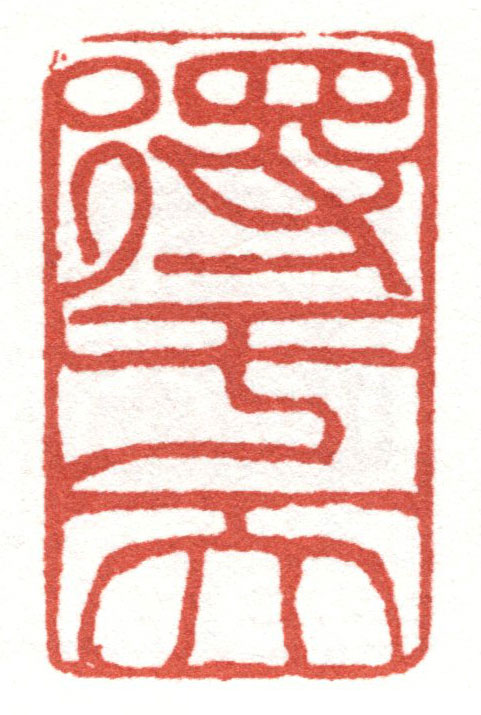
Image Healing: Guided Mandala Viewing - Lesson 134
Please observe a mandala with a clear outer frame and a stable center. The outer frame symbolizes an enclosed space, and the center symbolizes your ego. First, slowly trace the outer frame with your gaze to confirm the existence of the boundary—without judgment or resistance, simply acknowledge it.
Then shift your gaze to the center and focus on the quietest spot. Let your eyes linger on the center three times. Each time you pause, feel your breath flowing in and out naturally. It doesn't need to be deeper or slower, just natural.
Then move back and forth between the outer frame and the center, as if practicing being near the boundary and also returning to the center. You are not trapped; you are in a container, practicing returning to yourself.
Mandala drawing is not about what you draw, but about what you observe. When you can continue to observe even with the outer frame in place, it means your nervous system is learning to close off. Closure does not equate to danger; there is still room for maneuver.
The mandala in this lesson, with its "clear outline and quiet center," symbolizes bringing attention back to one's core self within a closed experience.
◉ One gaze is sufficient; no repetition is required.

Lesson 134: Fear of Enclosed Spaces - Drawing Guidance
① Action guidance:First, draw a wide central circle to symbolize "I can breathe, I have space".
② Action guidance:Adding a few slightly tighter layers of lines to the outer ring represents the pressure of a closed environment, but don't seal off the center.
③ Action guidance:Draw several slowly spreading bright lines from the center, symbolizing "I can maintain inner expansion within confinement".
Please log in before submitting your drawings and feelings.
○ 134. Enclosed Space Log Guidance Suggestions
① Which type of enclosed space made me most nervous today? What was the trigger?
② What is the worst-case scenario I'm worried about? What is the probability of it actually happening?
③ Are there moments when you feel "tense but don't have an attack"? Record them and reinforce them.
④ Write a sentence to support yourself: "The space has shrunk, but I have not lost my abilities."“
Please log in to use.
Enclosed spaces won't trap you. Your breathing and inner space are always larger than the outside world.