

Lesson 135: Anxiety and Safety Preparations Before Going Out
Duration:70 minutes
Topic Introduction:
For many people who have experienced anxiety or panic, the "pre-trip" period is often more painful than the actual trip.
Even though I was just going to the supermarket, going to work, or seeing friends, my body felt like it was preparing for a disaster.
You might repeatedly check: Did you bring water? Did you bring medicine? Is the route safe? Are there any escape exits? Is your phone fully charged?
These "safety preparation behaviors" may make you feel relaxed in the short term, but in the long run, they can increase anxiety. This course will help you understand the mechanisms behind these behaviors and teach you how to prepare in a way that truly helps you stay calm.
Why is it easier to trigger anxiety before going out?
- The brain rehearses the worst-case scenario:The closer it gets to the time to leave, the more threats I imagine, and my body automatically enters a tense mode.
- Fear of losing control:Fear of being unable to handle unexpected situations (palpitations, dizziness, embarrassment, panic) when out and about.
- Dependence on safety objects:Water, medicine, tissues, routes, and escape exits are considered sources of "safety".
- Over-preparation reinforces anxiety:The more I prepared, the more I felt that "I can't go out without these things."
Lesson 135: Pre-trip anxieties and safety preparations; Click to listen to the reading and view the content.
The anxiety before going out is often not about actual danger, but about "what if I lose control outside?" So you start making a series of safety preparations: bringing water, medicine, candy, checking routes, checking restrooms, checking hospitals, repeatedly checking your phone battery, repeatedly imagining how you would escape if you had an attack. On the surface, these preparations make you feel more at ease, but psychologically, they subtly tell your brain that going out is indeed dangerous; otherwise, why would you prepare so much? So the more you prepare, the more you turn going out into an action that needs to be defended; the more you defend, the more tense you become; the more tense you become, the more you need to prepare—this creates a cycle that sustains anxiety. What needs to be understood is that you're not afraid of going out; you're afraid of not being able to control your body's reactions when you're out. Safety preparation becomes your way of negotiating with fear: "As long as I'm well-prepared, nothing will happen." But fear never truly leaves because of preparation; it only makes higher demands—bring a little more, check again, confirm again. The key to healing is not to completely stop preparing, but to shift preparation from "using it to counteract fear" back to "a reasonable arrangement of life." You can allow yourself to bring one everyday necessity, but no longer treat it as a talisman; you can check the route once, but don't refresh it repeatedly; you can choose a small starting point for your outing, but don't treat it as a test. Most importantly, when that worry arises before leaving the house, you don't need to immediately prepare to eliminate it. You can pause for thirty seconds, let the worry exist, and then still put on your shoes, grab your keys, and walk out the door. What you need to train is to act even when you're worried, because action is the way the brain relearns safety. As you repeatedly go out without excessive preparation, your nervous system will learn new lessons: going out doesn't require a lot of defense, and I'm capable of handling fluctuations. You'll gradually discover that true security doesn't come from how much you carry in your pocket, but from your trust in your own reactions—you can leave imperfectly and return safely.
▲ AI Interaction: What are you most afraid of happening when you're getting ready to leave the house?
You're not worried about the outside world, but rather "whether my body will cause me trouble."
You can share these concerns, and we can help you categorize them: Which are real risks? Which are just exaggerated claims from the brain?
You don't need to be perfectly prepared, just "safe enough".
Pre-trip anxiety can cause your heart rate to rise, your shoulders and neck to stiffen, and your stomach to tighten. Gentle melodies can pull your body back from this heightened state to its natural rhythm.
It is recommended to let music "tune your frequency" for you 5 minutes before leaving the house.
○ Eastern Healing Tea: Tangerine Peel Pu-erh
Recommended reasons:It warms the spleen and stomach, relieving the stomach tightness, mild nausea, and floating sensation that are common before going out.
practice:Add 3g of Pu-erh tea and a little dried tangerine peel, steep in 90℃ hot water for 3–4 minutes. The mellow taste can make the body feel calmer.
○ Stable Dietary Therapy: Soft Tofu with Scallion and Warm Oil (ID135)
When you're preparing for the day, your body is often tense and expending energy, needing a gentle yet reassuring signal. The delicate texture and warmth of soft tofu quickly reduce the burden on your stomach and intestines, providing a stable feeling of fullness. The aroma of scallions and warm oil offers a gentle temperature and fragrance, sending a message to the nervous system that "I am being cared for." This snack is suitable to eat before or after going out. It doesn't emphasize compensation or reward, but rather helps you get back into your daily rhythm, reminding your body that pre-trip preparations can also be gentle and calming.
Reduce tension
Back to normal
Open Recipe
◉ Dietary therapy: Soft tofu with scallions and warm oil
Soft tofu is delicate and easy to digest, rich in plant protein, calcium, and various micronutrients; scallions are warming and can promote blood circulation and improve appetite; warm oil drizzled on the surface of the tofu enhances its aroma and smooth texture. This dish is extremely simple to make and is suitable as a light meal, a recovery meal after illness, or a light and comforting late-night dish.
Strengthens the spleen and stomach Nourishing and light Warm up and promote qi circulation
I. Recommended Dietary Therapy and Reasons
Recommended dishes:Soft tofu with scallions and warm oil (ID 35)
Recommended reasons:It is extremely simple to prepare, easy to absorb and gentle on the stomach; suitable for people who are tired, have a poor appetite, are overthinking and have qi deficiency, or want to supplement with a small amount of warm food late at night.
2. Recipe and Method
Recipe (1–2 servings):
- 300g of silken tofu (silk tofu)
- 1-2 scallions (finely chopped)
- 1–1.5 tablespoons of sesame oil or hot oil
- 1 teaspoon light soy sauce
- a pinch of salt
- A small amount of roasted white sesame seeds (optional)
practice:
- After removing the tofu from the packaging, rinse it with clean water and gently pat it dry with kitchen paper.
- Cut the tofu into small cubes or gently scoop out large pieces, and place them in a shallow bowl for later use.
- Finely chop some scallions and sprinkle them evenly on the surface of the tofu.
- Add a small amount of oil to the pot and heat it until it is warm but not smoking (about 70-80 lbs).
- Pouring warm oil directly onto the scallions will immediately bring out their aroma.
- Add 1 teaspoon of light soy sauce and a pinch of salt, then gently shake the bowl (avoid stirring to prevent the tofu from breaking its shape).
- You can sprinkle a small amount of white sesame seeds to enhance the aroma.
3. Small rituals for body and mind
When preparing this dish, treat the steps as a "slow ritual": heat the oil, listen to the soft sound of the oil being poured over the scallions, and feel the sense of everyday tranquility that the dish brings.
Eat slowly, allowing the aroma of warm oil and the soft texture of tofu to help your body enter a calm state. It is especially suitable as a light meal to "switch channels" after a busy day.
During your time alone in the evening, enjoy a cup of warm water or hot tea and focus your attention back on the temperature and sensations inside your body.
4. Dietary Therapy Experience Record
- Observe the warmth in the stomach, overall ease, and degree of mental relaxation after eating.
- Record whether the problem of fatigue or poor appetite has improved.
- Repeated preparations can record changes in taste and mood.
V. Instructional Videos (approximately 3–5 minutes)
◉ Video Title:Soft tofu with scallions and warm oil: A minimalist, nourishing dish.
6. Precautions
- Tofu can be eaten cold or warm, but those with weak stomachs are advised to eat it at room temperature or slightly warm.
- Avoid using excessively hot oil to prevent producing fumes or destroying nutrients.
- For those who don't like onions and garlic, you can substitute cilantro, perilla leaves, or shredded seaweed.
hint:This dish is suitable for daily mild conditioning, but if you experience long-term loss of appetite or stomach discomfort, you should consult a professional doctor.
○ Suggestions for Chinese Calligraphy and Seal Carving Practice - Lesson 135: Anxiety and Safety Preparations Before Going Out
The core of this seal carving practice lesson is to shift the "preparation" from being driven by fear to being driven by rhythm. Seal carving requires you to first determine the layout before making your cut, and each step should be clear but not repeatedly revised. When you learn to finalize the design on the first try and steadily move forward, you are training a new way of going out—relying on steady action rather than repeated confirmation.
- Introduction to the characteristics of seal carving:
This lesson corresponds to the concept of "defining boundaries and shaping with a single stroke" in seal carving. Defining the boundaries before making the cut, without repeatedly tracing, symbolizes that you don't rely on repeated checks to ensure safety before setting out, but rather on making a decision once and then continuing on your way. - Written words (seal text):
Chonglang Tianyou - Psychological Intention:
Inscribing "Chonglang Tianyou" is a reminder that going out is not about taking a test, but about walking with nature. You entrust your footsteps to the sky, your tension to the wind, and let your actions take you out of your small cautionary circle. - Knife skills:
Practice "light touch first, steady progress later." Start with a light, gentle cut to find the direction, then steadily advance without making back-and-forth cuts. This symbolizes setting aside worries and letting action take the lead. - Emotional transformation:
Transforming the mindset of "I must be fully prepared before I dare to go out" into "I can go out even with a little worry" brings preparation back to a reasonable level.
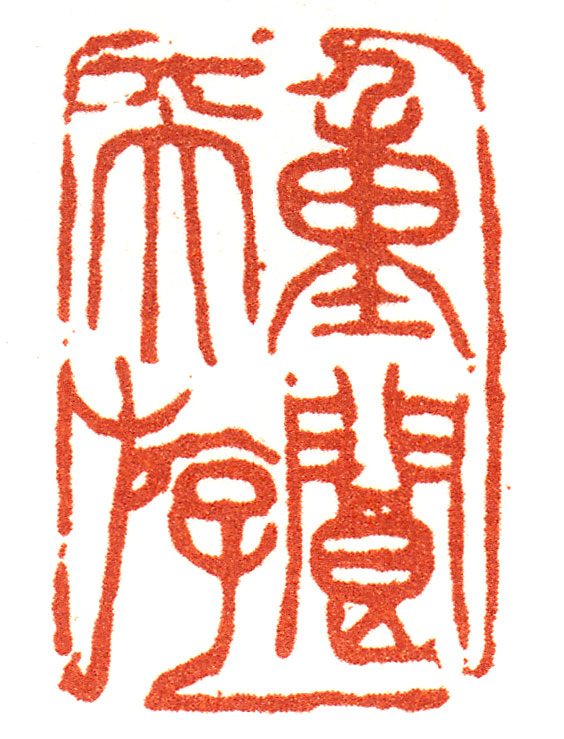
Image Healing: Guided Mandala Viewing - Lesson 135
Please observe a mandala with a clear sense of path, such as a radial structure expanding outward from the center. It symbolizes going out not by leaping, but by taking one step at a time.
First, focus your gaze on the center three times, feeling yourself breathing each time. Then, slowly walk outwards along any line. You don't need to go to the outermost circle; just walk until you feel comfortable.
When you want to look back to confirm or bring your gaze back to the center, gently continue moving outward a little bit. This is practicing moving forward without repeatedly confirming.
Mandala drawing is not about what you draw, but about what you observe. Just observe the path, just as you take a step out the door. Security grows in action, not in preparation.
The mandala in this lesson, with its "radiating path and gentle blank space," symbolizes the ability to act outwards even while harboring concerns.
◉ One gaze is sufficient; no repetition is required.

Lesson 135: Before Going Out - Drawing Guidance
① Action guidance:Draw a stable and heavy center point, using warm colors to symbolize "landing" before departure.
② Action guidance:Extending outwards with several soft lines symbolizes your willingness to step into the world with a sense of stability.
③ Action guidance:Add a small, bright symbol somewhere in the image to symbolize “not perfect but sufficient safety preparations.”
Please log in before submitting your drawings and feelings.
○ 135. Pre-trip anxiety: journaling guidance suggestions
① What was I most worried about before going out today? Was it the real risk or the imagined risk?
② What "over-preparation behaviors" did I engage in? Did they help me in the short term? What are the long-term effects?
③ During your trip, were there any moments that were "actually easier than I expected"? Write them down to reinforce your understanding.
④ Remind yourself before you set off: "I don't need to be perfect, I just need to be adequate."“
Please log in to use.
Your preparation isn't about anticipating all risks, but about telling your body: "I'm ready, I can go."“