

Lesson 153: How to Post-Exposure Analysis
Duration:70 minutes
Topic Introduction:
The key to exposure exercises is not "how well you do them", but "how you review them afterwards".
A post-mortem review is not about checking for mistakes, but about summarizing lessons learned:
What aspects were more difficult than expected?
How did I get through it?
What are some moments that aren't actually as scary as you imagine?
This lesson will teach you a stable, repeatable debriefing structure so that every exposure becomes a learning experience, rather than a judgment.
○ Three core aspects of exposure review
- Focus on the process, not the performance:Exposure is not a competition, but an experiential training.
- Recording "Disasters That Did Not Happen":The brain needs to see reality, not prediction.
- Identify the "next minor improvements":Small improvements accumulate into huge changes.
Lesson 153: How to Conduct a Post-Exposure Recap (Click to listen to the reading and view the content)
After exposure practice, what truly determines the effectiveness of learning is not the intensity of immediate fear, but how you review the experience. Many people immediately enter "evaluation mode" after exposure, repeatedly recalling what went wrong, whether the fear subsided, and whether it will be worse next time. This kind of review seems serious, but in reality, it pulls the brain back to the danger judgment, overshadowing the learning. Effective review is not about analyzing emotions, but about consolidating experience. The first principle is "only review the completion, not the feelings." What you need to confirm is not whether the fear has disappeared, but whether the plan was executed: Did I enter the situation, did I stay for the predetermined time, and did I not escape from the discomfort? The second principle is "record the process, not the result." Write down the sequence of beginning, change, and end, allowing the brain to see the complete closed loop again, instead of remaining at the peak. The third principle is "avoid secondary confrontation." Review is not a self-criticism session; you don't need to correct yourself or find stronger methods. What you need to do is simply tell the system: this is over, and I survived. The fourth principle is "timely closure." After the debriefing, end with a simple action, such as closing the notebook, drinking water, or walking around, to give your body a clear signal that it's over. What you should avoid is repeatedly reviewing the experience, trying to prove yourself to others, or using the exposure of success or failure to evaluate your self-worth. The debriefing after an exposure is essentially training your brain's memory archiving method: storing the experience as "completed" rather than "to be solved." As the debriefing becomes simpler, the weight of fear in your memory will naturally decrease. You don't need to learn a lot from every exposure; you only need to learn one thing: I accomplished it.
▲ AI Interaction: Where would you like to start reviewing your exposure exercise today?
Tell me what kind of exposure you did: physical, situational, or emotional?
Which part did you find the most unexpected?
Post-mortem analysis is not about finding mistakes, but about finding "the parts where you successfully overcame difficulties".
We can work together to create a personalized exposure review form just for you.
Before reviewing the event, calm your body down. Choosing slow-paced music with long sustained notes can help lower your alertness.
When the body returns to natural breathing from tension, the debriefing becomes more objective and gentle.
○ Eastern Healing Tea - Oolong Tea for Refreshing the Mind
Recommended reasons:The mild sweetness of oolong tea can alleviate post-exposure fatigue and help the brain switch to summarizing mode.
practice:Brew at 85℃ for 2–3 minutes. It can be re-brewed to allow the process of refining the aroma to settle.
○ Anting Food Nourishment - Miso Sesame Cold Noodles (ID153)
After an exposure and debriefing, the body needs nourishment that provides a sense of closure without being overstimulating. The fermented aroma of miso brings a sense of closure and stability, while the rich flavor of sesame helps the nervous system calm down. This cold noodle dish is perfect as a finishing meal after practice, allowing the body to clearly receive the signal that "it's over."
Experience Archive
Smooth decline
Open Recipe
◉ Japanese Food Therapy: Miso Sesame Cold Noodles (ID 32)
This is a satisfying cold noodle dish with a rich, comforting "hug" feel. Unlike the blandness of clear broth noodles, it uses a sauce made with rich white miso and fragrant sesame paste. This intense flavor provides a strong sense of satisfaction to the brain, making it especially suitable for moments of anger due to hunger, mood swings, or feelings of emptiness and anxiety. It fills the stomach with its robust taste and soothes the emotional void.
Harmonize emotions Balance anxiety Satisfying hunger
I. Recommended Dietary Therapy and Reasons
Recommended dishes:Miso Sesame Cold Noodles (ID 32)
Recommended reasons:Sesame seeds are rich in magnesium and are known as a "natural tranquilizer," effectively regulating the nervous system and relieving irritability and anxiety. Miso, as a fermented food, can improve mood through the gut-brain axis. The carbohydrates in noodles can quickly raise blood sugar, eliminating physiological anxiety caused by low blood sugar. Iced noodles can physically lower body temperature, calming a "feverish" brain.
2. Recipe and Method
Recipe (1 serving):
- 1 serving of noodles (udon, ramen, or somen).
- Half a cucumber (shredded)
- One hard-boiled egg (to supplement protein)
- Special miso sesame paste:
- 2 tablespoons of white sesame paste (or sesame oil)
- 1 tablespoon white miso
- 1 teaspoon of sugar (or honey)
- 1 teaspoon of rice vinegar
- 2–3 tablespoons of kombu broth (or cold water) (to adjust thickness)
- A little chili oil (optional, to stimulate appetite)
practice:
- Preparing the sauce (the key step):In a bowl, first mix sesame paste, miso, and sugar. Gradually add broth/water while stirring until it becomes a smooth, thick consistency like yogurt. Finally, add vinegar to enhance the flavor.
- Cooking noodles:Cook the noodles until done.key:After cooking, immediately put them in ice water and rub them to wash away the surface starch, making the noodles firm and chewy.
- Drain:Drain the noodles thoroughly (too much water will ruin the flavor of the rich sauce), and place them in a bowl.
- Plating:Top with crisp cucumber shreds and halved hard-boiled eggs.
- Sauce:Pour the special sauce generously over the noodles.
- Decoration:If you like, add a few drops of chili oil or sprinkle some roasted sesame seeds.
3. Small rituals for body and mind
While stirring the sauce, feel the miso and sesame paste going from separation to fusion, and tell yourself, "My emotions can also be harmonized and embraced like this."“
Slurping noodles is not only a way to appreciate food in Japanese culture, but also a way to release stress.
Feel the rich, satisfying sauce coating every noodle, and confirm: "My needs are being met."“
4. Dietary Therapy Experience Record
- Record the feeling of "being extremely hungry" or "being inexplicably angry" before eating, and whether it disappears after eating.
- Observe whether the aroma of sesame makes you feel at ease and reassured.
- Pay attention to how long the feeling of fullness from this meal lasts, and whether it stabilizes your mood as a result.
V. Instructional Videos (approximately 3–5 minutes)
◉ Video Title:Miso and sesame cold noodles: A rich flavor that soothes emotional fluctuations.
6. Precautions
- Miso selection:It is recommended to use "white miso" or "Shinshu miso", as they have a sweeter and milder flavor; red miso may be too salty and its color is not mild enough.
- Heat balance:Sesame paste is high in calories, but its healthy oils are important for the nervous system. If you are concerned about calories, you can increase the proportion of vegetables (such as bean sprouts and lettuce).
- Noodle selection:For a chewier and more satisfying texture, choose udon noodles; for a refreshing feel, choose somen noodles; for more sauce, choose curly ramen.
hint:This dietary therapy utilizes "high satiety" and "magnesium-rich foods" to combat hunger-induced emotional instability, making it an excellent choice for lunch.
○ Chinese Calligraphy: Suggestions for Practicing Running Script - Lesson 153
Written words:
Dwelling in Foolishness
In-depth analysis:
The wisdom of reflection lies not in thinking smarter, but in not overexerting oneself. The natural flow of cursive script symbolizes letting go of experience rather than clinging to it. "Abiding in Foolishness" reminds you that you don't need to understand everything every time; completing it once is enough to find peace in it.
Writing Skills (Advanced Version):
- Continuous strokes:Not rewriting symbolizes not ruminating.
- Smooth speed:Avoid rushing to summarize.
- Relaxed brushstrokes:"Imperfect" lines are allowed.
- The brush dips downwards at the end:Complete it without leaving it hanging.
- The whole phrase flows smoothly:Reinforce the feeling that "it's over".
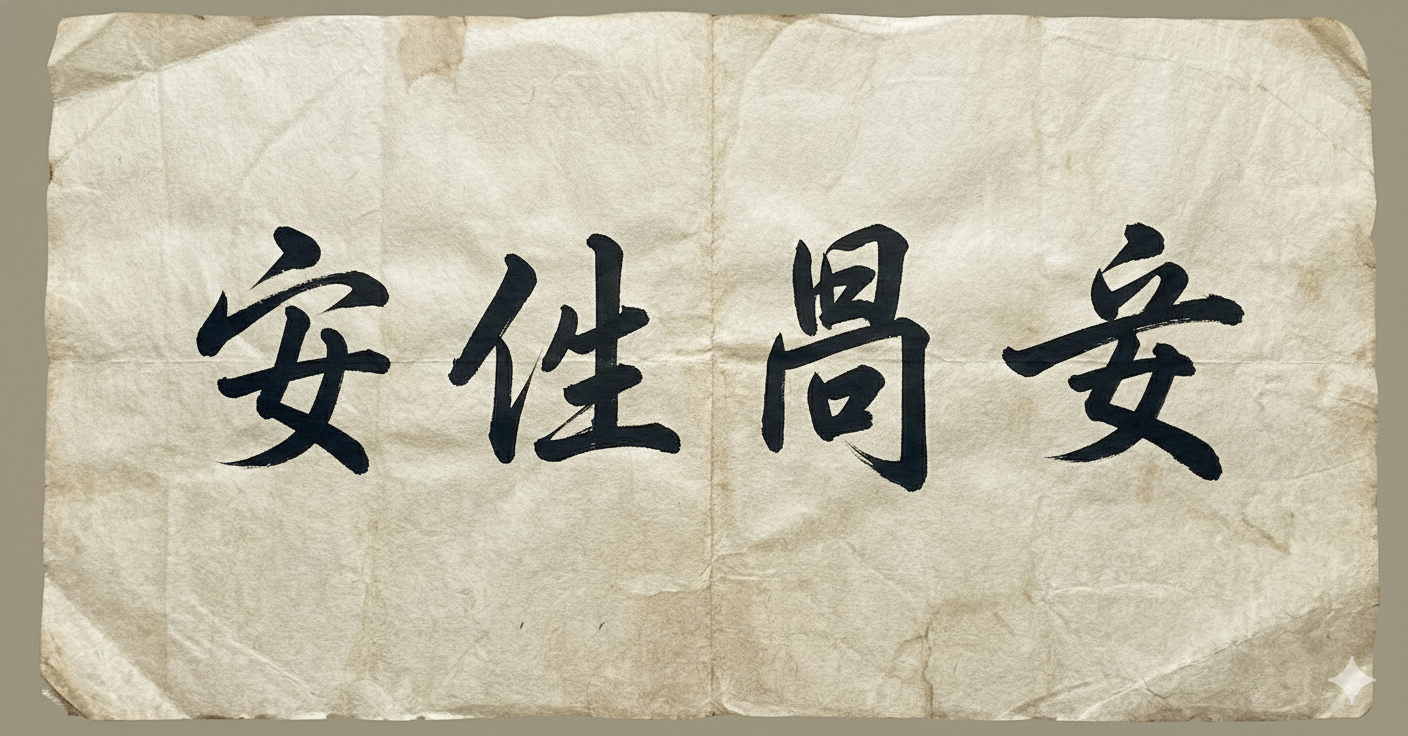
Image Healing: Guided Mandala Viewing - Lesson 153
Please observe a mandala with a complete structure and clear boundaries. It has a distinct outer circle and a sense of closure.
Let your gaze move from the outer circle to the center, and then naturally settle there.
When your gaze stops, silently repeat in your mind, "This round is over."
A mandala is not about drawing something, but about observing it. When you learn to stop, fear won't be carried over to the next time.
The mandala in this lesson is themed "complete closure," symbolizing the proper archiving of exposed experiences.
◉ One gaze is sufficient; no need to repeat.

Lesson 153: Guided Drawing - Exposure Recap Diagram
① Draw the "most intense moment" of today's exposure in the center of the picture, and use color to express the intensity.
② The surrounding area is depicted as "the actual situation," including those disasters that did not occur.
③ Add a soft, outward-expanding line to symbolize "the next step can be made a little easier".
Please log in before submitting your drawings and feelings.
○ 153. Exposure Review · Log-Guided Suggestions
① Which moment was the most difficult for me during today's exposure exercise?
② What are some disasters that I thought would happen but ultimately did not?
③ In what moments did I discover that I was more resilient than I expected?
④ Which part of the difficulty would I like to increase next time? (5%)
Please log in to use.
Every exposure is a practice, not an exam. Reflection gives your courage a foothold, making growth clear and sustainable.