

Lesson 156: Support Systems: Partners and Family Members
Duration:70 minutes
Topic Introduction:
Recovery from panic disorder or severe anxiety is rarely something that can be accomplished entirely by one person alone.
In critical moments, a partner, family member, or close supporter can act as a "stabilizing other," helping you bring your escalating fears back to reality.
This lesson helps you understand: what role they should play, how to support them, and how to avoid over-dependence, so that relationships become a part of your recovery, not a source of stress.
○ The role of support systems in panic recovery
- Safe Other:When you are overwhelmed by fear, use a calm presence and simple companionship to help you ground yourself.
- Reality Anchor Point:They can remind you that the current situation is safe and that your body is not in danger.
- Support without control:Good support doesn't "eliminate the risk" for you, but rather helps you regain control of your body and emotions.
Lesson 156: Support Systems: Partner and Family Roles (Click to listen to the reading, view content)
In the recovery process from panic and chronic anxiety, the support system isn't there to "solve your problems for you," but rather to help you avoid feeling isolated during the experience. Many people mistakenly believe that they can only recover when their partner or family fully understands and comforts them; however, in reality, what truly matters isn't whether the other person says the right thing, but whether you allow them to exist in a real and limited way. Partners and family cannot take your fear away or eliminate your symptoms; their role is to be a stable external reference point, allowing you to remain connected to life amidst the fluctuations. A common difficulty is that one person is eager to help, while the other feels controlled; or one person remains silent and avoids the issue, while the other feels ignored. What's needed during recovery is clear boundaries and genuine communication. You can clearly express: "I don't need you to analyze things for me, nor do I need your immediate comfort; I just want you here with me." The other person also needs to know that they don't have to be constantly vigilant or responsible for your emotions. When the support system is misused as a "safety crutch," it only exacerbates your feelings of helplessness; only when it's seen as a companion will your sense of autonomy slowly return. Allow your family and partner to maintain their own rhythm; they don't have to revolve around your state. You are not safe because you are being cared for, but because you are still treated as a whole person within the relationship. Truly healthy support is the flow of life continuing even when you are experiencing discomfort: eating together, taking walks, talking, being silent. These ordinary, stable interactions send an important message to the brain—even in my turmoil, the relationship still exists, and life goes on. When you stop demanding perfection from your support system, it becomes the most reliable background force in your recovery process.
▲ AI Interaction: How do you hope your family will support you?
Tell me what you most want them to do, and together we'll put it into a language we can communicate.
Support is not a demand, but a form of cooperation.
Fear is not your fault, and support is not their burden.
We can write a "Support Manual I Need" together.
Playing soft music in a space where you spend time with your family is one way to establish a "shared, stable rhythm".
Music brings you all closer to a stability that can be shared without the need for language.
○ Eastern Healing Tea - Oolong Tea (Lightly Fermented)
Recommended reasons:The mild and gentle nature of oolong tea can bring natural relaxation and is also suitable for sharing with family, promoting peaceful interaction.
practice:Brewed at around 90℃, the tea soup is clear and the aroma is soothing, making it a suitable background beverage for family conversations and support.
○ Stable Dietary Therapy - Yam and Lemon Aromatic Salad (ID156)
During the rebuilding of the support system, the body needs nourishment that is both stable and refreshing. The gentle warmth of yam symbolizes sustained support, while the aroma of lemon brings a sense of boundaries and clarity. This salad is suitable for consumption after emotional exchange, helping the body return to a stable, non-overly dependent state.
Relationship Harmony
Fresh Boundaries
Open Recipe
◉ Japanese Dietary Therapy: Sweet Potato and Lemon Salad (ID 35)
This is a quick and easy salad with a texture as crisp as fresh snow and a flavor as refreshing as a gentle breeze. It uses Japanese taro (Nagaimo), which can be eaten raw, diced and served with refreshing lemon juice. The unique mucilage of taro gently soothes a sore stomach lining, while its crunchy texture satisfies the craving for chewing. When anxiety manifests as "excessive stomach heat" (manifested as bad breath, swollen gums, increased hunger, or heartburn), this snow-white dish effectively clears heat, relaxes the tense body, and reduces inflammation.
Clears heat and soothes the stomach Improve tightness Protect mucous membrane
I. Recommended Dietary Therapy and Reasons
Recommended dishes:Sweet Potato and Lemon Salad (ID 35)
Recommended reasons:Long taro is rich in digestive enzymes (amylase) and mucoprotein. The former helps reduce the digestive burden on the stomach, while the latter can repair the mucous membrane damaged by excessive stress acid. Traditional Chinese medicine believes that yam "nourishes qi and yin, and tonifies the spleen, lungs, and kidneys," and can moisturize the body's dryness and heat. Combined with the sour taste of lemon, it not only promotes saliva secretion but also deeply moisturizes body tissues dehydrated by anxiety through the principle of "sour and sweet transforming into yin."
2. Recipe and Method
Recipe (1–2 servings):
- Japanese Naga Yam (Raw Yam) 200g
- Juice of 1/2 fresh lemon
- A small amount of lemon zest (key source of aroma)
- 1 teaspoon of light soy sauce (or shirade sauce)
- 1 teaspoon of olive oil
- a pinch of salt
- Two shiso leaves (or parsley) (chopped)
- Wasabi, very little (optional, subtle).
practice:
- Protection:Wear gloves when handling taro to prevent skin irritation from the sap.
- Diced:Peel the taro and cut it into small cubes of about 1–1.5 cm (Dice Cut). Cubes offer a better "crispy on the outside, soft on the inside" texture than slices.
- Remove astringency (optional):Soak the cut taro in vinegar water for 2 minutes, then drain. This will help maintain its whiteness and remove any bitterness.
- Prepare the sauce:In a bowl, combine lemon juice, soy sauce, salt, olive oil, and a pinch of mustard, and stir well.
- Mix well:Add the diced taro to the sauce, sprinkle with lemon zest and chopped perilla leaves, and gently toss. The slimy substance on the surface of the taro will naturally emulsify the sauce, allowing it to coat each cube.
- refrigeration:For best flavor, refrigerate for 10 minutes.
3. Small rituals for body and mind
When slicing long taro, focus on the clean feel of the blade cutting through the fibers, and imagine you are severing the connection of troubles.
Looking at the snow-white taro cubes and tender yellow lemon peel in the bowl, you can feel the visual cooling effect brought by this refreshing color scheme.
Enjoy the crisp cracking sound while chewing; it's a natural white noise that can relax the brain through bone conduction.
4. Dietary Therapy Experience Record
- Record whether the burning sensation in the stomach or hunger anxiety was relieved after consumption.
- Observe whether the clenched jaw muscles relax naturally during chewing.
- Notice whether your mood becomes "cleaner and brighter" after eating this light dish.
V. Instructional Videos (approximately 3–5 minutes)
◉ Video Title:Sweet Potato and Lemon Salad - Snow-white cubes to soothe a sore stomach
6. Precautions
- Variety selection:Please be sure to purchase“"Japanese Naga Potato" or "Crispy Yam"”Only these varieties are suitable for raw consumption and have a crisp texture. Common "iron stick yam" has a poor taste when eaten raw and is prone to causing allergies.
- Allergy test:A very small number of people are allergic to the mucus of raw yam (itching of the lips). If it is your first time eating it, please try a small piece first.
- Treatment for itchy hands:If your hands itch while peeling, washing them with vinegar or warming them over a fire will relieve the itch.
hint:This dietary therapy utilizes the "mucus" in the ingredients to protect the gastric mucosa, making it ideal for people experiencing stomach pain or acid reflux due to stress.
○ Chinese Calligraphy: Suggestions for Practicing Running Script - Lesson 156
Written words:
Steady and calm
In-depth analysis:
The significance of a support system lies not in shielding you from storms, but in helping you maintain stability as you move forward. "Steady progress and a calm mind" reminds you that in relationships, there's no need to rush to prove you're alright.
The rhythm of running script symbolizes maintaining one's own pace even while being accompanied by others.
Writing Skills (Advanced Version):
- Stable Qi circulation:We don't pursue speed; we focus on continuity.
- The strokes converge:Avoid expressing emotions outwardly.
- Center of gravity:Symbolizing self-establishment in a relationship.
- Consistent rhythm:Don't let others disrupt your plans.
- Write repeatedly:Let a sense of stability enter your body.
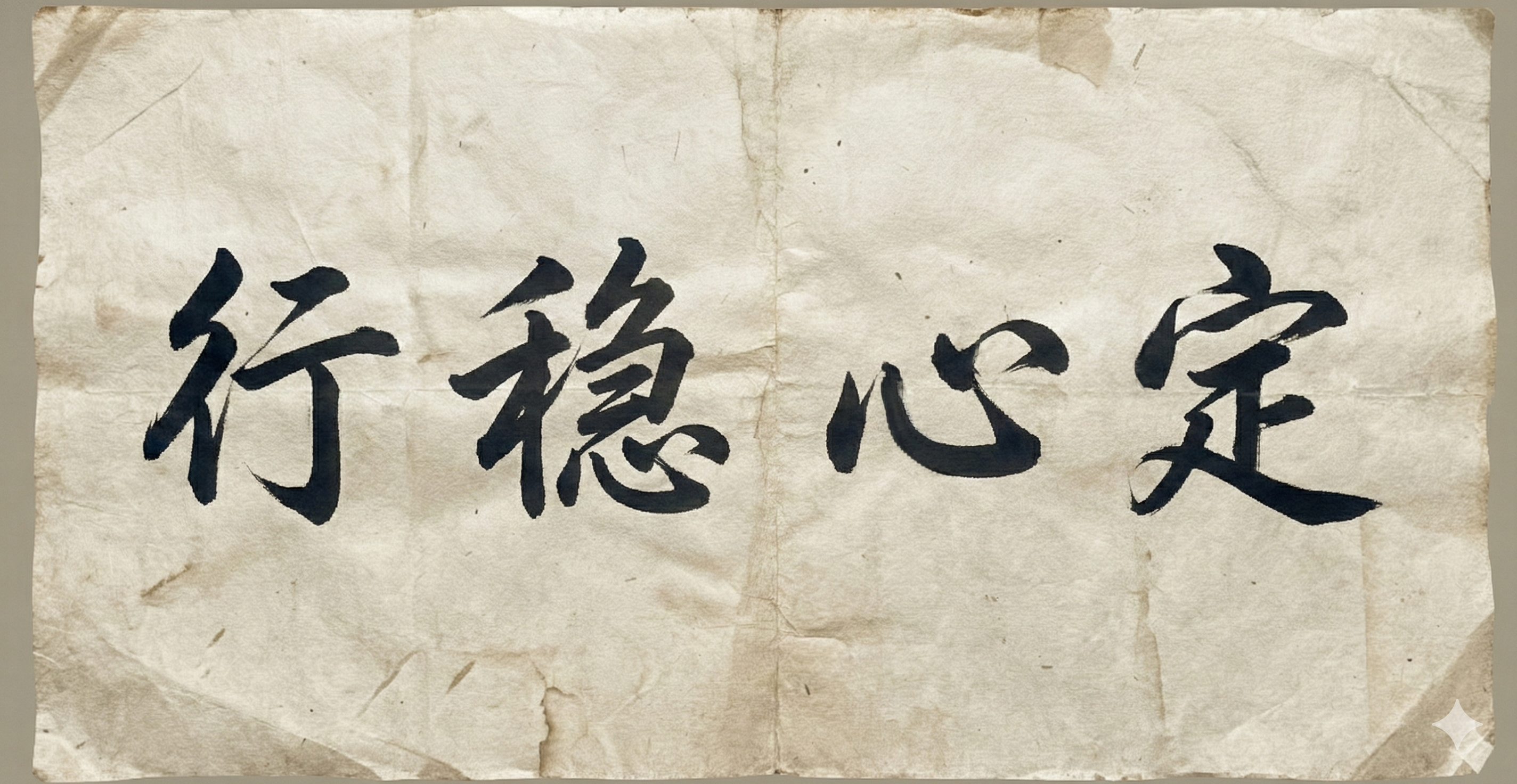
Image Healing: Guided Mandala Viewing - Lesson 156
Please select a mandala with a clear structure and distinct inner and outer layers.
Focus on the center first, then slowly expand to the outer circle.
The stability of the center and the connection to the outer circle coexist.
A mandala is not about drawing something, but about observing it. When you stand firm in your relationships, support will naturally appear.
The theme of this mandala is "stable connection," symbolizing that you do not lose yourself in relationships.
◉ Watch once; no need to repeat.

Lesson 156: Drawing Guidance - My Support Circle
① Draw a central point to represent "me", and draw 2-3 outer rings to symbolize supporters at different levels.
② Use different colors to represent "the feelings they give me": warmth, reassurance, companionship, and stability.
③ Add a reminder in the blank space: Support is not dependence, but a process of mutual growth.
Please log in before submitting your drawings and feelings.
○ 156. Support System · Log Bootstrapping Recommendations
① At what moment today did I feel support from others?
② Which support methods do I truly need? Which are unnecessary?
③ Am I able to clearly express "what I need"? Why?
④ Tomorrow I'm willing to try making a small request to someone I trust.
Please log in to use.
Support won't walk the entire path for you, but it will make your steps more steady. You are not alone in facing fear, nor are you alone on the road to recovery.