

Lesson 199: Coping with Relapse: Shortening Avoidance Time
Duration:70 minutes
Topic Introduction:
Relapse does not mean regression, but rather that the brain's old alarm system is being activated again.
The core goal of this lesson is not "don't avoid it," but rather to enable you to adjust the duration of avoidance during the relapse period from a long, complete withdrawal to a shorter, more controllable stay.
When avoidance time is shortened, your nervous system can relearn that discomfort can be tolerated, rather than something that must be escaped.
Why is it that during the relapse period, the more you avoid it, the more afraid you become?“
- ① Avoidance makes the body instantly feel relaxed:The brief moment of comfort makes the brain mistakenly believe that escape is the only safe path.
- ② Over-vigilance about the "recurrence of discomfort":The anticipation of "preparing for collapse" is more likely to occur during the relapse period.
- ③ Minor discomfort is magnified into a huge danger:The body's signals were quickly interpreted as "something is about to go wrong again."
- ④ Past successes have been forgotten:When a relapse occurs, the brain only remembers the danger, not the fact that you did it.
Lesson 199: Coping with Relapse, Shortening Avoidance Time, Click to Listen to the Reading, View Content
Relapses during recovery don't mean previous efforts were in vain; they're a normal reaction of the nervous system to increased stress or disrupted rhythms. What truly determines the outcome isn't whether a relapse occurs, but how you respond afterward. Many people, upon experiencing discomfort again, quickly extend their avoidance time, suspend outings, or interrupt practice. This reaction provides short-term relief but amplifies fear. The core principle of coping with relapses is to shorten avoidance time. The first step is to change your interpretation of the relapse. A relapse isn't a return to danger, but a systemic reminder of increased current workload. When you stop viewing it as failure, the brain's alarm intensity naturally decreases. The second key is time, not intensity. You don't need to complete challenging outings during a relapse; simply re-enter the relevant scenario as soon as discomfort arises, even for a very short time—for example, go out for a minute, stand for a moment, and then return. The key is to break the chain of complete avoidance. The third point is to shift avoidance from a behavioral to a strategic level. You can reduce distance and duration, but don't completely cancel the action; let the brain continuously receive the signal that you are still engaged. The fourth stage is to establish a fixed coping template for relapses. For example, when I experience the urge to withdraw, I complete a minimal action within 24 hours. This template significantly reduces hesitation and internal conflict. It's important to understand that the fear system relies heavily on time. When avoidance is prolonged, it grows rapidly, while when avoidance is shortened, it fails to generate new evidence. True stability isn't about never fluctuating, but about quickly bringing each fluctuation back on track. When you maintain continuity of action during relapses, the brain relearns, and safety doesn't disappear even with fluctuations. In the long run, shortening avoidance time is more powerful than any radical challenge.
AI Interaction: How many seconds can I shorten today's avoidance time?
Answer three questions: "At what moments today did I choose to quit?"“
“"What did my body feel like at that time?" "How much shorter could I be willing to shorten it? 5 seconds? 10 seconds?"”
The system will help you generate a personalized "short stay plan".
○ Voice guidance: Shift from "Escape immediately" to "Stop for a moment"“
Synchronize your breathing with slow, rhythmic sound waves to allow your brain to enter a state of "allowing it to rest".
During the relapse period, it is especially suitable to use 2 to 3 minutes of breathing sounds, light drumbeats, and low-frequency ambient sounds to reduce the automatic escape drive.
○ Western Herbal Healing Tea - Licorice Tea
Recommended drinks:Licorice Tea
Recommended reasons:Natural sweeteners soothe the throat, support stress-relieving glands (adrenal glands), and restore energy.
practice:Cut 3–5 slices of licorice root and steep in boiling water at 100°C for 5–10 minutes.
○ Stable Dietary Therapy - Chickpea Stew (ID199)
During the relapse coping phase, the body needs warm and consistent support. Chickpea stew, with its slow simmering, provides stable energy, symbolizing continuity of action amidst fluctuations. This nourishing dish is suitable for consumption after a short outing or minimal activity, helping the body confirm that the exercise has been completed.
Shorten avoidance
Continuous Action
Open Recipe
◉ Greece – Mediterranean Diet: Greek Lemon Chickpea Soup (Revithia) (ID 199)
In Greece, Revithia is synonymous with Sunday. This dish is incredibly simple, appearing to be just a bowl of yellow soup, but its texture is astonishing—velvety smooth and rich. It contains no cream or flour; its thickness comes entirely from the emulsification of chickpea starch and olive oil. For those who are tense, prone to stomach cramps, and anxious, a sip of this warm, creamy "liquid gold" can instantly relax all inner defenses.
Extremely comfortable Gut soothing Plant-based whole protein
I. Recommended Dietary Therapy and Reasons
Recommended dishes:Greek slow-cooked lemon chickpeas (Revithosoupa)
Recommended reasons:
1. Natural anti-anxiety remedy:Chickpeas are an excellent plant-based source of tryptophan. Combined with the abundant carbohydrates in soup, this amino acid efficiently crosses the blood-brain barrier and is converted into serotonin, bringing a sense of peaceful well-being.
2. Intestinal "cleaners":Rich in insoluble fiber. This fiber cleanses the gut like a gentle brush, promoting the growth of beneficial bacteria. A healthy gut leads to a brighter mood (Gut-Brain Connection).
3. Mild power supply:Unlike refined starches, which cause a rapid rise in blood sugar, chickpeas are a low-GI food that provides a stable energy flow for several hours, preventing panic attacks caused by hypoglycemia.
2. Recipe and Method
Recipe (Serves 3–4):
- 250g dried chickpeas (must be soaked in advance)
- 2 onions (finely diced, as this is the source of sweetness)
- 1/2 cup extra virgin olive oil (do not reduce the amount; this is the secret to making the soup white).
- Juice 2 lemons
- 2 bay leaves
- 1 teaspoon of dried rosemary (optional)
- 1 teaspoon baking soda (the secret to making beans soft and tender)
- Salt and white pepper powder to taste
- Approximately 1.5 liters of water
practice:
- Soaking in baking soda (the night before):Wash the chickpeas and place them in a large bowl. Add water and 1 teaspoon of baking soda. Soak overnight. The baking soda softens the chickpea skins—a secret of the Greek grandmother.
- Rinse thoroughly:The next day, discard the baking soda water. Rinse the beans repeatedly with running cold water until they are no longer slippery.
- Cook together:Place the beans, diced onion, olive oil, and water in a pot. Bring to a boil over high heat.
- Skimming and slow cooking:Skim off any foam. Add bay leaves. Cover and simmer on the lowest heat for 1.5 to 2 hours.
- Hilomeni (the critical moment):When the beans are soft and the broth starts to reduce, remove the lid. If you feel the broth isn't thick enough, you can use the back of a spoon to crush some of the beans. Continue cooking uncovered for 10 minutes to allow the broth to thicken and emulsify.
- Infused with soul:Turn off the heat. Add salt and white pepper. Pour in lemon juice. You'll see the soup instantly turn white and shiny, releasing an irresistible aroma.
3. Small rituals for body and mind
Transformation Contemplation:As you crush the beans, imagine you are breaking down the hardened "ego" or "fear" within you. What was once hard, after being simmered by time (the trials of life), eventually blends into the soup, becoming a source of nourishment for you.
Temperature perception:Hold the hot soup bowl in both hands and feel the heat travel to your palms. Let this warmth first warm your hands, then your stomach, and finally your heart.
4. Dietary Therapy Experience Record
- Record the sensation of the first sip of soup entering your mouth: Is it gritty? Or smooth? Does this delicate texture make you feel safe?
- Observe how the onions completely dissolve into the soup after long simmering, leaving no trace but sweetness. Does this make you understand the power of "restraint" and "integration"?
- Notice whether your mood is more stable than usual and you are less easily disturbed by the outside world the afternoon after you finish this bowl of soup.
V. Instructional Videos (approximately 3–5 minutes)
◉ Video Title:Thick and creamy Greek "divine soup" Revithia recipe (without flour)
6. Precautions
- About salt:I'll say it three times:Add salt last! Add salt last! If you add salt at the beginning, chickpeas will never cook through; they'll be as hard as bullets.
- Lemon quantity:The defining characteristic of this soup is its "sourness." Add enough lemon juice; it balances the richness of the starch and provides a refreshing sensation. If you find it too sour, add it gradually.
- Soda flavor:As long as it's rinsed thoroughly, the finished product will have absolutely no baking soda taste. Without baking soda, the cooking time may need to be doubled.
hint:Don't worry about making too much. This soup will thicken like jelly after being refrigerated (due to its rich pectin content). Adding a little water the next day will make the flavor even more intense.
○ Suggestions for Chinese Calligraphy and Seal Carving Practice - Lesson 199
The seal carving exercises in this lesson are used to re-establish control of action when the urge to retreat arises. During the relapse phase, the most important thing is not the intensity of the strokes, but maintaining continuity.
- Introduction to the characteristics of seal carving:
This lesson emphasizes continuous strikes and uninterrupted movement. The continuous forward movement of the blade symbolizes uninterrupted action. - Writing words and seals:
Qin Shun - Psychological Intention:
The portrayal of Qin Shun is that he trains by moving forward in the current state rather than waiting for the perfect opportunity. - Knife skills:
Practice steady, continuous movements without stopping due to hesitation, which corresponds to shortening the avoidance time during the relapse period. - Emotional transformation:
Transform the fear of regression into trust in continuity.

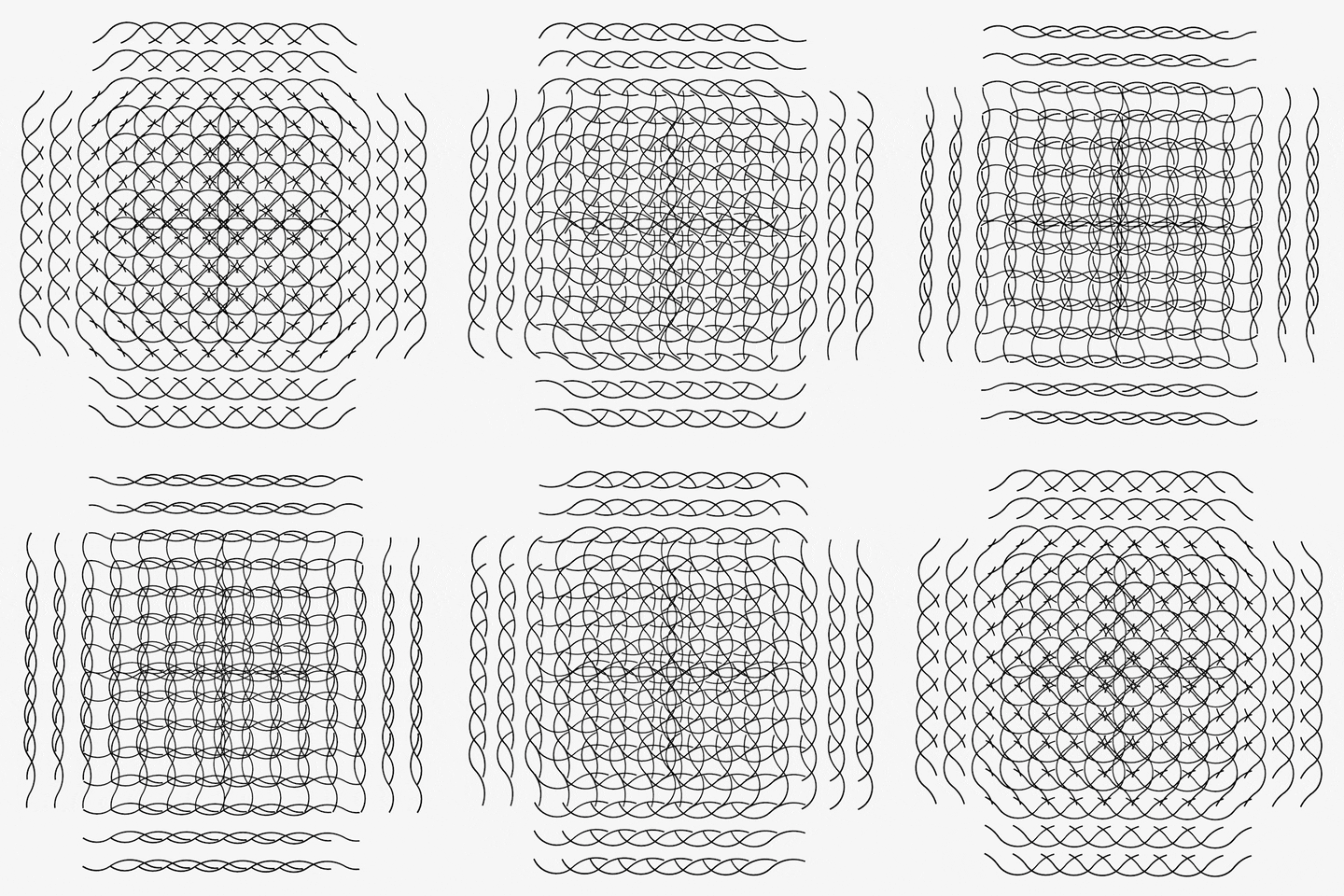
Image Healing: Guided Mandala Viewing - Lesson 199
Choose a mandala with continuous patterns and a stable center.
Let your gaze follow the path back to the center.
The actions, though small, were never interrupted.
Mandala drawing is not about what you draw, but about observing what you practice in the process of observing – it's about continuity and return.
The theme of this lesson's mandala is an unbroken ring, symbolizing recurrence, no more prolonging, and avoidance.
◉ One gaze is sufficient; no repetition is required.
Lesson 199: Draw your "Shortening Avoidance Time Chart"“
① Avoid the timeline:
Draw a horizontal timeline on a piece of paper and mark your most recent experience of "wanting to escape" on it.
Mark the time between "feeling unwell" and "actually turning away", and then draw a slightly shorter alternative time.
Let your brain see that avoidance doesn't happen instantly; there's an adjustable range in between, and that range is the space you're practicing in.
② Dwelling intensity map:
Draw 5 intensity levels, from mild discomfort to the strongest urge to escape.
Mark "the location where I stayed today", and then mark a smaller dot further ahead to represent "the location where I am willing to stay for an additional 5 to 15 seconds".
Visually: Although the intensity is changing, I can still find a manageable step within that change.
③ Micro-motion substitution diagram:
Draw a small forward arrow to represent "still want to leave";
Draw another small downward dot to represent "stop and take a breath".
Display two branches on the screen: one is an automatic departure path, and the other is a short stay path that you are practicing.
Let the body learn through painting: I can choose a second path.
Please log in before submitting your drawings and feelings.
○ 199. Log Guidance
- In which situations today did I have the urge to "leave immediately"?
- How much did I successfully reduce the avoidance time? 5 seconds? 10 seconds?
- Where would I like to stay a little longer next time?
Please log in to use.
Avoidance is not scary; what is scary is running away too quickly. As long as you are willing to pause for a few more seconds, the fear will begin to dissipate.