

Lesson 208: Attachment Style and the Formation of Separation Fear
Duration:70 minutes
Topic Introduction:
Separation fear does not stem from the fear of being alone itself, but rather from the deep attachment system issuing an alarm.
When early experiences lead the brain to habitually seek safety through methods such as "clinging to, avoiding, and overscanning for risk,"
Separation becomes a symbol of "uncertainty, lack of response, and inability to sustain".
This lesson will help you understand how the four attachment styles affect emotional responses during separation.
It allows you to start rebuilding stable and mature connectivity from the source.
Why does attachment style affect separation anxiety?
- Anxious attachment:Separation was interpreted as "I'm going to be left behind".
Even small distances are magnified, and the body quickly enters a state of tension. - Avoidant attachment:Outwardly independent, but inwardly uncomfortable with "too close" relationships.
Once separated, it is easy to feel cold, empty, and defensive. - Disorganized attachment:Past chaotic experiences have led to strong contradictions arising from the separation:
They want to get closer, but at the same time they are afraid to get closer, which creates strong and unstable emotional fluctuations. - Secure attachment:To view separation as a "real need"
And maintain trust, rhythm, and self-regulation so as not to be quickly overwhelmed by distance.
Lesson 208: Attachment Styles and the Formation of Separation Fear (Click to listen to the reading and view the content)
Separation fear is not accidental; it is often closely related to an individual's early attachment style. Psychology suggests that attachment is a fundamental pattern for obtaining security and regulating emotions in relationships. When this pattern is repeatedly reinforced during development, it continues to function in adult relationships. Securely attached individuals, while feeling reluctant to separate, have a stable belief in the continuity of the relationship and are therefore less prone to panic. Anxiously attached individuals, on the other hand, are more likely to see companionship as the sole source of security in relationships, and separation quickly triggers fantasies of being abandoned or losing connection. Avoidant attachment, while seemingly not needing companionship, often suppresses separation fear beneath the surface, avoiding triggering it through emotional detachment. The first step in understanding attachment styles is to stop self-blaming; attachment is not a personality flaw but rather an adaptive strategy formed in the environment. The second key is to identify one's automatic reactions in separation situations, such as tracking and confirming emotional freezes or excessive independence—these reactions do not equate to genuine needs. The third point is understanding how separation fear is learned. When companionship in childhood is unstable or responses are unpredictable, the brain learns to amplify emotions to gain connection; this learning continues into adulthood. The fourth stage is updating attachment experiences. By repeatedly experiencing the continued existence of the relationship after brief separation, emotions can subside on their own, and the brain gradually modifies old models. The fifth key is to expand attachment from a single object to multiple forms of support, including self-support, daily structures, and stable rhythms. When the source of security is no longer concentrated on one person, the threat of separation significantly decreases. It's important to understand that attachment style is not destiny but a tendency that can be reshaped. As you practice new responses with understanding, separation fear transforms from an automatic reflex into a modifiable experience. True security is not about never being separated, but about knowing that connection and self still exist even when separated.
AI Interaction:
Click on the Q&A section below and answer the questions as prompted:
“"What are the three most common automated thoughts that come to my mind when I'm separating things?"”
“"Are these thoughts more like anxiety-driven, avoidance-driven, or disorganized reactions?"”
The system will help you identify your attachment response patterns and provide a daily tweak you can try.
○ Sound buffering and stable breathing exercises before separation
Practicing vocal stabilization for 2–3 minutes before separation can reduce "anticipatory anxiety".
When the brain senses consistent external stimuli, it reduces the fear of being "abandoned/lost contact".
There's no need to force yourself to relax; just allow your breathing to be guided by the rhythm of the music.
○ Herbal Tea: Chamomile + Lavender (Relieves attachment tension)
Recommended reasons:
Chamomile brings a sense of calm, while lavender helps the mind and body settle down; it's a typical "emotional soothing combination."
Drinking a small glass of water before and after separation can help reduce the body's overreaction to separation.
Brewing method:Steep 1 teaspoon of chamomile and 1/2 teaspoon of lavender in hot water for 5–7 minutes.
○ Stable Dietary Nourishment - Purple Rice Eight Treasure Porridge (ID208)
During the stage of understanding attachment patterns and undergoing inner renewal, the body needs gentle and inclusive nourishment. Purple rice eight-treasure porridge, with its synergistic combination of various ingredients, symbolizes the diversity of safe sources. This nourishing dish is suitable for consumption after relationship reflection or separation exercises to help the nervous system complete integration.
Separation Fear
Multi-faceted support
Open Recipe
◉ Chinese Food Therapy: Purple Rice Eight Treasure Porridge (ID 208)
Eight-treasure porridge is a symbol of "completeness" for Chinese people. We specially selected "purple rice" (black glutinous rice) as the base because it corresponds to "kidney water" in Traditional Chinese Medicine and has excellent yin-nourishing and kidney-tonifying effects. When anxiety makes you feel exhausted and your body feels hollowed out, this bowl of rich porridge, which blends five-colored ingredients and has a complex and varied taste, can repair you from all levels of your internal organs, allowing you to rediscover the feeling of "abundance".
Complete nourishment Kidney-tonifying and blood-nourishing Strengthen the spleen and stomach
I. Recommended Dietary Therapy and Reasons
Recommended dishes:Purple Rice Eight Treasure Porridge
Recommended reasons:
1. Harmony of the Five Elements:Anxiety often indicates an imbalance of energy in the body. Eight-treasure porridge contains ingredients of various colors, including black (purple rice), red (red beans/dates), yellow (peanuts), and white (lotus seeds/lily bulbs), which nourish the five internal organs and harmonize yin and yang.
2. Anthocyanins fight aging:Purple rice is rich in anthocyanins, which not only have antioxidant properties but also improve poor blood circulation in the brain caused by stress, making people clear-headed.
3. It's not just about eating, it's about "gathering":Eight-treasure porridge is rich in ingredients, symbolizing the gathering of scattered energy. Drinking this porridge creates a strong sense of "unity" and "security".
2. Recipe and Method
Recipe (Serves 2–3):
- Base:50g purple rice (black glutinous rice), 30g white rice (to neutralize stickiness)
- Hard beans:20g red beans, 20g peanuts
- Fruits:10g lotus seeds, 3-5 red dates, 10g dried longan pulp
- Nuts:Add 2-3 walnuts (add last).
- Seasoning:Yellow rock sugar (appropriate amount)
- 1200ml of clean water
practice:
- Soaking (the key to success):Purple rice, red beans, and peanuts have a hard texture.Soaking must be done in advanceSoak for at least 4 hours (overnight recommended). The water used to soak the purple rice will turn a deep purple color and is rich in nutrients.Do not pour it out.It can be used directly to cook porridge.
- First round of cooking:Add the soaked purple rice, red beans, peanuts, and soaking water to a clay pot, then add enough water to cover. Bring to a boil over high heat, then reduce to low heat and simmer for 30 minutes.
- Second round of cooking:Add the rinsed rice, lotus seeds, and red dates. Continue to simmer over low heat for 30 minutes.
- Third round of cooking:Add the dried longan pulp and walnuts. The porridge should have thickened by now. Cook for another 10 minutes.
- Melting sugar:Finally, add rock sugar and stir until dissolved, then turn off the heat. Cover and let it sit for 10 minutes to allow all the flavors to meld.
3. Small rituals for body and mind
Bean Meditation:Don't rush when preparing ingredients. Pour all the beans and rice into a plate and pick and wash them one by one with your fingers. This process of "categorizing and organizing" can help you organize your chaotic thoughts and bring order to your mind.
Abundance Meditation:Looking at the colorful ingredients bubbling in the pot, I said to myself, "My life is just as vibrant. I have all the nutrition and support I need."“
4. Dietary Therapy Experience Record
- Experience the different textures in every bite: the soft and sticky texture of purple rice, the sandy texture of red beans, the crunchiness of peanuts, and the powdery softness of lotus seeds. This rich sensory stimulation can greatly enhance the pleasure of eating.
- Pay attention to the satisfying feeling of fullness after eating; does it fill the void caused by some kind of "hunger" or anxiety in your heart?
- Observe whether the unique aroma of purple rice makes you feel relaxed.
V. Instructional Videos (approximately 3–5 minutes)
◉ Video Title:The Secret to Making Authentic Purple Rice Eight Treasure Porridge: Soft, Sticky, Sweet, and Perfectly Cooked
6. Precautions
- Those with weak digestion should consume with caution:Purple rice and red beans are both difficult to digest, and glutinous rice is sticky. If you often experience bloating or acid reflux, it is recommended to cook the ingredients until very soft, or reduce the proportion of glutinous rice and add more regular rice.
- Sugar control:While sweet porridge is delicious, too much sugar can exacerbate anxiety. It's recommended to use less sugar, relying on the natural sweetness of red dates and longan, or simply enjoy it plain with side dishes.
- Ingredient substitution:“The "Eight Treasures" are not fixed. If you have dampness in your body, you can add Job's tears; if you want to nourish your lungs, you can add lily bulbs. Combining them as you like is also a kind of fun.
hint:This is an excellent festive food (such as for Laba Festival), but cooking a big pot of it on a regular weekend and sharing it with the whole family creates a warm atmosphere that is the best anti-anxiety remedy.
○ Chinese Calligraphy: Clerical Script Writing Practice: Lesson 208
Cultivate a gentle and stable inner character through writing and understanding relationships.
Written words:
Harmony brings good fortune
Pre-writing advice:
Before writing, sit quietly for a moment, take three deep breaths to feel the relaxation of your abdomen and back, and then slowly begin writing in the clerical script.
Writing Tips:
The flowing horizontal strokes and restrained vertical strokes of the clerical script are suitable for expressing inclusiveness and balance in relationships. When writing with harmony, the lines are steady, symbolizing the warmth of the relationship; when writing with auspiciousness, the converging strokes remind us that security comes from inner order. Each stroke injects new flexibility into attachment patterns.
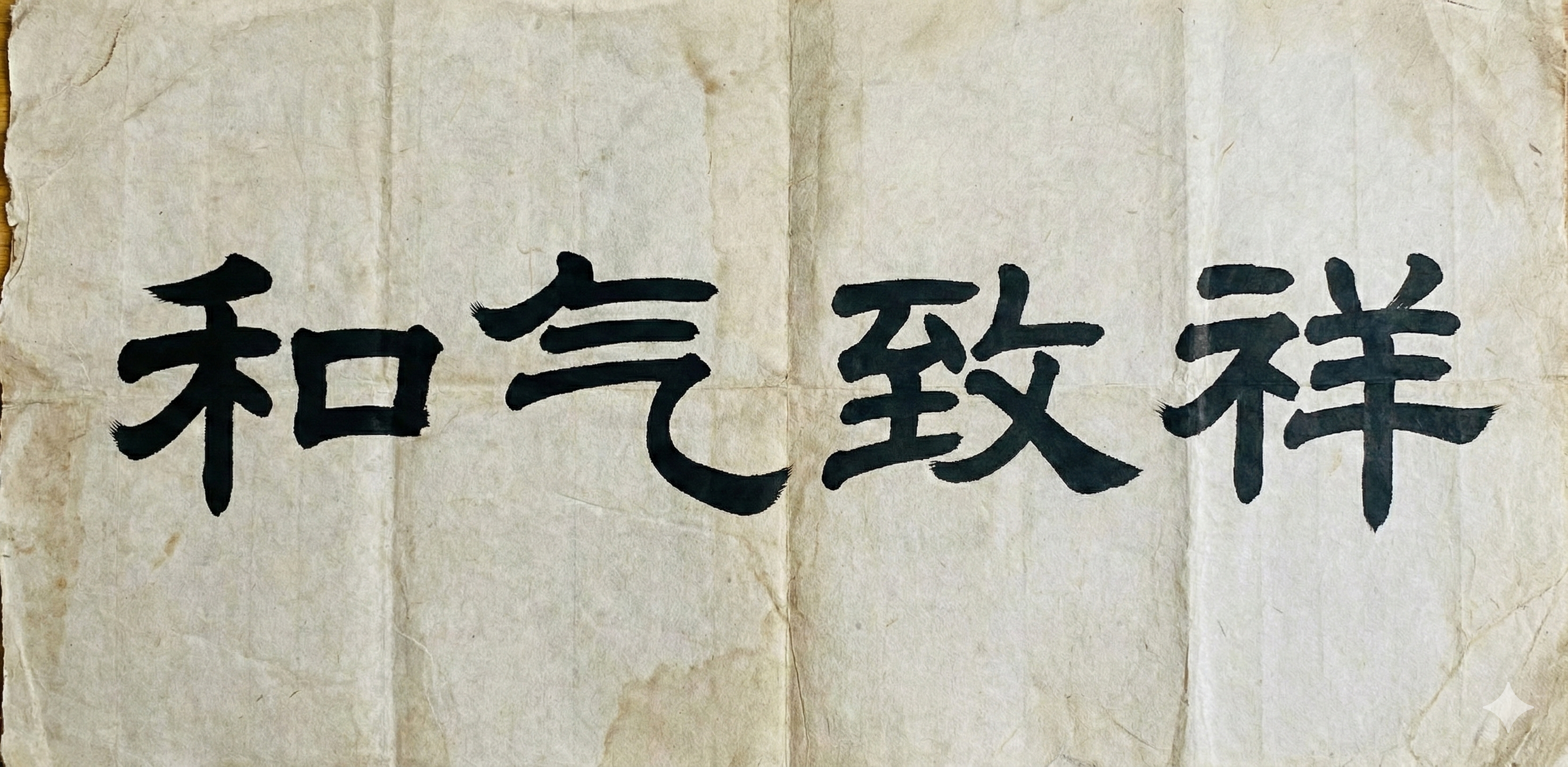
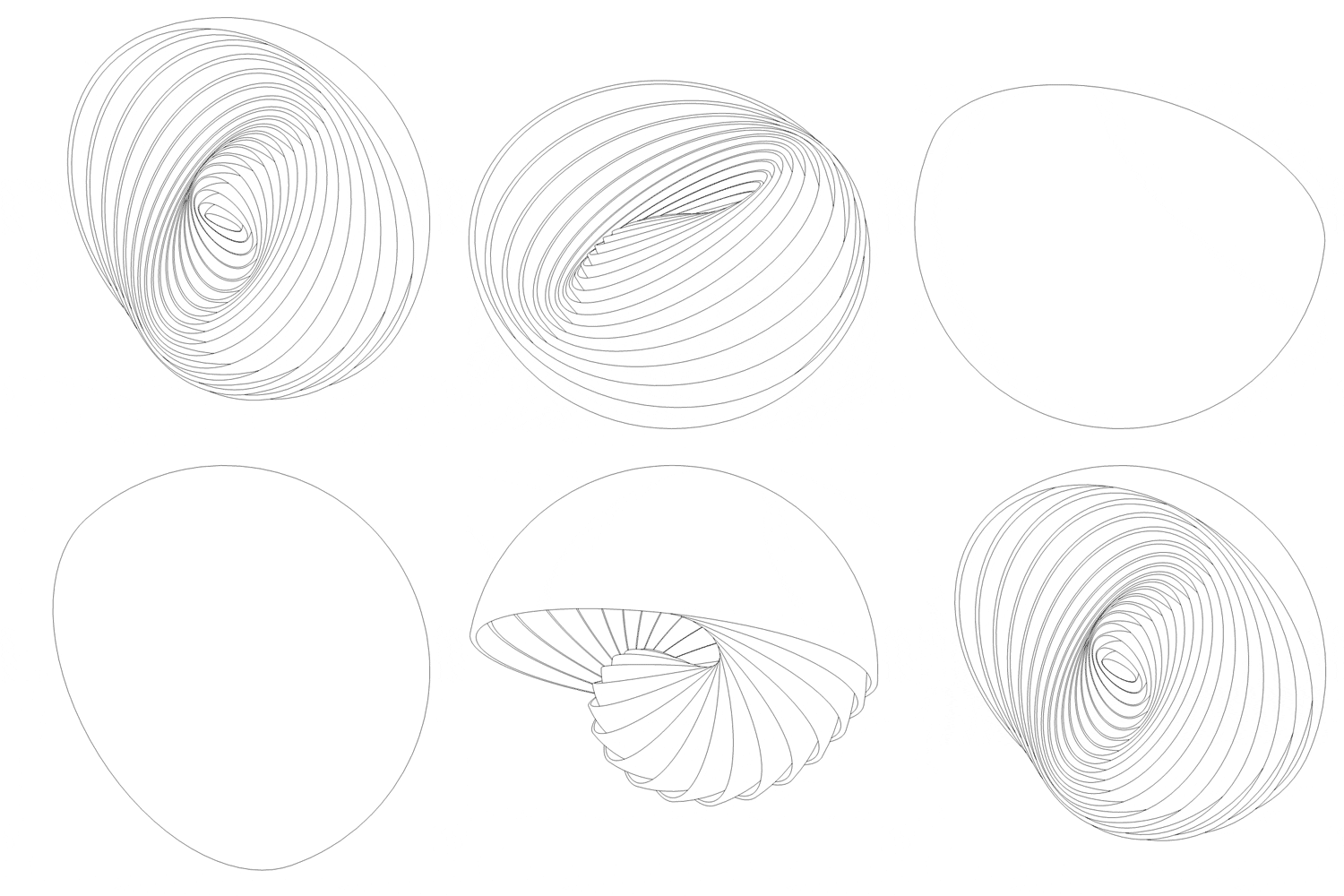
Image Healing: Guided Mandala Viewing - Lesson 208
Choose a mandala with a gentle center and rich layers.
Let your gaze wander slowly among the different elements.
Experience the diversity and coexistence of sources of security.
Mandalas are not about drawing something, but about observing. Through observation, you practice balance and tolerance in relationships.
The theme of this lesson's mandala is a multi-sourced ring, symbolizing that security is no longer solely dependent on anything else.
◉ One gaze is sufficient; no repetition is required.
Lesson 208: Draw Your Attachment Response Map“
① Draw a picture of the separation scenario:Choose a typical separation scenario (going to work, leaving home, saying goodbye) and draw a rough outline.
② Mark the reaction nodes:Draw out your typical reaction points before, during, and after the separation, such as gripping, emptiness, and worry.
③ Draw the "new reaction" you want to add: For example, a slight pause, a deep breath, or a stable posture can serve as a basis for practice.
Please log in before submitting your drawings and feelings.
○ 208. Log Guidance
- What is my most typical automatic reaction during separation? Which attachment style does it resemble most?
- What is a "more mature separation reaction" that I'd like to practice today? Can it last for 5 seconds?
- Do I feel that I can tolerate even a little bit of distance more than before? Write down the small but real differences.
Please log in to use.
Separation is not about breaking off; it's about practicing the ability to remain steadfast even at a distance. You are rebuilding a sense of security that allows you to move forward on your own.