

Lesson 230: Learning to Delay Response and Stabilize Oneself
Duration:70 minutes
Topic Introduction:
In relationships, the more insecure a person is, the more likely they are to "respond immediately".
Because your body equates delay with danger, silence with being ignored, and waiting with being abandoned.
But true stability comes from your ability to "stay calm, maintain your pace, and stay connected" even without an immediate response.
This lesson will guide you in practicing the ability to delay your response, so that waiting is no longer torture, but a strength.
Why does a delayed response make you anxious?
- The brain mistakenly interprets "waiting" as "danger": It stems from uncertain experiences in childhood or a lack of security in relationships.
- Lack of stable internal support:Relying solely on external responses for self-affirmation will trigger a sense of weightlessness due to the delay.
- Excessive empathy and excessive attention:They overemphasize other people's feelings and underestimate their own.
- Fear of conflict or being misunderstood:We hope for an immediate explanation, immediate repair, and immediate confirmation.
Lesson 230: Learning to Delay Response and Stabilize Oneself (Click to listen to the reading, view the content)
Delayed response is not indifference or escapism, but rather the ability to reclaim sovereignty from external influences. Immediate responses to messages often stem from anxiety rather than genuine will; in an alert state, the nervous system perceives speed as safety. The core of learning to delay response is not procrastination, but rather a process of self-stabilization before responding. The first step is to identify triggers, such as notification sounds, screen lights, or changes in the other person's tone—these quickly engage the body. The second key is to pause, not disappear, giving yourself a clear buffer window, even if it's just a few breaths, to allow your body to return to the present moment. The third stage is physical stabilization, not mental stabilization; slow your breathing by placing your feet on the ground or touching a physical object to lower your alertness. The fourth key point is to clarify your response motivation: ask yourself if your response is out of willingness or fear. If it's fear, calm yourself before deciding. The fifth stage is to establish a predictable rhythm, such as regularly checking times or using response rules, shifting the relationship from immediate reactions to a stable pace. The sixth key is to experience the consequences of delay. You'll find that in most cases, the relationship isn't damaged; instead, it reduces misunderstandings and over-interpretations. It's important to understand that self-stabilization doesn't weaken the connection, but rather makes it clearer. When you're no longer driven by immediacy, your responses become more authentic and measured. Practicing delayed responses trains inner resilience, giving emotions a container and room for choice. With practice, you'll find yourself able to stand firm in uncertainty, taking care of yourself before responding—a key sign of a mature relationship.
▲ AI Interaction: Delay is not loss, and you are not being abandoned.
Your anxiety isn't about "they replying slowly".
Instead, your brain is telling you:
“Will I be ignored again? Am I still important?”
But emotions are not reality.
Waiting is not dangerous.
Silence is not a rejection.
The more you can keep yourself calm while waiting, the better.
The less easily you are swayed by your emotions.
Click the button below to let AI help you practice "self-soothing during delayed response".
Hearing is one of the best ways to create a sense of calm and anticipation.
By turning "blank space" into "rhythm" through music, you won't fall into the black hole of anxiety.
○ Eastern Healing Tea: Red Date and Longan Warming Tea
Recommended drinks:Red dates + longan
Recommended reasons:Enhance your emotional energy so that you don't "fall" while waiting and maintain a feeling of being supported.
practice:Soak 3 red dates and 2 dried longan fruits in hot water for 5–8 minutes.
○ Stable Nutrition Hazelnut Honey Cake (ID230)
During the practice of delayed response and self-stabilization, the body needs gentle, moderately sweet nourishment. Hazelnuts and honey provide comfort and a symbol of being treated well while waiting. This nourishing dish is suitable to consume after completing a delayed response exercise to help the body consolidate the experience of stability.
Self-stable
Relational rhythm
Open Recipe
◉ Roman Dietary Therapy: Hazelnut Honey Cake (ID 230)
In ancient Rome, natural sweetness was considered a source of energy that was "soothing rather than stimulating." The combination of hazelnuts and honey doesn't aim for intense sweetness, but rather uses the richness of the nuts and the smoothness of the honey to give the body a feeling of being enveloped and cared for. This hazelnut honey cake is suitable for consumption during recovery, after emotional exhaustion, or when you need a gentle reward, allowing the energy return process to be both stable and reassuring.
Gentle nourishing Stabilize emotions Replenish physical strength
I. Recommended Dietary Therapy and Reasons
Recommended dishes:Hazelnut Honey Cake
Recommended reasons:
1. The soothing effect of natural sweetness:Honey releases its sweetness slowly, so it won't cause drastic fluctuations in mood or blood sugar.
2. The "grounding sensation" of hazelnuts:The fats and minerals in nuts can give the body a sense of stability and security.
3. Suitable as a snack during recovery:This is not a stimulating dessert, but a controlled and gentle energy supplement.
2. Recipe and Method
Recipe (6–8 small pieces):
- 120g hazelnut flour (or roast whole hazelnuts and grind them)
- 80–100g of honey
- 40g whole wheat flour or oat flour
- 2 eggs
- 2 tablespoons olive oil (or melted butter)
- 1/2 teaspoon baking powder
- (Optional) A small amount of cinnamon powder
- (Optional) A pinch of salt
practice:
- Preheating:Preheat the oven to 170°C.
- Mixed wet materials:Whisk the eggs and honey together gently, then add olive oil.
- Add dry ingredients:Mix in hazelnut flour, flour, baking powder, salt, and cinnamon powder, and gently combine.
- bake:Pour into the mold, smooth the surface, and bake for 25–30 minutes, or until the center is set.
- cool down:Let it cool completely after baking before cutting it into pieces for a more consistent texture.
3. Small rituals for body and mind
Permission to use:Before eating, tell yourself: I can enjoy sweetness without feeling nervous.
It will end slowly:Treat this small piece of pastry as the end of a moment, not the beginning of an exciting one.
4. Dietary Therapy Experience Record
- Record whether you feel satisfied after eating, rather than wanting to eat more.
- Observe whether your emotions become gentler and whether your internal stress decreases.
- Be mindful of whether you're reducing your cravings for refined sweets.
V. Instructional Videos (approximately 3–5 minutes)
◉ Video Title:Make your body feel cared for without stimulation
6. Precautions
- Control the portion size:This is a restorative dessert; it is recommended to eat it in small pieces.
- Nut allergy:Those allergic to nuts should avoid this product.
- Eat at night:If you are close to bedtime, it is recommended to reduce the amount of honey you consume.
hint:It can be paired with warm water or herbal tea to help the body absorb sweet energy more smoothly.
○ Suggestions for Chinese Calligraphy and Seal Carving Practice - Lesson 230
The seal carving practice in this lesson is designed to help you calm your mind and move slowly and deliberately before responding.
- Introduction to the characteristics of seal carving:
Seal carving emphasizes the importance of determining the position before proceeding. Each stroke must be confirmed to correspond to the correct position within the relationship before responding. - Written words:
Spiritual Journey and Appreciation - Psychological Intention:
Writing about spiritual wandering and appreciation involves training one's inner self to detach from a sense of urgency and approach relationships with clarity and appreciation. - Knife skills:
The brief pause before the knife strikes, followed by a steady advance, symbolizes a stable rhythm within the delay. - Emotional transformation:
Transforming the anxiety of being urged into a judgment of the direction of the lines allows the response to return to self-sovereignty.
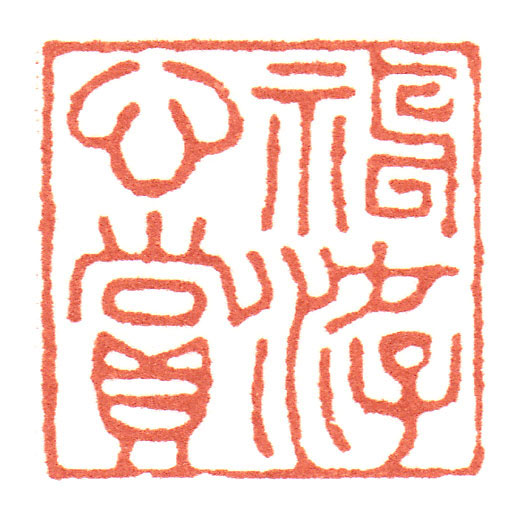
Image Healing: Guided Mandala Viewing - Lesson 230
Choose a mandala with a slow rhythm and clear layers.
Let your gaze pass through each floor in sequence.
The feeling of time being extended without disturbing the mind.
A mandala is not about drawing something, but about observing. What you practice in observing is maintaining tranquility while waiting.
The mandala theme of this lesson is the circle of serenity, symbolizing self-abiding before responding.
◉ One gaze is sufficient; no repetition is required.

Lesson 230: My "Delayed Response Stability Plot"“
Objective: Visualization exercises transform waiting from a painful experience into a sense of security.
Steps: Draw a slowly rising line on a piece of paper, symbolizing your "patience curve".
Draw a few pause points (● ● ●) next to it to symbolize "I allow myself to pause".
Finally, one last sentence:
“"While I wait, I still exist."”
Please log in before submitting your drawings and feelings.
○ 230. Delayed Response and Stability Log Guidance
① In which situation today did you feel "I can't wait"?
② What physical signals are you experiencing right now? (Irritability/Rapid heartbeat/Tense)
③ Did you mistakenly interpret "delay" as "being ignored"?
④ What methods did you use to help yourself stabilize today? (Breathing/Music/Touch/Away from your phone)
⑤ Write a sentence about your experience of "I can slow down".
⑥ In which scenario would you like to practice delayed response tomorrow? What are the criteria for success?
Please log in to use.
Delaying your response isn't about creating distance; it's about practicing a more mature, stable, and gentler form of love. When you stabilize yourself first, your relationship will stabilize you as well.