

Lesson 231: Detaching Yourself from the Gaze of Others
Duration:70 minutes
Topic Introduction:
Much anxiety and self-doubt stem from a common source:
“Am I good enough in other people's eyes?”
The more you rely on the evaluations, responses, or opinions of others, the easier it is for you to hand over your value to others.
This lesson guides you to reclaim your own value through awareness, boundaries, bodily sensations, and psychological adjustment, establishing a stable foundation of "I am worthy, independent of others' opinions."
Why do the gazes of others possess such power?
- The evaluation system familiar from childhood:People who are compared, criticized, or ignored tend to take external reactions as indicators of value.
- Oversensitivity in relationships:Unstable attachment makes it easier for you to interpret subtle changes in other people's facial expressions.
- Fear of conflict and being disliked:Treating "pleasing others" as a survival strategy.
- Lack of internal value source:When you lack self-confidence, you can only seek validation from the outside world.
Lesson 231: Detaching Your Self-Worth from the Gaze of Others (Click to listen to the reading, view the content)
Detaching oneself from the gaze of others doesn't mean disregarding others, but rather ceasing to base one's existence on external evaluations. Many people experience repeated tension in relationships and social interactions not because of a lack of ability, but because they internally subscribe to a rule: I must be recognized to feel safe. Thus, others' expressions, tone of voice, silence, or even a glance can be interpreted as a denial of self-worth, leading to anxiety, self-blame, or overinterpretation. To change this pattern, one must first understand that gazes are information, not judgments. The first step is to identify how you equate gazes with evaluation. When you enter a crowd, do you automatically scan who is looking at you and how they are looking at you? This puts your nervous system on constant alert. The second key is to distinguish between facts and inferences. The fact is that someone glanced at you; the inference is that they dislike you. Inferences often come from past experiences rather than the present. The third stage is to withdraw value assessment from the external and internal, giving yourself a stable evaluation dimension, such as whether I expressed myself honestly, whether I remained polite, and whether I took care of my health—these are more reliable than others' reactions. The fourth key point is to practice allowing oneself to be disliked. True freedom comes from being able to be misunderstood and still exist. The fifth stage is establishing self-support statements. When eye contact triggers, tell yourself, "I allow others to have opinions, but my worth is not determined by them," and then focus your attention back on your breath, your feet, or the task at hand. The sixth key is low-dose exposure. Practice in safe settings, without explaining or pandering, allowing your body to experience that it won't crumble even without immediate approval. It's important to understand that the more you rely on others for your self-worth, the more vulnerable you become. When you place your value back on your own choices and actions, you will be more stable, more natural, and more able to truly connect with others. You don't need everyone to like you; you just need to stand firm on your own ground.
▲ AI Interaction: Your value is never in the eyes of others.
Others can't see you.
That doesn't mean you don't deserve to be seen.
Others can't understand you.
It doesn't mean you're not good enough.
What you should fear is not how others perceive you.
It's not that you've forgotten your own inherent value.
Your existence does not require approval.
Your value does not need to be proven.
Click the button below to practice "reclaiming value from the gaze of others" with AI.
Music can help you return to your own rhythm from the perspective of the outside world.
When you hear your own breathing, you are less likely to be swayed by the reactions of others.
○ Eastern Healing Tea - Osmanthus Pu-erh Tea for Stress Relief
Recommended drinks:Osmanthus + Pu'er
Recommended reasons:Osmanthus is gentle, and Pu'er tea is calming; the combination of the two helps one to "turn inward" and return to inner stability from external evaluations.
practice:Steep 3 grams of Pu-erh tea and a few osmanthus flowers in hot water for 3 minutes.
○ Stable Dietary Therapy - Garum Vegetables with Fish Sauce (ID231)
During the phase of practicing detaching oneself from external scrutiny, the body needs refreshing and orderly nourishment. Fish sauce vegetables, with their simple seasoning that brings out the natural flavor of the ingredients, symbolize completeness without excessive external evaluation. Suitable for consumption after social interactions when reconnecting with oneself, it helps the mind and body return to a state of simple stability.
Social attention
Inner Standing
Open Recipe
◉ Roman Dietary Therapy: Garum Vegetables (ID 231)
In ancient Roman cuisine, garum (fish sauce) was not only a condiment but also a source of savory flavor that "enhanced bodily sensations." Using a small amount of garum in vegetable cooking could quickly awaken the sense of taste and digestion without increasing food intake. This salted garum vegetable dish is not overly stimulating; rather, it uses controlled portions to help the body rediscover its eating rhythm and direction during periods of fatigue, loss of appetite, or recovery.
Awaken your appetite Replenish minerals Promote digestion
I. Recommended Dietary Therapy and Reasons
Recommended dishes:Garum Vegetables (salted fish sauce)
Recommended reasons:
1. Small amounts are effective:Fish sauce is rich in natural amino acids, and only a very small amount is needed to enhance the overall flavor, so avoid overeating.
2. Help restore appetite:For those who "don't want to eat anything" after anxiety, this salty and savory flavor can gently trigger the eating reflex.
3. Vegetables are more palatable:Making light vegetables more satisfying helps maintain nutritional balance during recovery.
2. Recipe and Method
Recipe (1–2 servings):
- 200g of broccoli or cauliflower
- 1/2 carrot (sliced)
- 1/2 zucchini (sliced, optional)
- 1 tablespoon olive oil
- Garum (fish sauce) 1/2–1 teaspoon
- 2–3 tablespoons of water
- (Optional) A very small amount of black pepper
practice:
- Pre-treated vegetables:Wash and cut the vegetables to a uniform size.
- Remove from heat:Add olive oil to a pan and heat over low heat.
- Lightly stir-fry:Add carrots and other firmer vegetables and stir-fry for 1–2 minutes.
- Seasoning:Add water and fish sauce, and gently stir to coat the ingredients evenly.
- Simmering:Cover and simmer over low heat for 3–5 minutes, until the vegetables are cooked but not mushy.
- Finish:You can sprinkle a very small amount of black pepper before taking it off the heat.
3. Small rituals for body and mind
First confirmation:After swallowing the first bite, pay attention to whether your body has a natural reaction of "wanting to keep eating".
The principle of not overdoing:Once your sense of taste is awakened, allow yourself to stop at just the right point.
4. Dietary Therapy Experience Record
- Record changes in appetite before and after meals.
- Observe whether the demand for heavily seasoned snacks decreases.
- Pay attention to whether your abdomen feels warm rather than bloated after meals.
V. Instructional Videos (approximately 3–5 minutes)
◉ Video Title:How a little fish sauce can bring back your appetite
6. Precautions
- Salt control:Fish sauce is high in salt, so be sure to use it in small quantities.
- People with high blood pressure:Please use caution or substitute with low-sodium fish sauce.
- Not seeking thrills:Avoid pairing with spicy or oily foods.
hint:If you cannot tolerate the smell of fish sauce, you can use a small amount of anchovy sauce or fermented soybean paste as a mild alternative.
○ Humanist Script of the Italian Renaissance - Lesson 231 Writing Exercises
Today's healing phrase:
light within the heart
In-depth analysis:
The gaze of others can shift our focus from self-centeredness to external judgment.
Humanist Script trains a way of standing without rushing to prove oneself through clear proportions and ample white space.
When letter spacing is stable and strokes are not overly forceful, you are putting the baseline of value back in your own hands.
light within the heartRemind yourself to settle down with mindfulness, neither chasing after nor resisting what is being seen, but simply returning to the stability and clarity of the present moment.
Writing Techniques (Stable Self Version):
- Stable baseline:The consistent bottom edge of each line symbolizes that its value does not fluctuate with the viewer's gaze.
- Leave space for breathing:Leave space between letters during training to prevent evaluation from being squeezed out.
- A gentle beginning:Avoid sudden force and do not rush to explain or prove it.
- Mid-section relaxation:The middle of the letter should not be too tight to reduce tension and make it more palatable.
- Repeat the writing:The nervous system learns to maintain a steady rhythm and bring its center of gravity back to itself.
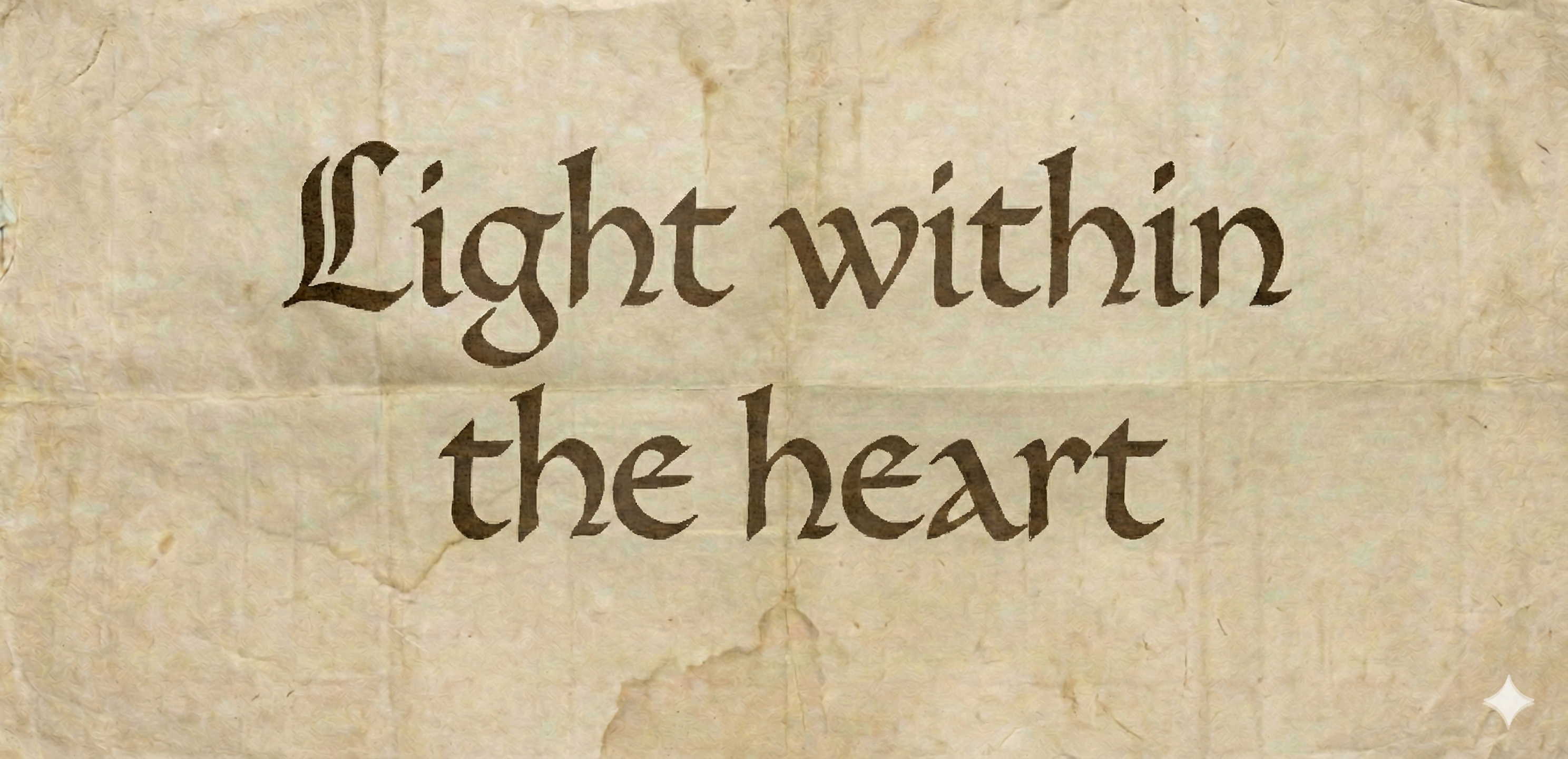
Image Healing: Guided Mandala Viewing - Lesson 231
Choose a mandala with a clear center and an open outer circle.
Focus your gaze on the center first, then browse the outer rings.
You can feel the presence of external gazes, yet you still have a center.
Mandala drawing is not about drawing something, but about observing. In observing, you practice detaching yourself from the gaze and returning to your self-worth.
The central ring of this mandala symbolizes values rooted within rather than external judgments.
◉ One gaze is sufficient; no repetition is required.

Lesson 231: Draw your "center of self-worth"“
Objective: To help you shift your focus from external evaluations back to your intrinsic value.
Steps: Draw a large circle on the paper to represent "the outside world's gaze". Draw a small circle in the center of the large circle to represent "my value center".
Write down the evaluations you are often worried about on the big circle (e.g., others misunderstand me, others don't like me, others think I'm not good enough).
Write down your true value traits (such as: gentleness, honesty, strength, and love) in the small circle.
Finally, encircle the small circle with a thick line, symbolizing:
“"Value belongs to me, not to others."”
Please log in before submitting your drawings and feelings.
○ 231. Self-worth journal guidance
① In which situation today do you care most about how others perceive you?
② What emotions did that scene trigger in you? (Shame/Nervousness/Self-doubt)
③ Is that really someone else's thought, or your own projection?
④ Write down one “inner choice” you made today.
⑤ Write a sentence about your understanding of "value belongs to me".
⑥ In which situation would you like to practice "defining yourself without relying on others' opinions" tomorrow? What are your criteria for success?
Please log in to use.
When you reclaim value for yourself, the gaze of others loses its power to harm you. You are still seen, but you see yourself first.