

Lesson 277: Gradually Participating in Public Expression Activities
Duration:70 minutes
Topic Introduction (Overview):
Many people are afraid of public speaking not because they are "afraid," but because their bodies are not yet able to withstand the pressure of being "noticed by the public."
The goal of this course is not to get you directly on stage, but to facilitate public participation through controlled, selectable, and phased methods.
Let "expression" transform from dangerous to neutral, and then from neutral to a manageable experience.
You will learn how to participate in public settings in the subtlest ways, such as nodding, raising your hand, giving a brief greeting, and reading sentences.
And gradually expand to group discussions or short sharing sessions.
The core spirit can be summed up in one sentence:
“"Public expression is not about exposure, but about practicing being."”
Lesson 277: Gradually Participate in Public Expression Activities, Click to Listen to the Reading, View Content
Once language and emotional regulation have stabilized, public speaking activities often become the next significant hurdle. Public speaking here is not equivalent to giving a speech or presentation, but rather the experience of being seen and heard in a shared context with multiple people. The core of gradual participation is not proving oneself, but allowing the body to relearn safety in public settings. The first step is to redefine public speaking. Public doesn't mean being the center of attention or having all eyes on you; it simply means no longer being completely invisible. The second step is to start with low-exposure forms, such as giving a brief response in a group, reading a sentence in class, or completing a small task in an activity, allowing the body to adapt to being noticed. The third step is to set clear stage goals. Each participation should have only a minimum completion point, such as saying a sentence or raising your hand once, to avoid setting overly ambitious goals that could trigger avoidance. The fourth step is to focus on the structure rather than evaluation, paying attention to whether the process was completed, rather than how others perceive you. The fifth step is to allow tension and participation to coexist. Tension doesn't mean you're unsuitable for public settings; it's simply the nervous system learning a new environment. The sixth step is post-participation cleanup. After the activity, give yourself a clear closing ritual, such as walking slowly or taking deep breaths after leaving the venue, allowing the body to complete a safe loop. The seventh step is to build familiarity through repetition. Repeated participation in similar public activities significantly reduces uncertainty. The eighth step is to view each participation as an accumulation of experience rather than a test of ability. When the body repeatedly confirms safety in public spaces through public expression, the threatening environment transforms into a place where one can linger, and your voice gradually gains a foothold within it.
▲ AI Interaction: Which type of public expression are you best suited to start with?
Everyone's starting point for public participation is different; some start by saying "thank you," some by nodding, and some by writing on flashcards.
Let AI help you assess your current stage and the most suitable "first step in public engagement".
Click the button below to start exploring:
○ Musical Guidance: From Tension to "Availability"“
Choose upbeat but not intense music, and let your body sway gently to the rhythm.
The goal is not to "perform," but to allow the body to experience something:
“I can appear in the rhythm of the outside world without being swallowed up.”
○ Western Healing Tea - Citrus–Mint Social Ease Blend
Recommended reasons:Citrus brings a "bright" energy, while mint relieves chest pressure, making it an ideal drink before participating in public activities.
practice:Lemon slices and mint leaves, steeped in hot water for 3 minutes.
○ Stable Dietary Therapy: Black Bean and Vegetable Stew (ID277)
After engaging in public participation exercises, the body often needs a solid and stable replenishment. The combination of black beans and various vegetables helps enhance inner strength and endurance, making it suitable for consumption after activity to help the body return to balance from public stimulation.
Gradual participation
Stable recycling
Open Recipe
◉ Black bean vegetable stew
Soaked black beans are stewed with carrots and tomatoes, and bay leaves and mild spices are added. The soup is rich and filling, and nourishes the kidneys and replenishes qi.
Nourishes the kidneys and replenishes qi Sufficient fiber Rich and filling
1. Recommended dishes and reasons
Recommended dishes:Black Bean Vegetable Stew (ID 207)
Recommended reasons:Black beans replenish kidney energy and are rich in fiber, making them suitable as a main dish for dinner.
2. Recipe and Method
Ingredients (Serves 2–3):
- 250 g black beans (soaked for 8–12 hours)
- 1 carrot (diced)
- 1 tomato (diced)
- 1/2 onion (chopped)
- 1 bay leaf
- 1/2 teaspoon cumin powder
- 1/3 teaspoon turmeric powder
- 1 tsp olive oil
- 1.2 L clear soup
- salt to taste
- A pinch of black pepper
- A few cilantro leaves (for garnish)
practice:
- Heat oil in a pan, sauté onion over low heat until translucent, then add carrot and tomato and stir-fry briefly.
- Add black beans, broth, bay leaves, and spices and simmer for 60–75 minutes until the beans are soft.
- Season with salt and black pepper, sprinkle with cilantro, and serve with whole grains or on its own.
3. Eating rituals
Eat slowly and in small bites, focusing on the warmth.
Serve with steamed vegetables or brown rice.
Record how long you feel full.
4. Experience Record
- Physical sensation (refreshing/full/warm).
- Post-meal mental and digestive scores.
- Record portion sizes and daily fruit, vegetable, and whole grain intake.
5. Tutorial Video (approximately 2–5 minutes)
◉ Video Title:Black beans and vegetables · Rich and filling
6. Precautions
- Patients with kidney disease need to control potassium intake under the guidance of a doctor.
- Those who are prone to bloating can add ginger slices and cook together and eat in small amounts at several times.
hint:Diet therapy is for daily care and does not replace individualized medical treatment. If you have allergies or chronic diseases, please consult a professional first.
○ Humanist Script of the Italian Renaissance Period · Lesson 277 Writing Exercises
Today's healing phrase:
Peace and joy
In-depth analysis:
Public expression is often misunderstood as a display of ability, but in the recovery path it is first and foremost a practice of being.
The balanced proportions and clear structure of Humanist Script help you maintain inner order when you are being seen.
When writing becomes stable in public spaces, it will gradually become more acceptable.
Being seen does not equate to being judged.
Writing Skills (Public Participation Version):
- Short sentence writing:It symbolizes repeated public appearances.
- Clear baseline:It reminds you to stand in your own position.
- Appropriate use of cursive writing:Keep your expression coherent and unhurried.
- Balanced letter spacing:This corresponds to the sense of boundaries in public spaces.
- Stop when finished:Every participation has an end.
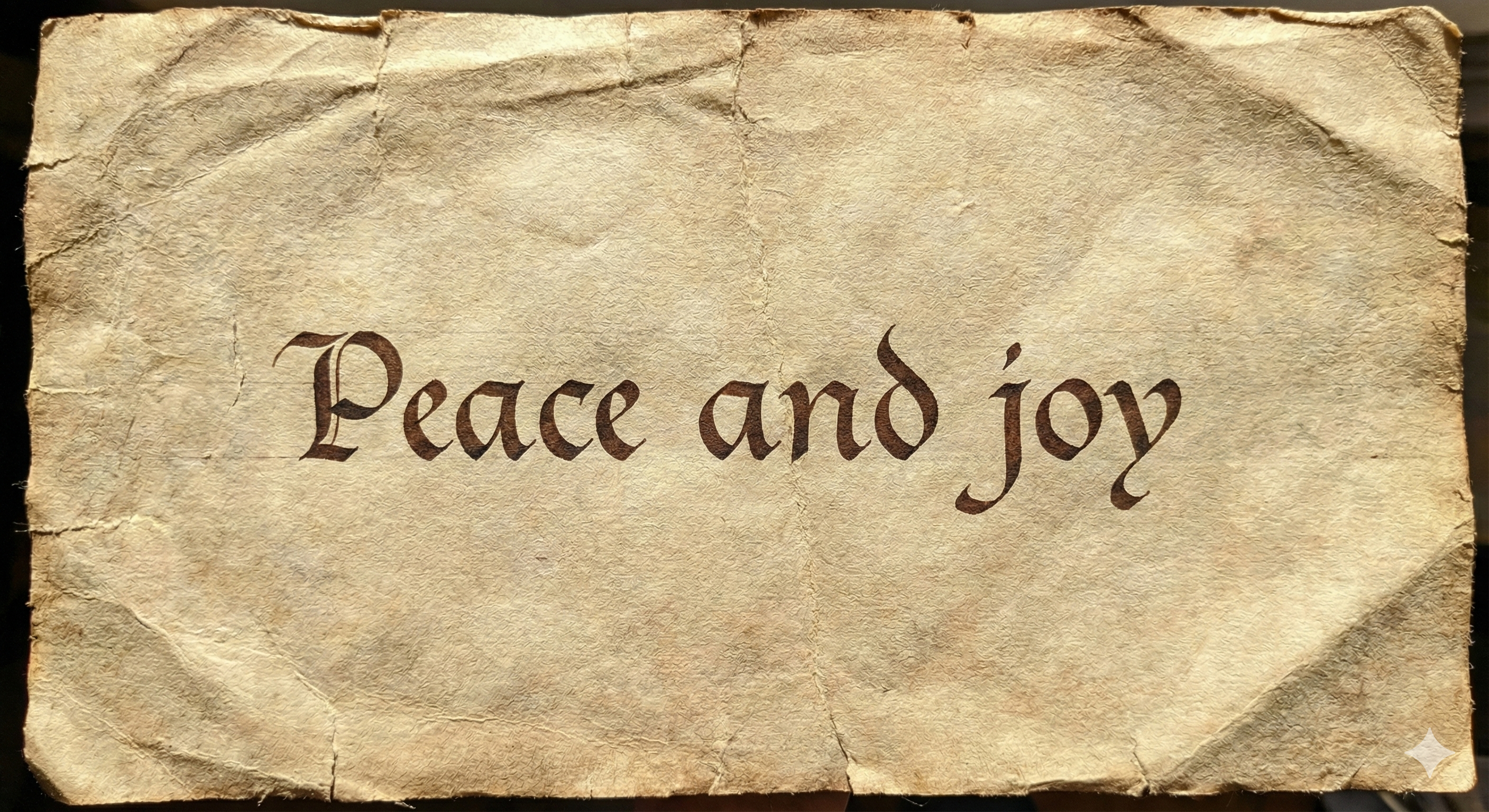
Image Healing: Guided Mandala Viewing - Lesson 277
Choose a mandala with a clear center and an open outer circle.
First, focus your attention on the center to confirm your position.
Then slowly look outward and feel yourself as part of the whole.
Mandala is not about drawing something, but about observing. What you practice in observing is maintaining your sense of self and connection in public spaces.
The theme of this lesson's mandala is "The Realm of Shared Manifestation," symbolizing that you are safely entering the arena of public expression.
◉ One gaze is sufficient; no repetition is required.

Lesson 277: The Ladder of Public Expression - Drawing Exercises
Purpose:It helps you visually build a hierarchical structure that encourages you to "dare to appear".
step:
① Draw a five-step ladder: Existence → Participation → Speaking out → Expression → Sharing.
② Write down a small action you dare to try on each level, such as nodding, saying hello, or reciting a short sentence.
③ Write a supportive statement at the top of the steps:
“I’m gradually emerging.”
Please log in before submitting your drawings and feelings.
○ 277. Log Guidance
① Did I "appear" even a little bit in a public environment today?
② What makes me willing to appear? What makes me hesitate?
③ What small act of public participation did I complete?
④ What is the next "micro-action of public expression" that I am willing to take on?
Please log in to use.
Public speaking isn't about becoming extroverted, but about learning to exist in the world. You're already on your way, and every step deserves to be seen.