

Lesson 295: Discovering "Controllable Micro-Goals" in Everyday Life“
Duration:70 minutes
Topic Introduction (Overview):
In major depressive disorder, a person is not "unmotivated," but rather overwhelmed by a deep sense of powerlessness:
The tasks seemed too many, too big, and too difficult, draining even the courage to begin.
Therefore, what you need is not to force yourself to work hard, nor to set grand goals, but to rediscover those simple joys in life.“"Controllable Micro Goals"”——
Those small actions, decisions, and adjustments that you can complete in 30 seconds, 1 minute, or 3 minutes.
The significance of controllable micro-targets lies in:
It doesn't demand that you become better immediately, but rather it helps you gradually transition from "I can't do anything" to "I can do a little bit."
From "stagnation" to "a little bit of progress";
The feeling of "total failure" has been transformed into "partial success".
This lesson will teach you how to select the smallest feasible unit from everyday life:
Such as tidying up a corner, drinking a glass of water, opening a window, walking 10 steps, writing a sentence, replying to a message, washing a dish...
These small goals are not insignificant; they are the engine of depression recovery.
When you start doing something small, your life gradually returns to your own hands.
Lesson 295: Discovering Controllable Micro-Goals in Daily Life (Click to listen to the reading, view the content)
In depression or a prolonged state of low energy, much of the suffering doesn't stem from the events themselves, but from the overall feeling of powerlessness—"I can't do anything." The first step is to re-understand the meaning of goals. Goals don't necessarily have to be grand, life-changing plans; they can simply be small steps achievable today. The second step is to recognize what "controllable" means. Controllable doesn't mean there are no difficulties, but that the outcome depends primarily on your current actions, not on the reactions of others or unpredictable circumstances. The third step is to narrow down goals to the physical level, such as drinking a glass of water after waking up, going to the window to open the curtains, or tidying a small area of your desk. The fourth step is to avoid comparisons. The value of micro-goals lies not in how important they seem, but in the fact that you accomplished them. The fifth step is to allow for lower standards; even completing only 50% of the plan is still a successful experience. The sixth step is to retain the sense of accomplishment in your body; pause for a few seconds after completing a task to feel the changes in your body, rather than immediately moving on to the next requirement. The seventh step is to view micro-goals as training to restore autonomy, not as a test of self-discipline. The eighth step is to accumulate gradually. As micro-goals are repeatedly accomplished, the brain relearns, "I can influence my day." True recovery is not about suddenly becoming motivated, but about gradually regaining a sense of participation in life through a series of small, controlled actions.
▲ AI Interaction: Help me identify actionable "micro-goals" for today.“
Enter your current state and concerns (e.g., feeling powerless, procrastinating, confused, anxious, unable to start). AI will assist you:
① List 3 to 7 micro-goals that can be completed in 30 seconds to 3 minutes.
② Analyze the psychological functions corresponding to these micro-goals (initiating action/establishing order/enhancing a sense of control)
③ Provide a ranking from "easiest → most feasible → most meaningful".
④ Help you develop today's "Minimum Viable Recovery Plan (MVP)"“
○ Musical Guidance: Light-tempo "Starting Music"“
Choose upbeat but not stressful music and let your body make small movements to follow the rhythm.
practise:
When the music starts → do a 3-second micro-movement (raise your shoulder, turn your head, stretch).
When the music ends, complete a small 30-second goal.
Use music to set a natural beginning and end point for actions.
○ Western Healing Tea - Peppermint & Oatstraw Focus-Start Tea
Recommended reasons:Peppermint provides a "start-up" feeling, while oat grass offers tolerance, making it easier for you to get from stagnation to action.
practice:Add 1g of mint and a little oat grass, and steep for 5 minutes.
○ Stable Diet: Low-Fat Yogurt with Berries (ID295)
During the phase of setting micro-goals, the body needs light and stable support. Low-fat yogurt and berries provide gentle energy, making them suitable for consumption after completing a small task, helping the body remember "completion is nourishment."
Controllable Actions
Restore autonomy
Open Recipe
◉ Low-Fat Yogurt with Berries
Low-fat plain yogurt paired with strawberries, blueberries and raspberries is refreshing and sweet; it contains probiotics and polyphenols, making it suitable as a snack or breakfast side dish.
Probiotics Antioxidant Low fat and light burden
1. Recommended dishes and reasons
Recommended dishes:Low-fat yogurt with berries (ID 162)
Recommended reasons:Low-fat dairy products + berries with antioxidants and fiber satisfy the taste and are beneficial for blood pressure and weight management.
2. Recipe and Method
Ingredients (Serves 2–3):
- 200g low-fat plain yogurt
- Strawberries/blueberries/raspberries 120 g
- 1 tsp ground flax seeds (optional)
- 1 teaspoon honey (optional)
practice:
- [Preparation] Wash and drain the berries, remove the stems and cut into pieces; freshly ground flax seeds are easier to absorb.
- [Combination] Pour yogurt into a bowl, top with berries, and sprinkle with flax seeds as needed; if sweetness is desired, add a small amount of honey.
- [Serving Suggestion] It tastes better when refrigerated; as a snack, keeping the calorie intake within the 200–250 kcal range is more in line with DASH weight management goals.
3. Eating rituals
Taste the yogurt alone before mixing.
Focus on the balance of sweet and sour.
Record your feelings of fullness and satisfaction.
4. Experience Record
- Physical sensation (refreshing/full/warm).
- Post-meal mental and digestive scores.
- Record portion sizes and daily fruit, vegetable, and whole grain intake.
5. Tutorial Video (approximately 3–6 minutes)
◉ Video Title:Low-fat yogurt berry · Refreshing and light
6. Precautions
- If you are lactose intolerant, choose lactose-free yogurt or Greek-style strained milk.
- Those who need to control sugar do not add honey.
- Omit the flaxseed if you are allergic to seeds.
hint:Dietary therapy is for daily care and does not replace individualized medical treatment. If you have food allergies or chronic diseases, please consult a doctor first.
○ Modern Calligraphy · Lesson 295 Writing Practice Suggestions
In-depth analysis:
Practicing with micro-goals essentially lowers the barrier to entry.
The value of modern calligraphy lies not in its grand structure, but in...Each stroke can stand alone..
Once a small section of the line is completed, the whole thing is finished.
This experience helps the brain to understand again: you don't have to write everything at once to still move forward.
Writing Skills (Advanced Version):
- Short pen practice:Write one letter or word at a time to reduce psychological burden.
- Clearly define the start and end points:Each stroke has a clear beginning and end, corresponding to an achievable micro-goal.
- No need for decoration:Avoid complex trimmings and focus on "completion itself".
- Slow pace:Without speeding up or delaying, make the actions predictable.
- Stop when finished:Stop writing once you're done, and allow the sense of satisfaction to arise naturally.
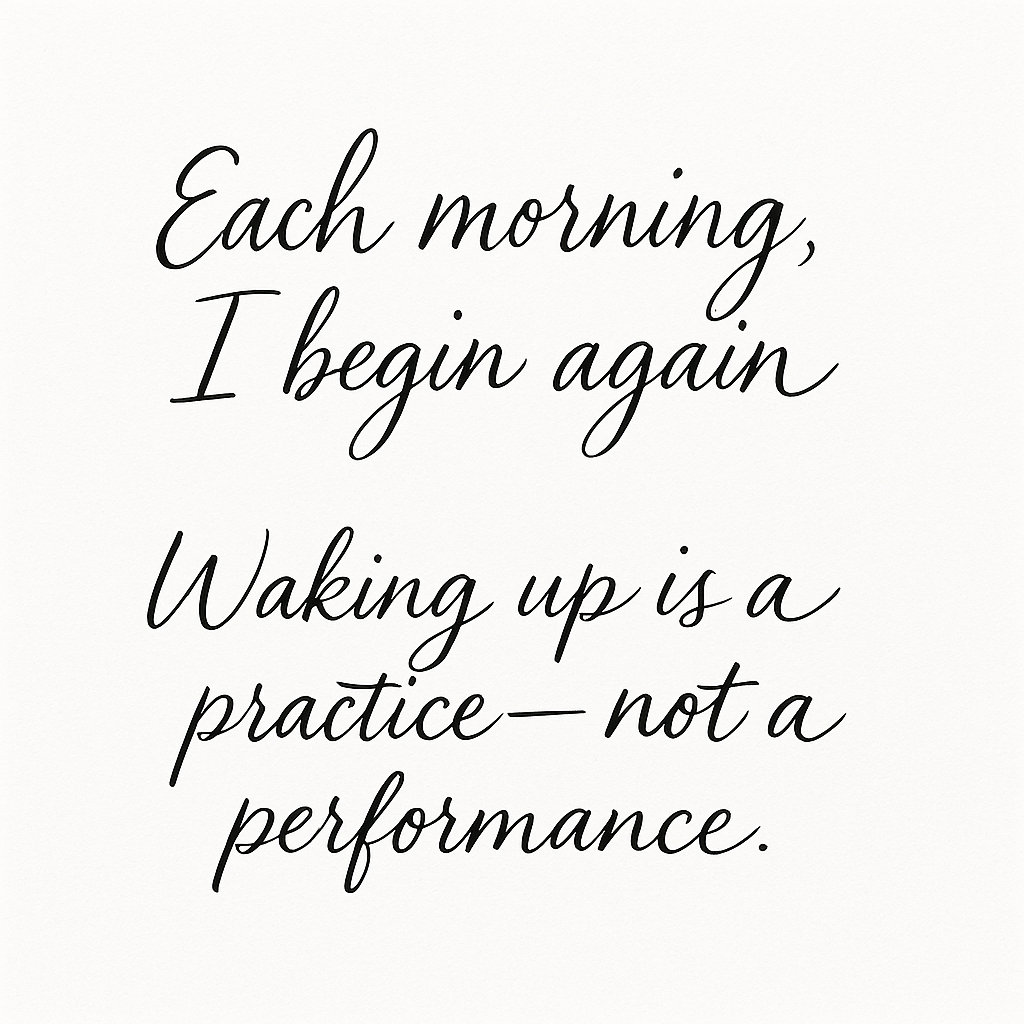
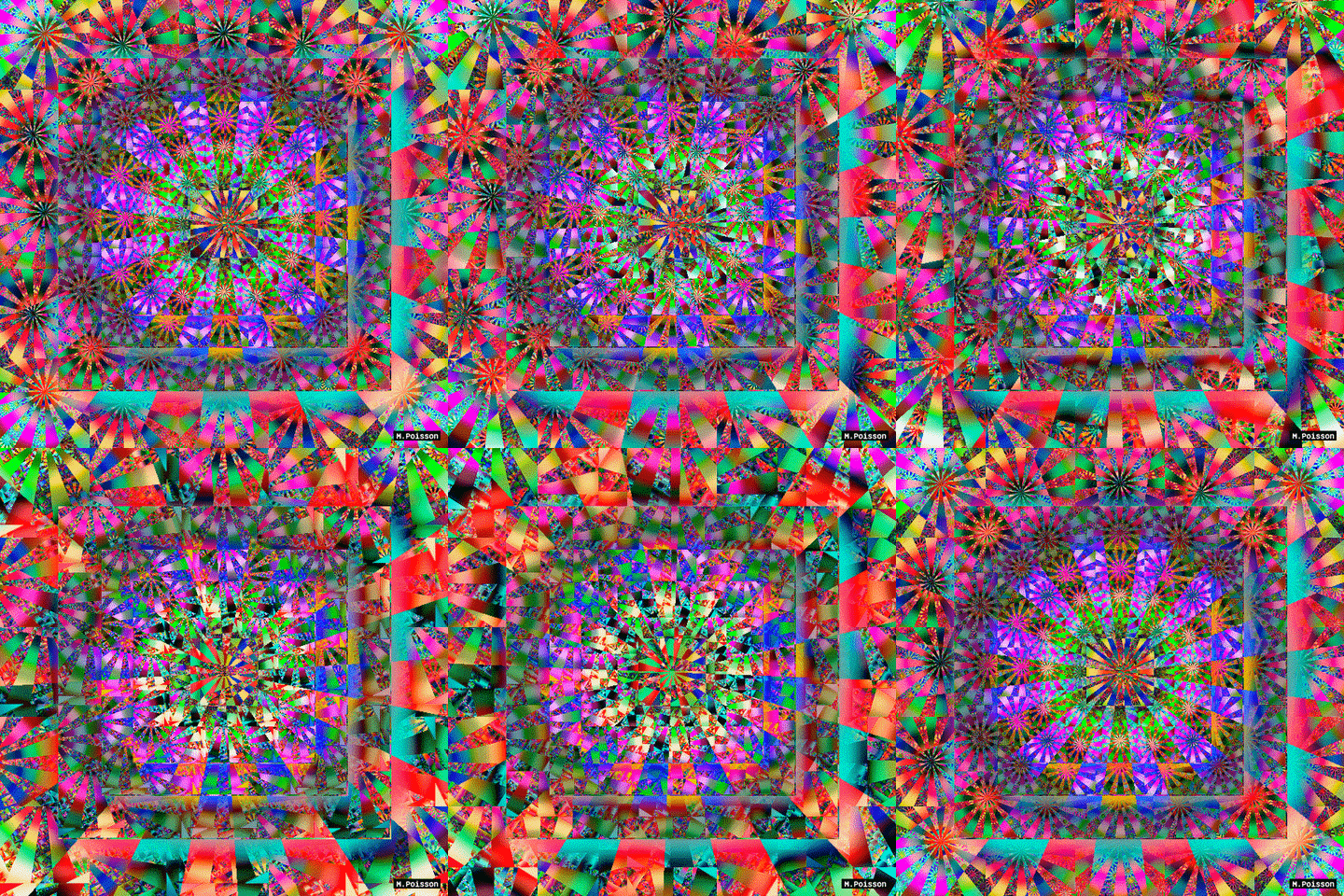
Image Healing: Guided Mandala Viewing - Lesson 295
Choose a mandala with a simple structure and high repetition.
Let your gaze slowly move along the same pattern.
Feel the stability brought by the "small and certain" rhythm.
Mandala drawing is not about drawing something, but about observing. What you practice while observing is: one step at a time, you can also walk a distance.
The theme of this lesson's mandala is a controllable ring, symbolizing a safe order composed of small actions.
◉ One gaze is sufficient; no repetition is required.
Lesson 295: Practice in Drawing Controllable Micro-Target Maps
Purpose:It lets you see "the most feasible small steps for today" at a glance.
step:
① Write in the center of the paper: A small step today.
② Draw 6 lines outwards, and write a small goal on each line (e.g., drink water, tidy up the corner of the table, walk 20 steps).
③ Add a symbol to each line (✓=easy, △=medium, □=somewhat difficult).
④ Choose the easiest target and color it with a light color.
⑤ After completion, write a sentence: I am willing to start from this little bit.
Please log in before submitting your drawings and feelings.
○ 295. Log Guidance
① What is the smallest and easiest thing I can do today?
② After completing it, what subtle changes did I experience in my body or mood?
③ Which tasks can actually be broken down into smaller steps?
④ Am I allowed to "do only a little bit" today?
⑤ What is one small goal I'm willing to try again tomorrow?
Please log in to use.
Being small is not a sign of retreat, but rather the starting point for you to regain control of your life.