

Lesson 957: Post-Stress Emotional Release and Artistic Expression
Duration:75 minutes
Topic Introduction (Overview):
After acute stress, emotions often don't dissipate immediately, but rather surge like a tide: sometimes suppressed, sometimes explosive, sometimes numb, sometimes indescribable chaos. Emotional catharsis doesn't mean venting, but rather releasing the tension trapped within the body in a safe and manageable way. This lesson will guide you to understand why artistic expression (color, line, rhythm, movement) provides a safe outlet for emotions; why, during acute stress, language often struggles to contain emotions, while non-verbal art offers a stable vessel. You will learn to use music, color, touch, breath, and movement to create a "space that allows emotions to flow," freeing inner pressure from its depths. Expression is not a display, but self-salvation; art is not an outcome, but a pathway.
▲ AI Interaction: What kind of outlet do your emotions need most?
Please write down your strongest, most prominent feeling from the past 72 hours: anger? crying? anxiety? emptiness? or an indescribable sense of oppression?
Emotions are not the problem; they are the form of stress in your body. AI will guide you to find a suitable "way of expression" for your current state—not by forcing you to express yourself, but by finding an outlet that your body is willing to accept.
Whether it's drawing lines, listening to music, crumpling paper, smearing colors, or writing a sentence, these are all safe ways to let emotions flow.
Click the button below to find the gentlest emotional outlet with AI.
○ Music therapy: Let your emotions find direction through sound.
Music is a cathartic release that needs no explanation. Choose a piece of music that matches your current mood: if your heart is racing, use slow music to calm it down; if you're feeling down, use warm melodies to lift it up.
Let your body move gently to the music: sway your shoulders, rotate your wrists, tap lightly on the table. As the movements become fluid, your emotions will flow with them.
During the chorus, remind yourself: I allow these emotions to be seen; there's no need to hide them.
🍵 Aromatherapy Drinks
Recommended drinks:Relaxing lavender and lemongrass blend drink.
Lavender helps calm emotions, while lemongrass brings a refreshing sense of awakening. The combination of the two can soothe emotional fluctuations and relieve the body from feeling suppressed or tense.
Instructions: Steep 1 teaspoon of lavender and 1 teaspoon of lemongrass in hot water for 5 minutes.
Observe your emotions while drinking: If you feel your chest gradually loosening, it means that your emotions are beginning to find an outlet.
○ British Vegetarian Therapy: Spinach and Creamy Mashed Potatoes (UK Comfort Mash)
During acute stress, warm, soft, and easily digestible foods can provide the most direct comfort to emotions. English spinach and creamy mashed potatoes, with their smooth texture and warmth, allow the body to rediscover a feeling of being "wrapped," helping emotions shift from tension to fluidity.
Easy to digest
comfort
Healing Recipes
/home2/lzxwhemy/public_html/arttao_org/wp-content/uploads/cookbook/kao-hong-shu-pei-hei-dou.html(Please confirm that the file has been uploaded: kao-hong-shu-pei-hei-dou.html)
🎨 Mandala Stability Viewing · Mi Xiangwen 957
Before venting your emotions, please quietly look at the center of the mandala.
No need to draw, no need to explain, no need to search for meaning, just watch.
When you gaze at the center, you may find that your emotions no longer surge outward, but instead slowly settle inward.
The order of a mandala can accommodate your chaos, and you don't need to suppress or organize it. Just let your gaze linger, and your emotions will begin to loosen.
Watching is the prelude to catharsis; it allows emotions space to flow, rather than explode.

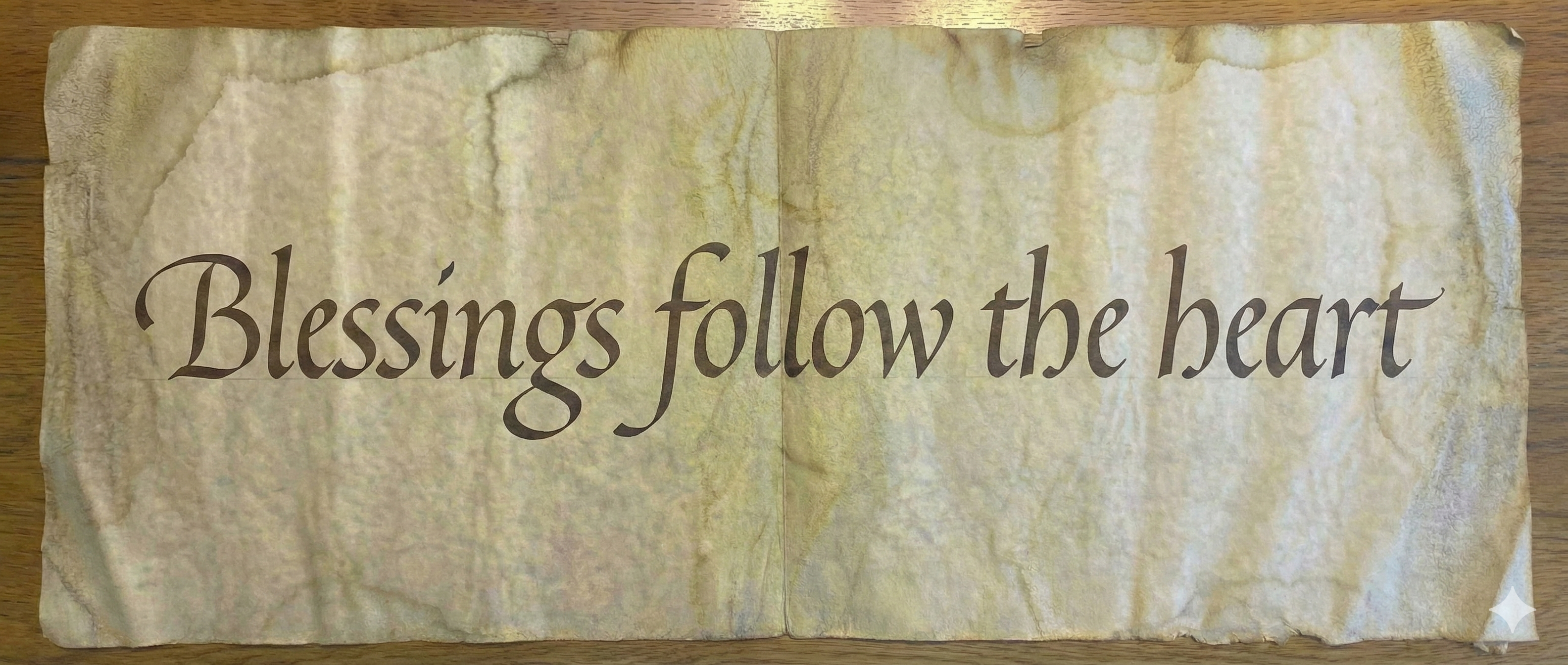
○ Running script - Self-expression writing practice
Write sentences:I allow myself to express myself.
The lines of running script have a rhythm of speed and pauses, just like the movement of emotions in the body. When you write this sentence on paper, the acceleration and deceleration of the strokes will naturally guide the emotions from "blockage" to "flow".
It doesn't need to be well-written, just authentic, so that every stroke is a release.
Lesson 957: Emotional Release and Guided Drawing
Objective: To allow emotions to be "pollinated out" in a safe manner.
Steps: Take a piece of paper and draw the "trajectory of the flow of emotions" using any color you like.
It can be waves, broken lines, swirling lines, fast, thick brushstrokes, or slowly laid-out blocks of color.
If you draw in a hurry, it's because your emotions are looking for an outlet;
If you draw slowly, it's because your emotions are settling down.
There is no good or bad, it's just that emotions are starting to move.
Please log in before submitting your drawings and feelings.
○ 957. Suggestions for Emotional Release and Journaling
① Write down what your strongest emotion is today.
② Write down the name you gave this emotion (anger, resentment, breakdown, emptiness, heartache, etc.).
③ Write down how you want it to be treated: heard? put aside? expressed? accepted?
④ Write down a sentence that allows emotions to exist, for example: I allow myself to have these feelings.
Please log in to use.
Emotions are not a flood, but rather the sounds that existed before language. Let them flow through art, and you will no longer be trapped within them.