

Lesson 963: Cognitive Restructuring: From "Danger" to "Controllable"“
Duration:75 minutes
Topic Introduction (Overview):
In the initial stages following acute stress, the brain's automatic threat system is often strongly activated, causing neutral sounds, expressions, actions, and scenes to be misinterpreted as "dangerous." This over-vigilance isn't because you're "overthinking," but rather the brain rapidly raising its alarm threshold to protect you within a very short timeframe. This lesson will guide you through understanding why the brain amplifies many stimuli into threats in a short period and teach you how to use "cognitive restructuring" to reframe these signals, preventing them from being amplified uncontrollably.
The core of cognitive restructuring is not denying danger, but regaining your right to assess: What are the facts? What are automatic guesses? What are amplifications caused by shock? By gradually extracting evidence, observing bodily reactions, recording real clues, and gently reinterpreting the event, you will gradually loosen your grip on automatic thoughts like "I can't take it," "It will definitely happen again," and "No one can help me." Mandalas aren't about drawing anything, but about observation—observing how your mind is manipulated by shock, observing signals that could be reinterpreted, thus gradually bringing your brain back to a "controllable" state.
▲ AI Interaction: Identifying and Reconstructing "Dangerous Automated Thoughts"“
When you are affected by a stressful event, your brain is most likely to misinterpret vague stimuli as danger.
Please write down three moments that made me suddenly nervous today, and record your automatic thoughts at the time.
Then ask yourself a question: Is this true? Or is my brain protecting me?
You don't have to change immediately; just write down your thoughts and see them. This is the first step in cognitive restructuring.
Click the button below to practice cognitive reconstruction with AI.
○ Relaxation and Music Therapy
Play a piece of music with a steady rhythm and smooth melody, close your eyes, and focus your attention on the "back and forth" of your breathing.
With each deep breath, gently name an automatic negative thought in your mind: "This is an alarm, not a fact."
Music can help you prolong your exhalation, relax your shoulders, and allow your brain to return from over-alertness to a state where you can think.
Cognitive restructuring requires the brain to be in a resilient zone, and music is the medium that brings you back to that zone.
🍵 Recommended Drink: Chinese Black Tea
Recommended teas:Lapsang Souchong.
The natural woody aroma of Lapsang Souchong has a calming and warming effect, making it especially suitable for consumption before and after cognitive restructuring, gradually easing the nervous system from a state of heightened alert. The warming properties of black tea can improve blood flow, helping the body recover from the chills, emptiness, and weakness that follow a shock.
usage:Take 3 grams of tea leaves, steep in 85-90℃ hot water for 10-15 seconds, and drink. Continuously sipping the warm tea can help relax the chest more quickly.
○ Wheat and Lily Bulb Soothing Porridge
Wheat nourishes the heart and relieves irritability; lily calms the mind and soothes the nerves, stabilizing breathing and sleep rhythms after a shock. This porridge is suitable as a gentle staple food during the recovery period after stress, helping you regain basic rhythm and a sense of security when your inner turmoil is over.
Healing Recipes
/home2/lzxwhemy/public_html/arttao_org/wp-content/uploads/cookbook/xiaomai-baihe-zhou(Alternatively, you could try relaxed="1" or use an existing filename.)
🎨 Mandala Stability Viewing · Mi Xiangwen 963
Observe the central circle of the mandala. It is not perfectly symmetrical, but rather has slight undulations—like post-stress thinking: chaotic, disjointed, and easily swayed. Then look outward at the patterns in the second and third layers; they are wider and more stable than the center, like expanding breaths. You don't need to try to understand these patterns; simply observe how they move from contraction to openness.
Mandala drawing is not about drawing something, but about observing. Observe how the chaos at the center is surrounded by the stability on the outside; observe how your thoughts are gradually led from "danger" to "control"; observe how the rhythms on the outside remind you: expansion, breathing, circulation, stability—these are all abilities you already possess.

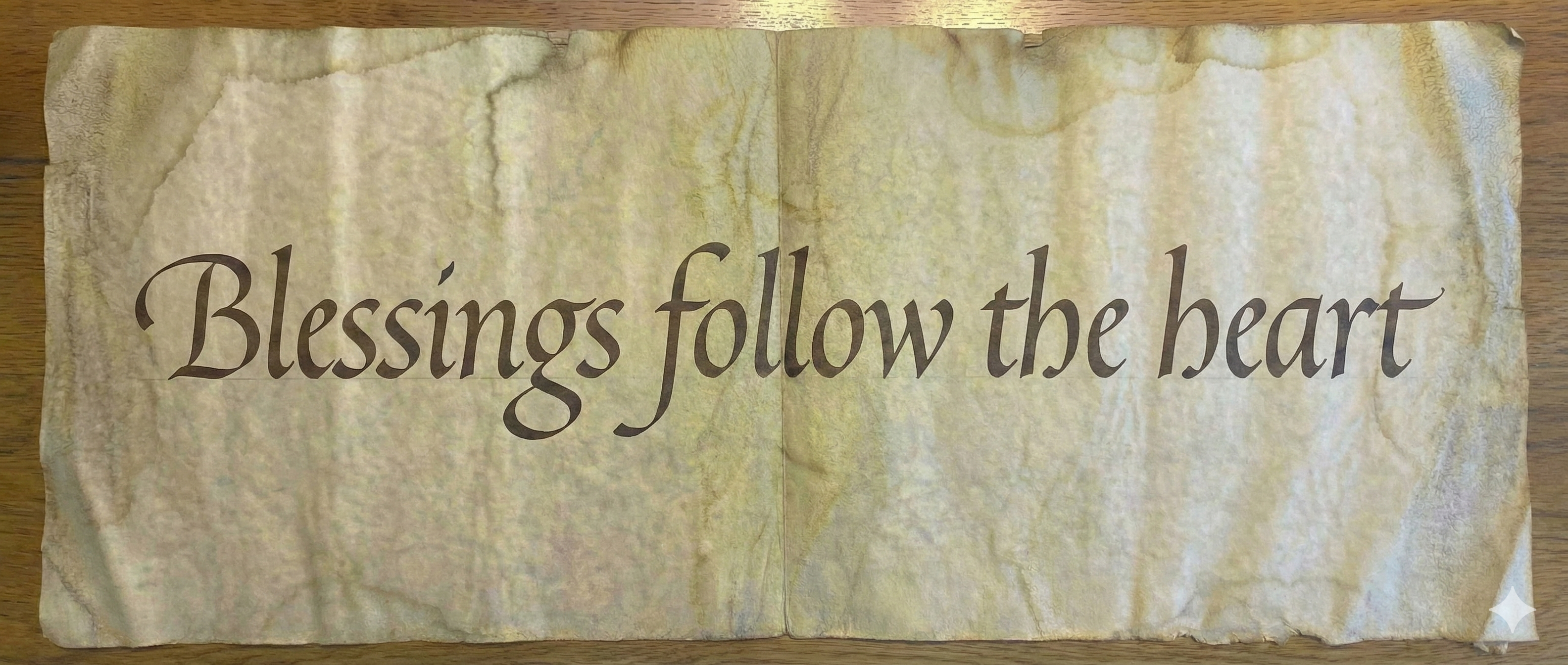
○ Italian Renaissance Humanist Script: Gentle Cognitive Writing Exercises
Write sentences:I can understand my fear and turn it into something I can manage.
Humanist Script's open structure and soft lines mirror the process of "rearranging" your thoughts. Each letter you write is like telling your brain: I am reorganizing, reinterpreting, and regaining control. Writing slowly makes this cognitive reconstruction feel more tangible and stable.
Lesson 963: Cognitive Reconstruction - Guided Drawing
Objective: To help you externalize seemingly dangerous ideas into images, thereby creating a sense of distance.
Steps: Draw a gradient line from dark to light, with the left end representing "maximum sense of danger" and the right end representing "gradually becoming controllable." Then draw a second line below, representing factual evidence. Compare the two lines: one is highly volatile, the other is more stable. You are using imagery to tell your brain: thoughts are not facts, and they can be rearranged.
Please log in before submitting your drawings and feelings.
○ 963. Cognitive Restructuring: Journal-Guided Suggestions
① Write down the three “dangerous automatic thoughts” that occurred today.
② Write down the evidence that supports them and the evidence that does not support them.
③ Write down an alternative idea that is closer to reality but not overly optimistic.
④ Record which part of your body relaxed slightly when you were writing down alternative ideas.
⑤ Today’s controllable action: the smallest step you can choose.
⑥ Conclusion: Cognitive reconstruction is a "gentle correction," not suppression or denial.
Please log in to use.
When you can see "danger" as "controllable" again, you regain control of your thinking instead of being led by fear.