

Lesson 964: Identifying Overreaction and Avoidance Patterns
Duration:75 minutes
Topic Introduction (Overview):
After an acute stressful experience, many people fall into two extremes: either overreacting to minor stimuli, their heart racing and their minds filled with worst-case scenarios at the slightest disturbance; or engaging in widespread avoidance, completely withdrawing themselves from situations that might trigger memories or emotions, appearing calm but actually continuously depleting their inner energy. This lesson will guide you on how to identify these two common patterns—overreaction and avoidance—and understand that they both stem from the same starting point: you are trying to protect yourself, not that you "did something wrong."
During this process of reflection, you will begin to distinguish which reactions are necessary for the current situation and which exceed the actual danger; which withdrawals are temporary self-protection and which lead to a shrinking of your life. Through reviewing specific situations, recording trigger points, and gently questioning yourself, you will gradually see how your "alarm threshold" and "withdrawal boundary" are formed. The mandala is not about drawing something, but about observation—observing how you learn to over-raise the alarm or completely withdraw from the scene after a fright, thus gradually regaining more flexible and adjustable coping mechanisms.
▲ AI Interaction: Seeing Your Own Overreactions and Avoidances
Sometimes, even when you know there is no real danger, you still can't help feeling tense, angry, frozen, or running away.
Please write down the most recent situation that made you clearly "overreact" or "simply avoid" something: What happened? What was your first thought at the time? What changes did your body experience?
You don't need to change immediately. Just write these reactions down and let them go from "automatic operation" to "visible patterns".
Click the button below to work with AI to analyze your overreaction and avoidance patterns.
○ Awareness of Emotional Fluctuations & Music Therapy
Choose a piece of music with a clear but not hurried rhythm, and while listening, silently pay attention to your body's reactions.
When the tempo picks up slightly, do you immediately tense up and want to turn it off? When the melody softens, do you relax a little?
Let music be a mirror, reflecting your sensitivity to "change," and training yourself to avoid excessive avoidance of small changes.
When you can maintain a little stability amidst the ups and downs of music, you are also more likely to avoid being completely swept away by momentary fluctuations in real-life situations.
🍵 Chinese Black Tea: A Temperature-Stabilizing Support for Your Mood
Recommended teas:Lapsang Souchong.
The woody aroma and slightly sweet aftertaste of Lapsang Souchong can provide a signal for the body to "slow down" after an "overreaction." The warmth of black tea helps relieve stomach discomfort, cold hands and feet, and a feeling of emptiness in the chest caused by prolonged alertness, preventing you from being pulled away by tension again when observing your reaction patterns.
usage:Take 3 grams of Lapsang Souchong tea, steep in 85–90℃ hot water for 10–15 seconds, then sip and drink warm. It is recommended to drink a small cup before and after writing in a journal or having a conversation with yourself, so that your body can gradually adapt to the rhythm of "taking it a little slower".
○ Chinese Food Therapy: Red Date, Longan, and Millet Porridge
Red dates replenish qi and blood, longan warms and nourishes the heart and spleen, and millet strengthens the spleen and calms the mind. This is a gentle conditioning combination for those experiencing repeated overreactions and avoidance after stress. This porridge can gradually restore the body's basic energy after prolonged tension, making you less prone to overexertion when facing triggering situations, and giving you more energy to be aware of and adjust your coping mechanisms.
Healing Recipes
/home2/lzxwhemy/public_html/arttao_org/wp-content/uploads/cookbook/hongzao-guiyuan-xiaomi-zhou(Alternatively, you could try relaxed="1" or use an existing filename.)
🎨 Mandala Stability Viewing · Mi Xiangwen 964 · Reaction Circles
Imagine yourself standing in the center of a mandala. The innermost circle represents your first reaction: shock, anger, and an immediate urge to escape. The outermost circle represents the moment you begin to see your own reaction: "I'm nervous again," "I want to hide again." The outermost circle represents the space where you allow yourself to slow down and observe more.
You don't need to draw these circles; simply observe the mandala's layered expansion, treating it as a map of your reactions: the central circle is tight and rapid, while the outer circles begin to widen and slow down. The mandala isn't about drawing anything, but about observing—observing how you are gradually led from your automatic reactions at the center into a wider space; observing how you gain a little more choice within each layer of circles, instead of being simply pushed along by your reactions.

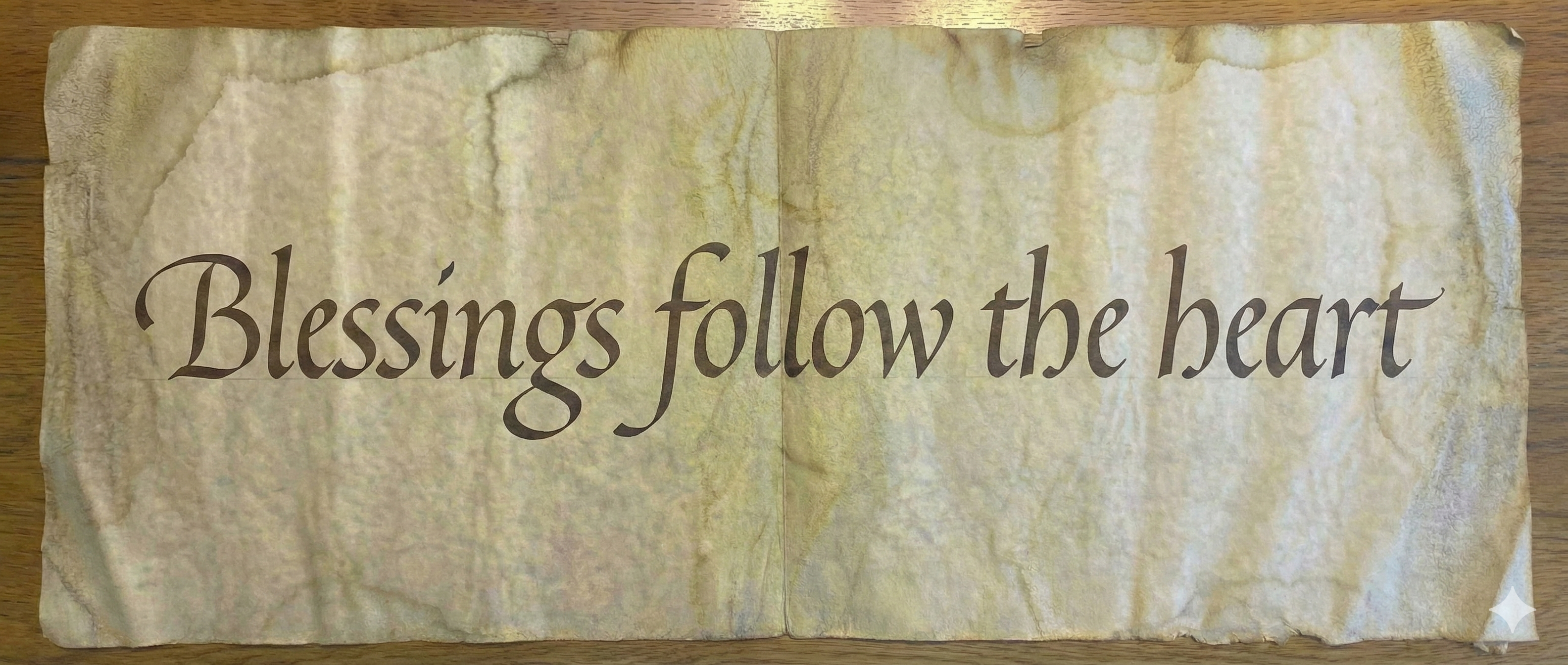
○ Italian Renaissance Humanist Script: A Practice in Writing about Gentle Communication
Write sentences:I want to get closer to you in a stable way.
When you write this sentence at a slow, steady pace, you are not only practicing building stable connections with others, but also sending a signal to yourself: I don't need to overreact to protect myself, nor do I need to cut everything off through extreme avoidance. In the open and balanced glyphs of Humanist Script, you can practice stroke by stroke—approaching, but no longer losing control; maintaining distance, but no longer disappearing.
Lesson 964: Identifying Overreaction and Avoidance Patterns - Drawing Guidance
Objective: To help you see your reaction patterns as "paths in an image" rather than "definitions about your personality".
Steps: Draw two parallel paths on a piece of paper: the left is a zigzag line with varying heights, symbolizing overreaction; the right is a dotted line with sudden breaks and gaps, symbolizing avoidance patterns. Then, draw a small circle above each line, representing "seeing yourself on this line." You don't need to correct the lines; just see that you have a position "observing from above," instead of simply being dragged along by a line.
Please log in before submitting your drawings and feelings.
○ 964. Identifying Overreaction and Avoidance Patterns: Log-Guided Suggestions
① Write down the three most recent situations in which you felt you "overreacted" or "simply avoided" them.
② For each situation, record the automatic thoughts and physical reactions (heartbeat, breathing, muscles, stomach, etc.) at that time.
③ Mark: Is this a tendency toward overreaction or avoidance?
④ Write down what different options you could have if you had only taken a step back to observe, instead of immediately doing as instructed.
⑤ Today's mini-practice: In a small scenario, try to react and avoid things a little less than usual, and record your feelings.
⑥ Conclusion: Recognizing your own patterns is not about blaming yourself, but about giving yourself another path to take.
Please log in to use.
When you learn to recognize overreaction and avoidance patterns, you are no longer just someone being pulled in different directions, but someone who can choose their own pace and direction.