

Lesson 969: Self-Acceptance and Support System During Recovery
Duration:75 minutes
Topic Introduction (Overview):
After an acute stressful experience, many people suddenly enter a period of "emptiness": the body is no longer on high alert, but the mind feels as if a protective layer has been removed, becoming vulnerable, sluggish, and fatigued, with reduced responsiveness to the outside world and unusually harsh on oneself. You might constantly question yourself: "Am I overreacting? Am I not strong enough? Others recover faster than me, is something wrong with me?" These voices are not signs of weakness, but rather the nervous system's self-adjustment during the process of returning to normal rhythm from extreme stress. This lesson will guide you to understand the true nature of the recovery period: it is not a rapid rebound, but a slow, iterative curve that needs to be understood.
We will also learn how to build a reliable support system during recovery: this includes people you can trust, a steady rhythm you can maintain, and ways to replenish your energy. You will begin to see that recovery is not about willpower, but about allowing, about rhythm, and about being supported. A mandala is not about drawing something, but about observing—observing how you gradually return from chaos to wholeness, observing how you reaccept yourself as you are now, even if you are still slowly recovering.
▲ AI Interaction: Understanding the "True Speed of Recovery"“
Recovery is never a straight line, but rather a fluctuation. Please write down the moment you most recently felt "better," and the moment you suddenly "fell back down."
AI can help you analyze: behind these fluctuations, is it emotion, physical condition, environment, or excessive self-discipline?
You don't need to be faster, you just need to be more authentic.
Click below to chart your recovery timeline with AI.
○ Restore Rhythm · Music Therapy
Choose a piece of music with a slow melody, strong repetition, and no dramatic emotional fluctuations.
Play it at the same time every day so your body remembers: this is time to "recover," not to struggle, not to cope, not to endure.
Let music help you practice a new rhythm: steady, gentle, and gradually returning.
🍵 Chinese Black Tea: Returning to Warmth and Support
Recommended drinks:Yunnan black tea.
Yunnan black tea's mellow aroma and smooth taste are perfect for drinking during recovery. It won't stimulate the nervous system, but rather gently support you, making your body feel "enclosed." When the mind is still recovering, the warmth and sweetness of Yunnan black tea can help you retreat a little from "inner tension and self-blame," and rediscover "I deserve to be treated gently."
usage:Take 3–4 grams of Yunnan black tea and brew it with hot water at around 90℃. Before taking the first sip, smell the aroma for three seconds to let your body know that this is your time for recovery.
○ Chinese Food Therapy: Red Date and Millet Porridge
People in the recovery period often experience symptoms such as fatigue, decreased appetite, stomach tightness, and weakness. Red dates replenish qi and blood, while millet calms the nerves and strengthens the spleen. When cooked together into red date and millet porridge, it becomes a gentle and non-irritating "recovery porridge." It helps the body stabilize from the inside out, allowing energy to gradually return.
Healing Recipes
/home2/lzxwhemy/public_html/arttao_org/wp-content/uploads/cookbook/hongzao-xiaomi-zhou(Alternatively, you could try relaxed="1" or use an existing filename.)
🎨 Mandala Stability Viewing · Mi Xiangwen 969 · Slowly Returning to Oneself
Gazing at the center of the mandala—it is not a symbol of "power," but a symbol of "allowance." Allowing you to be tired, allowing you to be slow, allowing you to be unprepared.
The outer rings of the mandala become softer with each concentric circle, much like your recovery period: seemingly repetitive, yet gradually becoming more stable without you even realizing it. A mandala isn't about drawing something, but about observation—observing how you loosen the ropes of self-blame, observing how support slowly approaches you from the outside.

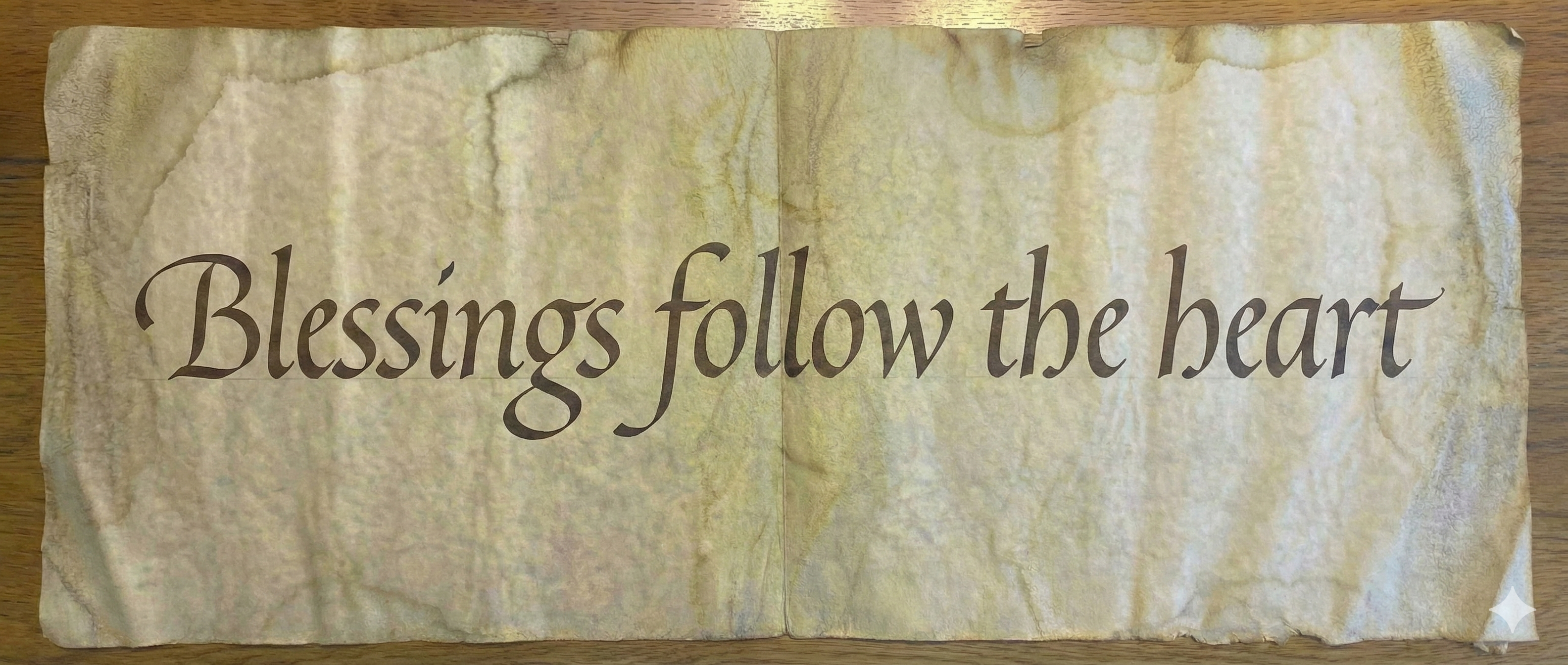
○ Italian Renaissance Humanist Script: A Gentle Acceptance Writing Exercise
Write sentences:I allow myself to recover at my own pace.
When you're writing Humanist Script, make sure each letter's curve has a slight pause, letting your hand tell you: slowing down is okay, pausing is okay, you're good to be this way. When you write "my own pace," try slowing down, as if you're whispering a reassurance to yourself.
Lesson 969: Self-Acceptance During Recovery - Guided Drawing
Purpose: To help you see "I am recovering" and build support in the image.
Steps: Draw a soft dot in the center of the paper to represent yourself now; draw three to five layers of light-colored circles outwards, writing a support item on each layer: a person, a small thing, a habit, a time period, a reminder. You will see that recovery is not isolated, but surrounded by circles of support.
Please log in before submitting your drawings and feelings.
○ 969. Self-Acceptance During Recovery: Journaling Guidance Suggestions
① Write down the most recent instance where you "demanded too much" of yourself.
② If you consider recovery as a gentle slope rather than a straight line, where are you now?
③ Write down three things that make you feel “supported” (they can be very small).
④ Which of your "imperfections" are you willing to accept today?
⑤ Suggested closing statement: I am slowly coming back, and I deserve to be treated gently.
Please log in to use.
Recovery is not about proving yourself, but about returning to yourself. May you be supported in every step you take, and may you support yourself in return.