

Lesson 972: Application of Body-Directed Therapy in Acute Stress
Duration:75 minutes
Topic Introduction (Overview):
In acute stress, many experiences are difficult to articulate: a blank mind or a mind filled with images, a racing heart, numbness in the limbs, stomach cramps, and muscles feeling like taut bowstrings. The somatic-oriented approach emphasizes not just "telling the story," but starting with the body to help the nervous system gradually return from a state of high alert to one that is "bearable, perceptible, and capable of stopping." This course will introduce how to gently soothe a frightened body during acute stress through ground awareness, tactile anchors, subtle movements, rhythmic breathing, and postural adjustments, rather than forcing oneself to immediately "think positively."
We will learn how to work with our bodies without overly dwelling on the details of trauma: identifying areas of tension and numbness, finding a small, still relatively safe area, and practicing a rhythmic shift between safety and discomfort to let the nervous system know that this is no longer the dangerous situation it once was, but a space where we can relax a little. A mandala is not about drawing anything, but about observation—observing the body's true reactions in the present moment, observing how each small relaxation slowly spreads, reweaving the feeling of "I am still alive in this moment."
▲ AI Interaction: Finding a Little Safety Starting with the Body
Body-oriented therapy does not require you to immediately explain "what happened", but rather asks: Where is the body safest right now?
Please write down: the two areas that are most uncomfortable right now, and one relatively neutral area (e.g., palms, soles of feet, back).
Next, describe: When you focus your attention on that neutral area, are there any subtle changes in your breathing, heart rate, or tension? Even a difference of just one point is worth noting.
Click the button below to let AI accompany you in practicing small, steady states "starting from the body".
○ Body-Oriented Music Therapy
Choose a piece of instrumental music with a steady rhythm and no drastic changes, such as a gentle piano or slow strings.
Use music as the background for your "body scan": whenever you hear a repeated melody, scan yourself from head to toe to find the most tense and most relaxed parts of your body.
There's no need to force yourself to relax. Just, with the music playing, acknowledge: "This part is tight, this part is a little better." This is a body-oriented exercise in itself.
🍵 Chinese Green Tea: Gentle and refreshing without being irritating
Recommended drinks:Biluochun green tea.
After acute stress, some people experience persistent drowsiness, while others remain tense and unable to stop. The delicate fragrance and gentle aroma of Biluochun tea can subtly invigorate the mind without further raising the heart rate like high-caffeine beverages. When drinking tea, consciously slow down: observe the leaves, smell the aroma, sip gently, and feel the warmth as it glides through your mouth and esophagus. Use this small ritual to remind your body: "This is the present moment, not a dangerous situation."“
usage:Steep 2–3 grams of Biluochun tea in 80℃ hot water for about 1–2 minutes. First, smell the aroma three times, then drink it in three to five sips. Treat the tea-drinking process as a miniature, grounded practice.
○ Chinese Food Therapy: Lotus Seed and Lily Bulb Soothing Porridge
Lotus seeds and lily bulbs are often used in traditional Chinese medicine to relieve anxiety, insomnia, and startle reflexes. When cooked into a soft, sticky porridge with a small amount of rice, they are easy to digest and gently soothe the feeling of a "stuffy stomach" after stress. Body-oriented therapy not only focuses on muscles and respiration but also on whether the digestive system can once again accept warm, soft food—an important signal that "I am still capable of absorbing nourishment."
Healing Recipes
/home2/lzxwhemy/public_html/arttao_org/wp-content/uploads/cookbook/lianzi-baihe-zhou(Alternatively, you could try relaxed="1" or use an existing filename.)
🎨 Mandala Stability Viewing · Mi Xiangwen 972 · The Body's Tiny Return Journey
Imagine the mandala before you as a map of your body: the center represents the area most tense at this moment, while the outer ring represents the areas that are still barely calm. You don't need to manually change it; simply observe slowly—which area is darker, which is slightly translucent? Which patterns are chaotic, and which lines are still symmetrical?
Mandala drawing isn't about drawing anything; it's about observation—observing how tension spreads through the body and where it stops; observing how that small, still-quiet spot acts like a small lamp, reminding you that "not the whole place is overrun by the storm." When you simply observe quietly, your body has the opportunity to gently drift back towards safety, little by little.

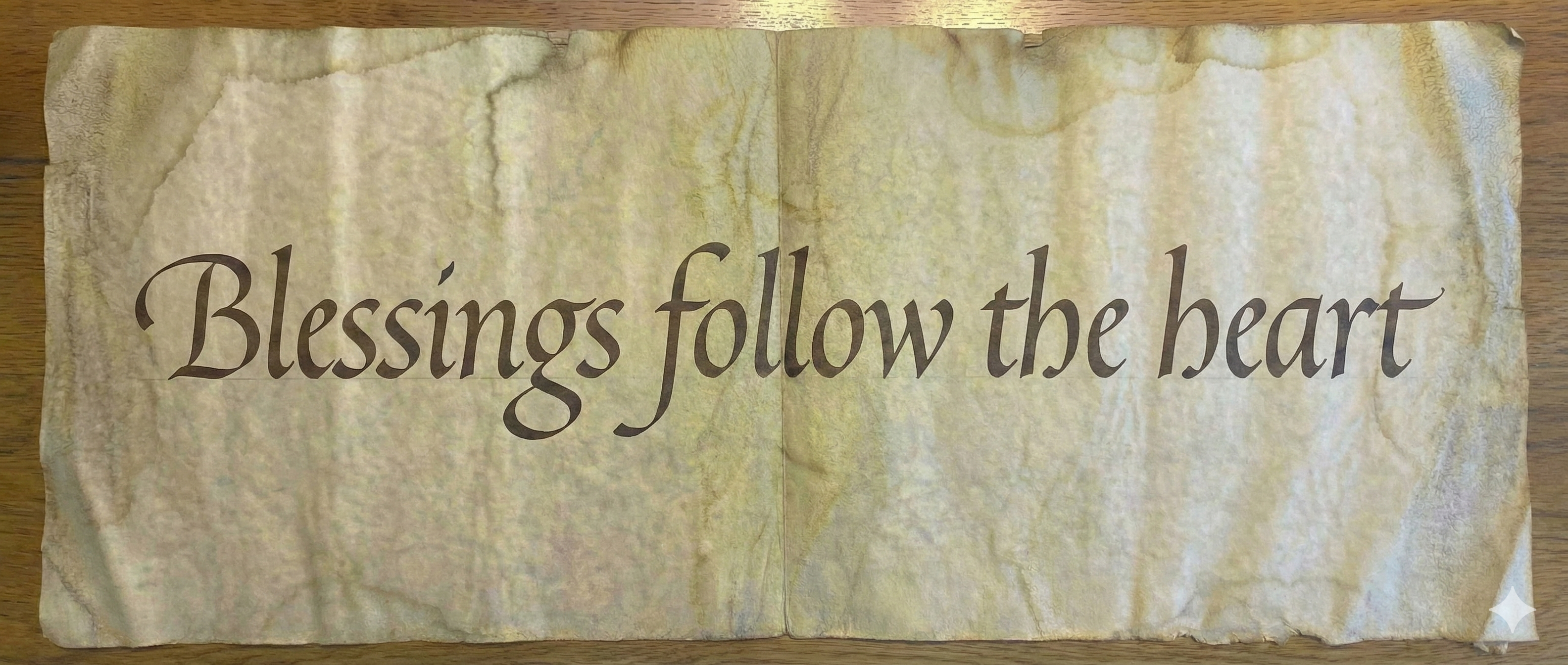
○ Italian Renaissance Humanist Script: Exercises in Writing Phrases about Body Gentleness
Write sentences:I listen gently to my body.
In Humanist Script, the letters are rounded and spaced out, emphasizing a balanced and humane order. Slow down when writing, making each letter feel like a gentle touch: when you write "listen," imagine your ears listening to your body's signals; when you write "gently," ease the pressure on your hand; when you write "body," silently say your name and tell yourself, "I am here, with this body."“
Lesson 972: Body-Oriented Therapy - Art Guidance
Objective: To visualize the distribution of "body tension - neutrality - comfort" to provide an intuitive map for subsequent body-oriented exercises.
Steps: Draw a simplified human silhouette on paper, dividing the body into five sections: head, chest, abdomen, arms, and legs. Use three colors to mark these sections: darker for the most tense areas, lighter for neutral areas, and lighter for areas that offer some comfort. Finally, draw a soft halo around the entire silhouette, symbolizing a "healing space" enveloping the body—you don't need to change it immediately, just see and allow it to exist.
Please log in before submitting your drawings and feelings.
○ 972. Body-Oriented Therapy: Journal-Guided Suggestions
① What are the three parts of your body that feel the most uncomfortable today? Describe them using words like "tight," "sore," "numb," "empty," or "cold."
② Is there an area that is "acceptable"? Where is it? How does your breathing change when you focus on it?
③ Did you experience any small moments of relaxation today (such as yawning, wanting to stretch, or having your shoulders droop naturally)? Please write them down.
④ Try writing a sentence to your body: for example, "Thank you for holding on until now" or "I will slowly learn to listen to you".
⑤ Set a small body-guided exercise for tomorrow: such as stomping your feet for 1 minute, taking 3 deep breaths, or gently massaging your shoulders before bed.
Please log in to use.
When you learn to see the stress response from the perspective of your body, healing is no longer just about "thinking more positively," but rather a real change that is gradually implemented in the body and nervous system.