

Lesson 991: Common Misconceptions about Psychological Adjustment Disorders
Duration:75 minutes
Topic Introduction (Overview):
When faced with sudden stressful events, many people mistakenly believe that "I have poor stress tolerance," "This is making a mountain out of a molehill," or "I should return to normal immediately." These misunderstandings make adjustment disorders harder to see and allow symptoms to worsen. Adjustment disorders are not weakness or capriciousness; they are a psychosomatic response to significant changes, life shocks, or sustained stress—a temporary imbalance that occurs when the brain and emotional system try to adjust to environmental changes. Misconceptions often stem from social labeling, self-denial, excessive self-blame, and a lack of understanding of psychological reactions.
This lesson will guide you to systematically identify common misconceptions, such as "I shouldn't react this way," "Everyone else can handle it, but I can't," "I must recover quickly," and "Distracting myself will make me better." These beliefs can cause you to ignore necessary support and even miss the golden period for adjustment. Mandala drawing isn't about what you draw, but about observation—observing how these misconceptions are sown in your mind, how they influence behavior, and how they exacerbate stress. Once you understand these misconceptions, you can begin real recovery action.
▲ AI Interaction: The First Step in Identifying Misconceptions
Write down the three most self-critical statements you say to yourself, such as: "I'm too sensitive," "I should try harder," and "Everyone else is fine."
Then write: Are these words based on facts? Or on pressure?
The more a misconception is seen, the weaker its power becomes.
Click the button below to help AI identify misconceptions and facts.
○ Mind-Body Regulation · Music Therapy
Play a piece of light music with a gentle rhythm and simple melody, and focus your attention on the rhythm of your chest and breathing.
With each inhale, silently repeat: "Maybe I'm not wrong."“
With each exhale, silently repeat: "At this moment, I allow myself to slow down."“
🍵 Chinese Green Tea: Refreshing and Stress-Relieving
Recommended drinks:Choose either Longjing or Biluochun tea.
The theanine in green tea can reduce stress activation, allowing thoughts to shift from a "vortex of misconceptions" to a clear and gentle self-understanding.
Usage: Brew with water at around 80°C, sip gently, and pay attention to the changes in aroma in the mouth and nasal cavity to help slow down your thoughts.
○ Chinese Food Therapy: Longan and Lotus Seed Porridge (Calming and Stress Relief)
Longan and lotus seed porridge has the effects of nourishing the heart and calming the mind, as well as tonifying the heart and spleen. It is especially suitable for relieving anxiety, insomnia, or restlessness caused by misconceptions. The warm sweetness of longan and the calming effect of lotus seeds balance each other, allowing the body to stabilize first, so that the emotions can gradually relax.
Healing Recipes
/home2/lzxwhemy/public_html/arttao_org/wp-content/uploads/cookbook/kao-hong-shu-pei-hei-dou.html(Please confirm that the file has been uploaded: kao-hong-shu-pei-hei-dou.html)
🎨 Dream Mandala Healing · Mi Xiangwen 991 · The Shadow of Illusion
You dream that you walk into a misty forest, where every tree casts a long shadow. You think the shadows are real obstacles, so you keep going around them, retreating, and staying in one place. But when you stop, the mist gently dissipates, and you realize that the shadows are just ordinary trees magnified.
The forest in your dream is your inner self. Imagine it as a mandala: the center is the moment you stop walking, and the outer circle is the gradually shrinking texture of shadows. A mandala is not about drawing something, but about observing—observing how misconceptions amplify your anxieties, and also observing how the truth reveals itself when you are willing to approach it.

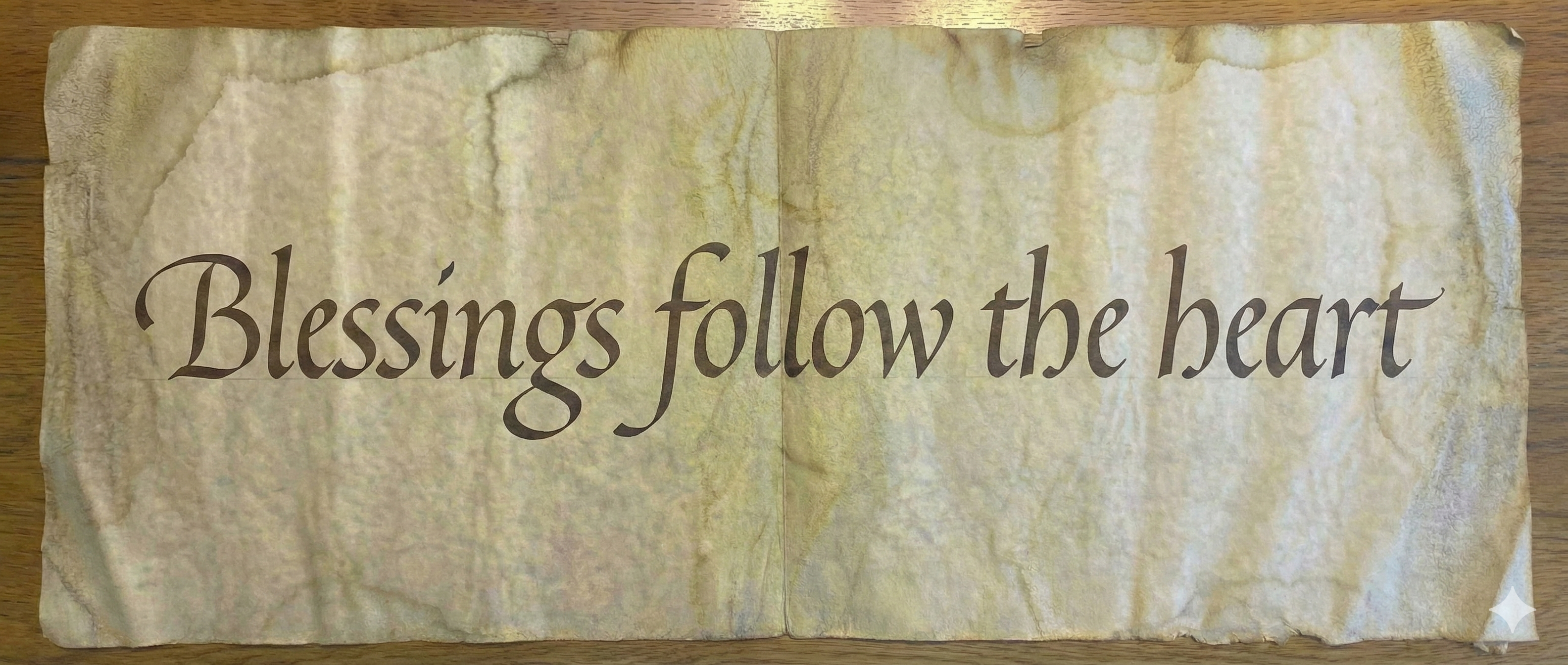
○ Italian Renaissance Humanist Script: Gentle Writing Exercises
Write sentences:I allow myself to see things as they truly are.
Practice “gentle and honest self-seeing” using the rounded structure of Humanist Script, allowing hand movements to loosen the heart.
Lesson 991: Identifying Misconceptions and Providing Drawing Guidance
Objective: To visualize the "misconception" and remove its hidden power.
Steps: Draw a circle in the center of a piece of paper, and write the three most recent misconceptions that have affected you most outside the circle. Use different lines to represent their strength: sharp, heavy, and light. Finally, write "Truth" in the center of the circle, symbolizing that you are moving from the misunderstandings on the outer circle towards the truth.
Please log in before submitting your drawings and feelings.
○ 991. Misconception Identification & Log-Based Guidance Suggestions
① Write down the mistake you make most often.
② When did this misconception first appear?
③ Does it come from your own experience? Or from culture or the expectations of others?
④ If we narrow down the misconceptions (30%), what things will become easier?
⑤ What is one small change you can make today?
⑥ Conclusion: The more misconceptions are seen, the freer you become.
Please log in to use.
When the misconceptions are cleared up, you regain your freedom of action. Understanding is more powerful than blame.