

Lesson 1095: Post-Traumatic Dreams and Unconscious Expression
Duration:75 minutes
Topic Introduction (Overview):
Many people who have experienced complex trauma are re-engaged in fear by their dreams at night when they have "calmed down during the day": recurring scenes, being chased, falling, people whose faces are not clear, waking up with a racing heart and sweating profusely.
These dreams are not just "sleep problems," but more like the subconscious trying to process unfinished emotions and memories—only the way they are processed is often crude and intense, making people feel like they are being invaded again.
This lesson will guide you to understand the psychological meaning of post-traumatic dreams: how they carry repressed fear, shame, and helplessness, and how they emerge at night in symbolic and metaphorical form.
We won't rush to "interpret" dreams, nor will we force ourselves to stop dreaming. Instead, we'll practice interacting with dreams in a safer way: recording, observing, and gently naming them, allowing dreams to become another window into understanding ourselves.
Mandala drawing is not about drawing something, but about observing—observing the colors, scenes, and bodily sensations that recur in dreams, observing how the subconscious tries to tell you: "There is still pain and power that has not yet been seen."“
▲ AI Interaction: Maintain a safe distance from your traumatic dreams
Dreams are often the "language of emotions" rather than logical narratives. You can explore them with the AI using the following questions:
① What was the most troubling dream you've had lately? (Just a simple scene, no need for too much detail)
② What was the strongest feeling in your dream: fear, shame, anger, helplessness, loneliness, or something else?
③ If you were to view this dream as a movie, would you rather be an "actor" or an "audience member"? Why?
④ Is there any scene that you would rather pause and watch slowly than run away immediately?
Click the button below to practice seeing yourself in your dreams in a gentle way with AI.
○ Bedtime Transition Space: Music Therapy
Set aside 5 to 10 minutes before going to sleep to play a piece of soft, slow music without drastic changes, and regard this time as a "bridge from day to night".
Tip: While listening to music, gently recall the most stressful scene of the day, and tell yourself, "That's enough for tonight, I'll continue tomorrow." This can reduce the intensity of your dreams.
Eastern Healing Tea: Promoting Sleep and Peace of Mind
Recommended drinks:Sour jujube seed and lily bulb calming tea.
Sour jujube seed helps calm the mind and improve sleep, while lily bulb nourishes yin and moistens dryness, relieving irritability.
For those who are easily startled awake by traumatic dreams and have difficulty falling back asleep, this cup of warm tea not only supports sleep but also acts as a gentle reminder to the body: "You can slow down."“
usage:Soak 6-8 grams of jujube seeds (lightly crushed) and 5 grams of lily bulbs in warm water or simmer over low heat for 5-8 minutes. Drink slowly 30 minutes before bedtime.
○ Chinese Food Therapy · Soups · Lily and Lotus Seed Soup for Calming the Mind
Lily bulbs and lotus seeds are often used to treat restlessness and excessive dreaming at night. When combined with a light and non-stimulating diet, they can help reduce the frequency of waking up at night.
For someone who is constantly disturbed by traumatic dreams, a bowl of warm, calming soup is like telling yourself, "My nights are not just a replay of nightmares; I can slowly find some peace."“
Healing Recipes
/home2/lzxwhemy/public_html/arttao_org/wp-content/uploads/cookbook/zhu-ye-dong-gua-tang.html(Please confirm that the file has been uploaded: zhu-ye-dong-gua-tang.html)
Dream Mandala Healing · Mi Xiangwen 1095 · "The Second Audience in the Night"“
You dream that you are running in a narrow corridor, and something seems to be chasing you, but you can't see it clearly.
Each time you turn around, all you see is a blurry shadow and an ever-growing wall. You feel increasingly breathless, yet you can never find a way out.
Suddenly, a second "you" appeared in my dream, standing at the end of the corridor, not running, but just quietly watching everything.
You realize that you don't have to be the one being chased; you can also be the one watching from afar.
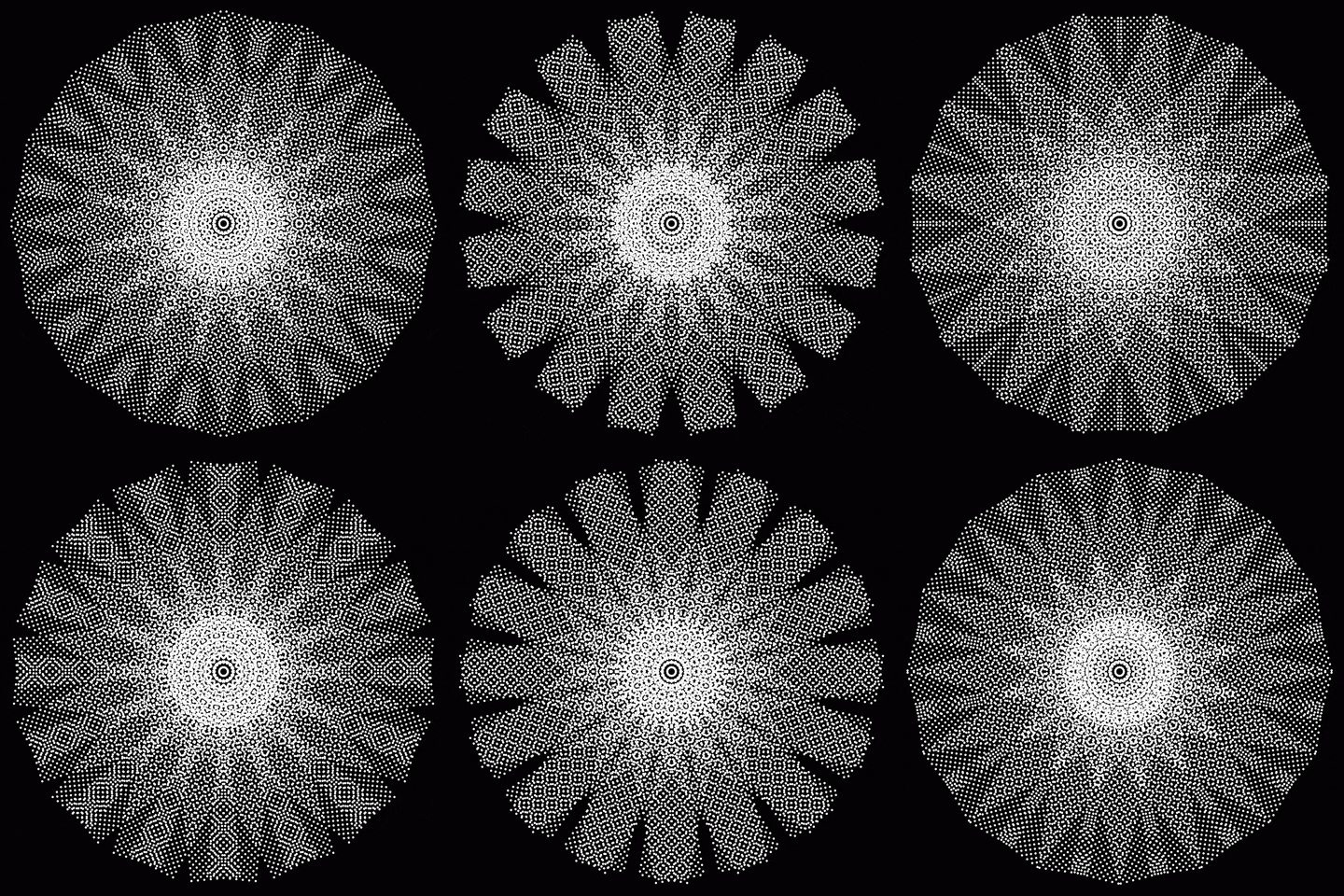
Imagine this corridor as a mandala: at the center is you standing in the distance, and on the outer circle are constantly circling footsteps and shadows.
A mandala is not about drawing something, but about watching—watching yourself slowly transform from a character trapped in a dream into someone who can "witness" for yourself.
○ Running script: Write a gentle sentence for the night.
Let the fluidity of running script become a transitional ritual "from day to dream".
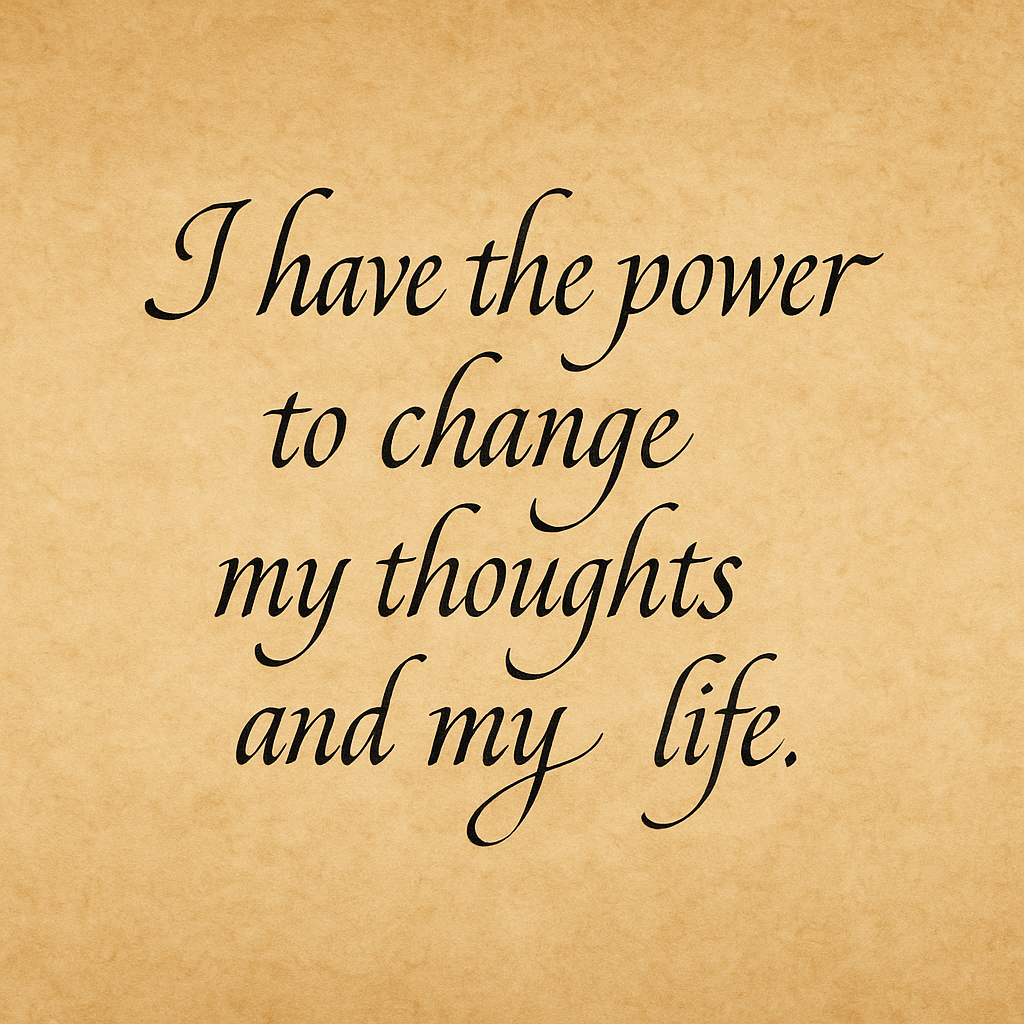
- Written words:Good night, peace of mind.
- English equivalent:At night, I watch, not fight.
- hint:As you write, imagine that each stroke is making room for your dream tonight—not by ordering yourself "not to dream," but by telling yourself, "Even if you dream, I will be here with you."“
Lesson 1095: Post-Traumatic Dreams - Guided Drawing
Objective: To transform the emotions and scenes in dreams from "intrusive" to "viewable images".
Choose a traumatic dream fragment that resonates with you the most, and draw the "scene outline" in a minimalist way on the upper half of the paper (such as a door, a corridor, or a black outline). No details are needed, and do not draw the characters' expressions.
On the lower half of the paper, draw a small "audience self," which could be a small person, a dot, or a profile of someone sitting in a chair.
After finishing the drawing, I whispered to myself, "I am watching this dream, not being overwhelmed by it again."“
Mandalas are not about drawing something, but about watching—watching how dreams transform from "reenacting trauma" into "expression and understanding".
Please log in before submitting your drawings and feelings.
○ 1095. Traumatic Dreams and Subconscious Expression: Journaling Guidance Suggestions
① Write down your most recent dream that left a deep impression on you. Only record the core images; you don't need to pursue the complete plot.
② Describe the emotions you experienced in your dream using three words (e.g., suffocation, shame, terror, being abandoned, etc.).
③ Write a sentence to yourself in your dream: "I see you experiencing..." and fill in the blanks as you like.
④ Reflection: In this dream, which scene most resembles something you are experiencing or fearing during the day? Simply write it down; there's no need to analyze it immediately.
⑤ Design a "little bedtime ritual" for tonight (a cup of tea, three deep breaths, write a blessing), and record how you feel tomorrow morning.
⑥ Conclusion: Dreams are not the enemy; they simply bring your unspoken stories to the curtain of night in another way.
Please log in to use.
When you stop just running and hiding in your dreams and start learning to "watch" and "record," you have already opened up a new path of healing for yourself at a subconscious level.
Nighttime is no longer just a time for replaying trauma; it can gradually become a space for understanding and integration.