

Lesson 1096: The Rhythm and Review Mechanism of Long-Term Recovery
Duration:75 minutes
Topic Introduction (Overview):
Repairing complex trauma is not a task that can be completed in a few sessions, but rather a long recovery journey with progress, pauses, and reversals.
Sometimes you feel like you've moved on, but a triggering event pulls you back to familiar pain points. If you only use a binary standard like "it's better/it's not better,"
It's easy to negate all your efforts with every fluctuation, falling into repeated self-blame and giving up.
This course focuses on "the rhythm and review mechanism of long-term recovery": how to see your slow changes on a monthly, quarterly or even annual time scale;
How to distinguish between "temporarily triggered" and "completely returning to the starting point"; how to design your own debriefing ritual—such as using a journal, mandala, body awareness chart, etc.
Use methods like mood charts to regularly review the small, ongoing progress. A mandala isn't about drawing something, but about observation—observing the gradually lengthening stable range you maintain amidst the ups and downs.
Watch the rhythm of life that is no longer entirely controlled by trauma.
▲ AI Interaction: Draw a timeline for your own restoration“
Recovery isn't a straight line, but more like waves and spirals. You can use the following questions to help AI unravel your rhythm:
① If we draw a timeline of the past year, which periods were relatively stable? Which periods were particularly difficult?
② When facing difficulties, do you seek help more quickly, express yourself more often, and blame yourself less than before? These are themselves "changes in rhythm".
③ What kind of pace do you hope the next 3 months will be like: slow but stable? Allowing for ups and downs? Or do you need more rest?
④ Want to design a "weekly or monthly review checklist" with AI? Write down the three metrics you care about most: mood, sleep, interpersonal relationships, work experience... choose any of them.
Click the button below to build your own long-term recovery rhythm chart with AI.
○ Long-term rehabilitation · Musical rhythm exercises
Choose a piece of music with a slow, gradual development and a melodic unfolding (rather than abrupt changes in tempo), and play it at a fixed time:
For example, the same time of the same day every week, or the ten minutes before bedtime each night.
Make this music your "restoration rhythm cue": every time you hear it, ask yourself three questions—
What did I persevere with today? Did I allow myself to rest today? Was there even one small difference in my life today?
The duration of a song is a short but stable review.
Eastern Healing Tea: Gentle Support for Rhythm and Endurance
Recommended drinks:Astragalus and red date energy-boosting tea.
Long-term recovery requires sustainable energy, not short bursts of exertion. Astragalus helps replenish qi and enhance endurance, while red dates warm and nourish the spleen and stomach, and soothe emotional fluctuations.
It is especially suitable for those who often feel "mentally tired, physically weak, and lacking energy" during long-term recovery.
usage:Boil 10 grams of astragalus root and 3-4 pitted red dates in water for 10-15 minutes, then drink it warm in several portions. This can be used as a special drink during each "debriefing writing" or "debriefing meditation," reminding the body: "This is me taking care of myself long-term."
○ Chinese Food Therapy · Soups · Yam and Goji Berry Resilience-Boosting Soup
Yam nourishes qi and yin, strengthens the spleen and consolidates the foundation, while wolfberry nourishes the liver and kidneys, nourishes blood and improves eyesight. Pair it with light protein (such as lean meat or soy products).
It helps maintain basic physical endurance and stability under prolonged stress. For those on the path of complex trauma recovery,
A bowl of soup that appears regularly is not only nutritious, but also a silent promise to "keep going".
Healing Recipes
/home2/lzxwhemy/public_html/arttao_org/wp-content/uploads/cookbook/ku-gua-pai-gu-tang.html(Please confirm that the file ku-gua-pai-gu-tang.html has been uploaded)
Mandala Healing · Mi Xiangwen 1096 · "A Trajectory That Circles and Circles"“
Imagine you are standing in the center of a blank square, with a faint circular path beneath your feet. You begin to walk slowly along the circle.
One lap, two laps, three laps... Sometimes you want to walk faster, sometimes you stop and space out, and sometimes you even want to leave the lap line.
Suddenly, looking down from the air, you realize that the trajectories of each circle don't perfectly overlap: in some places they've moved an extra step outward, and in others they've moved a little closer inward.
In some places, even more resolute footprints were left.
You realize that your recovery is not "going around in circles," but rather gradually deviating from the old path and growing a new route.
Mandala is not about drawing something, but about observing—observing these similar yet different paths, observing how you slowly make corrections through repetition.

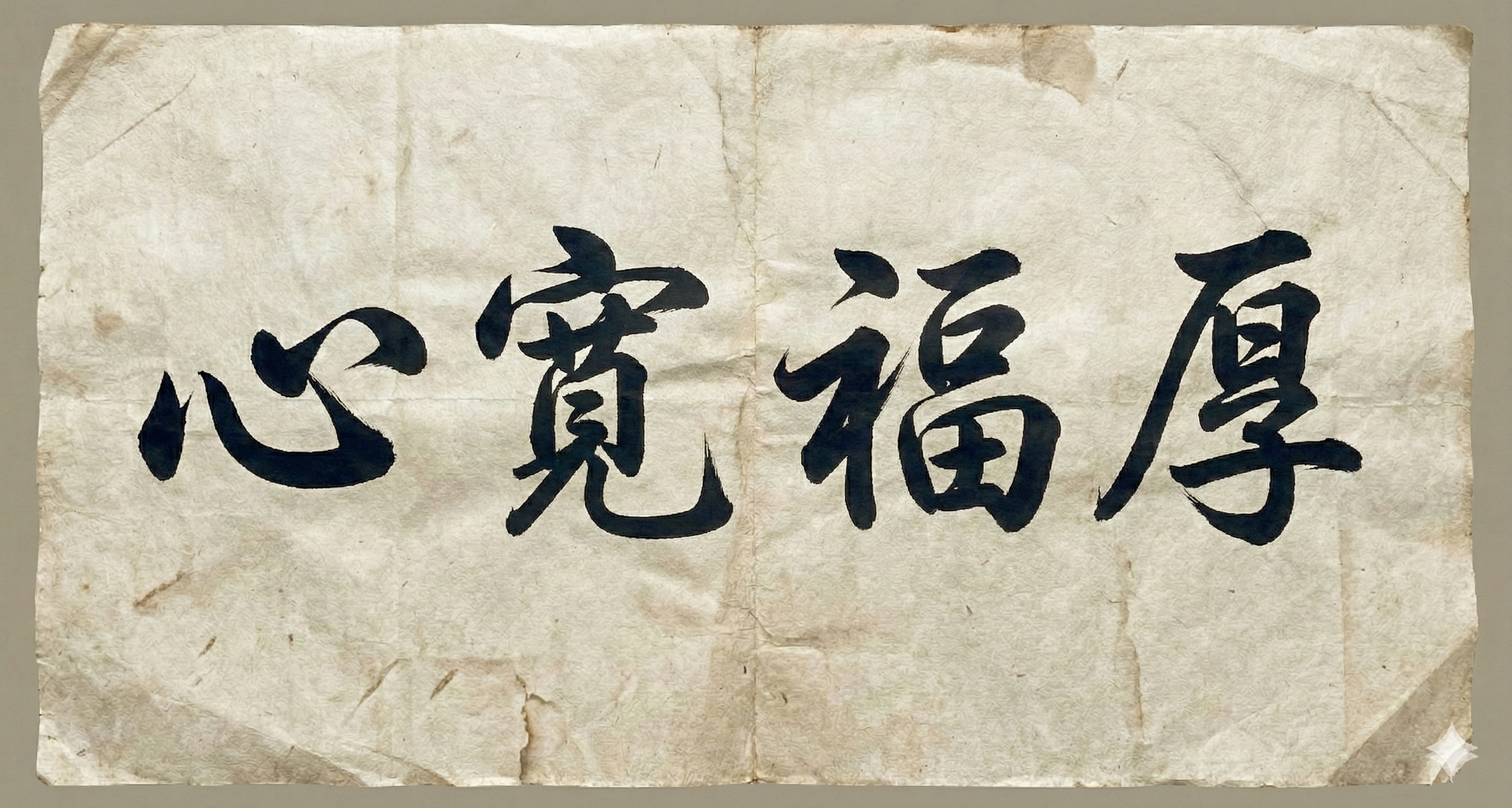
○ Running script – Write a rhythmic sentence for the long-term restoration.“
The continuous flow and pauses of the running script symbolize the ups and downs and pauses on the road to recovery.
- Written words:Slow and steady progress, may peace prevail.
- English equivalent:I move slowly, yet I stay.
- hint:Before putting pen to paper, take a deep breath; when writing the character "缓" (huǎn, meaning slow or gradual), deliberately slow down your pen speed; when writing the character "安" (ān, meaning peace or tranquility), gently lift your pen, making the whole sentence a promise to "get better in the long term rather than immediately".
Lesson 1096: Long-Term Rhythm Restoration - Guided Drawing
Objective: To transform long-term restoration from an abstract concept of "time" into a visible "trajectory".
Draw a small dot in the center of the paper to represent "you at the starting point of post-traumatic stress".
Using this dot as the center, draw spirals or circular lines outwards, with each circle representing a unit of time: a week, a month, or a year, as you decide.
Mark the circle that you find "particularly difficult" with a darker color; draw a ray of light or a small symbol on the circle that you feel "there is a glimmer of hope".
After you finish drawing, treat the whole picture as a mandala and observe it quietly—you'll see that those days you thought you "just got through" are actually forming a slow, outward-moving path.
A mandala is not about drawing something, but about observing; you are observing a long-term recovery curve that belongs to you.
Please log in before submitting your drawings and feelings.
○ 1096. Rhythms and Retrospectives for Long-Term Recovery: Journal-Guided Suggestions
① Looking back over the past 6-12 months, in which three aspects did you "not break down as quickly as before"? Please write down the specific situations.
② Write about an experience where you thought you had "completely returned to square one." Looking back now, is that really the case? Is there even the slightest difference?
③ Design your own "weekly or monthly review question list", listing at least 3 questions that you are willing to answer repeatedly over a long period of time.
④ Give your rhythm a name (e.g., slow movement plan, tidal rhythm, spiral recovery, etc.) and write down why you chose this name.
⑤ Write a sentence for yourself three months from now, neither exaggerating your progress nor denying the possibility of setbacks.
⑥ Conclusion suggestion: Please rewrite this sentence in your own words: "I am not failing repeatedly, but practicing living at my own pace."“
Please log in to use.
The key to recovery is not "to stop experiencing ups and downs," but rather that through each ups and downs, you become better able to take care of yourself, record your experiences, and believe in yourself.
When you make room for your long-term rhythms, you are already on a deep path to healing complex trauma.