

Lesson 1137: Psychological Recovery and Reconstruction at the Community Level
Duration:75 minutes
Topic Introduction (Overview):
When unexpected events occur, individuals are injured, families are shaken, and the atmosphere of a community changes: streets become quiet, gatherings decrease, once bustling places become deserted, people avoid eye contact, and topics are avoided, as if everyone is simply "holding on alone." However, trauma itself is collective, and recovery also requires collective strength. This course focuses on psychological recovery and reconstruction at the community level: from temporary shelters and volunteer service stations to schools, churches, community centers, and online support groups, how to build places where people can rest, shed tears, and discuss the future again with limited resources.
Together, we will identify what kind of community atmosphere exacerbates feelings of helplessness (e.g., rumors, blame, division), and what everyday, small actions are quietly repairing collective trust (e.g., stable information dissemination, mutual greetings, shared commemorative rituals). You will learn the key elements of community psychological recovery: the rebuilding of a sense of security, the repair of a sense of connection, and the reshaping of a sense of meaning and shared memories. A mandala is not about drawing something, but about observing—observing how an entire community, from fragmentation and numbness, slowly regains color and rhythm, and new ways of connecting grow from its wounds.
▲ AI Interaction: How is your community recovering?
Try shifting from "personal feelings" to "collective imagery," write down your observations of the community's state, and organize them with AI:
- ① After the incident, what was the most noticeable change in your neighborhood, social circle, school, or online community?
- ② Is there any individual or organization quietly taking supportive actions (e.g., regularly sending out information, organizing mutual assistance, distributing supplies)?
- ③ In these spaces, do you feel more indifference and tension, or an attempt at "mutual consideration"?
- ④ If you consider your community as a whole with a "heartbeat," is its current rhythm rapid, stagnant, or slowly recovering?
Write down your feelings and observations for AI, and let it help you see clearly: you are not just an individual being affected, but you are also participating in a larger recovery process.
○ Community Level: Shared Moments of Music and Silence
For a wounded community, large events can sometimes be too stimulating, while a moment of quiet and gentle music can be a starting point for recovery. This section invites you to imagine or practice: arranging a short time for shared listening in schools, clubs, online groups, or small gatherings.
Practice suggestions:
- Choose a gentle, not overly sentimental, but sustained harmony piece of music and play it for 3 minutes before the start of a group or online meeting.
- I invite you to do only one thing during these 3 minutes: breathe, close your eyes, or quietly look out the window. You do not need to speak.
- After the music ends, you can simply say, "We all got through this part in the same sound." No further analysis is needed.
○ Chinese Green Tea: Cooling your emotions with a touch of bitterness and sweetness
In the wake of collective trauma, communities are easily fueled by anger, anxiety, and rumors, pushing them to a fever pitch. The coolness and slight bitterness of Chinese green tea serve as a symbolic "cooling down": the bitterness reminds us of the hardships of reality, while the lingering sweetness suggests that "it's not all over yet." Before attending community groups, offline workshops, or online sharing sessions, you can prepare a cup of lightly brewed green tea as a form of "self-clarification ritual before entering public spaces."
Watching the tea leaves unfurl in the water, I practice telling myself: I care about everyone, but I also remain clear-headed; I'm willing to listen to others' stories, but I also protect myself from getting overly involved in destructive arguments. A mandala isn't about drawing something, but about observation—observing the process of green tea clearing up, like observing the emotions of a community gradually becoming clearer, more visible, and organized.
○ Chinese Food Therapy · Community Shared Soup · Lotus Root, Lily Bulb, and White Fungus Soup
Lotus root soothes the mind and calms the nerves, lily bulbs nourish yin and calm the heart, and white fungus moistens and soothes the soul. This soup is suitable as a "shared comfort food" for small community gatherings, neighborhood sharing, mourning days, or volunteer outreach activities. In a bowl of warm and delicate soup, people don't need to immediately express their heavy thoughts; they just need to know: there is a group of people here who are still willing to spend time and effort cooking something for each other.
You can see this soup as a "flavor symbol of community restoration": it's not luxurious, but it takes time; the flavor isn't overly strong, but before it slowly cools down, it constantly conveys to everyone that "there's still warmth here." When words fail to connect, a bowl of soup can sometimes make people feel more strongly than words: I am not alone.
Dream Mandala Healing · Mi Xiangwen 1137 · Neighborhood Ring
You dream of a giant mandala, the center of which is not a person, but a familiar street: fallen trees, windows still lit, and shop doors half-closed. The first circle consists of hurried passersby; the second circle is of people who stop to look around; the third circle is of people who begin to greet each other, offering hot water and food; and the outermost circle consists of strangers who have come from elsewhere to offer their help.
You do nothing, you simply observe the changes in these circles: some leave, some join, some disappear temporarily and then reappear. You suddenly understand that community recovery is not a "return to normal" overnight, but rather countless slow, small actions weaving together a ring that is no longer so broken. A mandala is not about drawing something, but about watching—watching how, amidst ruins and weariness, the neighborhood gradually rearranges tables and chairs, hangs up lights, and invites people back to the scene of living together.
[mandala_gallery1137]
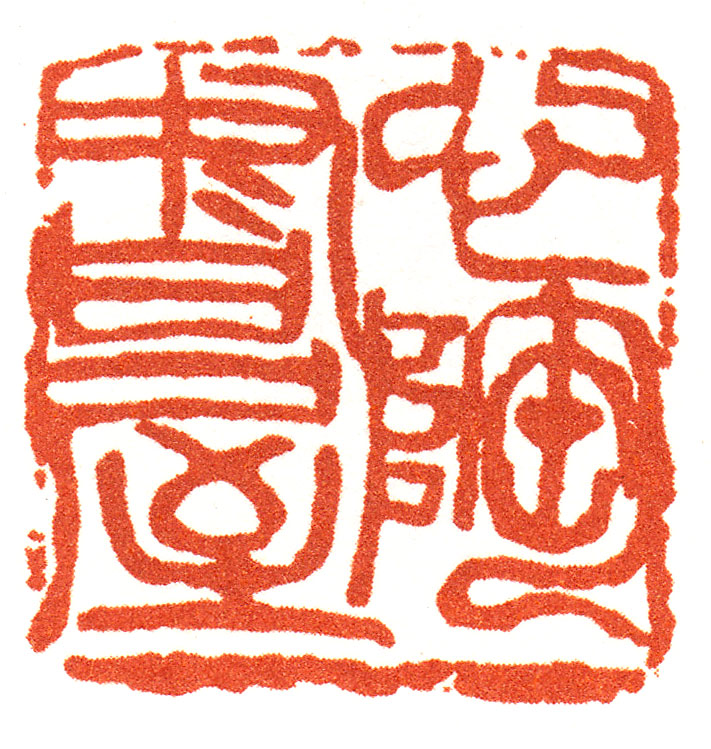
○ Regular script writing practice for "Sharing the same path and building together"
Regular script is upright and distinct, like the stable and clear skeleton of a community. It is a way of writing that redraws a sense of order from chaos.
- Written words:Together we build
- English equivalent:Walk together, rebuild together.
- Practice points:When writing "同路" (tong lu, meaning "together on the same road"), deliberately elongate the character slightly, like a road extending forward; when writing "共建" (gongjian, meaning "to build together"), make the vertical strokes more stable, like pillars supporting the community. While writing, you can silently tell yourself: I am just one stroke among many, but every stroke has meaning.
Lesson 1137: Community Restoration - Guided Viewing of Mandala
Purpose:By viewing mandalas, practice shifting the perspective from "individual trauma" to "collective recovery".
Find a mandala with distinct layers and colors that gradually change from dark to light or from cool to warm. First, imagine the center as the moment the sudden event occurs, then slowly look outwards: Which circle resembles the initial panic? Which circle resembles the people who started organizing? Which circle resembles the supporting forces that joined later? Don't rush to interpret; just observe how these colors and shapes gradually soften and broaden from contraction and sharpness.
Then ask yourself: Which circle am I used to staying in right now? Am I observing from the outside, or am I stuck in the innermost circle, unable to leave? Can I allow myself to move out half a circle to reach more support? A mandala is not about drawing something, but about watching—watching how the trauma of a community spreads layer by layer, and how it is responded to and repaired circle by circle in time and relationships.
Please log in before submitting your drawings and feelings.
○ 1137. Community-level Psychological Recovery and Reconstruction: Journaling Guidance Suggestions
① Write down your vision of "community": it could be a specific neighborhood, a school, an online group, or a group of people who support each other over a long period of time.
② Looking back after the incident, what three small things happened in this community that made you feel that "someone is trying to keep it together"?
③ Have you ever experienced a situation that made you feel disappointed or torn apart? Try writing it down, but don't rush to judge who is right and who is wrong.
④ Imagine you can contribute something small to the community’s recovery (e.g., delivering reliable information steadily, organizing an online support talk, or quietly caring for a vulnerable member). What would it be?
⑤ Conclusion: On the long road to community recovery, you are both a victim and a potential beacon of light; both identities can coexist.
Please log in to use.
The recovery of a community is not about returning it to its pre-disaster state, but about acknowledging the wounds and slowly building new connections. May you, while taking care of yourself, also see those quietly restoring this land, and, within your own power, become a part of the recovery process.