

Lesson 1147: Early Recognition of Manic Episodes
Duration:75 minutes
Topic Introduction (Overview):
In bipolar I disorder, many people vividly remember the suffering of the "depressive phase," but easily overlook the early warning signs of manic or hypomanic episodes: sleeping less and less without feeling tired, thoughts running at full speed, plans expanding rapidly, talking incessantly, increased impulse to spend, and feeling "omnipotent." These changes often initially masquerade as "increased efficiency" or "a burst of inspiration," leading people to mistakenly believe they are in a better state, until significant consequences occur in relationships, finances, and health, making them realize they have entered a danger zone.
This course will help you build your own "early warning map of mania": meticulously identifying seemingly minor yet highly indicative changes across dimensions such as sleep, mood, thought speed, social interactions, and impulsive behavior. We will explore how to establish a shared observation mechanism with family or trusted individuals, so that reminders are not accusations but signals for collective protection. The key to preventing mania lies not in post-event control, but in the initial step of identification—
Mandala is not about drawing something, but about observing: observing the acceleration of energy, the imbalance of rhythm, and seeing the prelude to an attack in the images and everyday details.
▲ AI Interaction: Create Your "Mania Warning List"“
The following questions can help you identify early signs of mania with AI. Please answer them in short sentences:
- ① What changes typically occurred in your sleep before you experienced mania or significant agitation? (e.g., sleeping less, having difficulty falling asleep but not feeling tired)
- ② What signs of a sudden increase in the frequency of your speaking, socializing, or texting?
- ③ What tendencies do you typically exhibit in the early stages of your spending, planning, or risk-taking behavior?
Based on your answers, AI will help you compile a personalized "mania warning list" so that you and those around you can see the risks in advance, rather than trying to remedy them afterward.
○ Rhythm Awareness and Music Therapy Practice
Before a manic episode, the internal rhythm often "quietly accelerates," even if outwardly it appears as "positive and energetic." Music can be a tool for observing rhythm, rather than a means to further stimulate excitement.
Please choose a piece of instrumental music with a steady, moderate tempo, close your eyes, and silently count every four bars.
Observe yourself: Do you find yourself wanting to quicken your breathing, sway your body, or immediately do more? If so, say to yourself, "I see the rhythm speeding up."“
You don't need to slow down immediately; you just need to learn to recognize your "urge to accelerate," which is a key protective action in itself.
○ Chinese green tea: A calming and regulating beverage, not "adding fuel to the fire"“
In the early stages of hypomania or mania, many people unconsciously increase their caffeine intake, further amplifying the accelerated state. This lesson suggests replacing your "afternoon coffee" with a cup of light Chinese green tea, treating the drinking process as a slowing-down ritual rather than an stimulating one.
When brewing tea, first observe the tea leaves unfurling, then watch the tea liquor change from light to dark. Before drinking, smell the aroma, then sip, shifting your focus from "I want to do more" to "I am in this moment."
Mandala drawing is not about drawing something, but about observing—observing the color of brown, observing your own breath, helping you shift from over-excitement to clear awareness.
○ Chinese Food Therapy · Soup Dishes · Lotus Seed and Lily Bulb Soup for Calming the Mind
Lotus seeds and lily bulbs are often used in traditional Chinese medicine to calm the mind, soothe the nerves, and regulate mood swings. For patients with bipolar I disorder who tend to have racing thoughts at night and find it difficult to stop, a bowl of warm, smooth soup can provide stable energy without raising excitement levels like high-sugar, high-caffeine drinks.
Please treat this bowl of soup as a "slow-down reminder": when you find yourself talking more, planning bigger, and feeling less sleepy during the day, make yourself a ritual to slow down and gently wrap things up at night.
🎨 Dream Mandala Healing · Mi Xiangwen 1147 · Accelerated Halo
You dream of a city's night view painted as a mandala: the outermost circle is traffic and neon lights, with the light spots constantly accelerating and rotating; the middle circle is the windows of tall buildings, with lights suddenly turning on one by one; the innermost circle is a slowly pulsating light spot—that is your heart.
At first, you were only attracted by the speed of the outer ring, thinking that it represented "vitality," "inspiration," and "boundless energy." Later, you noticed that as the outer ring sped up, the pattern in the middle began to blur, while the central point of light seemed to be struggling.
So you bring your gaze back from the outer circle and focus on the center.
A mandala is not about drawing something, but about observing—observing how you are swept away by the speed of the outer circle, and how you gradually return to the center, guarding the heart that needs to be protected.
[mandala_gallery1147]
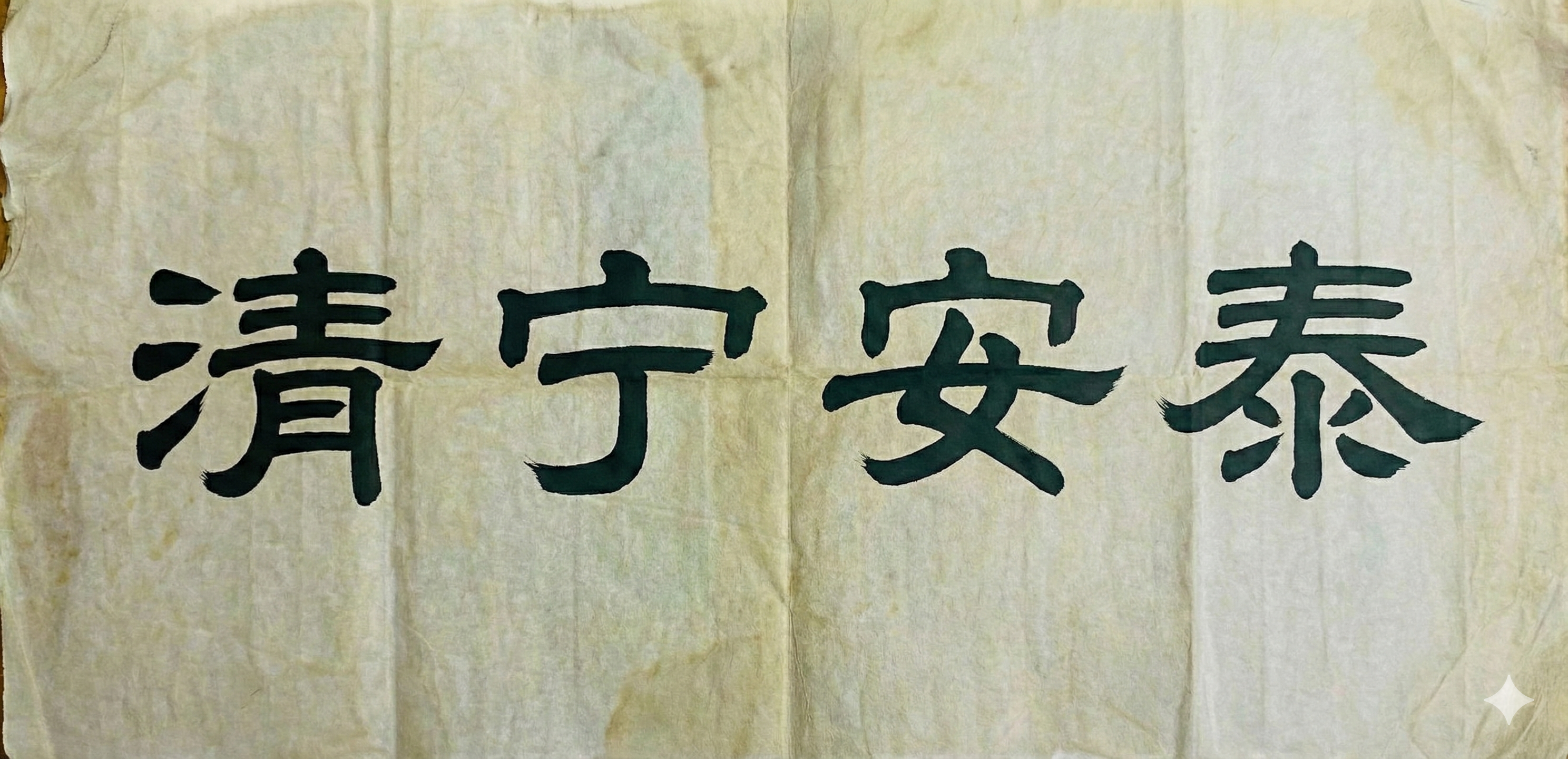
○ Regular script · Stability · Boundary · Self-reminder sentence writing
Regular script emphasizes uprightness, steadiness, and rhythmic pauses, making it ideal for daily practice to observe whether one is "accelerating."
- Written words:Stability Boundary
- English equivalent:Stay steady·Keep boundaries
- hint:When writing "稳" (steady), slow down the beginning and end of each stroke, reminding yourself not to rush; when writing "界" (boundary), imagine drawing a gentle boundary for yourself, allowing for rest and pauses.
Lesson 1147: Early Signs of Mania - Guided Mandala Viewing
Objective: To practice recognizing the acceleration of one's own inner rhythm by observing the "speed changes" in images.
Please prepare a mandala pattern that gradually becomes denser from the center outwards.
Start by looking at the outer circle: that's where you're most likely to be noticed by others—you talk more, become more active, and expand your plans.
Next, look at the middle circle: it symbolizes your inner thought speed and emotional fluctuations.
Finally, look at the center: it symbolizes your sleep, physical fatigue, and real needs.
Spend 1–2 minutes each day doing this viewing exercise and silently repeat in your mind:
“"When the outer circle accelerates, I am willing to look back at the center."”
Mandala drawing is not about drawing something, but about observing—observing whether one's own rhythm has quietly crossed the safety line.
Please log in before submitting your drawings and feelings.
○ 1147. Early Identification of Manic Episodes: Journal-Guided Suggestions
① Recall a past experience of significant arousal or mania. What were the three aspects that changed first? (e.g., sleep, speaking speed, spending behavior, etc.)
② Please write down one early warning sign that you are most likely to overlook right now, and explain why you tend to ignore it.
③ Choose someone you trust and write down how you would like them to gently remind you when they see these signals.
④ Today, was there anything in your behavior or emotions that seemed "a little too fast"? Please write it down.
⑤ Conclusion: Early identification is not about doubting yourself, but about using a little bit of advance awareness to gain a more stable and freer living space.
Please log in to use.
Recognizing the early signs of a manic episode is the beginning of cooperating with yourself, rather than fighting against yourself. May you become increasingly steady and clear-headed on your journey to understanding rhythm.