

Lesson 1149: Biphasic Periodic Variation and Its Laws
Duration:75 minutes
Topic Introduction (Overview):
Many individuals with bipolar I disorder, after years of mood swings, may vaguely sense a "cycle": for a period of time, they sleep less, their thoughts quicken, they plan more, and they spend money impulsively; then, after a while, their bodies feel drained, they have difficulty getting out of bed, lose interest, and their thinking slows down, but it's difficult to accurately describe the rhythm of these changes in words. This course will help you organize these seemingly chaotic changes into a more understandable "cycle map"—including the frequency and duration of episodes, seasonal patterns, changes in circadian rhythms (sleep, diet, and sleep patterns), and the impact of major life events.
Together, we will distinguish between a single mood swing and a complete bipolar cycle; we will also discuss "rapid cycles," "seasonal patterns," and how medication and lifestyle habits are involved. Through recording and reviewing, you will gradually see that those seemingly random highs and lows often have traceable patterns.
Mandala is not about drawing something, but about observation—observing how emotional color blocks recur on the timeline, observing one's energy, sleep, relationships, and behavior at different stages, and gradually shifting from "being dragged along by the cycle" to "being able to perceive and respond to this round of changes in advance."
▲ AI Interaction: Draw your emotional cycle timeline
The following questions will help you work with AI to understand the basic patterns of biphasic cycles. You can answer briefly or write more in detail:
- ① Looking back over the past two or three years, have you noticed that you are more prone to high or low moods in certain months of the year? Please write down the approximate time periods.
- ② Before entering a "high" or "low" phase, what subtle, noticeable changes occur in your sleep, appetite, and work rhythm?
- ③ Are there any events that are often associated with the onset or exacerbation of the cycle, such as staying up late, traveling across time zones, significant stress, or interpersonal conflict?
- ④ If you were to draw a circle representing your year, what percentage of your life would you consider to be manic/hypomanic periods, depressive periods, and stable periods?
Based on your answers, AI will help you generate a "personal cycle observation note" as an important resource for subsequent self-care and medical communication.
○ Emotional Cycle Awareness & Musical Rhythm Exercises
A key characteristic of biphasic cycles is the shift in internal rhythm: during the climax, everything is "too fast"; during the trough, everything is "too slow." This exercise invites you to use music to guide your own rhythm, rather than forcing yourself to change it.
Please choose a piece of instrumental music with a stable rhythm and moderate tempo. While playing, please close your eyes and feel whether the rhythm of the music is faster or slower than your current internal state.
If you are very excited and speaking quickly, the music may seem "a bit slow";
If you are very tired and lack energy, the music may actually sound "a bit rushed".
Please don't rush to adapt to it; just silently tell yourself, "So this is my current rhythm."“
Mandala drawing is not about drawing something, but about observation—observing the gap between the internal rhythm and the external rhythm, accumulating feelings to identify "where this cycle is in".
○ Chinese Green Tea: Observing Ups and Downs with a Cup of Tea
Brew a cup of Chinese green tea. Don't rush to drink it. First, quietly watch the tea leaves unfurl in the water: they sink quickly when added, then slowly rise, pause, and then gently sink again, like a small cycle. Observe the tea color as it goes from light to dark and then back to light again, and think about the ups and downs of your emotions and energy over a year or a month.
You don't need to force yourself to "cure bipolar disorder with tea," but rather treat this cup of tea as a gentle reminder: every cycle has a beginning, a peak, and a fall; no state stays at the same point forever.
Mandala is not about drawing something, but about observation—observing the tiny cycles in the cup, and also observing the emotional curves you've gone through over the years, allowing them to be seen.
○ Chinese Food Therapy · Soup Dishes · Lotus Seed and Lily Bulb Soup for Calming the Mind
Repeated cyclical fluctuations often keep people in a state of constant vigilance and anxiety: on the one hand, they fear "it will rise again," and on the other hand, they worry about "falling into darkness again." In traditional food therapy, lotus seeds and lilies are often used to calm the mind, nourish the heart, and relieve irritability and nighttime awakenings. They are presented in the form of a mild soup, which is more suitable for drinking slowly and in small sips when emotions are fluctuating.
The key is not how much you eat at once, but that "I am still trying to cooperate with my body, instead of just waiting for my emotions to dictate everything." Even if it's just cooking a small bowl and drinking a few sips, it's about maintaining a stable little anchor point for yourself within the cycle.
🎨 Dream Mandala Healing · Mi Xiangwen 1149 · The Ring of Ups and Downs
You dream of a giant circular mandala, divided into concentric rings of different colors: one ring is bright, almost dazzling; another is dark, almost inky black; interspersed in many transitional colors between the two. Someone tells you that your life belongs to either the brightest or the darkest ring, but you decide to stand on the edge of the ring and slowly walk around it.
As you walk, you discover that there are no absolutely clear boundaries between each circle, but rather subtle gradients of slowly changing color—like sliding from mild excitement to mania, from mild depression to melancholy, not a sudden fall, but a gradual approach. You stop to look at the entire mandala: all the circles together form the complete image.
Mandala is not about drawing something, but about observing—observing how the ups and downs connect with each other, and also observing the ever-present "path of the observer," guiding you to maintain a little clarity and gentleness in the cycle.
[mandala_gallery1149]
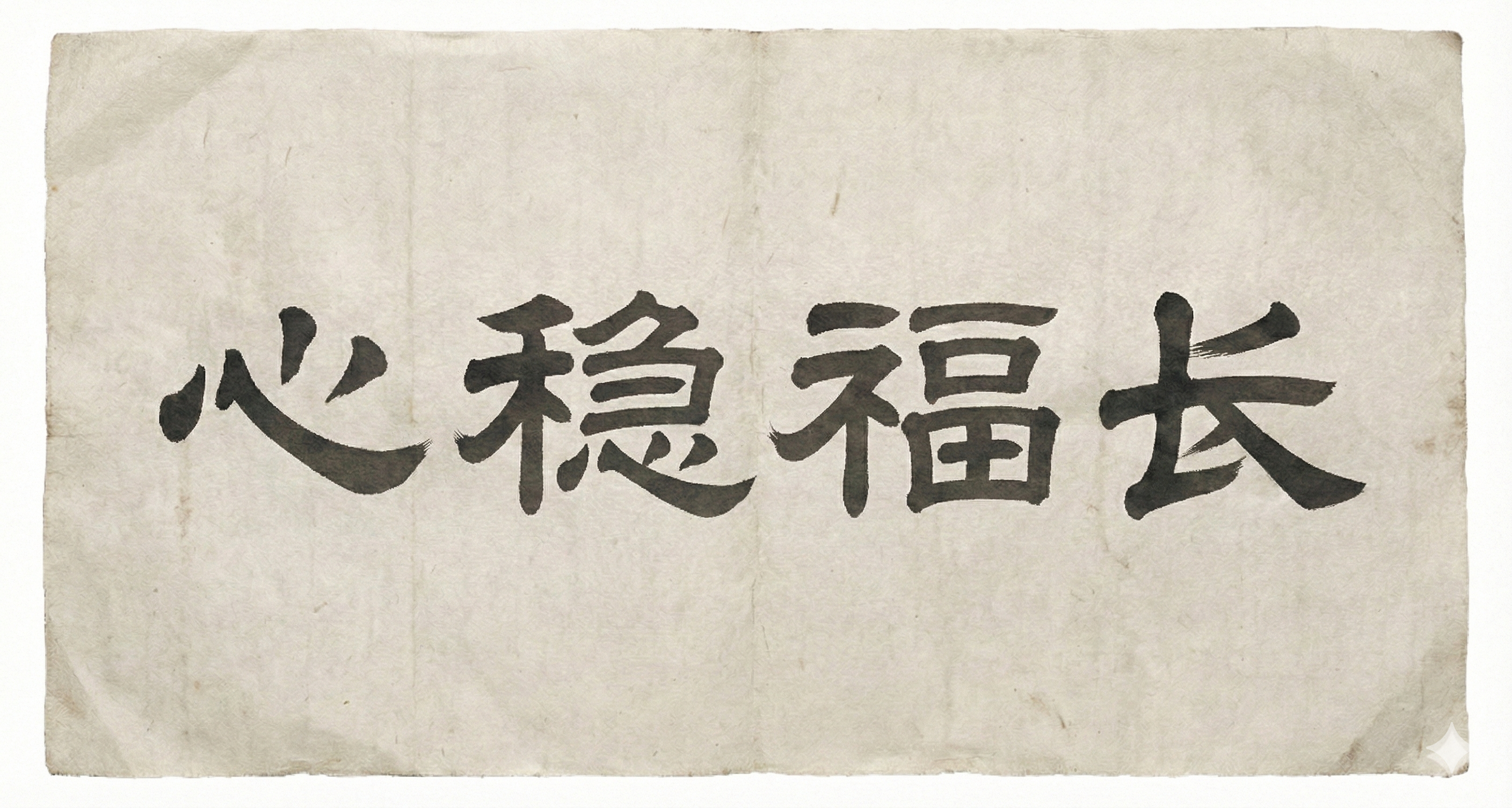
○ Regular script · Periodic self-awareness sentence writing
This exercise uses neat and slow regular script to help you establish a sense of stability amidst the ups and downs, knowing "which circle I'm on".
- Written words:Knowledge and Degree
- English equivalent:Know Rhythm
- hint:Write slowly, stroke by stroke. After each stroke of "知" (zhi), pause for a breath and silently say, "I am learning about my own cycle." When writing "度" (du), feel that the rhythm of your hand doesn't have to be perfect, but it can be gently adjusted a little.
Lesson 1149: Biphasic Cycles - Guided Mandala Viewing
Objective: To experience the feeling that "emotional fluctuations are a cycle, not a single ending" by observing the circular structure.
Please select a mandala image with multiple concentric circles.
The first step is to look only at the outermost circle and ask yourself: Does this resemble a relatively stable or peaceful period of the year for me?
The second step is to move your gaze to the center of the image and think about when you were in a state of "slight excitement" or "slight depression": Did the colors start to become tighter or darker?
Third, look at the innermost circle and imagine that's your most difficult moment—but please note that even the innermost circle is only a part of the whole image.
Tell yourself quietly, "I won't wait until I fall to the center to start observing; I'll start paying attention from the outer edge."“
Mandala is not about drawing something, but about observation—observing one's own state in different circles, allowing fluctuations to exist, while reserving a path for oneself to return to the outer circle.
Please log in before submitting your drawings and feelings.
○ 1149. Biphasic Periodic Variation and Its Patterns • Log Guidance Suggestions
① Looking back over the past one to two years, can you identify three to five distinct emotional phases? Please mark them with approximate times and brief descriptions.
② Before each stage begins, can you recall one or two recurring "precursors" (e.g., sleeping less, talking more, increased shopping desire, or suddenly feeling that everything has lost its meaning)?
③ Once these stages begin, how long do they typically last? How do they usually end? Is it through natural remission, changes in life events, or the intervention of medication and treatment?
④ Try writing down a "cycle reminder" for yourself, such as: "When I have been sleeping very little and being very excited for three consecutive days, I need to slow down and seek support."“
⑤ Write down what you hope to do, even if it's just one small self-care action, in each cycle in the future.
⑥ Conclusion: Understanding cycles is not about labeling yourself, but about leaving more safety and leeway for each ups and downs.
Please log in to use.
Once you begin to see the patterns behind the biphasic cycle, you'll no longer be merely swept along by the tides, but gradually become a navigator who knows the ebb and flow of the tides. May you slowly find your own rhythm and way of care amidst each rise and fall.