

Lesson 1151: Prevention of High-Risk Behaviors During Manic Phases
Duration:75 minutes
Topic Introduction (Overview):
During the manic phase of bipolar I disorder, the danger often doesn't come from external sources, but from one's own "overly excited self": sudden increases in investment, excessive online shopping, high-speed driving, late-night outings, unprotected sex, frequent changes to plans and promises… At that time, you often genuinely believe "I can control everything" and "This time, nothing will go wrong," rather than deliberately courting disaster. Behind these high-risk behaviors lies the combined effect of reduced sleep, impaired judgment, inflated self-esteem, and increased impulsivity. This course will help you learn to identify early warning signs of high-risk behaviors during manic phases before truly losing control and to develop actionable prevention strategies.
Together, we'll outline three levels of prevention: First, identifying warning signs—finding subtle signals of impending mania in daily routines, speech rate, spending habits, and social patterns; second, designing safety boundaries—including restrictions on money and account access, bottom lines for transportation and social interactions, and reminders for medication adherence; and third, building a support system—establishing a checklist with family, friends, and therapists on what changes trigger protective measures. You don't need to rely solely on willpower during an episode; instead, during periods of stability, create multiple "buffer zones" for your future self. Mandala drawing isn't about creating images, it's about observation!—observing the rhythmic changes in your emotions and behaviors, observing those easily overlooked yet most protective subtle clues.
▲ AI Interaction: "Activating the Safety Switch in Advance" for Manic Phases“
By asking the following questions, you can work with AI to create your own list of high-risk behaviors during manic phases and develop prevention strategies:
- ① Looking back on one or two periods of mania or significant emotional elevation, what were your most typical high-risk behaviors? (e.g., large purchases, going out late at night, frequent confessions of love, quitting your job, investing, etc.)
- ② Before these behaviors occurred, what changes occurred in your sleep, appetite, speaking speed, and social desire? Please be as specific as possible.
- ③ When someone reminds you that "this is risky," what is the thought that most often comes to mind? For example: "You are too conservative," "I am very clear-headed right now," "This is a once-in-a-lifetime opportunity."
- ④ If you were to list three "bottom lines that you must never cross, no matter how excited you are," what would they be? For example: not spending several times more than your income, not driving alone late at night, and not changing long-term contracts.
- ⑤ Who do you want, and under what specific signs, to have the authority to remind you to stop your behavior, or even assist you in temporarily managing your accounts or vehicles?
Tell the AI the answers above, and it will help you create a "High-Risk Prevention Plan for Manic Phases". You can print it out, post it in a prominent place, or work with professionals to refine it.
○ Musical exercises for "steady rhythm" when emotions are running high
During manic or hypomanic periods, you may have a particular craving for loud, rhythmic music that constantly builds your emotions, which further reinforces the combination of "impulse + sense of invincibility." The purpose of this exercise is not to make you stop completely, but to help you establish a perceptible "steady rhythm" within your heightened state, like inserting a few fixed rocks into the crest of a wave.
Please select a piece of music with a steady rhythm, a relatively gentle but not oppressive melody, and a duration of about 10 minutes.
For the first 3 minutes, focus only on the beat and observe whether your breathing is faster than the beat;
For the next 4 minutes, try to synchronize your breathing with the rhythm of the music, completing each inhale and exhale between the rise and fall of the beat;
In the last three minutes, close your eyes and ask yourself: "Is there anything I can postpone deciding until tomorrow?"“
There's no need to change any plans immediately; just practice "postponing decisions a little" with music as your accompaniment.
A mandala is not about drawing something, but about watching—watching yourself in music gradually approach a perceptible rhythm from too fast.
○ Chinese Green Tea: Add a "Clarity Filter" to Your Life“
When the brain is operating at high speed during a manic phase, a person is prone to a state of "heat, agitation, and anxiety," with many thoughts but difficulty in carefully weighing them. Brewing a cup of Chinese green tea can be a ritual of "activating a clarity filter": observe the tea leaves unfurling in the water, the color changing from light to dark, and then from dark to a temperature suitable for drinking.
While waiting for the tea leaves to sink and unfurl, deliberately repeat three times to the one thing you most want to do today that might be a little risky: "This is something I need to think about for three more minutes."“
As you pick up your teacup, ask yourself three questions: ① If I were in a stable period, would I agree to take action now? ② How long will this decision affect me? A week, a year, or longer? ③ Is it necessary to confirm with a trusted person first?
You don't need to immediately deny your impulses; just add a little more "clarity" to your judgment with each sip of tea.
○ Chinese Food Therapy · Soup Dishes · Lotus Seed and Lily Bulb Soup for Calming the Mind
Frequently experiencing extreme highs and lows can keep the nervous system in a state of constant tension: sometimes abnormally excited, sometimes extremely fatigued. In traditional Chinese medicine, lotus seeds and lily bulbs are often used to nourish the heart and calm the mind, relieving restlessness and insomnia. Presented in the form of a mild soup, they are more suitable for gently nourishing the body and mind in daily life. It's not about "suppressing emotions," but rather symbolizing your willingness to invest some patience in maintaining your own stable rhythm.
It is recommended to prepare this soup during a relatively calm but still easily excitable period, savoring it slowly while feeling, "I can treat my mind and heart in a gentler way." When you take care of yourself quietly like this time and time again, you are also sending a message to the manic part of your heart: you are not just a force to be used to "rush to the front line," but also deserve to be steadily supported and settled.
Dream Mandala Healing · Mi Xiangwen 1151 · Guardrails on the Skyline of the City
You dream that you are standing on a very high city rooftop, with lights spread out below you like a sea of stars. The wind is strong, but it makes you feel unusually clear-headed and free. Suddenly, a thought pops into your head: "If I jump straight from here to that rooftop, I'm sure I can do it." People around you are clapping and cheering, saying, "You look great, no problem."“
As you prepare to start running, you suddenly notice a thin ring of light along the edge of the rooftop, like an invisible railing encircling the entire building like a giant mandala: at the center is your impulse and excitement, and on the outer ring is that almost ignored light—rules, boundaries, reminders from others, and the safety agreements you've written down. You stop, crouch down, and carefully examine the texture of that light. Within it are your own handwriting, the gazes of your family, and the instructions of your therapist.
You discover that true courage isn't about leaping from a great height, but about allowing yourself, even amidst cheers, to say, "Let me take a look first." A mandala isn't about drawing something; it's about observing!—observing that tiny railing, observing how you shift from "I must act immediately" to "I can pause for a moment."
[mandala_gallery1151]
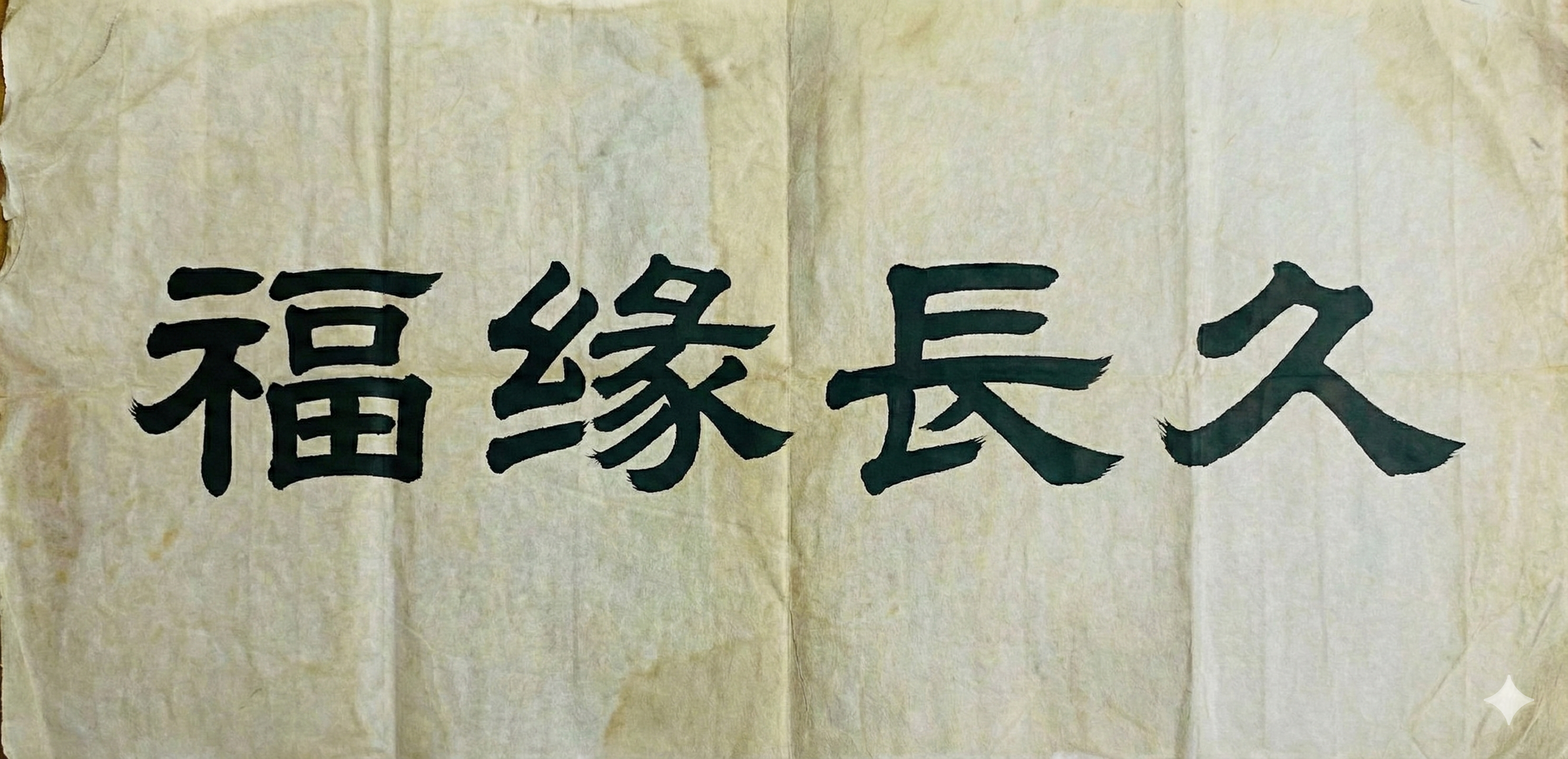
○ Regular script practice: boundary and degree
The squareness and balanced strokes of regular script are very suitable for practicing a sense of "boundaries" and "moderation" when manic tendencies are obvious.
- Written words:Boundary Degree
- English equivalent:Boundary Measure
-
hint:When writing the character "界" (boundary), feel that each stroke is building a safe border; when writing the character "度" (degree), experience the proportion and blank space between horizontal and vertical strokes, as if practicing "leaving room for maneuver in doing things".
You can write a short sentence in the corner of the paper: "Only with boundaries can there be true freedom." After writing each line, pause for a few seconds and see if your handwriting is becoming more and more hurried, or if it is gradually becoming a little more stable—the writing process itself is an exercise in observation and adjustment.
Lesson 1151: Safe Boundaries During Mania - Guided Mandala Viewing
Objective: To experience the process of shifting from high-intensity stimulation at the center to a stable outer structure through "seeing without drawing".
Please select a mandala with a complex central pattern and strong colors, while the outer circle is relatively regular and the lines are more stable.
The first step is to focus solely on the central area and treat it as your internal state during a manic phase: full of thoughts, energy, impulses, and the drive to "act immediately."
The second step is to slowly move your gaze outward along the pattern, noticing the gradual transition of colors and the increasing order of lines. Treat this circle as the stage where "I begin to perceive the risks and begin to hesitate."
The third step is to focus your attention on the outermost circle, feeling the repetition, rhythm, and sense of boundary there, and imagining that it represents the precautions you set for yourself and the support that others can provide.
You don't need to change the image; just tell yourself while viewing it, "When I'm drawn to the center, I also have the ability to look outward."“
Mandala is not about drawing something, but about observing—observing how impulses pull your gaze, and also observing how you practice bringing your gaze back to safe boundaries.
Please log in before submitting your drawings and feelings.
○ 1151. Prevention of high-risk behaviors during manic phase: Journal-guided suggestions
① Write down 1–3 high-risk behaviors during your manic phase that you were most worried about or that actually happened in the past year, and describe the scene in one or two sentences.
② Before these behaviors occurred, what common precursors did you experience in terms of sleep, spending, social interaction, speech rhythm, and range of interests? Try to list specific details.
③ Choose one of the warning signs and write down its "benefits" and "costs" for you: How does it make you feel? And how does it increase the risk?
④ Draft three safety bottom lines for yourself that you must abide by no matter how excited you are, and write down why these bottom lines are important to you.
⑤ Think about which people you would like to invite to be your "safety witnesses," and what behaviors they would be authorized to remind you or even help you suspend certain decisions. Write down their names and what you would like them to say.
⑥ Conclusion: Write a short essay of 3-5 sentences, like writing a letter to your future self—when you feel the world at your feet again, please turn to this page first and remember how much you once wanted to live a safer and longer life.
Please log in to use.
Preventing high-risk behaviors during manic phases doesn't mean suppressing all your passions, but rather providing a more stable vessel for your vitality. Every early identification and gentle braking is a way of proving to yourself that you are not just a passenger in your emotions, but also capable of taking the helm.