

Lesson 1192: Self-Monitoring of Impulsive and High-Risk Behaviors
Duration:75 minutes
Topic Introduction (Overview):
Impulsive behavior and high-risk decision-making are often among the most easily overlooked signs of hypomania or its peak in bipolar II disorder. Many participants only realize in retrospect that they don't actually "like to be impulsive," but rather that in a state of mild mood elevation, increased energy, and accelerated judgment, they are more likely to make choices they wouldn't normally make in an instant. These choices include impulsive purchases, sudden changes to plans, working intensely late at night, excessive socializing, and even engaging in dangerous driving or risky relationships. These behaviors are often not based on careful consideration, but rather stem from an internally driven sense of urgency—an impulse to "do it right now."
This course will help you understand how impulsive behavior is formed: how the brain's reward system is strengthened in a state of hypomania, how reduced sleep weakens the inhibitory function of the prefrontal cortex, and how stress amplifies the interaction between excitement and impulsivity. It will also guide you on how to recapture the "half-second before the impulse" through self-monitoring. Mandalas are not about drawing anything, but about observation—observing your body's signals before an impulse, observing that sudden acceleration of your inner rhythm, and observing how you gradually transform impulse into awareness. This course will build a workable impulse monitoring system for you, allowing you to navigate life more safely and autonomously.
▲ AI Interaction: Identifying Physical and Psychological Signals Before Impulses Occur
Please recall your most recent impulsive behavior (spending, arguing, binge eating, sudden trip, heated words, etc.).
Write down 5 physical signals at that time (such as a fast heartbeat, excitement, and hot hands).
Write down 5 mental signals (such as eagerness, wanting to do it immediately, skipping the thinking stage).
Circle the one that you are most likely to overlook.
Click the button below to analyze your impulse patterns with AI.
Music Adjustment: Training to Capture "Rapid Passages"
Please play a piece of music with a distinct rhythm: slow at the beginning, suddenly accelerating in the middle, and then returning to a stable rhythm at the end.
First pass: Record which "acceleration phase" your body reacts to most.
Second time: When the acceleration phase occurs, practice inhaling deeply for 4 seconds and exhaling slowly for 6 seconds.
The rhythmic changes in music are a simulated environment for practicing "seeing the impulse".
Herbal Healing Tea: Lemon Verbena Soothing Tea
Recommended reasons:Lemon verbena can regulate nerve excitability, making it suitable for calming down before impulsive or agitated behavior. Its gentle aroma can help alleviate feelings of "acceleration," allowing the body to gradually return to stability.
usage:Soak 2g of verbena in hot water for 8 minutes. If you are particularly excited, you can add a peppermint leaf to help stabilize your focus.
Canadian Maple Diet: Maple Syrup Sweet Potato Energy Balanced Bowl
Impulsive behavior often occurs when blood sugar fluctuates or energy levels rise abnormally. Sweet potatoes with a small amount of maple syrup create a "slow-release energy" effect, allowing the body to remain stable for several hours and reducing impulsive behavior triggered by sudden energy spikes. Adding walnuts and chia seeds further enhances brain stability.
Suitable as a daily meal during the early hypothermic stage when you feel excited but not out of control.
Healing Recipes
/home2/lzxwhemy/public_html/arttao_org/wp-content/uploads/cookbook/maple-sweet-potato-bowl(Alternatively, you could try relaxed="1" or use an existing filename.)
Psychological Mandala Healing · Mi Xiangwen 1192 · Accelerated Circle
Imagine the mandala in front of you slowly rotating from the center, while the outer rings gradually accelerate. Simply observe, without trying to stop it or grasp anything. You see the center remaining stable, while the outer rings are attempting to carry you away.
Impulse is the outer circle, but you are not the outer circle. You are the center. You observe the change in speed, the moment you are pulled, and you also observe that you still have choices. A mandala is not about drawing something, but about observing—observing the speed, observing the pull, observing how you find the strength to stay at the center in the fast-moving outer circle.





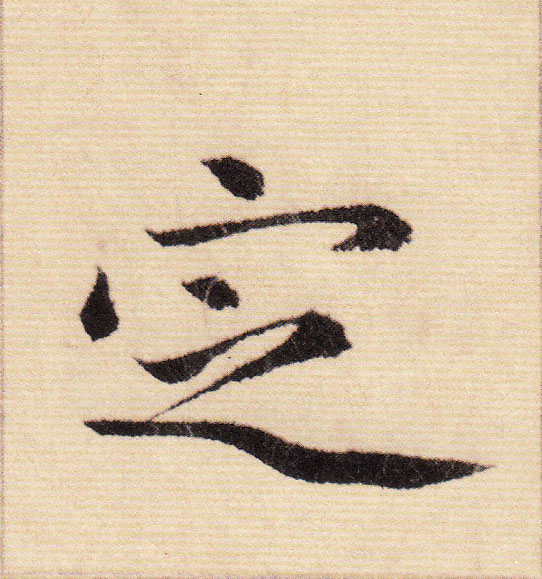


Chinese Calligraphy – Running Script: Writing the Character "止念" (Stop Thinking)“
- Written words:Stop thinking and keep the center
- English equivalent:Hold the Center Before Action.
-
Writing Tips:
The flowing nature of running script makes it ideal for practicing "pauses before actions." When writing the character "止" (stop), pause briefly, letting your hand linger on the paper. This pause itself trains the ability to be aware of impulsive actions.
Lesson 1192: Impulsive Behavior - Art Guidance
Objective: To help trainees visualize the "path leading to an impulse".
Step 1: Draw a line that gradually thickens from left to right, symbolizing "accumulated excitement".
Step 2: Draw a small dot at the thickest part and write down your most frequent impulsive behavior.
Step 3: Add small markers to the beginning of the line and write "body hot", "heart beating fast", "want to do it immediately".
Step 4: Draw a slow downward curve after the climax and write down the emotions following the impulse.
Instead of analyzing the line, observe the entire line and allow yourself to see that the impulse is not sudden, but gradual.
Please log in before submitting your drawings and feelings.
Lesson 1192: Impulsive Behavior - Journal Guidance Suggestions
① Did you engage in any impulsive behavior today? (Examples: spending, arguing, eating, taking actions)
② Three physical and three psychological signals within 30 minutes before the impulse.
③ Write down one "pre-intervention action" (such as leaving the room, drinking tea, taking a deep breath, washing your face, etc.).
④ Record whether you successfully "pause for a second before taking action" today.
⑤ Write a reminder: "I can see myself before I accelerate."“
⑥ Conclusion: Impulsiveness is not failure, but the beginning of practicing awareness.
Please log in to use.
Impulsive behavior is not a character flaw, but a natural reaction to changes in emotional rhythms. By monitoring, you can become aware of yourself sooner than before, seize that fleeting moment, and get your life back on track.