

Lesson 1195: Overconfidence and Difficulty in Attention During Hypochondriac Phase
Duration:75 minutes
Topic Introduction (Overview):
The experience of hypomania is often described as feeling "unusually good," "extremely confident," and "capable of anything." Many people with bipolar II disorder even mistakenly believe this is their true "optimal state." However, the confidence brought by hypomania is not a stable force, but rather an "energy illusion" resulting from an accelerated nervous system: attention becomes highly erratic, plans pile up, commitments become increasingly broad, and speed far exceeds depth, while actual execution ability does not increase proportionally. This course will help you identify the hidden risk structures within hypomania: How does overconfidence lead to judgment bias? How does inattention make you seem busy but progress limited? Why does hypomania often give you the illusion of "I've finally recovered," only to quickly plunge you into depression afterward?
Mandala drawing isn't about drawing anything; it's about observation—observing how the rhythm of restlessness beats faster than your actual abilities; observing how attention jumps between multiple points; observing how confidence transforms from "reasonable strength" into "unrealistic inflation." This course, combining herbal healing teas, the Maple Cure Diet, and cursive calligraphy practice, will help you maintain a steady pace during periods of restlessness, ensuring that "increased energy" doesn't become "the beginning of a later collapse."
▲ AI Interaction: Identify your hypo-anxiety "acceleration signals"“
Think back to the last time you suddenly became exceptionally confident, acted more quickly, and started talking more.
- ① What decisions did you suddenly make that you "wouldn't normally make so quickly" at that time?
- ② In which tasks have you noticed yourself jumping around or having difficulty concentrating?
- ③ In that state, is your "target quantity" much greater than your actual execution capability?
Write these down and work with AI to analyze which ones represent energy boosts and which ones indicate hypothermia or risk.
○ Music Therapy: From "Too Fast Pace" to "Sustainable Pace"“
The core issue during the hypotonic phase is not energy, but rather the excessively fast tempo. This musical exercise aims to stabilize the rhythm.
- Choose a song with a slow tempo and a repetitive melody.
- During the listening process, focus your attention on one type of sound—low-pitched sounds, breath sounds, long tones.
- Whenever you get distracted, don't criticize or chase after them; just bring your attention back.
- You are training one of the most crucial abilities during a period of restlessness: maintaining a steady focus.
○ Herbal Healing Tea: Lemon Balm + Maple Leaf Sweet and Warm Drink
Recommended reasons:Lemon balm can reduce the nervous system's "accelerated mode," while maple syrup from the maple diet provides gentle and stable energy, bringing the "lightheadedness" often experienced during hypomania back to reality.
usage:2g lemon balm + 1 teaspoon maple syrup + 250ml warm water. Drink when signs of restlessness appear to help stabilize nerve rhythm.
○ Maple Cure Diet · Warm Maple Syrup Oatmeal Bowl
Hypomania often presents with the illusion of "eating less, working faster, and not feeling hungry," but this state can lead to a rapid decline in mood later on. Warm maple oat bowls, with their slow-release oat base and added maple syrup, nuts, and berries, can provide the brain with a stable glucose supply, reducing mood swings and attention deficits.
Healing Recipes
/home2/lzxwhemy/public_html/arttao_org/wp-content/uploads/cookbook/maple-oat-bowl-01(Alternatively, you could try relaxed="1" or use an existing filename.)
🎨 Psychological Mandala Healing · Mi Xiangwen 1195 · The Light Spots That Scatter and Fade
Imagine you're standing in a dark space, and suddenly many points of light appear around you, scattering in all directions. You reach out to grab one, but each touch causes it to split into more, smaller, and faster points of light. This is the same as the attention during hypothermia: the more you try to grasp it, the more it scatters, and the more it scatters, the more panicked you become.
Now watch these points of light, let them fall on their own, instead of trying to catch them. The points of light gradually converge, eventually focusing into a soft halo in front of you. A mandala is not about drawing something, but about watching—watching how your attention returns to its proper place without chasing, watching how the rhythm returns from scattered to focused.

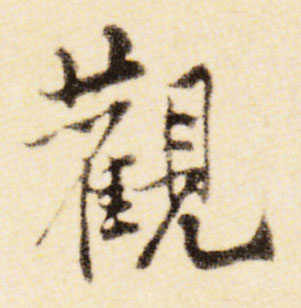

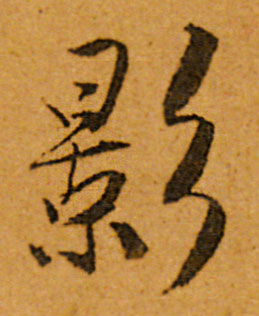




○ Running script practice: calming the mind and stabilizing the breath
The smooth and continuous nature of running script makes it ideal for practicing "maintaining continuity without skipping steps".
- Written words:Calm the mind and settle the breath
- English:Gather the Mind · Settle the Breath
- Practice Tips:Try to make each stroke as continuous as possible, without rushing or slowing down, so that the character forms a path that draws your attention back.
Distraction during Hysteria: A Drawing Awareness Exercise
Objective: To make scattered attention "seen" and gradually bring it together.
- Randomly place 20-30 dots on a piece of paper to represent scattered points of attention during the hypochondriac phase.
- Pick the center point you most want to "return to".
- Use soft lines to bring each small point back to the center, forming a mandala-like structure.
- After you finish drawing, take a look: which points are the hardest to connect? Those might be the areas where you are most easily distracted in real life.
Please log in before submitting your drawings and feelings.
○ 1195. Overconfidence during the hypomanic phase: Journal-based guidance suggestions
① Did I suddenly feel like "I can do anything" today? In what situation did this happen?
② In which three things did my attention jump?
③ Which plan "clearly exceeds my actual execution capabilities"?
④ Write a sentence for yourself that suggests "slowing down," such as: "I can slow down, but I'm still moving forward."“
⑤ Observation: Is today's pace sustainable? If not, at which speed can I adjust the pace back?
Please log in to use.
Once you learn to recognize the overconfidence and distraction during periods of hypotension, you possess the core ability to prevent "excessive emotional acceleration → collapse." True strength comes from stability, not speed.