

Lesson 1200: Emotion Regulation Strategies in Work and Study
Duration:75 minutes
Topic Introduction (Overview):
For those experiencing bipolar II disorder, study and work are often where symptoms are most amplified: in a state of hypomania, thoughts surge, actions accelerate, and tasks pile up; in a state of depression, deadlines are completely missed, leading to procrastination, self-blame, and feelings of helplessness. This course focuses on "emotional regulation strategies in work and study," helping you establish a workable middle ground between realistic demands and your internal rhythms, rather than oscillating between "frantic sprinting" and "complete collapse."
Mandala drawing isn't about drawing something, but about observation—observing your attention, efficiency, stamina, and tolerance for error under different emotional states. We'll start with task breakdown, prioritization, time block management, environmental optimization, and boundary setting, combined with herbal healing teas and the Maple Cure Diet to stabilize blood sugar and energy, allowing the brain to operate on a more stable physiological foundation. Through the "slow-paced practice" of Chinese calligraphy, you'll learn how to complete work and study at a "just right pace," rather than proving your ability by overexerting yourself.
▲ AI Interaction: When Emotions Enter the Desk and Office
Please reflect on the past week and answer the following questions:
- ① When you are prone to restlessness, in which tasks are you most likely to "take on too many, do them too fast, and not be able to stop"?
- ② When feeling down, which work or study tasks are most likely to be procrastinated until the last minute?
- ③ Do you habitually describe your day as "I did nothing today" or "I failed again"?
Write down a learning/work scenario that is currently troubling you, and mark it as leaning more towards "hyperactivity" or "depression and lethargy." Then click the button below to let AI help you design an adjustment plan that suits your current rhythm.
You don't need to become a "perfect and efficient person," but rather learn how to protect your mind and body and basic functions amidst fluctuations.
○ Emotional Regulation in Work and Study: Music Guidance
Choose a soothing yet not drowsy background music and break down today's work or study into a rhythm of "25 minutes of focused work + 5 minutes of relaxation".
When feeling restless, use music to remind yourself to focus on only one small module and to stop and rest after 25 minutes. When feeling depressed, use music as a "starting signal" to complete even the smallest task, as it counts as a successful round.
Document a complete "25+5" experience: What tasks did you complete? How well did you complete them? Did your emotions fluctuate? Would you be willing to try again next time?
🍵 Herbal Healing Tea: Maple Leaf and Chamomile Relaxing Drink
Recommended reasons:Chamomile helps relax tense nerves, and a small amount of maple syrup provides gentle and stable energy without causing a sharp rise or fall in blood sugar like high-sugar snacks. It is suitable to drink before studying or doing paperwork in the evening, which can relieve anxiety without affecting sleep.
Usage suggestions:Steep chamomile in hot water for 5–8 minutes. After it cools slightly, add a small amount of maple syrup for flavor. While sipping, write down "two small things you only need to accomplish today." Tea is a reminder, not a command—it gently tells you: take your time.
○ Maple Cure Diet · Maple Syrup Oatmeal and Nut Bowl
Combine oats, a small amount of maple syrup, nuts, and a few pieces of fruit to make a simple breakfast or pre-study snack. Complex carbohydrates provide sustained energy, healthy fats and protein support brain focus, and maple syrup provides a mild sweetness without being overly stimulating. For those who tend to be "over-excited" in the morning and "suddenly lose focus" in the afternoon, it is a more stable energy option.
The goal is not to make you hyper, but to help you maintain a sustainable energy curve in your work and studies.
Healing Recipes
/home2/lzxwhemy/public_html/arttao_org/wp-content/uploads/cookbook/maple-oat-bowl-05(Alternatively, you could try relaxed="1" or use an existing filename.)🎨 Psychological Mandala · 1200 Words of Wisdom · The Inner Center of the Daily Schedule
Imagine your schedule for today as a mandala: the outermost circle contains various meetings, assignments, emails, and message reminders; the further in you go, the projects and tasks are simplified circle by circle until only a small "current task" remains in the center. Instead of immediately tackling the entire outer circle, focus on lighting a small beam of light at the center.
When you feel overwhelmed by tasks and demands, simply take another look at this mandala in your mind: the outer circle can remain there and rotate, but the small circle in the center is what you truly need to attend to right now. A mandala is not about drawing something, but about observing—observing how you slowly move from the chaotic outer layer back to the step that can be accomplished.
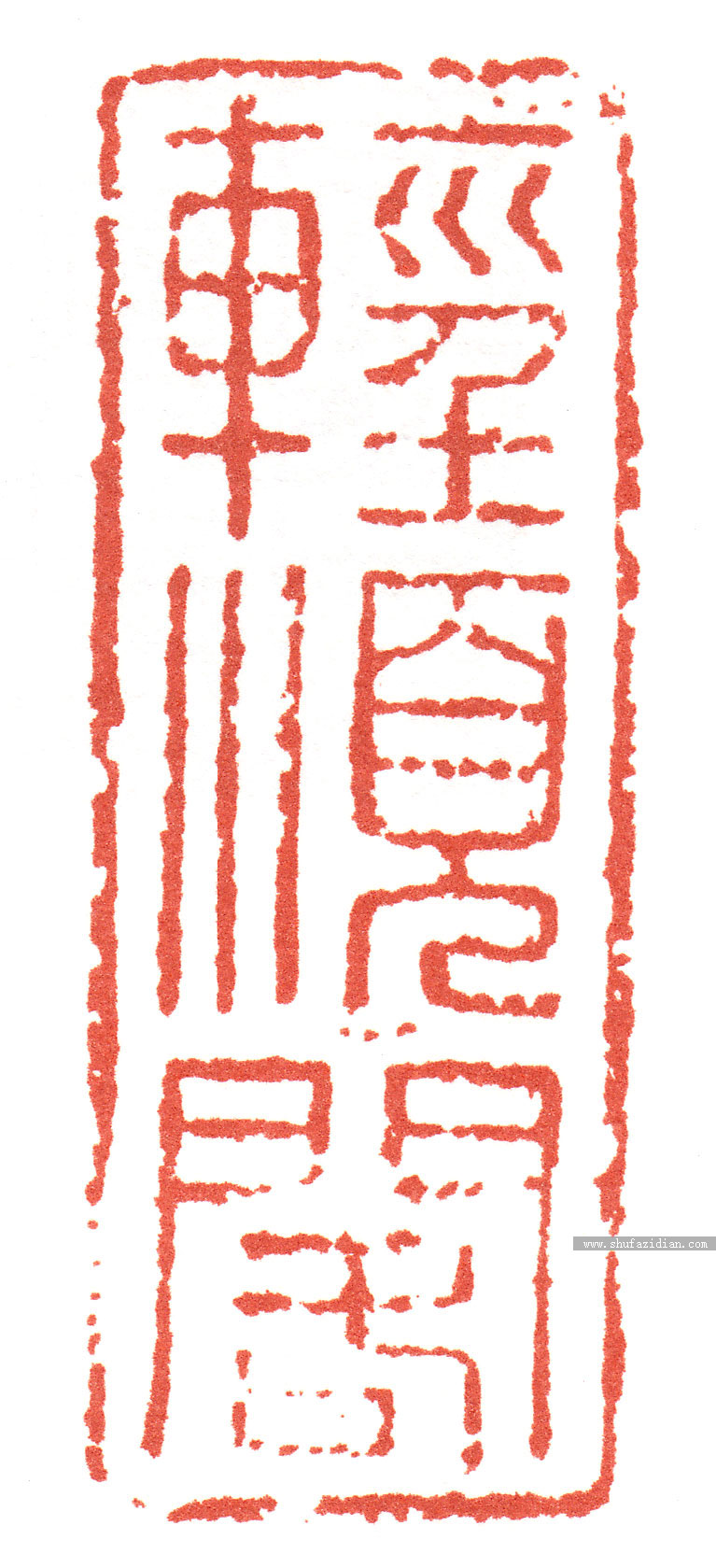
○ Chinese Calligraphy – Running Script: Unhurried Rhythm, Unfragmented Mind
In running script, every stroke, whether lifting or pressing, pause or deflection, is like adjusting one's work rhythm: one cannot linger forever, nor can one rush headlong.
- Written words:Take it slow and steady, proceed step by step.
- English equivalent:Neither rushed nor shattered, I move with steady steps.
- Writing Tips:When writing these words in a depressed state, you can focus solely on the completeness of each stroke; when writing in a calm state, deliberately slow down, allowing each stroke to feel grounded. Let writing become a small exercise to calibrate your inner rhythm.
○ Emotional Regulation Strategies in Work and Study: Art-Guided Suggestions
This drawing exercise continues the approach from Lesson 1199, "Structured Life: Task, Rhythm, and Environmental Management," placing "work/study tasks" within a clearer visual framework. You don't need to strive for perfect output; instead, use the image to help yourself see what's suitable to accomplish in your current state and what's not, thus achieving a relatively gentle compromise between emotions and tasks.
1. The quest mountain and the passable paths
- Draw a "task mountain" on a piece of paper, and write your most important goal (paper, project, exam, work deadline, etc.) on the top of the mountain.
- Draw three different paths from the foot of the mountain to the summit: one too steep (to be completed in one go), one a long detour (to be delayed indefinitely), and one relatively gentle (to be completed in stages).
- Write your mood next to each path: Which path do you usually choose when you're feeling restless? Which path do you hide in when you're feeling depressed? Would you like to practice a third "smooth path" for yourself?
II. Focus Island and Distraction Vortex
- Draw a small island and write "Focus Zone" around it, and draw several "Distraction Vortexes" around it (social media, aimless scrolling on the phone, endless research, repeated revisions of details, etc.).
- Write down the item you are most often sucked into next to the vortex, and indicate whether it usually occurs during hypomania or depression.
- Write on Focus Island, "I'll only stay on the island for 20 minutes today, then I can leave," making focus a short, manageable stay, rather than requiring you to "stay for a whole day."
III. Emotion-Task Checklist
- Draw a two-column comparison table: the left column should read "Suitable tasks when feeling hypostant", and the right column should read "Suitable tasks when feeling depressed".
- For example, when feeling hyperactive, it is suitable to organize materials, hold meetings, and brainstorm outlines; when feeling depressed, it is more suitable to perform small, mechanical tasks with clear steps, such as organizing folders, copying notes, or completing a mini-exercise.
- Write a sentence at the bottom of the table: "I can choose tasks based on my status, instead of judging myself by all the tasks."“
Reminder: The purpose of drawing is not just to make it look beautiful, but to help you visualize the relationship between "task-emotion-rhythm". You can refer to this diagram before and after each major emotional fluctuation to see if you have fallen back into the old path of "over-excitement" or "complete collapse", and try to leave yourself a smoother midline.
Please log in before submitting your drawings and feelings.
○ 1200. Emotion Regulation Strategies in Work and Study: Journal-Based Guidance Suggestions
① Write down the one thing that is currently bothering you the most in your studies or work (e.g., writing a report, preparing for an exam, replying to an important email).
② Label whether this task makes you feel more like "hysterical overexcitement" (taking on too many tasks, doing too fast, and having difficulty stopping) or "depressive paralysis" (procrastination, avoidance, and inability to start).
③ Referring to the content of this lesson, break this task down into 2-3 "smallest steps that can be completed today", and write down the completion criteria for each step.
④ Write down a reminder to stick on your desk, such as: "I am cooperating with the rhythm, not fighting against myself."“
⑤ Record any moment today where "even accomplishing just a little bit counts as a success," allowing your brain to learn to evaluate yourself using new standards.
Please log in to use.
Work and study are no longer a single yardstick for measuring whether you are "normal," but can become a long-term training ground for you to practice taking care of your rhythm, adjusting your pace, and guarding your boundaries. You don't have to be perfect the first time; you just need to keep leaving yourself a path to follow through with the ups and downs.