

Lesson 1202: How to Cope with Major Life Events and Time Pressure
Duration:75 minutes
Topic Introduction (Overview):
For individuals experiencing bipolar II disorder, major life events and pressing time pressures often act like a sudden acceleration: moving, changing jobs, exam season, changes in close relationships, financial stress, caring for family… These already energy-draining situations create intense tension between hypomanic tendencies and depressive susceptibility. This course focuses on how to avoid being swept away by emotions and respond in a more structured way when life requires making choices, completing tasks, and facing loss or change within limited timeframes.
We do not deny the existence of pressure, but rather use concrete tools to build "speed bumps" for ourselves: breaking down a huge task into manageable time units; reserving recovery time in the schedule instead of pushing it to the limit; and creating emotional buffers before and after major events. "A mandala is not about drawing something, but about observing"—we will use black tea from Chinese tea therapy to stabilize our rhythm, use Chinese food therapy such as porridge to provide the body with continuous but not overwhelming energy, and then use the steady lines of ancient Roman script to practice maintaining a clear breathing space as time approaches, so that the biphasic rhythm is not excessively pushed up or crushed in the storm.
▲ AI Interaction: How are emotions driven when there is "not enough time"?
Please select a major event that you are currently experiencing or have recently experienced: an important exam, a project deadline, relocation, a family member's surgery, a relationship decision, etc.
- ① Describe the event itself in three or four sentences, without adding any evaluation, only writing "what happened" and "when it needs to be completed".
- ② Observe your emotions and physical state 3 days before and after the event: whether you are prone to hypomania (sleep less, have many thoughts, and have extravagant plans) or depression (want to procrastinate, feel completely incapable).
- ③ Write down the three scenarios you are most afraid of right now, and the three supports you need most (even if they are small).
Then click the button below to let AI help you break it down: which are real external deadlines, and which are internal "must be completed immediately" requirements; which steps can be slowed down or assistance can be sought; and which steps can be turned into "small tasks" that only take 15 minutes to complete today, instead of a huge weight on your mind.
You're not "unresilient to stress," but rather your brain is naturally more sensitive to time and change. Understanding this is the beginning of redesigning your rhythm, rather than stubbornly enduring it.
○ Music Guidance for Major Life Events and Time Pressure
Prepare a "time buffer" for yourself—5 to 10 minutes long, with a steady melody that is neither too high-pitched nor too sad. Whenever you feel that time is getting out of control or that tasks are piling up and making you feel suffocated, give yourself this entire song's worth of time and don't make any decisions yet.
In the first half, focus your attention on the rhythm and beat: follow the rhythm, silently count to four in a set, and slowly lengthen your exhale in coordination with your breathing. In the second half, ask yourself three questions: What is the most urgent thing right now? If I could only do the smallest part of it, what would it be? Do I need to replenish my sleep, eat, or contact someone for assistance first?
Every time you're willing to "give yourself the time it takes to sing a song," you're adding a small buffer between the impetus of a major event and the emotional outburst.
Chinese Tea Therapy: Black Tea Time Anchoring Exercise
Recommended reasons:Under time pressure, many people drink cup after cup of coffee or sugary drinks, experiencing a brief boost before quickly fading away. Gently brewed black tea offers a more stable sense of alertness and warmth, helping to maintain basic clarity during high-pressure periods without excessively stimulating palpitations and anxiety.
Usage suggestions:Designate the most irritable or tiring times of day (such as around 3 or 4 pm, or when working overtime at night) as your "tea time." When the alarm goes off, don't immediately continue working on your tasks. Instead, take three minutes to brew tea, stand still, or sit down, focusing on the aroma, color, and temperature of the tea. Tell yourself: In these three minutes, do only one thing—let your body know, "I haven't abandoned you." When you return to your tasks, you'll be better able to distinguish which tasks are truly essential and which are merely fleeting illusions.
○ Chinese Dietary Therapy: Lotus Seed and Lily Bulb Stress-Relieving Porridge
During major events, two common scenarios often occur: either people are so busy they completely forget to eat, or they consume large amounts of oily and sugary foods to "calm their nerves." Lotus seed and lily bulb porridge, with its calming properties of lotus seeds and nourishing properties of lily bulbs, combined with a mild staple food, helps provide gentle and continuous energy to the central nervous system during periods of high stress. This reduces the secondary impact of drastic blood sugar fluctuations on emotions, preventing the amplitude of irritability and depression from being further amplified.
You can make an agreement: for three days before and after a major event, prepare a simple meal like this for yourself every day. It's not complicated, but it's predictable. While eating, deliberately avoid discussing plans or checking work information. Only allow yourself to do one thing—chew slowly, letting your stomach know "I'm being taken care of," before facing the external clock.
Healing Recipes
/home2/lzxwhemy/public_html/arttao_org/wp-content/uploads/cookbook/zhou-lian-zi-bai-he-01(Alternatively, you could try relaxed="1" or use an existing filename.)Psychological Mandala · Powerful Thoughts 1202 · Hourglass of Time and Inner Center
Imagine a mandala: the outer ring is a giant hourglass, with sand constantly pouring down its slender center, symbolizing external time pressures and deadlines. At the center of the hourglass is a stable ring, representing your inner rhythm. Occasionally, a grain of sand strikes the ring, making a soft sound, but the ring itself doesn't break; it simply vibrates gently before returning to stillness.
Please simply look at this image: observe the speed of the sand grains, the shape of the hourglass, the thickness of the rings, instead of rushing to "modify" it. A mandala isn't about drawing something, but about observation—observing how you, amidst the external pressure of a countdown, preserve a central space in your heart that isn't swallowed by the flowing sand. You'll discover that even as the sand keeps falling, you still have the choice: first, stand at the center and take a breath, then decide your next move, instead of being dragged along by time.
Ancient Roman script – Standing tall in time
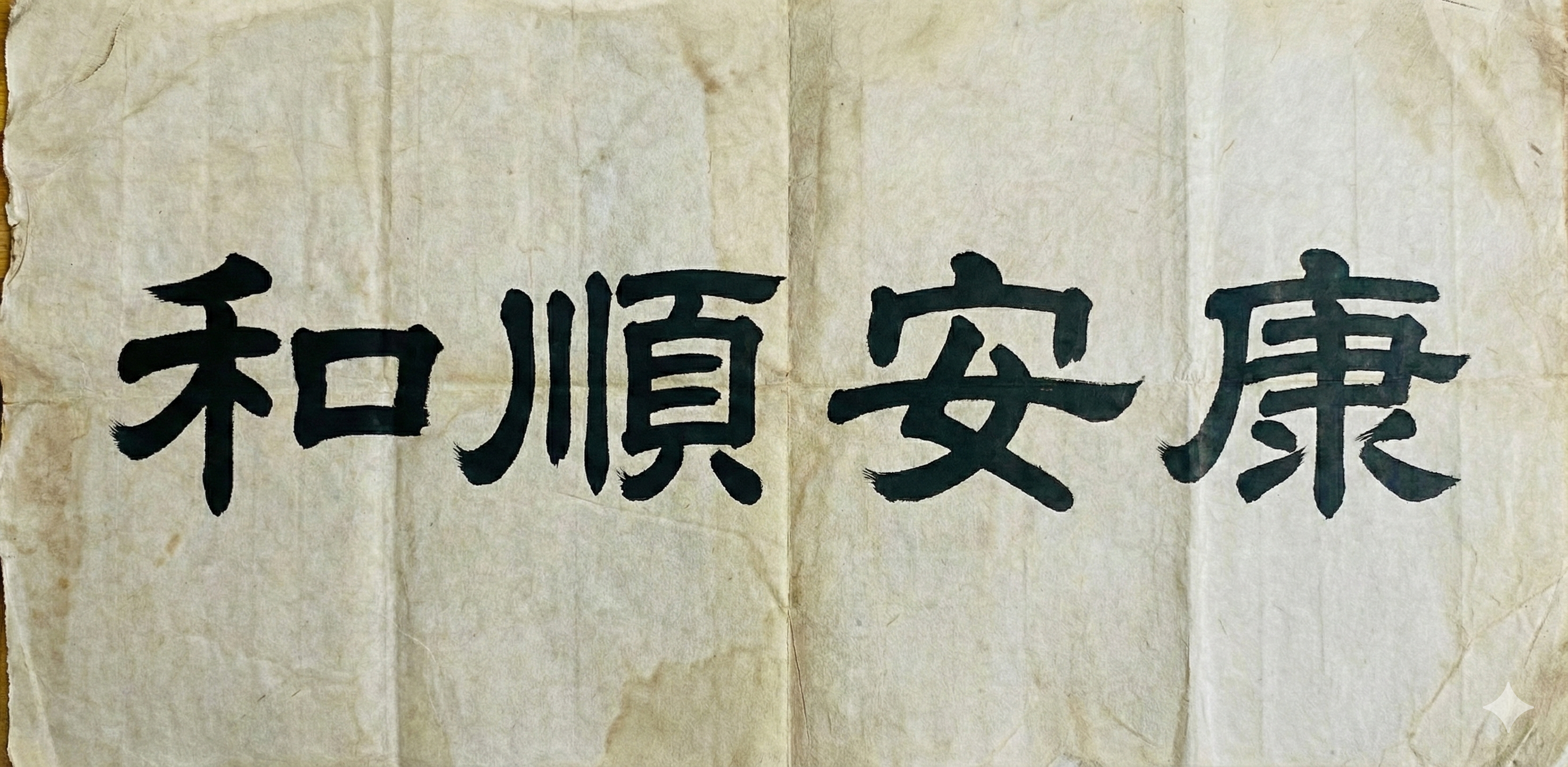
Ancient Roman script is characterized by its verticality, clarity, and stable proportions, resembling a row of stone pillars that stand firmly in the wind. Practicing this script during significant life events and under time pressure serves as a reminder that even amidst a fast-paced environment, I can choose to "stand upright" rather than be tangled into a chaotic mess.
- Sentence writing:One step, one day, is enough.
- Chinese meaning:One step, one day, is enough.
- Practice Tips:When writing each letter, consciously slow down the speed of the beginning and end of the stroke, paying attention to the height of each vertical stroke and the spacing between each letter. Let the stability of the font remind you that even the most important events can only be accomplished through this small step, and you don't have to carry the entire timeline in one night.
Before making a schedule or looking at a to-do list, write this sentence down on a line; when you feel your heart racing and your breathing becoming shallow, write another line down, bringing the rhythm back to paper.
○ How to cope with major life events and time pressure: Drawing guidance suggestions
This drawing exercise concretizes "major events" and "time pressure," transforming them from mere burdens into shapes, directions, and adjustable spaces on paper. By viewing these images, you can see more clearly how you are gradually pushed towards restlessness or depression, and at which points you can slow down or change course.
I. Map of Major Events: From Single Boulder to Movable Stones
- Draw a "big rock" in the center of the paper and write down the most important events that concern you right now, such as "moving", "exam", "surgery" or "project deadline".
- Then break the large rock into several smaller rocks, and write down the sub-tasks that can be broken down (e.g., prepare documents, contact someone, arrange transportation, reserve rest days).
- Observation: Are there any tasks that can actually be brought forward, postponed, or delegated to others? Mark a small arrow next to the small stone to indicate the direction in which it can be moved, reminding yourself that the event is not an immovable boulder, but rather small pieces that can be rearranged.
II. Time-pressure thermometer: from superheat to saturation
- Draw a vertical thermometer and mark the three temperature ranges from bottom to top: "supercool - suitable temperature - superheat".
- Reflect on the past week and draw a small dot next to each day to represent your subjective feeling of time pressure (too cold: completely lacking energy; moderate: tense but under control; too hot: palpitations, insomnia, unable to stop).
- Draw a protective line at the edge of the "suitable temperature" zone and write down strategies that can help you get back into this zone, such as: taking a short walk, turning off your phone for 30 minutes, asking a trusted person for help, or doing a micro-task for only 10 minutes.
III. Parallel Chart of Emotional Fluctuations and Timeline
- Draw two parallel horizontal axes on a piece of paper: the upper one is the "event timeline" and the lower one is the "emotion intensity line" (from -3 to +3).
- Mark key milestones on the event timeline (registration, interview, moving day, surgery day, manuscript submission day, etc.), and mark the emotional intensity of each day on the emotion line.
- Connect the upper and lower curves with a thin line and observe: Before and after which points do the emotions fluctuate the most? Draw small lights (red, yellow, green) next to these points and write down feasible self-protection actions, such as: "Reduce the workload by half one day in advance" and "Do not discuss other major decisions that night".
Reminder: Painting is not about asking you to be "stronger," but about helping you see how much weight you are already carrying, so that you have a reason to reallocate tasks and rewrite your schedule, instead of silently carrying all the burdens on your own shoulders.
Please log in before submitting your drawings and feelings.
○ 1202. How to Cope with Major Life Events and Time Pressure: Journaling Guidance Suggestions
① Write down a current event that is causing you great stress, describing the "factual version" in no more than 5 lines, without commenting on yourself.
② Review the past seven days and pick two days: one day when you felt you could "still hold on" and one day when you almost wanted to give up. Write down your daily routine and interpersonal interactions on those two days.
③ List three small things that can actually be cut, postponed, or delegated to others, even if it's just replying to one less message or reducing one household chore.
④ Write down a "time buffer declaration" for yourself, such as: "When faced with a major decision, I will give myself at least one night's sleep before making a decision."
⑤ Finally, affirm yourself with two sentences: In such a high-pressure period, what did you still do right? Even if it's just being willing to write these words today.
Please log in to use.
Major events and time pressures cannot completely disappear, but you can learn to stop letting them drag your emotions down with them. By breaking down tasks, allowing buffers, and taking care of your body and rhythm, you are gradually practicing maintaining your own slow center of gravity even in the face of a massive hourglass of time.