

Lesson 1228: The Periodicity and Triggering Mechanisms of Emotional Fluctuations
Duration:75 minutes
Topic Introduction:This course focuses on the "cyclical nature of mood swings" and "trigger mechanisms" commonly found in cyclic mood disorders. Many people only see themselves as "good one moment and bad the next," "coming in waves," but never recognize these fluctuations as regular patterns, let alone identify the underlying factors such as sleep, stress, interpersonal relationships, seasons, and hormones. This course will help you understand the cyclical changes in your emotions, energy, and behavior from the perspective of "waves" and "rhythms," distinguish between natural fluctuations and pathological fluctuations, and learn how to draw a "personal emotional rhythm map" to identify early warning signs and key trigger points. Through rhythmic support from green tea and soup, calligraphy practice, and guided visualization and drawing of a mental mandala, this course invites you to stop fighting your emotions and gradually understand that fluctuations are not failures, but a rhythmic phenomenon that needs to be nurtured.
○ "Waves" and Cycles in Cyclic Mood
- “The rhythm behind the "ups and downs":Cyclothymic mood disorder is not a completely random change in mood, but rather a relatively short-lived and less intense fluctuation in mood than bipolar disorder, but a clearly visible range of mood swings—sometimes slightly elevated, sometimes slightly depressed, oscillating back and forth over several days or weeks.
- Peaks and troughs:Peak periods may manifest as a slight increase in energy, increased social interaction, faster thinking, and more plans; trough periods are characterized by mild depression, decreased interest, difficulty starting activities, and a less optimistic outlook on oneself and life. Although not yet meeting the criteria for mania or severe depression, there is a slow wear and tear on daily functioning.
- The cumulative effect of short cycles:These relatively "mild" fluctuations, if they persist for months or even years, can subtly affect self-esteem, interpersonal trust, and life planning: you may often doubt yourself as "unstable" and "unable to persevere," and become increasingly less confident in "long-term commitments."
- The interplay of internal rhythms and external environment:Emotional cycles are not caused by a single factor, but are shaped by a combination of factors, including physiological rhythms (sleep-wake cycles, hormonal fluctuations), life events (stress peaks, transition periods), interpersonal interactions (conflicts or changes in attachment), and physical constitution.
- Understand cycles, not blame fluctuations:When you start to see emotional changes as "waves" rather than "personality flaws," you can detach yourself from self-blame and shame and move on to more practical questions: How often do these waves occur? And what usually happens before they happen?
○ Cyclic Perception Exercise: From "Feeling Chaotic" to "Seeing Patterns"“
- Time span:It is recommended to first review the past 3 months and try to mark the periods when you feel you are in a "higher state" and the periods when you feel "significantly low". Even if it is just a rough estimate, it will be much clearer than not looking at it at all.
- Rhythmic cues:Observe whether these fluctuations are related to specific cycles, such as high-pressure work weeks, menstrual cycles, seasonal changes, exams or project milestones, after interpersonal conflicts, before and after travel, etc.
- Body and behavior as indicators:Beyond the mood itself, it's more important to pay attention to changes in sleep, diet and appetite, activity levels, social frequency, and concentration. These specific behaviors are often easier to identify the cycle than "emotional adjectives."
▲ AI Interaction: Draw a "Wave Chart" for Your Emotions“
Many people only have the impression that their emotional experiences are "too much" or "too little," but they have never truly described their cycles and triggers. This section invites you to work with AI to transform vague feelings into a visible and discussable "fluctuation chart."
You can explore with AI:
- ① Looking back over the past three months, which periods were "significantly better" and which were "significantly worse"? Approximately how long did each last?
- ② Before and after each peak or trough, did any common events or states occur, such as staying up late, long-term high pressure, relationship conflicts, important decisions, physical discomfort, etc.?
- ③ When AI helps you organize and repeat these "possible triggers", how do you feel? Is it the first time you realize that you didn't "change for no reason", but that it is closely related to your life situation?
- ④ Try working with AI to create a "yellow light alert chart for mood swings," listing 3-5 early warning signs. Once two or three signs appear, remind yourself that you need to adjust your rhythm or seek support.
Click the button below to tell the AI the fluctuations you remember, and let it organize them into a language of "rhythm" and "trigger points." This isn't to prove you're crazy, but to help you stop being dragged along by cycles and gradually learn to walk alongside them.
○ Emotional Fluctuations & Music Therapy: Experiencing Inner Cycles Through Rhythm
The emotional fluctuations within a cyclical mood are often like a piece of music, sometimes strong, sometimes weak, sometimes fast, sometimes slow. If you consistently only surge through the highs and collapse during the lows, it's difficult to experience the more subtle rhythms within it. This music exercise invites you to use your ears and body to feel how "beat" can help you find a relatively stable inner rhythm.
Practice method:
- Choose a piece of music with a steady beat and not too intense emotions, lasting about 5–10 minutes.
- In the first half of the music, do just one small thing: gently tap your feet or pat your knees to the beat, and feel the power of "steady repetition" rather than pursuing a climax.
- In the latter half of the music, ask yourself: If you were to adjust your schedule for the coming week to fit this rhythm—not too packed, not too relaxed—what would you most like to adjust first?
- After the music ended, I wrote down a sentence on a piece of paper: "What kind of rhythm do I hope my week will be closer to?" It doesn't have to be perfect, just authentic.
○ Chinese Tea Therapy - Green Tea: Helping you see the "highs" and "lows" of the day
Recommended reasons:Green tea has a light and refreshing quality that can help keep the mind clear without causing excessive excitement. For people with significant mood swings, having a small cup of green tea during times when they are prone to drowsiness or distraction is not only a way to refresh themselves, but also a way to "mark the rhythm"—reminding themselves to pay attention to their energy curve throughout the day and establish a more subtle connection with their emotional rhythm.
Suggested usage:Choose a milder green tea, such as Longjing or Biluochun. Brew a small cup at two fixed times each day (e.g., 10 AM and 3 PM) with water at approximately 80℃, steeping for 1–2 minutes each time. While drinking the tea, take 30 seconds to write down your current energy and mood, such as "slightly anxious but still functioning," "starting to feel tired and wanting to escape," or "surprisingly calm."
Rhythm observation exercise:After recording your tea-drinking state for a week, connect these states into a simple curve. You might be surprised to find that you have relatively fixed peaks and troughs, rather than being completely chaotic. This provides a very important reference for adjusting your schedule, scheduling key tasks, and allocating rest time.
○ Gorgon Fruit, Lotus Seed, and Pork Rib Soup: To stabilize a body "twisted by fluctuations"
Fox nuts and lotus seeds are often used to strengthen the spleen, calm the mind, and stabilize the body's internal rhythms. Pork ribs provide a moderate amount of protein and fat, helping to restore energy without being too heavy. For those who often fluctuate between emotional peaks and troughs, a pot of mild fox nut, lotus seed, and pork rib soup can be a daily support for "building a foundation for rhythm from within": neither stimulating too much nor making one feel heavier, but slowly telling the body that it can gradually restore its own pace.
It's recommended to cook a pot of soup on a relatively stable day of the week and drink it over two meals or two days. Each time you drink the soup, consciously put down your phone and work, focusing only on the aroma, temperature, and taste of the soup. You can silently tell yourself, "No matter how high or low my mood is today, this bowl of soup is helping me slowly get back to my own rhythm." Let food therapy be a gentle way for you to realign with your body, rather than just another task.
Healing Recipes
/home2/lzxwhemy/public_html/arttao_org/wp-content/uploads/cookbook/tang-qian-shi-lian-zi-xiao-pai(Alternatively, you could try relaxed="1" or use an existing filename.)Mental Mandala: Observe your own cycles, instead of blaming the changes.
Psychological Healing: Psychological Mandala - 25 Thoughts
Observe the mandala quietly, instead of rushing to "see its meaning." You'll discover concentric circles expanding outwards, recurring shapes and intervals, some areas vibrant in color, others soft and gentle. It's much like your emotional state: sometimes close to the center, calm and collected, sometimes expanding outwards, bright and restless. The mandala isn't about drawing something, but about observing. As you simply focus on these regular repetitions, you're learning to see your own emotional cycles in the same way—not random errors, but waves that rise and fall. You don't need to immediately "control" these waves; simply whisper to yourself as you observe, "I wasn't intentionally being capricious; I'm just going through a phase." Slowly move your gaze from the center to the outer circle, and then back to the center, following your breath. Each movement is a practice: even if emotions temporarily drift away from the center, they will eventually return to a relatively stable position.
It is recommended to watch this video three times: the first time, focus only on the overall layered structure; the second time, pay attention to which areas of repetition feel "very similar to my cycle"; the third time, while watching, bring your attention back to your breathing and body weight, feeling "I am in the wave, but I am also in this chair/bed at this moment." You are not just about fluctuations, you also have a body that carries those fluctuations and the present moment.
Watch Healing Mandala Animations

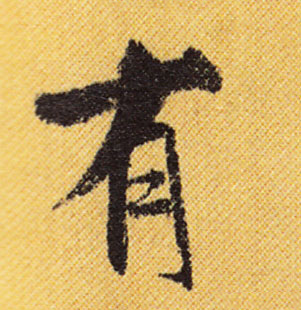



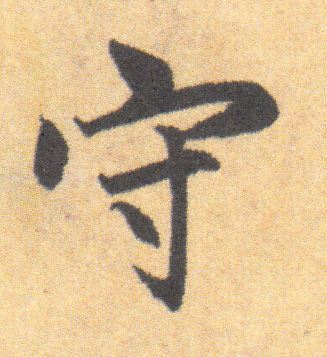


○ Chinese calligraphy, running script: Write "Waves rise and fall, hold fast to the center line"“
Running script achieves a balance between regularity and fluidity, possessing both structure and rhythm, making it ideal as a embodied exercise for understanding "emotional fluctuation cycles." You don't need to strive for perfection; simply let the pen move up and down on the paper, like drawing "visible emotional waves," while deliberately maintaining a "center line" within them.
- Writing words and phrases:
- Rising and falling waves, keeping the heart focused on the center line.
- Waves Rise and Fall, My Heart Keeps a Middle Line
- Writing Tips:
- When writing "waves rise and fall", the strokes can be slightly curved to make the fluctuations more obvious, symbolizing the ups and downs of the emotional curve.
- When writing the four characters “心守中线”, I deliberately made the structure more stable and the center of gravity slightly lower, and the strokes were more restrained, as if I were drawing a baseline on the paper that I could rely on.
- When writing English sentences, you can write "Waves Rise and Fall" a little larger, and "My Heart Keeps a Middle Line" more compact and steady, reminding yourself that even if you can't completely control the waves of your emotions, you can still practice keeping a certain middle line—such as a regular schedule and minimal self-care.
○ The Cyclicality and Triggering Mechanisms of Emotional Fluctuations • Drawing Guidance Suggestions
This guided drawing will help you transform your inexplicable emotional rhythms into a visual image. By drawing waves, calendars, and trigger point maps, you can clearly see that your emotional changes are not entirely random, but closely related to time, events, and physical state.
I. 30-day mood fluctuation curve
- Draw a horizontal axis on a piece of paper, marked 1–30, representing 30 consecutive days; the vertical axis is marked from bottom to top as “significantly low”, “slightly low”, “neutral”, “slightly high”, and “significantly high”.
- Based on your memory, try to roughly mark the location of your emotions each day for the most recent month (or a month that you remember clearly), and connect these points with a broken line.
- Observe whether the line shows a certain periodicity, such as a small peak or trough every few days, or continuous high/low in certain periods.
- Write a summary below the chart, such as: "It turns out that my emotions mostly fluctuate between slightly high and slightly low," or "It turns out that after three consecutive days of peak, I often experience a trough."
II. Triggering Mechanism Radar Chart: Identifying the Most Influential Factors
- Draw a circular radar chart, divided into at least 6 sectors, labeled as: sleep, work/study stress, interpersonal relationships, self-evaluation, physical condition, and environmental changes (seasons, moving, changing schools or jobs, etc.).
- Reflect on the past year and identify which factors most easily boosted or depressed your mood in a short period of time. Draw longer and more prominent charts for these factors in the corresponding sectors.
- Write down 1-2 specific scenarios next to each “highlighted sector”, such as “working overtime until 2 a.m.”, “arguing with a loved one”, “having chronic stomach pain without seeking medical attention”, etc.
- Think about it: If you had to pick one factor you'd most want to prioritize adjusting, which would it be? Write down a small wish for action on the edge of the drawing, rather than a grand goal.
Tip: If you recall any triggering events that cause you intense discomfort or pain while drawing, please give yourself sufficient pause and care. You can temporarily put down your brush, drink a glass of water or green tea, or share your findings with someone you trust. If you experience significant emotional distress or self-harm/despair thoughts, please seek professional support first; drawing and classes should only be used as supplementary tools.
Please log in before submitting your drawings and feelings.
○ 1228. The Periodicity and Triggering Mechanisms of Emotional Fluctuations: Journaling Guidance Suggestions
① Reflect on the past 3–6 months and write down the two periods that were “significantly higher” and the two periods that were “significantly lower” that left the deepest impression on you. Describe what happened in each period in 2–3 sentences.
② Try to list at least one possible trigger for each peak and trough (such as changes in sleep, relationship events, work events, physical discomfort, etc.). Don't strive for complete accuracy; just guess honestly.
③ Write down the old explanations you used to describe these fluctuations (e.g., “I’m just emotional,” “I’m too dramatic,” “I’m not strong enough”), and then try to replace them with new explanations that are closer to “rhythm” (e.g., “I’m more likely to experience peaks and troughs when I’m under stress and have poor sleep”).
④ Develop a "yellow light reminder rule" for yourself: When certain signs appear at the same time, it means you may be approaching the beginning of a new cycle and need to adjust in advance (such as sleeping too late for two consecutive nights + a sudden explosion in social interactions, etc.).
⑤ Write down one thing you're willing to start preparing for before the next fluctuation: it could be adjusting your sleep schedule, communicating boundaries in advance, arranging a professional consultation, or preparing a "self-care menu" (green tea, soup, simple exercise, writing, etc.).
⑥ Conclusion: Respond to yourself in one sentence, for example: "I no longer regard the cycle as a personality defect, but as a rhythm that needs to be understood and cared for."“
Please log in to use.
This lesson helps you transition from "Why do I keep repeating myself?" to "I do have an emotional rhythm." When you learn to observe cycles, identify triggers, and reserve buffers for fluctuations, you'll no longer be dragged along by your emotions, but gradually gain the space to negotiate with them. May a cup of green tea, a bowl of soup, a piece of music, a line of calligraphy, and the contemplation of mandalas become your daily fulcrums for practicing "holding the midline" in the cyclical waves.