

Lesson 1234: Daily Behavior During Repeated Switching Between "High" and "Low"
Duration:75 minutes
Topic Introduction:
The "high-low" shifts in cyclothymia are not dramatic mood swings, but rather subtle yet persistent rhythmic changes that continuously impact your lifestyle. At the "high" end of the hypomanic tendency, you might experience a sudden surge in motivation, increased planning, faster thinking, increased social activity, or a decreased need for sleep, but not as extreme as mania. Once the rhythm dips to the "low" end, you might experience mild slowing, decreased motivation, diminished interest, increased interpersonal sensitivity, or a heightened expectation of failure. This lesson will help you identify the specific manifestations of these recurring shifts in your daily life, including fluctuating work pace, inconsistent attention spans, volatile relationship needs, and wavering judgments about the future. By gradually observing these signals, you will be able to see your own rhythm curve more clearly, allowing you to stabilize your lifestyle in advance. (231 words)
○ Overview of Cyclothymic Disorder
- Symptom characteristics:Cyclothymic mood disorder is characterized by alternating periods of hypomania and mild depression lasting for more than two years, causing individuals to fall into a rhythmic fluctuation that is "never completely stable".
- Rhythm Pattern:Although the mood swings are not as severe as those in bipolar disorder, long-term fluctuations can still affect interpersonal relationships, work, and life structure.
- Risks and delays:Because the symptoms are not "severe" enough, many people go undiagnosed for years, leading to long-term functional impairment and chronic mental fatigue.
▲ AI Interaction: Record your "Rhythm Switching" Three-Day Chart
Think back to the past three days: in which periods did your "high" and "low" periods occur respectively?
Write down your emotions, focus, physical energy, and social needs at the time.
Write down "what you did at that time" to help you identify the trigger point.
The clearer the rhythm, the less likely you are to be led astray by your emotions.
Click the button below and AI will help you sort out the switching modes.
○ Buffering Rhythmic Fluctuations: Music Therapy
Choose a piece with a steady rhythm and a soft timbre, pausing at the highs and supporting at the lows.
Music can help you maintain an "inner steady pace" while switching between music tracks.
Let the melody remind you: you are not the speed of emotions, but the person who can choose the rhythm.
🍵 Calming and Stabilizing Green Tea
Recommended reasons:Green tea is rich in theanine, which helps to soothe the "acceleration" during the mild phase and stabilize the "sluggishness" during the low phase, helping you maintain a more even rhythm.
usage:Steep 3g of green tea at 80°C for 2–3 minutes, and drink one cup each in the morning and at noon.
○ Solomon's Seal and Lily Bulb Soup
Polygonatum odoratum nourishes yin and moistens dryness, while lily bulb calms the mind and soothes the nerves. This is a gentle tonic soup for those whose rhythms fluctuate and whose sleep is easily affected. It is suitable to drink during periods of significant emotional shifts to help balance mood.
Calm
Smooth transition
Healing Recipes
/home2/lzxwhemy/public_html/arttao_org/wp-content/uploads/cookbook/kao-ji-xiong-rou-quan-mai-mian-bao.html(Please confirm that the following has been uploaded: kao-ji-xiong-rou-quan-mai-mian-bao.html)
🎨 Psychological Mandala
Psychological Healing: Psychological Mandala - Thoughts 07
“The "high-low switching" is like the ever-expanding and contracting rings of a mandala. When viewing it, let your gaze slowly focus inward from the outermost circle, symbolizing that you are returning from the outer edge of the rhythm to its core. Just watch, don't interpret, and you can feel your rhythm returning to its ground.
Watch the mandala 3 times to slow down the switching speed.
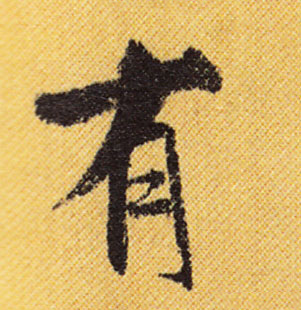
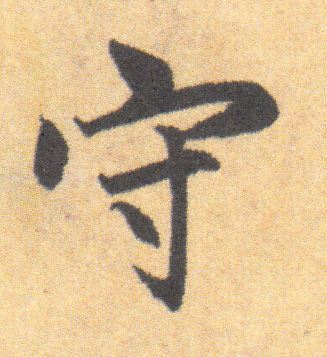
○ Chinese calligraphy – Running script
Running script has the quality of "finding stability in flow", which is very suitable for practicing the inner sense of speed when switching rhythms.
- Written words:
- Gradual yet stable, steady yet yielding
- Steady in Softness, Softness in Flow
- Writing Tips:
- Practice allowing your strokes to find a natural transition point between "fast" and "slow," symbolizing that your rhythm has returned to an adjustable range.






○ "High-Low Switch" Mode - Drawing Guidance Suggestions
To visualize the "high-low" transition, draw three lines on paper: the first represents the "high" end, with a wider peak and faster pace; the second represents the "low" end, with a deeper trough and slower pace; and the third represents your ideal "stable range." Mark three moments that occurred during the past week on each line, such as: a sudden strong urge to make plans, a sudden desire to isolate yourself from the world, or a sudden surge or blurring of focus. If desired, you can also mark bodily signals (such as changes in heart rate, breathing, or sleep) on the lines. These markings will allow you to clearly see the speed at which you oscillate between "acceleration" and "deceleration," making it easier to adjust your lifestyle and bring the fluctuations within a manageable range. (217 words)
Please log in before submitting your drawings and feelings.
○ 1234. "High-Low Switching" Log Guidance Suggestions
① Write down the moment when you suddenly "speeded up" the most recently; ② Write down the moment when you suddenly "slowed down" the most recently.
③ Speculate on the trigger points at that time (sleep, stress, interpersonal relationships, environment).
④ Write a reminder to yourself to maintain a steady pace: "I can choose my own pace and don't have to follow my emotions."“
Please log in to use.
By understanding the "high-low" transition, you will gradually regain control of your rhythm instead of being driven by your emotions.