

Lesson 1237: Why does the "Too Many Plans - Execution Crash" Pattern Occur?
Duration:75 minutes
Topic Introduction: In cyclothymic mood disorder, the "overplanning-execution breakdown" pattern is a very typical but often misunderstood pattern: when emotions slightly lean towards the hypomanic side, thinking speed increases, self-esteem temporarily rises, and the sense of time becomes optimistic, leading to a large number of plans and goals being listed within a day or two, even feeling "I can definitely do it this time"; however, as the rhythm gradually falls back to the neutral or even low range, tasks that were originally easy suddenly become heavy, motivation decreases, concentration wanes, and the body feels tired, and the plans become a source of stress and self-blame. This lesson will help you understand the rhythmic mechanisms behind this pattern, the changes in attention and energy allocation, and why "execution breakdown" is not simply a matter of weak willpower, but is closely related to mood fluctuations, sleep quality, and stress load, and will further guide you to learn a more rhythmic and realistic way of planning. (243 words)
○ Overview of Cyclothymic Disorder
- Symptom characteristics:Cyclothymic mood disorder is characterized by alternating periods of hypomania and mild depression lasting for more than two years, causing individuals to fall into a rhythmic fluctuation that is "never completely stable".
- Rhythm Pattern:Although the fluctuations are not as intense as those of bipolar disorder, they are enough to affect work performance, motivation, and self-evaluation.
- Risks and delays:Because the symptoms "do not meet the diagnostic criteria," many people go unrecognized for a long time, leading to chronic procrastination, repeated interruptions to goals, and a cycle of self-blame that lasts for many years.
▲ AI Interaction: Be Aware of Your "Plan-Collapse" Cycle
Write down the moment when you most "really wanted to rethink your life": your emotions, physical sensations, sleep patterns, and what inspired or stimulated you at that time.
Write down another day when you were "completely unable to move": What difficulties did you encounter in getting up, moving around, and focusing? How did your self-evaluation change?
Finally, write down a sentence you'd like to say to yourself, such as: "What I need is a plan that matches my rhythm, not to do everything at once."“
○ From Expansion to Landing: Music Therapy
Choose a piece of music with a steady melody, moderate rhythm, and neither excessive excitement nor depression, and use it as a transitional piece "from planning to execution".
Listen to it once before writing your plan to gradually bring yourself back to your true energy from the height of your emotions; listen to it again when you feel like you're about to break down to bring yourself back from self-blame to taking small steps that you can take right now.
The rhythm of music can be an external metronome for adjusting your movement rhythm.
🍵 Chinese Tea Therapy - Green Tea - Clear Thinking, No More Impulsive Planning
Recommended reasons:Green tea has a refreshing and invigorating effect, which can help to calm the mind and see the limitations of reality during the "expansion period of plans", and can also moderately boost the spirit during the "execution fatigue period" without overstimulating it.
Usage suggestions:Take 2–3 grams of green tea, pour in hot water at approximately 80°C, steep for 2–3 minutes, and then drink. This is suitable as a "pre-planning tea" or a "pre-execution focusing tea," helping you shift your attention from daydreaming to the tasks at hand.
○ Yam and Lotus Seed Soup for Calming the Mind
Yam invigorates the spleen and replenishes qi, while lotus seeds nourish the heart and calm the mind. This gentle tonic soup is suitable for those experiencing a cycle of "too much planning – too little execution." It helps boost basic physical strength while also calming the mind, allowing you to find a more responsive rhythm between planning and execution.
Healing Recipes
/home2/lzxwhemy/public_html/arttao_org/wp-content/uploads/cookbook/kao-ji-xiong-rou-quan-mai-mian-bao.html(Please confirm that the following has been uploaded: kao-ji-xiong-rou-quan-mai-mian-bao.html)🎨 Psychological Mandala
Psychological Healing: Psychological Mandala - Thoughts 07
The more plans you have, the more severe the breakdown becomes, often feeling like your heart is being pulled outwards by rings. Simply observe the mandala: slowly move your gaze from the complexity of the outer rings to the simplicity of the inner rings, and finally rest on the stable point of light at the very center. You don't need to solve all your plans immediately; just confirm through observation: at this moment, I only need to complete that small circle closest to the center. Repeat this observation three times, allowing anxiety and self-blame to slowly fade from the edges.
Please gaze at the mandala three times, shifting your attention from "everything that needs to be accomplished" back to "the first step that can be taken right now."
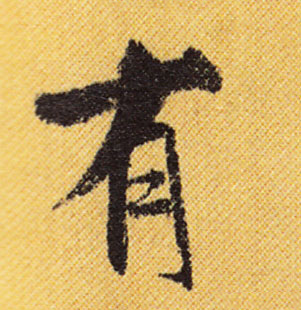
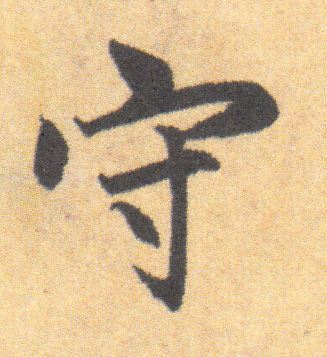
○ Chinese calligraphy – Running script
The running script, with its continuous strokes and pauses, embodies the power of "both advancing and concluding," making it very suitable as a medium for practicing "rhythmic movement."
- Written words:
- Act according to your ability and follow the steps that are feasible.
- Step by Step, Within My Strength
- Writing Tips:
- When writing, consciously slow down the speed of lifting and pressing the brush, making each stroke feel like "a small, manageable step," rather than writing everything in one go. The writing process itself is an exercise in breaking the cycle of "too much planning - execution failure."






○ "Too Many Plans—Execution Collapse" · Drawing Guidance Suggestions
Draw a vertical rectangle on a piece of paper. Write "Plan Inflation Zone" at the top and "Execution Collapse Zone" at the bottom, leaving a "Realistically Feasible Zone" in the middle. Then, without elaborate drawing, simply fill in the blanks with simple lines and symbols: When you are in the "Plan Inflation Zone," what tasks do you typically add, what words do you say, and what are your expectations of yourself? When you fall into the "Execution Collapse Zone," what behaviors do you exhibit (such as lying down, procrastination, turning off messaging, avoiding others)? Finally, write down three of the smallest, most practical actions in the "Realistically Feasible Zone" that don't require emotional support. Then, simply observe the diagram quietly: slowly move your eyes from top to bottom and then from bottom to top, feeling how you move back and forth between the three zones, and also realizing that this "small middle section" is actually where you truly want to gradually take root. (234 words)
Please log in before submitting your drawings and feelings.
○ 1237. "Planning and Execution" · Log Guidance Suggestions
① Write down the specific situation of your most recent "over-planning", including the time, place, triggering event and emotions.
② Write down another experience where you were "completely unable to perform", and mark three real-world limitations you overlooked (such as sleep, physical strength, time, and support).
③ Finally, write down a gentle self-reminder: "I can take it one step at a time, letting the goal follow a rhythm, rather than an impulse."“
Please log in to use.
Once you understand the rhythmic structure of "overplanning - execution collapse," you will no longer be left with only self-blame, but will be able to start designing truly feasible and sustainable action paths for yourself.