

Lesson 1245: How Emotional and Motivational Instability Affects Long-Term Goals
Duration:75 minutes
Topic Introduction:
For individuals with cyclothymic mood disorder, the problem isn't a lack of design for long-term goals, but rather the difficulty in consistently executing them. During periods of heightened emotion and strong motivation, they are filled with inspiration, formulate ambitious plans, create intensive schedules, and even complete a large number of tasks in a short period. However, during periods of declining emotion and drastically reduced motivation, the same goals seem distant, burdensome, and unattractive, leading to slower or even stagnant action and feelings of self-blame such as "I can never stick to it" and "Am I lacking perseverance?" This course will guide you to understand from the perspective of rhythm and emotional mechanisms: it's not that you lack willpower, but rather that the instability of emotions and motivation causes goal execution to be periodically interrupted. We will practice breaking down long-term goals into smaller, "cross-rhythmic" units, designing different approaches for periods of heightened and low mood, so that goals are no longer entirely dependent on current moods, but rather on a path that can be repeatedly returned to.
○ Overview of Cyclothymic Disorder
- Fluctuations in emotions and motivation:During the hype phase, motivation is excessively inflated and goals are set too high; during the depression phase, motivation drops significantly, and the idea of "giving up completely" is easily generated.
- Impact on long-term goals:Frequent oscillations between "high engagement" and "complete shutdown" make it difficult to establish a stable pace for long-term goals, intensifying self-doubt and feelings of powerlessness.
- Adjust direction:By redesigning goals through a rhythmic perspective, and categorizing execution strategies into "high-energy" and "low-energy" versions, you can take that small step that you can accomplish in different states.
▲ AI Interaction: Building "Multi-Rhythm Versions" for Long-Term Goals“
Please write down a long-term goal that you care about most but always interrupt, such as: learning a language, completing a project, or improving your physical condition.
Next, record in two columns: When you are in a high mood and highly motivated, what do you usually do for this goal? When you are in a low mood and lack motivation, what state do you become?
Finally, design a "high-energy action list" and a "low-energy action list" for this goal, so that you can maintain a little connection at different rhythms, instead of being completely disconnected when you are down.
○ The Rhythm of Long-Term Goals: Music Therapy
Choose a piece of music with a steady rhythm and a slow, progressive melody, and use it as your "target revisit song".
Whenever you play this music, do just one small thing related to your long-term goal: organize your materials, write a line of text, or complete a simple action to establish a fixed connection between the music and your goal in your brain.
Even when you're feeling down or lacking motivation, this music reminds you that you can maintain your connection with your goals with minimal action, rather than waiting until you're "in a good mood" to begin.
Warm Milk & Golden Milk: Healing
Recommended reasons:When you blame yourself for not sticking to long-term goals, your nervous system is often in a state of tension and fatigue. Warm milk or golden milk, with its gentle temperature, can help you shift from criticizing yourself to comforting yourself, providing a gentler starting point for reorganizing your goals and rhythm.
How to drink:On a night when you're ready to revisit your long-term goals, brew a small cup of golden milk, stir it slowly, and sip it. During this process, don't rush into making plans; simply tell yourself, "I'm willing to give myself a new, more rhythmic approach." Let the drink become a more welcoming bridge between you and your goals, rather than a tool for blame or punishment.
○ Kosher Food: A Simple Meal for a Stable Daily Rhythm
Choose a simple combination that aligns with kosher principles: whole-wheat bread, eggs or fish, and a vegetable salad. Designate this simple meal as a fixed recipe for "Goal Day"—prepare this consistent, light meal for yourself whenever you take even the smallest action towards a long-term goal. By ritualizing your meals, you send a message into your life: goals don't need to be driven by emotions, but rather go hand in hand with your daily routine, your body, and your rhythms.
Rhythm stability
Mind-body connection
Healing Recipes
/home2/lzxwhemy/public_html/arttao_org/wp-content/uploads/cookbook/kao-ji-xiong-rou-quan-mai-mian-bao.html(Please confirm that the following has been uploaded: kao-ji-xiong-rou-quan-mai-mian-bao.html)
Psychological Mandala
Psychological Healing: Psychological Mandala - Thoughts 07
When you constantly feel like you "can't stick to long-term goals," quietly observe the layered structure of a mandala: the center wasn't formed overnight, but rather slowly built up from concentric circles. You can imagine each circle as a different emotional state—high, low, vague, clear—but the pattern still unfolds outwards. You don't have to be perfect in every circle; just allow yourself to add one more stroke in any given circle. The mandala reminds you: long-term goals aren't a straight line, but a path you can repeatedly return to.
Please look at the mandala three times and whisper to yourself: Even if I only make a small progress today, I am still on the road.
○ Medieval Gothic Script
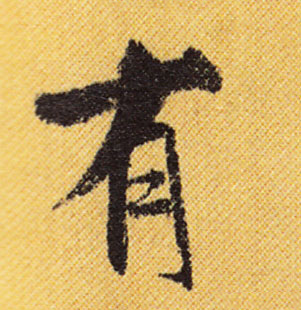
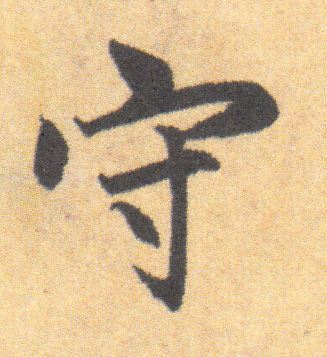
Long-term goals require a "slow but steady" force, and the steady structure of medieval Gothic script provides a visible form for this force: each stroke, seemingly clumsy, forms a solemn and complete text through repeated layering.
- Written words:Step by step, I stay
- Writing Tips:When writing each letter, consciously slow down and keep the spacing between strokes consistent. Feel that you are not "sprinting" to complete a line of words, but practicing patience in coexisting with the goal with each stroke, and writing "take it slow" into the shape of the characters.






○ Long-Term Goal Rhythm Chart - Drawing Guidance Suggestions
Draw a long road extending from left to right, dividing it into several smaller segments. Above each segment, write a small step related to your long-term goal, such as "Read one page," "Practice for five minutes," or "Organize an idea." Below the road, use wavy lines to indicate your actual emotional and motivational fluctuations: sometimes high, sometimes low, sometimes near level. After completing the drawing, quietly observe it. You'll find that the emotional line doesn't always overlap with the road, but the road can still exist and be walked on again. After finishing, tell yourself, "Even if I stop and start, this road still belongs to me." Let this drawing become a visual anchor point for maintaining your relationship with your long-term goal amidst the ups and downs.
Please log in before submitting your drawings and feelings.
○ 1245. Emotions and Motivation: Journaling Guidance Suggestions
① Write down a long-term goal that you have repeatedly tried to achieve but always have to give up.
② Record your emotional and motivational state during the most recent interruption: what you were thinking and how you felt at the time.
③ Write down a "high-energy version" and a "low-energy version" of this goal, and set a gentle reminder for yourself to continue on the same path during the next fluctuation.
Please log in to use.
Emotions and motivations aren't always on your side, but goals can reserve a place for you in new ways. By returning to them step by step, time and again, amidst the ups and downs, you're already practicing a long-term rhythm that belongs to you.