

Lesson 1271: Mood Fluctuation Curves: Recording Intensity and Duration
Duration:75 minutes
Topic Introduction:
In cyclothymic mood disorder, emotions are not simply "good" or "bad," but rather resemble a constantly fluctuating curve: sometimes light, sometimes somber, sometimes just brief fluctuations, sometimes prolonged. This lesson doesn't rush to judge whether your emotions are right or wrong, but invites you to first learn to "quantitatively observe"—using a scale of 0-10 to record intensity, and using start and end times to mark duration, transforming what was originally a vague mood into a visible and reviewable trajectory. By practicing the mood fluctuation curve, you will gradually discover: at which times of the day are you more likely to rise or fall, which events are more likely to trigger higher-intensity reactions, and which habits unconsciously prolong periods of low mood. The mood curve is not for self-blame, but to help you build an "emotion user manual": when you can see the rhythm of the fluctuations, you have a better chance to make adjustments at the appropriate time, rather than being dragged along by your emotions.
Why record two pieces of information: "intensity" and "time"?
- Remembering only feelings makes things too easy to become blurred.“Saying things like "Today was terrible" or "This week was bad" amplifies the pain, while specific scores and durations allow you to see the ups and downs rather than "total collapse."
- Intensity reflects instantaneous impact:A score of 0–10 helps you distinguish between moments of “minor setbacks” and “almost unbearable” moments, making it easier to review and adjust your coping strategies later.
- Duration reveals recovery ability:The same level of discomfort (7 points) can sometimes subside in half an hour, while other times it can linger for two or three days. This directly relates to your self-care methods and rhythmic schedule.
○ Basic methods for recording mood fluctuation curves
- Choose one day or one week as the observation period:For example, record your emotions once each in the morning, noon, and evening, or record them promptly when your emotions change significantly.
- Three core data points:Start time, emotional intensity (0–10 points), and time to end or significant relief; a "Main Event/Thought" column can be added.
- Presented using a simple line chart:Write the time on the horizontal axis and the intensity on the vertical axis. Draw a point for each record and connect them to form a unique emotional fluctuation curve.
○ Understanding Your Rhythm from the "Curve"
- Identify high-risk periods:For example, every evening, Sunday night, or before bedtime, making it easy to plan supportive activities in advance.
- Found the recovery resource:Pay attention to which behaviors (walking, drinking tea, writing, chatting) can slow the curve downwards rather than continue to rise.
- Provide a basis for professional support:Bringing the records to professionals can help in more accurate discussions about medication adjustments, lifestyle changes, and the direction of psychological interventions.
▲ AI Interaction: Sketch Your 24-Hour Emotional Fluctuations
Tell the AI: Choose the most recent day and briefly describe the time points from waking up to falling asleep when your mood changed significantly (e.g., 4 points when waking up, suddenly 7 points in the afternoon, and dropped back to 3 points after dinner).
You can also write down a particularly strong emotion (such as a sudden feeling of grievance, anger, or emptiness) and explain approximately how long it lasted.
AI will assist you:
- Organize your description into a "textualized mood fluctuation curve";
- It helps you identify potential "high-risk periods" and "buffer periods";
- Offer one or two small care suggestions suitable for high-risk periods (such as a short walk, a warm drink, or a reassuring message).
○ Day for Observing Mood Fluctuations - Music Therapy
On the day you record your mood fluctuation curve, you can pre-select a 10-15 minute instrumental piece as "background music for the observation moment".
When your mood rises to 6 or higher or falls significantly, play this music not to make you feel better immediately, but to remind yourself that this is a "moment that can be seen".
While listening, you can whisper to yourself:
- “"I am currently experiencing emotional highs and lows, and this is just part of the curve."”
- “"The music is flowing, and my emotions will continue to move forward; they won't stay here forever."”
After the music ends, record the intensity and duration, and write down your most genuine feeling at that moment in your notes, rather than a conclusive evaluation.
○ Eastern Healing Tea: Longjing Tea for Calming and Regulating the Mind
Recommended reasons:A light, fragrant green tea can help to slightly brighten the mind from a sluggish or cloudy state without causing over-excitement. The refreshing taste of Longjing tea, paired with a touch of white chrysanthemum or mint, is suitable for drinking before or after journaling your emotions, reminding yourself: "I'm not trying to suppress my emotions right now, but rather to give my brain a clear and gentle place to observe."
usage:Use 3-4g of Longjing tea, 2-3 white chrysanthemums or a pinch of mint, and water at around 80℃ to avoid it being too hot or too strong. First, gently smell the aroma of the tea, then sip it slowly. During the 5 minutes of drinking tea, briefly review your emotional changes over the past two hours, giving yourself a rough score on a scale of 0-10, and slowly organize the scattered fragments of the day into rhythmic segments.
○ Yam and Corn Stew
Chinese yam (yam) invigorates the spleen and replenishes qi, while corn silk promotes diuresis without harming the body's vital energy. Combined with carrots and a small amount of red dates, it can provide the body with a mild and continuous source of energy.
For people with significant mood swings, fluctuations in blood sugar and energy levels can amplify emotional ups and downs. This soup helps you build a "smooth and non-stimulating" energy base, preventing your mood curve from experiencing excessively sharp peaks or troughs due to hunger or fatigue.
During the days when you're preparing to record your mood curve for the week, scheduling 1-2 of these simple soups can serve as physical support for your "rhythm observation week."
Strengthen the spleen and replenish qi
Soup therapy
Healing Recipes
/home2/lzxwhemy/public_html/arttao_org/wp-content/uploads/cookbook/quan-gu-yan-mai-shui-guo-wan.html(Please confirm that the following has been uploaded: quan-gu-yan-mai-shui-guo-wan.html)
Psychological Mandala
Psychological Healing: Psychological Mandala Ideas 11
A mandala is not about drawing something, but about observing it.
Imagine a circular mandala with a gentle wave extending outward from the center: it rises and falls, yet always remains within the circle. The center symbolizes your core self, and the wave symbolizes your daily emotional curves.
Please observe only this single wave line as it slowly rises and falls within the circle. Note that no matter how high it rises or how close it temporarily approaches the edge, it never crosses the boundary.
While watching, whisper to yourself: "My emotions may rise and fall, but I always stay at my center."“
There's no need to analyze the pattern; simply focus your attention on the flow of this wave and let your eyes perform a "non-verbal understanding": emotional fluctuations are a process, not a judgment.
On the day you record your emotional curve, it is recommended to find a quiet moment and watch this article 2-3 times, connecting the image of "emotions fluctuating within the circle" with the line graph on your paper.
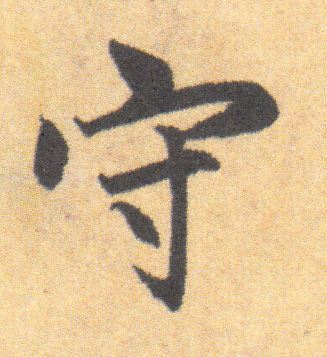
○ Chinese Calligraphy - Running Script
The lines of running script are neither as stiff as those of regular script nor as uncontrolled as those of cursive script. It maintains a breathable rhythm between speed and pauses, making it very suitable as a physical exercise for "observing the curve of emotions".
In the extension and contraction of each stroke, you can experience that lines also have strength and time, and no stroke stays at its highest or lowest point forever.
- Written words:“"Emotions may fluctuate, but the mind should remain steadfast" or "See the curve, but don't rush to conclusions."
- Writing Tips:Intentionally making some strokes slightly longer and others slightly shorter is like how some emotions come on strong but pass quickly, while some low moods, though less intense, linger longer. Allow these differences to exist while maintaining overall coherence.
- Practice method:After a day of recording, spend 5–10 minutes writing down these words, letting the scores and lines on the paper during the day settle into a single, steady line of flowing handwriting.







“`
○ Drawing Guide: My Daily Mood Line Chart
Take a piece of white paper and draw a horizontal line at the bottom. Write "Get up" on the left and "Go to sleep" on the right. You can mark several time points in the middle, such as morning, afternoon, evening, and night.
Draw another vertical line and mark it with 0-10 points. 0 represents the calmest or even numb emotions, and 10 represents the most intense emotions (whether excitement or pain).
Reflect on your general emotions today or yesterday, and mark key moments as points: for example, "I was nervous at 10 am, which was a 7," "I was down to a 6 at 4 pm," and "I was down to a 3 after my evening walk." Then connect these points with lines.
After you finish drawing, please stop and look at this broken line. Don't rush to explain the reason. Just say to yourself, "So this is how my day goes on and off."“
This isn't a work of art; it's an honest map. You can jot down a small adjustment you'd like to try next in the corner: for example, schedule a cup of tea before or after a peak, a few minutes of stretching, or end some draining conversations early.
Please log in before submitting your drawings and feelings.
“`
○ 1271. Mood Fluctuation Curve - Journal Guidance Suggestions
① Describe in words when your highest and lowest emotional points occurred today (or the most recent day), and approximately how intense they were.
② Write down a segment of the day in which your emotions "recovered faster than expected" and another segment in which they "took longer than expected," and think about the differences between them.
③ Write a reminder to your future self: When you see your mood curve rise or fall, which sentence would you like to write down first in your diary, rather than immediately drawing conclusions for yourself?
Please log in to use.
The mood fluctuation curve is not meant to turn you into an "emotion statistician," but rather to help you find a visible line in your ups and downs.