

Lesson 1309: It turns out that my sensitivity wasn't "over the top," I just felt things more deeply.
Duration:75 minutes
Topic Introduction:
In the experience of Disruptive Mood Disorder (DMDD), you may often hear others say, "You're overreacting," "You're overthinking it," or "You're being overly sensitive." These comments are like layers of dust covering your heart, making you mistakenly believe that your feelings are irrational, inappropriate, or even "abnormal." This course will help you rediscover sensitivity: it's not exaggeration, but rather that your sensory system is faster, deeper, and more comprehensive than others; it also means you are more likely to perceive subtle changes, the warmth or coldness in relationships, and the tension and conflict in situations. Sensitivity is not a mistake, but rather it only escalates into an outburst when there is overstimulation, insufficient emotional regulation resources, or an unstable lifestyle. This course will guide you away from self-blame and shame, teaching you to re-accept sensitivity as a trait, not a burden. We will combine the soothing effects of aromatherapy drinks, the symbolic "return to the core" of Christian fasting, the solid writing of Humanist script, and mandala viewing exercises, so that sensitivity is no longer a wound to be hidden, but rather an entry point for you to begin understanding yourself.
[arttao_Healing_Course_tts_group1309_1313]
▲ AI Interaction: Write down three sentences that say "My sensitivity is not wrong".
When have you been misunderstood by others because of your sensitivity? Please write down three examples.
Next, write down your true feelings at the time: fear, resentment, shame, anxiety, isolation, and rejection?
Finally, transform these feelings into self-understanding, such as: "I feel deeply because I care."“
Click the button below to practice finding new meaning in your sensitivities with AI.
Sensitivity is not an exaggeration; music therapy.
Choose a piece of music with soft strings to help you loosen your old belief that "sensitivity equals error".
While listening, focus your attention on your chest or neck and shoulders, and feel how the pressure from sensitivity is gradually relieved by the music.
To say softly, "My deep feelings are a kind of ability."“
Aromatherapy Drink: Chamomile & Lavender Soothing Drink
Recommended reasons:Chamomile soothes an oversensitive nervous system, while lavender enhances a sense of security—a combination tailor-made for those with sensitive skin.
usage:Steep 3g of chamomile and 1g of lavender for 5 minutes; as you take your first sip, silently repeat to yourself, "I can feel, and I can take care of myself."“
○ Simple Grain Soup (Christian Fasting Style)
When you are too sensitive, external sounds, expressions, and actions will be amplified, while minimalist food symbolizes "reducing input and reducing stimulation".
Simple cereal soup helps you symbolically "clear out external noise," allowing you to return to a more stable, lighter state where you can better hear your inner voice.
Sensitivity doesn't need to be suppressed; it needs a cleaner space to be understood.
Gentle self
Back to the core
Healing Recipes
/home2/lzxwhemy/public_html/arttao_org/wp-content/uploads/cookbook/lotus-soup.html(Please confirm that lotus-soup.html has been uploaded)
Psychological Mandala (Viewing)
Psychological Healing: Psychological Mandala - 56 Thoughts
Sensitive people are often overwhelmed by external pressures, but the symmetrical structure of the mandala can give a sensitive heart a visual rhythm that allows them to let down their guard.
Focus your gaze on the center of the mandala, allowing the part of your heart that is most easily stimulated to slowly relax.
No need to draw, just watch.
If you feel you have "too much," focus on the lines of the outer circle of the mandala. They will remind you that your levels, your depth, and your acuity are never a burden, but a structure.
Mandala is not about drawing something, but about observing; observing makes you realize for the first time that your sensitivity can also be stable.

○ Italian Renaissance · Humanist Script
Humanist Script, with its steady rhythm and even breathing, is an ideal writing style for practicing "being sensitive yet composed."
A steady rhythm while writing will bring you back from a state of being overwhelmed by stimulation to a state of adjustment.
- Sentence writing:
- My sensitivity is not exaggeration.
- My sensitivity is not an exaggeration.
- Writing Tips:
- Slow down, let each letter seem to be telling you: "Deep feeling is not the same as being wrong."“

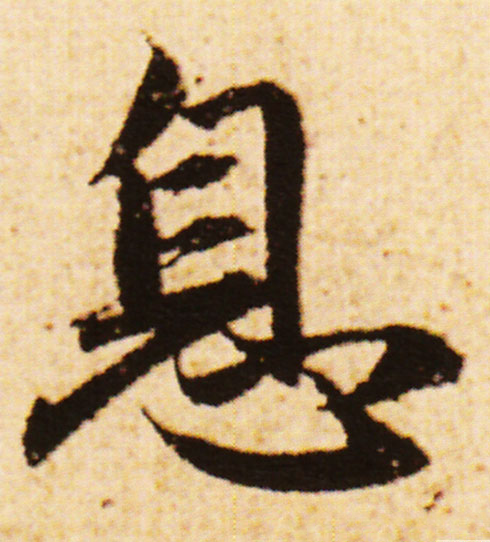






○ Sensitive Skin Recovery: Guiding Suggestions for Art Therapy
Sensitivity can easily accumulate into emotional outbursts, while painting allows you to express your "deep feelings" externally, instead of keeping them inside your body.
1. Mood Fluctuation Curve
- Draw a curve representing your mood fluctuations throughout the day.
- Mark the periods when sensitivity is particularly high and write down the possible triggers.
- Observe which fluctuations come from external stimuli and which come from internal pressure.
II. Sensitive Layer Profile
- Draw a structure that radiates outwards from the inside to represent your levels of sensitivity.
- Write down the categories that resonate with you most at different levels (relationship, voice, tone, expression).
- This allows you to see that your sensitivity is structured and logical, not a chaotic reaction.
Please log in before submitting your drawings and feelings.
○ 1309. Sensitive Recovery - Log Guidance Suggestions
① Write down three "sensitive moments" that happened to you today.
② Describe your true emotions in each moment, rather than labels that have been attached to you.
③ Write a sentence that you would be willing to support your sensitive self.
④ Complete the sentence: "My sensitivity isn't an exaggeration, but rather..."“
Please log in to use.
Your sensitivity is not a flaw, but a deeper understanding of life than others; learn to nurture it, and it will become your strength.