

Lesson 1325: Quantifying Emotions with Numbers Made Me Feel "I Can Be Understood" for the First Time“
Duration:75 minutes
Topic Introduction:
For children and adolescents with disruptive mood disorder (DMDD), emotions are often described as "too exaggerated," "too sensitive," or "explosive," but few people ask: How much pain, how much noise, how much discomfort does it actually cause you? This course will guide you through a simple yet crucial skill—quantifying the intensity of emotions with numbers, allowing those feelings that adults downplay to appear clearly for the first time.
When you say, "I'm feeling 8 out of 10 in discomfort right now," or "My anger is only 3 out of 10 today, but my fear is 9 out of 10," you're no longer just being labeled "it's happening again," but rather you're showing others your true state in an understandable way. Together, we'll differentiate between the types and intensities of emotions, learn a self-assessment scale from 0 to 10, try recording your daily emotional fluctuations numerically, and consider at what emotional level you need help or rest. The course combines 24 types of Eastern healing teas and 40 kinds of Chinese medicinal soups to gently support the nervous system, the steady rhythm of writing in Chinese calligraphy (clerical script), and focused training on "mandala drawing is not about what you draw, but about what you observe," helping you find an honest and understandable path to expression, bridging the gap between "being criticized too much" and "not being able to explain yourself clearly."
[arttao_Healing_Course_tts_group1325_1329]
▲ AI Interaction: Build Your "0-10 Emotion Scale"“
Imagine a scale of 0-10 in your mind: 0 represents complete calm, and 10 represents being on the verge of exploding and unable to hold on any longer.
Write down three emotions: sadness, anger, and fear. For each emotion, imagine: What would you be like at 3 minutes? What would you be like at 7 minutes?
Next, recall a small incident from today and assign it three numbers, such as: "Because I didn't finish my homework, I was 6 points sad, 4 points angry, and 7 points scared."“
Click the button below to practice using numbers to describe the intensity of your emotions with AI, so that others can understand more clearly what you are going through, rather than just seeing your behavior.
○ Use rhythm to feel the "intensity of emotions" · Music therapy
Play a piece of music that gradually increases in intensity or gradually decreases in intensity, and divide the entire song into ten sections in your mind, from 0 to 10.
While listening, pay attention to your physical reactions in different sections: Which section makes you feel "3 points of tension"? Which section makes you feel "7 points of explosiveness"? Which section makes you feel "2 points of rest"?
Use music as a tool to help you practice feeling "intensity differences"; when you can distinguish these subtle differences, you will be better able to describe your state with numbers, instead of just saying "I can't stand it".
○ Eastern Healing Tea: Jujube Seed and Albizia Bark Soothing Tea
Recommended reasons:Sour jujube seed and albizia bark are traditionally used to calm the nerves, relieve irritability and difficulty falling asleep, and are especially suitable for people with volatile emotions who are still reviewing their "emotional score" at night. It's like telling you: "You can gradually deduct points, you don't have to stay at 9 or 10."“
usage:Steep 3g of jujube seed and 3g of albizia bark in 90–95°C hot water for about 8 minutes. While drinking, ask yourself, "How tense am I right now?" Don't strive for accuracy; just being honest is a step towards understanding.
○ Yam and Goji Berry Soup for Stabilizing Emotions (Chinese Food Therapy - Soup)
Yam strengthens the spleen and goji berries nourish the blood, making it suitable for those who are in a state of "high emotional stress and physical and mental exhaustion" for a long time.
When your daily mood score fluctuates between 6 and 9, your brain and body are actually constantly overdrawn.
A bowl of yam and goji berry soup symbolizes replenishing your basic energy after it has been depleted, allowing your emotions to gradually decrease from a "high" state, rather than being constantly on the gas pedal.
While drinking, you can tell yourself, "I have the right not to be 9 or 10 every day. I can slowly return to the world of 3 or 4."“
Replenishing Qi and nourishing blood
Suitable for long-term emotional exhaustion
Healing Recipes
/home2/lzxwhemy/public_html/arttao_org/wp-content/uploads/cookbook/asari-miso-shiru.html(Please confirm that asari-miso-shiru.html has been uploaded)
Psychological Mandala (Viewing)
Psychological Healing: Psychological Mandala - 76 Thoughts
A mandala is not about drawing something, but about observing it.
Imagine the mandala in front of you, with the center and outer rings representing an emotional intensity of 0–10:
The center is worth 0 points, and the outermost edge is worth 10 points.
Focus on the center and ask yourself: "If my current emotions were a circle, which circle would I be on?"“
Precision isn't necessary; just intuition.
Then slowly move your gaze from the circle where you stopped to one circle inwards, imagining that you are also trying to reduce the tension by 1 point.
The act of watching itself is a practice of recognizing and adjusting intensity, rather than being dragged along by emotions.

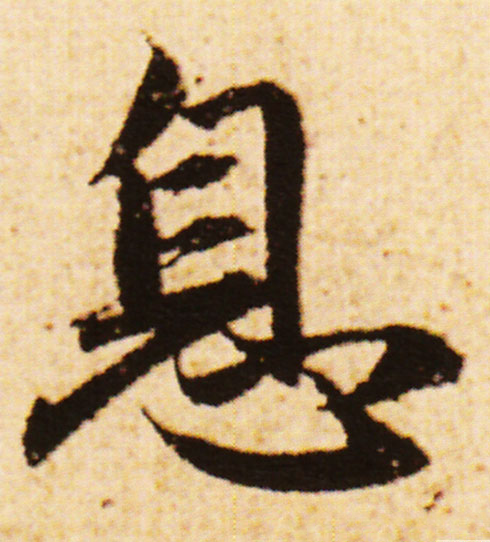
○ Chinese calligraphy - Clerical script (Write a sentence for the emotion score)
The slow rhythm and stable structure of clerical script make it a suitable "stable background" when you are recording your emotional scores.
When you write down your state of mind stroke by stroke, the numbers are no longer just cold, hard quantifications, but a serious statement you make to the world.
- Sentence writing:
- Today I'm 6 out of 10 sad, but I'm still trying to live my life.
- My sadness is 6 out of 10 today, and I am still trying.
- Writing Tips:
- First decide on a realistic score in your mind, then put pen to paper.
Each time I finish writing this sentence, I take a deep breath, as if telling myself:
“"Some people are paying attention to my scores, including myself."”
The handwriting doesn't have to be perfect, as long as it stands firmly on the paper, it's like you're taking a place for your own feelings.







○ Draw the fractions: Art therapy exercise
Numbers are the language of reason, while images are the language of emotion; when the two meet, you will have a clearer understanding of what you are experiencing.
I. Emotion Line Chart
- Draw a horizontal axis (time) and a vertical axis (0–10 points of emotional intensity) on a piece of paper.
- Reflect on the day and mark the "emotional scores" at several key moments, connecting them with lines.
- Observe this line: During which periods are it particularly high? Is there a period of relative stability? This can help you find "times when you need assistance" and "short breaks when you can rest".
II. Emotional Score Color Scale Chart
- Draw a color bar from light to dark, and divide it into 11 segments from 0 to 10.
- Below each paragraph, write a description of how you felt about "that score," for example: 2 points = a little tired, 6 points = a stone pressing on my chest, 9 points = about to explode.
- You can put this picture where you often see it. When you can't speak, just point to that square, and you're already saying, "I'm probably here right now."“
Please log in before submitting your drawings and feelings.
○ 1325. Express your feelings with numbers: Journal guidance suggestions
① Reflect on today and select three moments, labeling each moment with a score of "sad, angry, or scared".
② Choose the moment with the highest score, and describe in a few sentences what happened at that time and what you really wanted.
③ Write a sentence you would like to say to someone you trust in the future, for example: "When I say I feel 8 points upset, please don't scold me first, ask me what happened."“
④ Complete the sentence: "When I started quantifying my emotions with numbers, I felt for the first time that I could be understood, because..."“
Please log in to use.
You're not exaggerating, nor are you being pretentious; you've simply finally learned to express yourself in a way that others can understand.
“"This really hurts me."”
May this lesson bring you more genuine understanding in a world often misunderstood.