

Lesson 1333: What I need is a consistent response, not repeated confusion.
Duration:75 minutes
Topic Introduction:
For children and adolescents with disruptive mood disorder (DMDD), what's often more devastating than a single conflict is the unpredictable nature of others' reactions: sometimes gentle reassurance, sometimes a sudden outburst; saying yes one day, no the next; agreeing one second, turning on you the next. Your nervous system is already sensitive and volatile enough, and when external reactions are contradictory, it's like being thrown into a game with no rules, where you can only use intense emotions to try and confirm whether the relationship is still stable. This lesson will help you understand that the "consistent response" you crave isn't about demanding others be perfect all the time, but rather about hoping for basic, predictable boundaries, tone, attitude, and principles. Together, we'll explore how inconsistent and chaotic responses exacerbate your emotional storms, why inconsistency is interpreted by your brain as "I'm not important" or "I could be abandoned at any time," and how you can use clear language and enforceable agreements to help relationships gradually become more stable. The course will combine 24 types of Eastern healing teas, 40 kinds of Chinese food therapy soups with their calming symbolism, the steady rhythm of Chinese calligraphy (clerical script), and the inner gaze exercise of "Mandala is not about drawing something, but about looking at it" to help you clearly express this need and learn to fight for a more consistent and reliable response.
[arttao_Healing_Course_tts_group1333_1337]
▲ AI Interaction: Write "The Consistent Response I Need"“
What you crave is not "controlling others," but rather to avoid being dragged into repeated emotional outbursts by the constant chaos. Let's start by using words to help you organize your true inner needs.
- ① Write down three inconsistencies that frustrate you the most: for example
“"Sometimes they comfort me, sometimes they suddenly scold me with very harsh words";
“"The same thing can be done today, but not tomorrow."
“"She said she wouldn't leave, but the next time we argued she said she wanted to give up on me." - ② Write down your true feelings for one of these: fear? confusion? feeling unworthy of being taken seriously?
- ③ Complete the sentence: "What I need is—, not—." (For example: a stable stance, not inconsistent behavior.)
Click the button below to complete this "Consistent Response Manual" with the help of AI, giving important others the opportunity to know how to treat you more consistently.
From Chaos to Predictability: Music Therapy
Choose a piece of music with a simple structure, repetitive rhythm, and not too strong fluctuations, and let it symbolize that "the world has rhythm, not complete randomness".
For the first 30 seconds of the music, try counting the beats: one two three four, one two three four, let your body know:
“"At least in this song, everything follows a pattern."”
Then whisper a sentence to yourself:
“I deserve a steady response, not a push-and-pull that comes and goes.”
○ Oriental Healing Tea - Jasmine Longjing Balancing Drink
Recommended reasons:The fragrance of jasmine brings a gentle sense of comfort, while Longjing tea symbolizes clarity and balance, making it suitable for readjusting one's inner boundaries when emotions are stirred up by the "hot and cold" attitude of others.
usage:Steep 2g of Longjing tea with a small amount of jasmine flowers in 80°C hot water for 2–3 minutes. Treat the tea as a kind of "rhythm": watch the tea leaves unfurl, and remind yourself that your sense of self-worth should not fluctuate with the moods of others.
○ Lotus Root and Pork Rib Soup for Calming the Mind (Chinese Food Therapy - Soup)
Lotus root symbolizes roots and clarity, while pork ribs provide stable energy. For someone like you who's always "shaken" in chaotic relationships, this soup means:
“Even if external reactions are unpredictable, you can still slowly build a solid internal foundation for yourself.”
While drinking soup, imagine yourself sitting in a chair that won't tip over, and silently repeat:
“"Others may have emotions, but my value doesn't need to be pushed around like that."”
This isn't about forcing yourself to be strong; it's about practicing building a mental center that's less easily dictated by external factors.
Buffer relationship tension
Suitable for post-emotional recovery
Healing Recipes
/home2/lzxwhemy/public_html/arttao_org/wp-content/uploads/cookbook/asari-miso-shiru.html(Please confirm that asari-miso-shiru.html has been uploaded)
Psychological Mandala (Viewing)
Psychological Healing: Psychological Mandala - 84 Thoughts
A mandala is not about drawing something, but about observing it.
Think of the core of the mandala as your true need: "I want a basically consistent response."“
The outer ring pattern resembles the different emotions of different people: sometimes bright, sometimes dark, sometimes close, sometimes far away.
While watching, please practice:
First, focus on the center and silently state your needs;
Looking outwards, we must acknowledge that the world does indeed change;
Then return to the center and tell yourself:
“Even though they are in disarray today, my needs remain clear, legitimate, and not excessive.”
What the mandala teaches you is to stay at your center even within the complex outer circle.

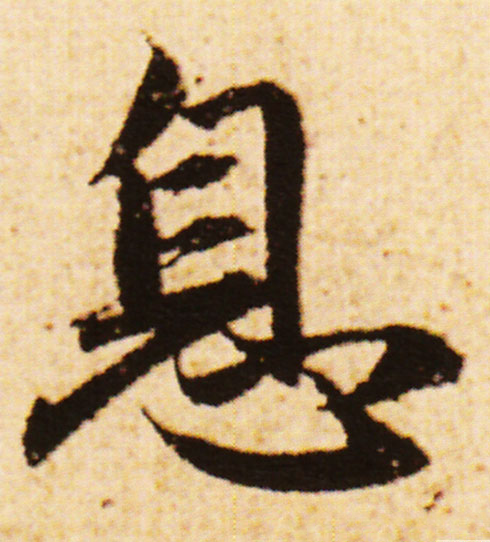
○ Chinese calligraphy - Clerical script (Write a declaration for "unanimous response")
The clerical script is broad and rhythmic, with each stroke having a beginning, a process, and an ending.
When you practice writing clerical script amidst chaotic relationships, you are actually using your body to experience "predictable strokes" and "stable lines".
- Sentence writing:
- I deserve to be treated consistently and reliably.
- I deserve consistent and steady responses.
- Writing Tips:
- When writing the word "worth it", I deliberately slowed down so that each stroke landed firmly on the paper.
Imagine this is the boundary you're drawing for yourself:
Others' attitudes may change, but your self-worth will no longer be out of control.







○ Moving Relationships from Chaos to Stability: Art Therapy Exercises
When you can't change others, at least draw out "what kind of response you need," see it clearly, and then say it out loud.
I. Emotional Temperature Line Chart
- Draw a horizontal axis to represent time and a vertical axis to represent your emotional intensity (0-10 points).
- Mark the different reactions others have to you at different times (gentle, stern, suddenly cold, suddenly close).
- Connect the dots with lines and see how these "inconsistencies" can push your emotions to a breaking point.
- This isn't about blaming others, but rather helping you understand that your sensitivity follows a pattern.
II. Ideal Response Diagram
- Draw two side-by-side columns: write "Realistic Response" on the left and "The Response I Need" on the right.
- Mark the elements you want on the right: steady tone, clear boundaries, consistent attitude, and no sudden change of attitude.
- This image can serve as a visual tool for future discussions with family, teachers, or therapists.
Please log in before submitting your drawings and feelings.
○ 1333. The Need for Consistent Responses • Log-Guided Suggestions
① Write down a person or relationship in your life that you feel is "most unpredictable" (you don't have to write their name, you can use a code).
② Describe an experience where your emotions were severely affected by a sudden change in attitude or a "hot and cold attitude".
③ Complete the sentence: "What I really need is not perfection, but..."“
④ Write a sentence to yourself: "Even if they can't do it yet, my needs are still reasonable."“
Please log in to use.
You are not suffering because you are "too sensitive," but because you have to endure the fickleness of others while being sensitive.
May this lesson teach you to acknowledge and speak out:
What I need is consistency, not chaos;
And this need itself is part of being loved.