

Lesson 1363: The harder you try, the less you can sleep (manifesting as anxiety)
Duration:60 minutes
Topic Introduction:This course focuses on an often overlooked yet extremely distressing pattern of insomnia—"the harder you try, the less you can sleep." Many people aren't unaware of sleep hygiene or lack relaxation techniques; rather, the anxiety of "having to sleep well" itself becomes the biggest source of arousal: before bed, they start calculating sleep duration, worrying about collapsing the next day, and forcing themselves to relax immediately. As a result, their heart rate increases, their brain becomes more alert, leading to "performance anxiety-induced insomnia." This course will help you understand the psychological mechanisms behind this vicious cycle: why, when sleep is turned into a "must-succeed" exam or performance, the brain automatically enters an evaluation and monitoring state; simultaneously, through becoming aware of self-demands, redefining "imperfect sleep," and practicing micro-strategies to "reduce effort," you can gradually transform sleep from a "task" into a "process that allows the body to happen naturally," allowing you to move from "forcing yourself to sleep" to "slowly falling asleep on your own."
○ Common experiences of anxiety-related insomnia
- Treat sleep as a task:As you lie down, silently repeat to yourself, "I must sleep well tonight" and "I can't have insomnia anymore," as if giving yourself a command.
- Continuous self-monitoring:I kept checking the clock and calculating "how many hours I have left to sleep," and the more I calculated, the more anxious I became, feeling like I was failing every minute.
- Catastrophizing insomnia:Imagining "things will definitely collapse tomorrow" or "I'll mess up my work/exams/relationships" creates anxiety far exceeding the actual consequences.
- Overuse of techniques:Taking deep breaths, relaxing, and changing positions—it's like constantly changing problem-solving methods during an exam, yet the tension only intensifies.
- Equating good or bad condition with value:I only feel good when I sleep well, and I feel guilty when I don't sleep well because "all my efforts have been in vain".
▲ AI Interaction: When Sleep Becomes an "Exam"
When you focus too much on "I must fall asleep tonight," your brain mistakenly perceives the current situation as extremely important or even dangerous, automatically raising its alertness and making it harder to relax. The more you try to control your sleep, the more you lose trust in it.
Please write down your three most recent experiences of "trying to sleep but being unable to": What were you thinking at the time? How strong was your anxiety about the next day (1-10 points)? What specific behaviors did you "try" in bed?
Write down: If you still don't sleep well or even sleep badly tonight, what are the three things you fear most? Will they really happen? Have you ever had a day where you "didn't sleep well but barely made it through"?
In conclusion: You're not not trying hard enough, you're just using the wrong approach. This lesson invites you to try a new kind of effort—not forcing yourself to be perfect, but practicing "allowing imperfection."
Click the button below to work with AI to analyze your "sleep performance anxiety script" and practice turning insomnia from a "must-win game" into a period of time to practice tolerance.
○ The harder you try, the less you can sleep - Music therapy
Anxiety-related insomnia is often accompanied by "exerting effort even while listening to music": listening while constantly monitoring whether one is relaxing. This music therapy session does not require "actually becoming sleepy," but rather encourages practicing using music as a companion, not a tool.
Exercise 1: Choose a piece of soft, simple music without strong emotions, and tell yourself: "This time is not for falling asleep, but for making myself no longer alone in fighting the night." Allow yourself to just listen without evaluating the effect.
Exercise 2: Practice "Floating Attention" with music—let your attention slowly move between sounds, breath, and bodily sensations, instead of staring at a single point and hoping to relax immediately. You only need to be an audience member, not a director.
Exercise 3: If the thought "Why am I not sleepy yet?" keeps popping into your head during playback, simply respond softly in your mind: "This is just practice to keep myself company, not an exam." Treat the music as a gentle rhythmic framework, providing rhythm for anxiety rather than an answer.
In conclusion: When you stop demanding that music "must work," it has a chance to quietly work its magic.
○ Chinese Black Tea Healing Drink
Recommended drinks:Keemun Black Tea - Gentle Night Blend
Recommended reasons:Keemun black tea is renowned for its delicate floral and fruity aroma and mellow tea liquor. When brewed too strong, it offers a warm experience that is "ritualistic yet not overly stimulating." For those experiencing anxiety-related insomnia, a cup of warm black tea before bed, if it is no longer tied to the need to "become sleepy immediately" but rather becomes a ritual to "mark the end of daytime tasks," can gradually rebuild the body's association with safety at night.
usage:Take 2–3 grams of Qimen black tea and brew with hot water at 85–90℃. Steep the first infusion for 30 seconds. The tea should be a bright reddish-brown color, avoiding over-strengthening. It is recommended to drink it 60–90 minutes before bedtime, taking a few slow breaths while drinking and telling yourself, "This cup is a tribute to my hard work today, not a sleeping pill."“
○ Yam and Red Date Stress-Relieving Soup
This soup, made with yam, red dates, a small amount of lotus seeds, and milk or plant-based milk, is delicate and smooth, nourishing the spleen and stomach while calming emotions. It's suitable for people who are overly demanding of themselves and often review their performance before bed, helping them shift from "evaluating today's performance" to "accepting that they have done their best today."
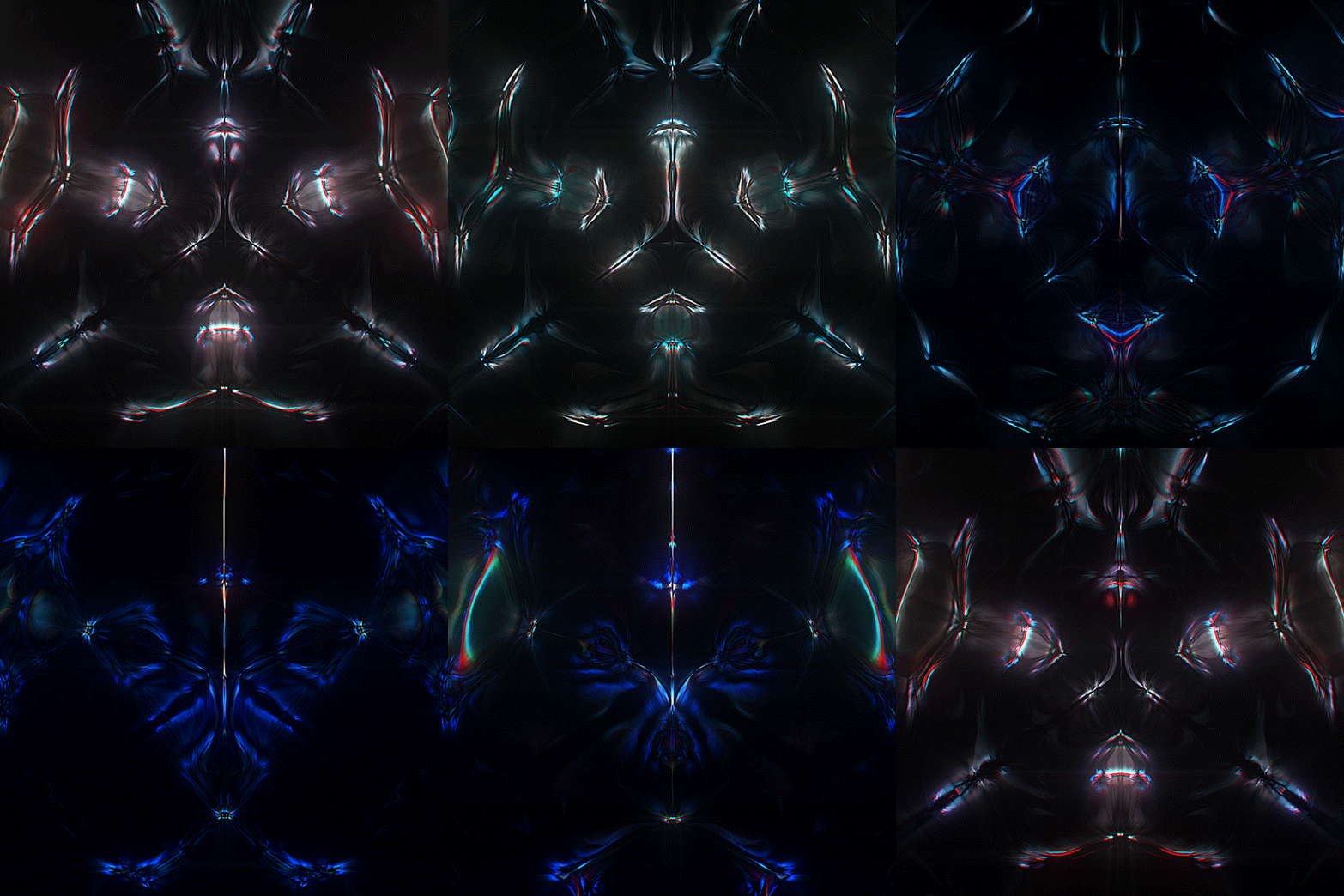
🎨 Theme Mandala - Viewing Guide
The theme mandala of this lesson uses the metaphor of "the forceful center and the relaxed outer circle". The central area has tight lines and strong color contrast, symbolizing your effort and self-demand to "sleep well"; towards the outer circle, the lines gradually become loose and the colors soften, symbolizing allowing yourself to take a step back from "perfect sleep" and experience that "being able to rest is enough".
Please justWatchFirst, focus your gaze on the most tense area in the center, acknowledging that it represents your true self at this moment—anxious, strained, and afraid of losing control. Then, slowly move your gaze outward along a certain line, noticing how it becomes more curved, softer, and more spacious. You don't need to force yourself to relax; you just need to see that there is already a path from the center to the outer circle that allows for "a little relaxation."
Applicable issues:Before going to bed, repeatedly checking the time, rating sleep performance, fearing that the next day will be abnormal, and having extreme thoughts like "if I don't sleep well, it's all over".
○ Chinese Calligraphy and Seal Carving Imagery Practice
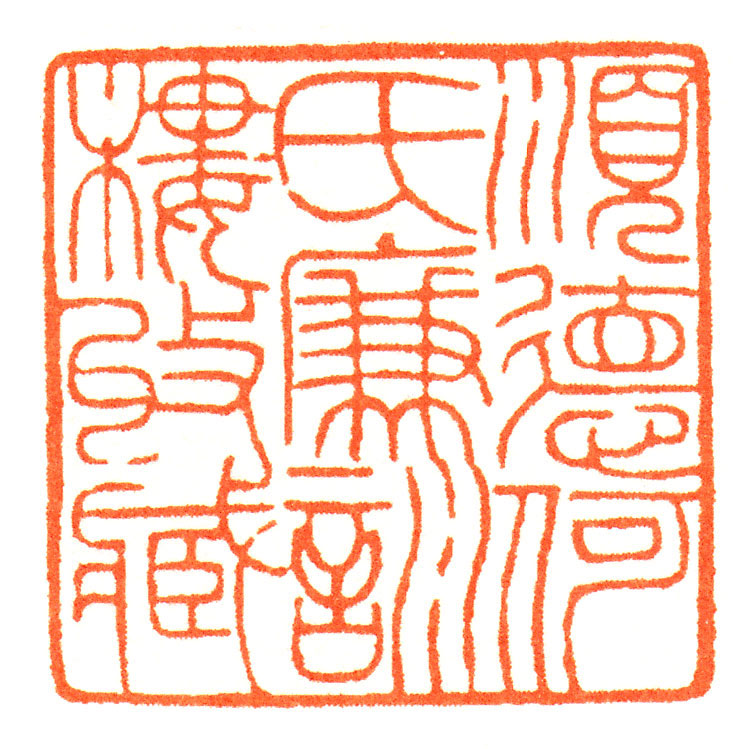
Seal carving emphasizes the "flow of energy within a small space," where each character is arranged within a limited area without feeling cramped. For those experiencing anxiety-related insomnia, copying or visualizing the structure of seal carvings is a way to practice "limited but not suffocating" energy.
Practice sentences:
“"Sleep is not an exam; doing your best is enough."”
Sleep is not an exam; doing my best is enough.
You can draw a small seal outline on paper, break the sentence down into several words or phrases, and slowly write them down one by one. With each stroke, silently repeat the corresponding words in your mind, allowing the information "it's not an exam" and "it's enough" to be gradually etched into your body's memory through the movement of your hand. You can also admire the surface of a real seal and imagine its weight and stability, absorbing some of the pressure of "must be perfect" for you.
○ The harder you try, the less you can sleep: Guidance and suggestions for art therapy
This page uses creative drawing to present the inner world of "anxiety-related insomnia"—you're not simply unable to sleep, but rather you've turned sleep into an exam you must pass, forcing your brain to remain constantly awake and proctoring. Through drawing, we attempt to visualize this state of "overexertion" as lines, blocks of color, and positions, giving you a chance to pause on paper and see how you're trapped in this vicious cycle.
1. The petty person lying on top of pressure
- Draw a simple bed at the bottom of the picture, with a small human figure lying on it, representing you at night.
- Above the bed, draw stacks of "stress cubes": you can write words like "work performance," "family responsibility," "health concerns," and "cannot fail" on them, symbolizing the worries weighing on your heart.
- Make these blocks look a little shaky to represent your worry that "if I don't sleep well, everything will fall apart," and write a reminder next to them: "These worries won't immediately come true just because you can't sleep right now."“
II. From taut red to soft gray-blue
- On the left side of the image, taut ripples are drawn in red and orange, like anxiety signals spreading outward from the center of the bed, representing the cycle of "the more tense you are, the less you can sleep."
- On the right, another series of ripples are gradually drawn using soft colors such as gray-blue and light purple, representing an alternative path of "allowing yourself to just rest and not have to fall asleep immediately".
- Connect the two sides with a thin transition line and write next to it: "From 100 points of perfect sleep to 60 points of 'being able to rest a little,' it is already a new beginning."“
Friendly reminder: Drawing isn't about changing your sleep tonight, but about helping you stop endlessly judging yourself. If you feel sad or powerless while drawing, you can pause, drink some warm water, or continue another day. If your anxiety is severely impacting your life, please consider seeking professional psychological or medical help.
Please log in before submitting your drawings and feelings.
○ 1363. The harder I try, the less I can sleep (indicating anxiety) · Journaling guidance suggestions
① Take stock: Recall what efforts you have made to “sleep well” in the past week (such as forcing yourself to go to bed early, frequently checking the clock, trying various techniques), write them down one by one, and mark the level of anxiety at the time (1-10 points).
② Disaster Prediction Record: Write down the three things you most often say to yourself that "if I can't sleep well, I'm doomed," such as "I'll definitely embarrass myself tomorrow," "I'll be looked down upon," or "My health will collapse." Then see how many times these predictions have actually come true in reality.
③ Alternative narrative: Write a milder but not false version for each catastrophic prediction, such as "Tomorrow may be more tiring, but that doesn't mean complete failure" or "I may be a little slower than usual, but that doesn't mean I'm incapable."
④ Evening rating adjustment: Reflect on how you used to "rating" your sleep - did you only look at sleep duration, or did you also consider "whether you got any rest"? Try writing a new evaluation for a night when you "slept so-so".
⑤ The Ritual of Forgiveness: Design a simple "closing statement," such as: "That's good enough. The rest is up to the night." Write down a sentence you'd like to use as the closing statement for the night, even if you don't fully believe it yet.
Please log in to use.
You can gradually practice shifting from "must sleep well" to "allowing rest," allowing the night to become a space you can rely on again, rather than an exam you can never pass.