

Lesson 1366: Nightmares, Anxiety Dreams, and Sleep Disruptions
Duration:60 minutes
Topic Introduction:This course focuses on the relationship between nightmares, anxiety dreams, and sleep disturbances—many people don't just "have trouble sleeping," but are repeatedly awakened in the middle of the night: dreaming of being chased, falling, failing exams, or loved ones being injured. Upon waking, they experience a racing heart, sweating, and general tension, making it difficult to fall back asleep. We will understand from both psychological and physiological perspectives why stress, traumatic memories, unprocessed anger, and fear return in the form of dreams at night; and why nightmares not only consume sleep time but also disrupt the entire nighttime circadian rhythm, leaving one extremely tired in the morning and unable to concentrate during the day. The course will help you learn to identify typical anxiety dream patterns, distinguish between "occasional stress dreams" and "recurring nightmares requiring further evaluation," and through gentle writing and viewing exercises, establish safety cues and stable rituals to prevent the night from being completely dominated by fear, laying the foundation for comprehensive treatment of subsequent trauma and insomnia.
○ Common experiences of nightmares and anxiety dreams
- Similar plots repeat:For example, repeatedly dreaming of being late, not being prepared for an exam, being chased, falling from a height, or getting lost in an unfamiliar city, and still feeling anxious and uneasy upon waking.
- A strong sense of powerlessness in the dream:They want to run but can't, want to shout but can't make a sound, or know they are in danger but can't save themselves, and feel frustrated and helpless after waking up.
- The body reacted noticeably:When I am startled awake at night, I experience a rapid heartbeat, sweating, shortness of breath, and muscle tension, and it takes a long time to calm down.
- Fear of falling asleep again:Fearing nightmares while sleeping, some people delay going to bed or deliberately stay up late, which only exacerbates sleep deprivation.
- Residual effects during the day:Even if I can't remember the details during the day, I still feel inexplicably nervous, irritable, and depressed, as if the shadow of the dream has not yet dissipated.
▲ AI Interaction: Finding Safety Clues from Nightmares
Nightmares and anxiety dreams often carry the fears and pressures that were not clearly stated or processed during the day. Dreams themselves are not necessarily prophecies, but rather "overloaded images" that the brain tries to organize its memories at night.
Please recall one or two nightmares or anxiety dreams that left a deep impression on you, and write them down in the briefest way possible: what happened, what you were most afraid of in the dream, and what your body's strongest reaction was at the time.
Next, write down: In your dream, did any "safe element" appear even for a second—someone reach out to help you, you have a place to hide, or you wake up to find yourself still in bed? If you can't think of anything right now, you can also imagine "what it would be like if a safety clue were added to your dream."
In conclusion: We don't aim to change your dream immediately, but rather to help you see it first—nightmares may already contain clues about survival and seeking help that have not yet been noticed.
Click the button below to work with AI to analyze your nightmare themes, practice distinguishing between "sense of danger" and "real danger," and explore safety symbols that can be added.
Nightmares, Anxiety Dreams, and Sleep Disturbances: Music Therapy
After a nightmare, the brain is often in a state of high alert, and even after waking up and confirming that "there is no danger," the body remains unable to slow down for a long time. Music therapy can serve as a transitional bridge "back to reality from the dream," rather than forcing oneself to go back to sleep immediately.
Exercise 1: Prepare a consistent piece of calming music for the moment you "wake up from a nightmare." It doesn't need to be long; just a simple melody with a slow tempo. Each time you are startled awake by a dream, allow yourself to listen to a short segment first, letting your ears and breath confirm together: "I have returned to the present moment."“
Exercise 2: Make brief anchors to reality while listening to music. For example, gently touch the sheets, pillows, and blankets, feel their texture and temperature, and silently say today's date or your city to help yourself re-root yourself in the real scene.
Exercise 3: Schedule a "post-dream processing time" during the day, play the same piece of music, briefly record the themes of your recent dreams, and let your brain know: "These contents will be processed during the day and do not necessarily need to be replayed at night."“
In conclusion, music cannot stop nightmares from happening, but it can help you feel less panicked and more in control each time you return from a dream.
○ Chinese Black Tea Healing Drink
Recommended drinks:Stable Lapsang Black Tea (Gentle Lapsang Night Cup)
Recommended reasons:Choose a Lapsang Souchong black tea with a milder smokiness and a smooth mouthfeel, and brew it in a light way. The main purpose is to use its warm and full-bodied taste to provide a "slowly landing" experience for the mind and body disturbed by nightmares. The focus is not on stimulating the mind, but on establishing an association with "a reassuring taste to rely on at night," allowing the emotions before falling asleep to shift from sharp to gentle.
usage:Take 1.5–2 grams of Lapsang Souchong tea, steep in 85–90℃ hot water for 20–25 seconds, and drink it 1.5 hours before bedtime. While drinking, take a few slow breaths and tell yourself, "Even if I dream, I am gradually learning to take care of myself after I dream." Those who are sensitive to caffeine can drink it during the day, just keeping the ritual.
Lotus Seed and Lily Bulb Soup for Relieving Worries
This delicate soup, made with lotus seeds, lily bulbs, a small amount of millet, and red dates, embodies the traditional imagery of calming the mind, relieving tension, and nourishing the spleen and stomach. It is suitable for those who are often awakened by anxious dreams and who always feel a weight on their mind. A small bowl before bed or in the evening can help them soothe the accumulated worries of the day with its warmth and gentleness.
○ Theme Mandala - Viewing Guide
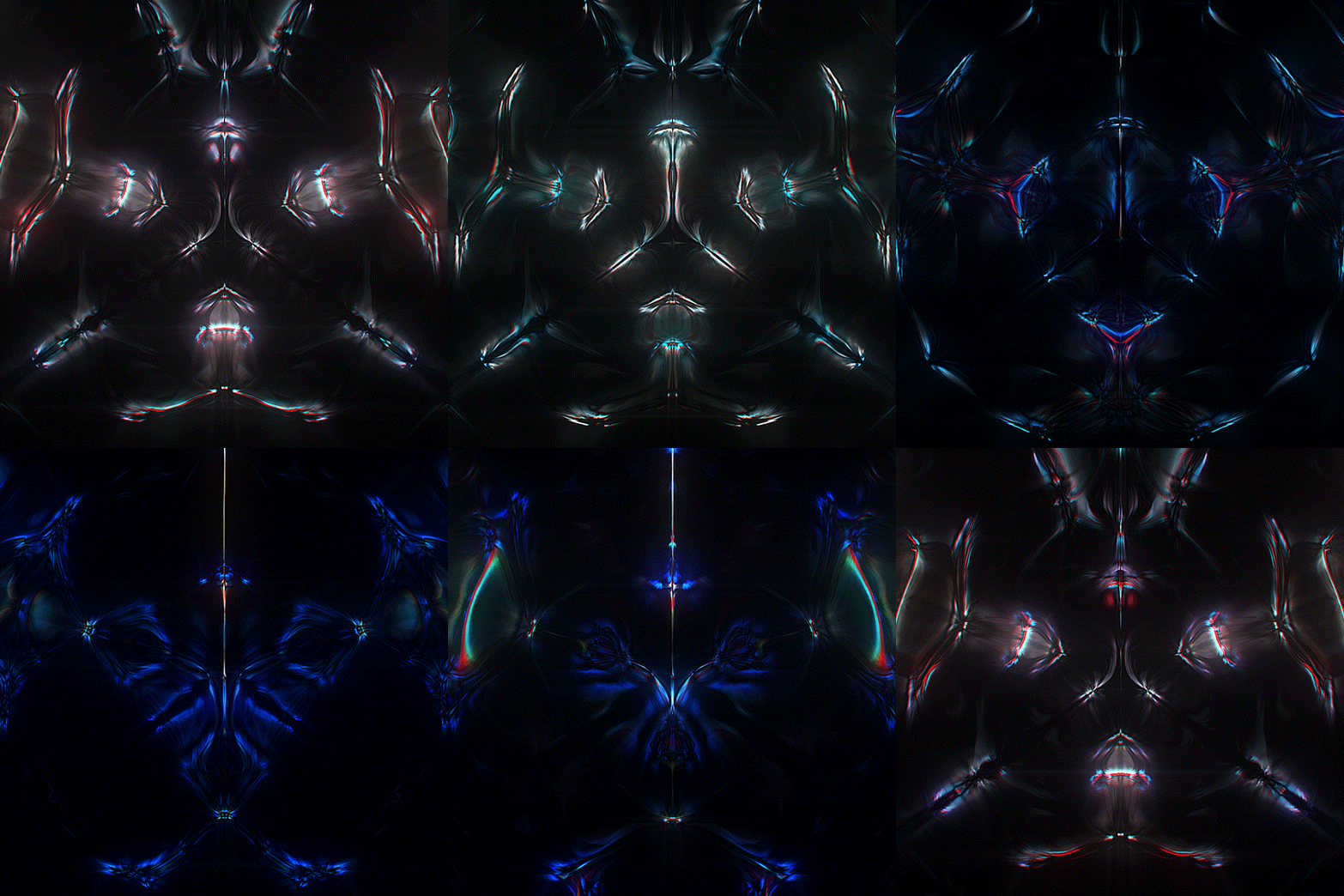
The theme mandala of this lesson revolves around "returning after awakening": the central area features undulating lines and strong color contrasts, symbolizing the chaos and fear in a nightmare; towards the outer circle, the colors gradually soften, and the lines change from broken to continuous, representing the process of slowly returning to reality from the fright of the dream and feeling accepted again.
Simply observe: First, focus your gaze on the most chaotic and glaring area, acknowledging that you truly experienced that fear and helplessness; then, move your gaze outward along a certain line, noticing how it slowly bends and smooths out, how the colors change from sharp to warm. You can silently tell yourself, "This is the shock brought on by the dream, and also the path I took back from the dream." There's no need to force yourself to calm down; just give this path "from chaos to a slightly more orderly" some time, allowing your eyes, along with your nervous system, to gradually slow down.
Applicable issues:Recurring nightmares, anxiety dreams, trauma-related dreams, and difficulty recovering for a long time after a dream.
○ Chinese Calligraphy and Seal Carving Imagery Practice
The characters in seal carving are robust and concise, expressing a power within a small space that "can still leave traces after weathering storms." For those often troubled by nightmares, copying or contemplating such seal characters is an exercise in finding stability amidst repeated awakenings.
Practice sentences:
“"Dreams may wake me up, but reality can catch me."”
Dreams may startle me awake; reality can still hold me.
You can draw a small frame on a piece of paper, break the sentence down into several words, and write them down slowly. With each word you write, silently repeat it in your mind, allowing the meaning of "being able to be received" to be etched into your body's memory through the movement of your hand. You don't have to write perfectly; just make each stroke slightly steadyer than the last, as if telling yourself: even if I'm pushed away by dreams at night, I can still return to a reliable place.

Nightmares, Anxiety Dreams, and Sleep Disruptions: Guiding Suggestions for Art Therapy
This page uses creative illustrations to help you transform the oppressive feeling of "nightmares and anxiety dreams" into visually tangible and describable images. We're not trying to analyze the mysterious meanings of dreams, but rather to help you see what your heart and body are truly enduring behind those nights of awakening.
I. Two Doors: Dreams and Reality
- Draw two doors on a piece of paper: write "Dream" on the left and "Reality" on the right. Connect the two doors with a path.
- Behind the "dream" door, use simple symbols to draw the elements that you are most often afraid of: chasing, falling, darkness, exam scenes, etc. It doesn't have to be detailed, just express the general feeling.
- Behind the "reality" door, draw your bed, window, lamp, and items that accompany you (books, water glass, medicine box, mobile phone alarm clock, etc.) to remind yourself: every time you wake up, it is actually a process of passing from the dream door back to the reality door.
II. Draw your "Post-Dream Repair Corner"“
- Leave a corner at the bottom of the image and draw a small "repair area": it could be a chair, a soft light, a glass of warm water, or your favorite soup.
- Write down one or two small things you can do after you wake up, such as "take a sip of water", "touch your pillow", or "tell yourself: it was just a dream, I'm awake now".
- A soft line connects the "dream scene" with the "repairing corner," symbolizing that you are not trapped in the dream, but rather that there is a path back to self-care.
Friendly reminder: If your nightmares are related to severe traumatic experiences, or if their frequency and intensity are significantly affecting your daytime functioning, please consider seeking professional trauma therapy or a sleep health evaluation. Drawing and writing can serve as aids, helping you, in addition to professional assistance, to preserve a space for understanding and peace of mind.
Please log in before submitting your drawings and feelings.
○ 1366. Nightmares, Anxiety Dreams, and Sleep Disruptions: Journaling Guidance Suggestions
① Brief description of the dream: Record one or two recent nightmares or anxiety dreams that left a deep impression on you in a few sentences. Write down the general scene, rather than every detail.
② Core Emotions: For each dream, select two or three of the strongest emotions, such as fear, shame, helplessness, anger, abandonment, etc., and write a sentence explaining "why".
③ Body memory: Record the most obvious physical sensations you experience when you wake up (heartbeat, breathing, sweating, muscle tension, headache, etc.), and approximately how long these sensations last.
④ Safety Clues: Write down three specific safety clues that you can rely on in real life, such as "a light in your bedroom", "someone you can contact", or "a comforting phrase".
Please log in to use.
Through this lesson, you will gradually understand that nightmares and anxiety dreams are not simply "sleep failures," but rather a way for the brain to process immense stress and fear at night. Through Chinese black tea, small portions of soup, seal carving imagery, and mandala viewing and writing exercises, you can gradually "pave a path back to reality" for these dreams, making the night not just about waking up in fear and loneliness, but also about the possibility of slow healing and being reconnected.