

Lesson 1418: Principles for Managing Multi-Organ Symptoms
Duration:60 minutes
Topic Introduction:
This lesson focuses on "how to identify, manage, and cope with symptoms occurring in multiple parts of the body and across multiple systems," specifically addressing the fears and misunderstandings often arising from the interplay of symptoms in multiple organs, such as drowsiness, fatigue, heaviness in the head, palpitations, stomach discomfort, chest tightness, and weakness in the limbs. Chronic stress, sleep deprivation, autonomic nervous system dysfunction, and excessive anxiety can cause temporary imbalances in different bodily systems, and these fluctuations are often misinterpreted as "a systemic illness" or "a precursor to a serious disease." In fact, the vast majority of these simultaneous discomforts in multiple parts of the body are functional changes rather than structural damage: they are the result of overall systemic fatigue and disordered neural regulation, not a simultaneous "breakdown" of the body.
This lesson will introduce how to shift from "dangerous assumptions" to "systemic fatigue understanding," guiding you to: address rhythm first, then observe changes; regulate tension first, then assess symptoms; observe fluctuations first, then infer causes. You will understand that the body doesn't issue multiple alarms under stress and fatigue, but rather tries to slow you down and restore your rhythm. We will combine herbal tea therapy, Christian fasting diet therapy, mandala visualization, and Gothic calligraphy practice to help you stabilize your mind and body, reduce "multisymptom phobias," and regain clarity of judgment.
○ Key principles when multiple organ discomfort occurs
- First, look at the rhythm:When people are sleep-deprived, stressed, or experience significant mood swings, they are more likely to develop multi-system symptoms.
- Look at volatility:If symptoms vary with attention, stress, and fatigue, they are likely functional fluctuations.
- Check for synchronicity:Multiple symptoms occurring simultaneously, fluctuating in intensity, are more indicative of an autonomic nervous system problem than a multi-organ disease.
- First stabilize, then make a judgment:First, perform rhythm correction for one day, then observe whether the symptoms decrease significantly.
[arttao_Healing_Course_tts_group1416_1420]
▲ AI Interaction: What might your "multiple symptoms" be saying?
Write down the three physical discomforts that worry you the most today.
Think about it: Do they change with fatigue or stress?
The author adds a clarification: "The simultaneous appearance of multiple symptoms does not mean that multiple organs are diseased at the same time."“
○ Multi-system tension period - Music stabilization method
Exercise 1: Select a fixed low-frequency music to allow your body to transition from "full-system alertness" to "single-system relaxation".
Exercise 2: Synchronize your breathing with the rhythm, and stop your body from scanning all organs.
Exercise 3: Observe which symptoms subside first during the music.
○ Herbal tea healing drink
Recommended drinks:Lemon Balm & Chamomile Stimulating Tea
Recommended reasons:Suitable for when multiple organ discomforts occur simultaneously, helping the nervous system to "de-escalate alarms".
usage:Drink it when you feel "uncomfortable all over" to restore a sense of central stability.
○ Christian Fasting and Dietary Therapy: Systemic Burden Reduction and Rhythm Reconstruction
Multi-organ discomfort usually indicates systemic fatigue rather than organ damage. A fasting, minimalist diet can reduce the body's energy expenditure, allowing metabolic rhythms and neural regulation to realign, bringing you back from "systemic chaos" to a more stable rhythm. The lighter and more stable the body is, the less likely symptoms will be amplified.
Restore rhythm
Reduce misreading
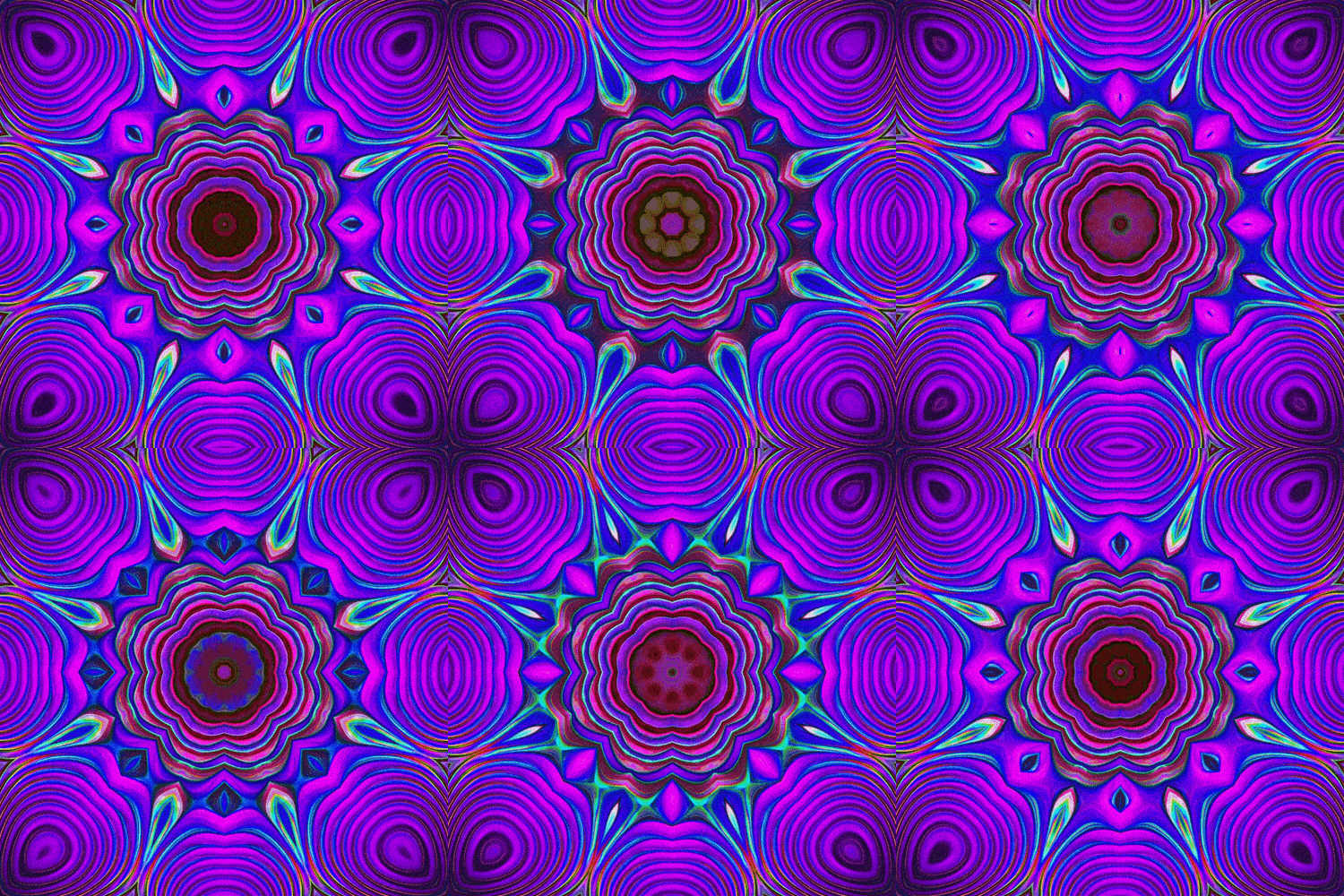
○ Themed Mandala - Viewing Guide: From Chaos to Integration
The complex and overlapping outer rings symbolize a sense of chaos and discomfort in multiple organs; the convergence towards the center symbolizes the system returning to its proper place.
Please remain silent and watch, allowing your vision to help your brain return from a state of "disorder" to one of "integration".
Target:Let your mind and body stop perceiving "feeling uncomfortable all over" as "having a disease all over your body".
○ Medieval Gothic calligraphy practice
The stable structure of Gothic objects symbolizes the possibility of "multi-dimensional integration".
Practice sentences:
“More does not equal worse.”
Many are not damaged.
Each time you write it down, you are rebuilding your correct understanding of your body's sensations.

○ Multi-system symptom integration diagram · Guided art therapy
Drawing allows you to concretize the chaos of "everything feeling wrong," thus understanding that chaos is not dangerous, but rather something that needs to be integrated.
1. Draw a "scatter plot of systemic symptoms".“
- Mark all areas of discomfort on the body contour map.
- Observe whether they appear and weaken simultaneously.
2. Draw the "integrated center diagram".“
- Use more stable lines to draw the image of energy returning to the center.
- The symbolic system is returning from chaos to order.
When you can “see integration,” the body is no longer misunderstood as “breaking down.”
Please log in before submitting your drawings and feelings.
○ 1418. Managing Multiple Symptoms: Log-Guided Approach
① Write down all the parts of your body that feel uncomfortable today.
② Record whether they fluctuate synchronously.
③ Write down a calming statement: "This is system fatigue, not system damage."“
Please log in to use.
When you understand that the chaos comes from fatigue, not disease, your body can reintegrate.