

Lesson 45: I'm afraid of awkward silences, I'm afraid others will think I'm boring.
Duration:70 minutes
Topic Introduction:
For those with social anxiety, the most terrifying moment is often not conflict, but rather the sudden silence. That silence feels like a bang, instantly plunging you into self-doubt: "Did I say something wrong?" "He must think I'm boring." "Say something quickly, don't let the atmosphere get awkward!" This extreme fear of awkward silences not only exhausts you in social situations but also hinders genuine connection. This course will help you break free from the performer's mentality of "must be interesting," learn to calmly face pauses in conversations, and rediscover relaxation in social situations.
Why are we so afraid of awkward silences?
- The Trap of Over-Responsibility:You subconsciously believe that creating a lively atmosphere is your "one-sided obligation," and that remaining silent is a dereliction of duty, rather than a mutual adjustment of the rhythm.
- Projective anxiety:You project your own embarrassment onto the other person, assuming they also feel awkward or bored, but in reality, they might just be thinking or enjoying relaxation.
- “The "Performer" Personality:You mistakenly believe that only by being humorous, knowledgeable, and perfect can you be accepted. You treat socializing as an exam, not as communication.
- Unbearable uncertainty:Silence signifies a loss of control; you don't know what will happen next, and this fear of the unknown makes you desperately want to fill the space with words.
- The backlash of safe behavior:To avoid awkward silences, you might speak too fast, interrupt, or constantly check your phone, which can actually make you seem anxious and unapproachable.
Lesson 45: I'm afraid of awkward silences, I'm afraid others will think I'm boring 🎧 Click to watch/listen to the reading
For many people, what terrifies them most in social situations isn't the heated debate, but the deathly silence that follows a break in the conversation. This silence feels physically heavy, suffocating. Your heart races, your palms sweat, your brain frantically searches for topics like an overloaded computer, and only one voice screams inside: "Say something! Don't let this get awkward! If I don't speak, they'll think I'm boring, dull, or even stupid." This pathological fear of awkward silences, and the deep anxiety of being "considered boring," is a typical mental trap for those with social anxiety. First, we need to dismantle this fear through cognitive restructuring. Why do you think the awkward silence is your fault? Conversation is a two-way dance; the pace and the rise and fall of voices are created by both parties. When silence occurs, due to your "over-responsibility" mechanism, you unilaterally bear the entire weight of the awkwardness, feeling obligated to keep the atmosphere going like a clown. This mindset turns equal communication into an unequal performance—you're performing energetically on stage, afraid the audience will leave. Second, the fear of "boredom" is often a psychological projection. Because you can't accept yourself when you're silent, feeling that quiet self is empty and worthless, you assume others will judge you the same way. But in reality, in interpersonal interactions, the other person often cares more about "feelings" than "the amount of information." A talkative but anxious person is far more exhausting than someone who speaks little but is calm and a good listener. Silence, in psychology, is considered a "boundary of contact." It's both a buffer zone for information and a touchstone for relationships. High-quality conversations need blank spaces, like a traditional Chinese ink painting. Those empty moments give each other the opportunity to process emotions and organize thoughts. If you always impatiently fill every gap with nonsense, you not only deprive the other person of space to think but also expose your unease. This unease won't liven up the atmosphere; instead, it will be contagious, making awkwardness real. The core exercise to overcome this fear is to "be at peace in this space." The next time silence arrives unexpectedly, try doing something counterintuitive: don't rush to grab your phone, don't rush to clear your throat, and don't rush to ask the next question. Try taking a deep breath and shifting your focus from "What should I say next?" to "How am I feeling right now?" Look the other person in the eye, or look away naturally, allowing those few seconds of silence to pass. You'll be surprised to find that when you stop fighting the silence, it no longer becomes a monster devouring you, but a quiet stream flowing between you. True confidence isn't about being sure you're always interesting, but about being sure that even if you have nothing to say at this moment, you still deserve to be accepted.
▲ AI Interaction: Redefining "Bored" and "Silence"“
We fear awkward silences because deep down there's a voice saying, "If I'm not interesting, I'm worthless."“
This pressure turns you into an acrobat desperately trying to please the audience.
But true connections often happen in moments when you don't need to deliberately find topics to talk about.
Try talking to AI about the kind of silent scenario you fear most.
We can practice together to reconstruct "awkward silence" into "comfortable white space".
Click the button below to explore with AI how easy it is to "be a boring but authentic person".
When conversations pause and your heart races, music can help you reset your breathing rhythm.
Try to feel it in the music: not all spaces need to be filled.
Leaving blank space is for better writing.
○ Eastern Healing Tea - Jasmine White Tea
Recommended drinks:Jasmine White Tea
Recommended reasons:The delicate fragrance of jasmine has excellent liver-soothing and mood-lifting effects, relieving chest tightness and discomfort during social situations; white tea is cool in nature and sweet in taste, helping to reduce internal heat and dryness. This tea can help you relax from tension in social situations, allowing you to naturally unfold like a flower.
practice:Take 3 grams of white tea and 3–5 dried jasmine flowers, and steep in 85°C water. Inhale the aroma three times deeply before drinking, allowing the fragrance to open your heart.
○ Comfort Pumpkin Soup
Golden pumpkin corresponds to the navel chakra and solar plexus, enhancing inner security and confidence. Its warm, smooth texture soothes a stomach cramped from social stress. This soup requires minimal chewing, making it a perfect warm and stress-free embrace after a day of social exhaustion.
Strengthen confidence
Relieve stomach tension
Healing Recipes
/home2/lzxwhemy/public_html/arttao_org/wp-content/uploads/cookbook/long-yan-gou-qi-zhou.html(Please confirm that the following has been uploaded: long-yan-gou-qi-zhou.html)Lesson 45: Chinese Calligraphy - Suggestions for Writing Running Script
In this lesson, we confront the fear of awkward silences. People with social anxiety often feel they must constantly talk to fill the silences, otherwise they feel "bored." However, in the art of calligraphy, "blank space" is just as important as "brush and ink." The spaces between characters are not "deficiencies," but rather "breathing." Learning to appreciate the blank spaces in writing is learning to find peace in the silence of dialogue.
Writing Instructions:
Pay attention to the spacing between characters (composition). Don't cram the characters together; try to create some space so that the white paper shows through.
After writing a character, the wrist naturally lifts up, pauses briefly in the air (writing in the air), and then the pen is put down to write the next character.
Feel this pause; it's not an awkward stillness, but rather a preparation for something to come.
Written words:
Everything goes smoothly
Motivational words:
A painting leaves three-tenths blank space, allowing vitality to emerge. Silence in a conversation gives each other room to breathe.
Writing Tips:
If you feel a stroke is too "empty" or the ink is too light, don't rush to fill it in. Leave that "emptiness"—it often has more charm than solid black ink. Embrace the "blank spaces" in a dialogue; because of relaxation, they can actually generate deeper meaning.
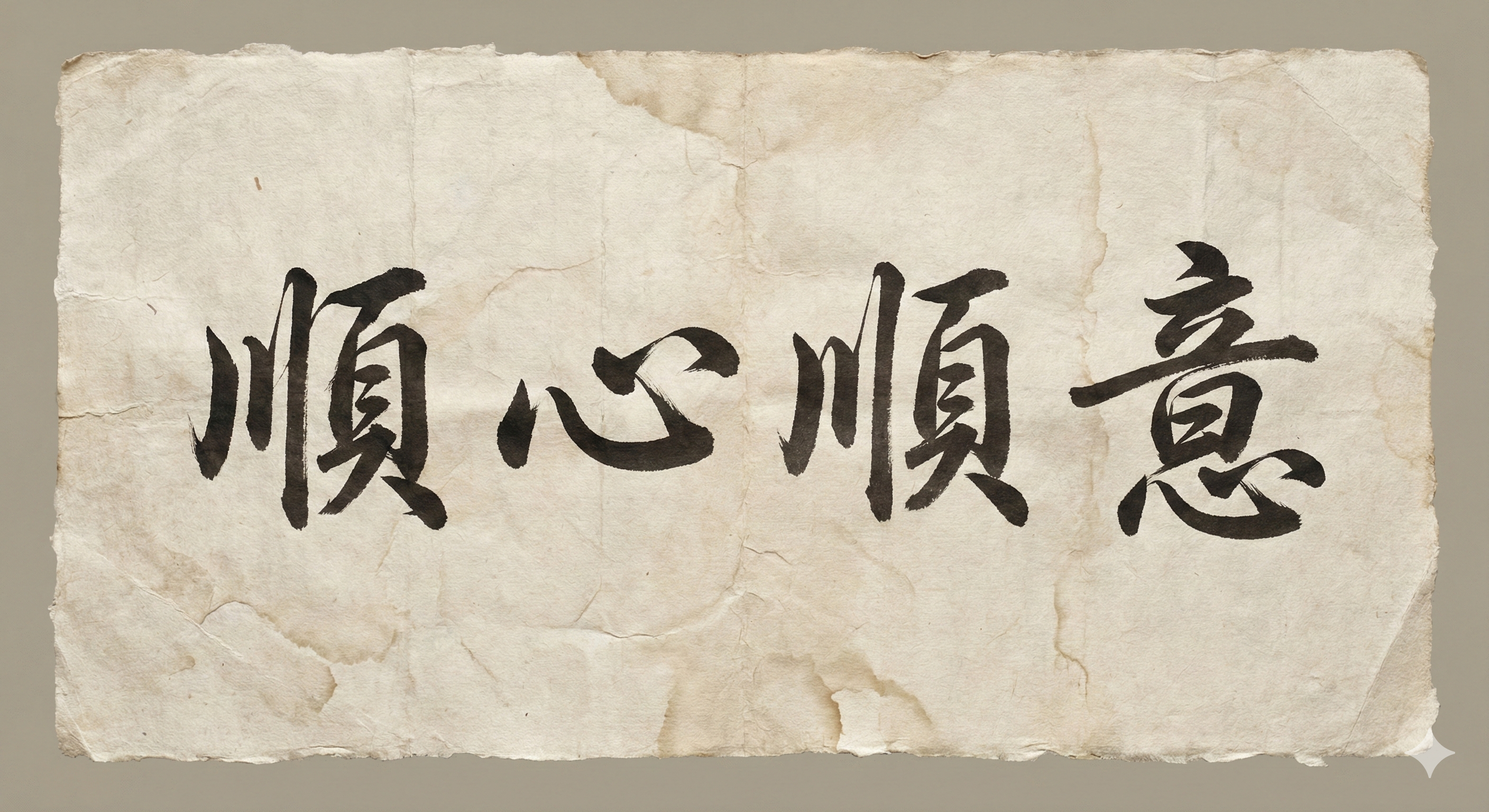
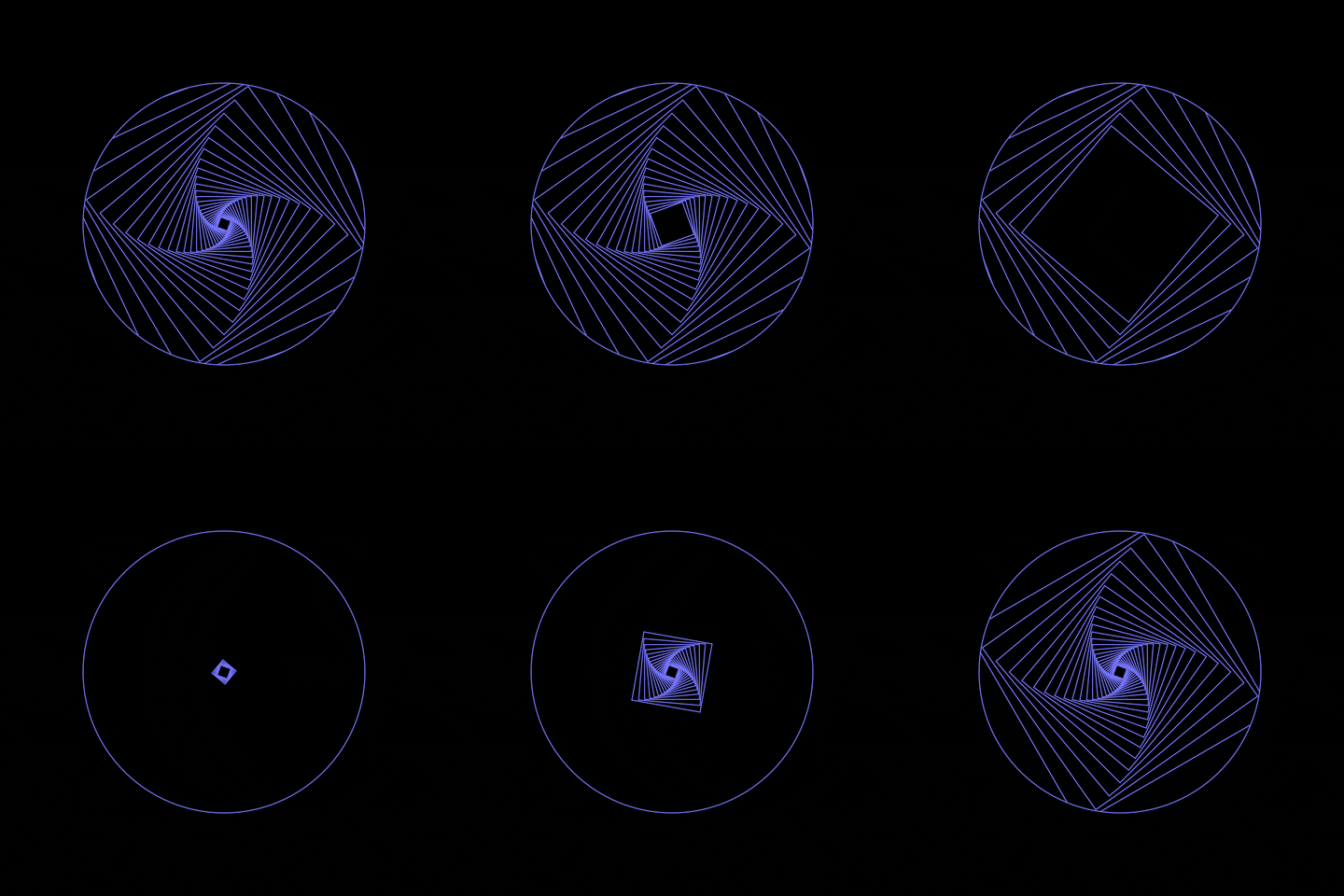
Image Healing: Mandala Stability Guidance 45
Gazing at the unfilled blank areas in a mandala. They support the structure of the entire design. Without these blanks, the lines would become a jumbled mess. Your social interactions are similar; silence is the canvas against which conversation unfolds. Only when you stop rushing to fill every second with words can you truly hear the other person. In silence, there is no awkward silence; you are simply sharing in the other person's presence.
Traditional mandalas typically feature a harmonious and intricately varied circular structure, symbolizing the wholeness of the universe and the cycle of life. By viewing mandala images, individuals can perceive inner peace and strength, achieving psychological balance.
◉ Gaze at the mandala twice, while taking deep breaths.
Lesson 45: Drawing the "Shape of Silence"“
Objective: To transform the "abstract silence" of fear into a concrete "visual image" and reduce catastrophic imagination of it.
Steps: Imagine two people sitting face to face, and the air between them suddenly becomes still. If silence had shape and color, what would it look like? Is it a black abyss? Or blue clouds? Or flowing transparent water? Please draw it. Then try to add some warm elements to the picture (such as light, flowers) to reconstruct the "awkward silence" into a "comfortable rest area".
Please log in before submitting your drawings and feelings.
○ 45. Suggestions for a Social Awkwardness Observation Log
① Record a pause in conversation that occurred today (or recall one from the past).
② What “catastrophic thoughts” automatically popped into your mind at that moment? (For example: He must be trying to use this to escape from me).
③ Reinterpret from the "observer's perspective": Besides "I'm bored," what other possibilities are there? (For example: he's thinking, he's daydreaming, he's also tired).
④ Write down three traits that you think make you “good even without talking” (e.g., I am a good listener, I have a gentle personality).
⑤ Conduct a small experiment on "active silence": In the next conversation, deliberately pause for 3 seconds and observe the other person's reaction.
⑥ A comforting thought to myself: "I don't need to prove my worth by entertaining others."
Please log in to use.
In a musical score, rests are just as important as notes; in life, silence is as precious as words. May you have the strength to feel at ease even in silence.