

Lesson 46: Overthinking what others are thinking ("They must be laughing at me")
Duration:70 minutes
Topic Introduction:
Anxiety makes people tend to interpret others' expressions, actions, and tone of voice negatively.
Before you even hear what the other person is actually saying, judgmental, mocking, and dismissive thoughts automatically pop into your head.
This lesson will help you understand the source of this "mind-reading anxiety" and learn how to transform your brain's automatic fill-in-the-blank into a neutral observer.
Where does this excessive overthinking come from?
- Projection of past experiences:Childhood or past experiences of being ridiculed or ignored are easily reactivated in social situations.
- Threat Scan for Anxiety:An anxious brain automatically searches for "danger," making it extremely sensitive to the facial expressions of others.
- Low self-esteem:The more you feel you are "not good enough", the more likely you are to assume that others are criticizing you.
- Cognitive bias:Even slight changes in facial expressions can be interpreted as "they are criticizing me."
Lesson 46: Overthinking Others' Thoughts ("They must be laughing at me") 🎧 Click to watch/listen to the reading
Hearing laughter behind you while walking down the street, does your back instantly stiffen, and the thought immediately pop into your head, "They're laughing at me"? Seeing colleagues huddled together whispering, and then the sound suddenly stops as you approach, are you certain, "They're definitely talking about my flaws"? This thought pattern of arbitrarily assuming others hold negative views of you without any concrete evidence is known in psychology as "mind reading." It's the most powerful pain-generating machine for those with social anxiety. We often mistakenly believe this is a kind of "keen intuition," but in reality, it's often a projection of inner fears. Because you lack self-acceptance, because you're currently criticizing your messy hair or awkward speech, you naturally assume that others are focusing on those same areas. You force your inner self-criticism into other people's minds and then claim that's their opinion. The truth is often far more tedious than you imagine. Humans are inherently deeply self-centered creatures. Everyone is busy dealing with their own daily affairs, busy worrying about their performance that day, busy thinking about what to eat for lunch. Due to limited cognitive bandwidth, they simply don't have the extra energy to constantly focus on and judge you. Those two whispering people might just be gossiping about celebrities, and that laughter might just be because someone told a lame joke. When you fall into this panic of being "examined" again, try to be a rational detective, not a panicked bird. Ask yourself three questions: Do I have evidence? Besides my guesses, what facts prove they're targeting me? If the protagonist were someone else, how would I feel? Usually, you'll find that the so-called "malice" doesn't stand up to scrutiny at all. Distinguishing between "facts" and "stories" is crucial. The fact is "someone is laughing," while "they're laughing at me" is a horror story you've made up. Being anxious or even avoiding social interaction because of this fabricated story is a huge waste of life energy. Even if someone really is judging you in their mind, so what? Others' thoughts are just a fluctuation of neurons; they can't take a piece of your body, nor can they change your true worth. Take back the power of interpretation, stop guessing at those "others' thoughts" that can never be proven, and you'll find that when you stop imagining the world is hostile, the world really does become much safer.
▲ AI Interaction: What is your first reaction when you start imagining what other people are thinking?
Sometimes, the "voices" you hear in your head are actually echoes of a past experience.
An anxious brain likes to fill in the gaps, so it automatically makes up stories when there is no evidence.
You are not listening to others, but to "your past self".
Once you realize this, you can gradually step out of the story.
You don't need to fight, just stop for a moment.
Click the button below to practice recognizing "real signals vs. anxious overthinking" with AI.
When your mind starts rapidly weaving stories, music can help you shift your focus from "imaginary others" back to your own body.
Let the melody accompany you as you slowly land, returning to the real present moment, rather than the world in your mind.
Inhale for four beats, exhale for six beats, and let your heartbeat find a gentle rhythm again.
○ Oriental Healing Tea - Silver Needle White Tea
Recommended drinks:White Tea Silver Needle
Recommended reasons:It has a light and refreshing taste, which helps reduce head tension and "overthinking."
practice:Use 80℃ water to steep for 2–3 minutes to give the tea a light and stable flavor.
○ Stable Dietary Therapy: Mushroom and Tofu Soup (ID46)
During periods of emotional sensitivity or inner tension, the body often needs a gentle yet resilient nourishment. The warm aroma of shiitake mushrooms helps soothe the nervous system and reduce internal defensiveness, while the soft texture of tofu provides the body with safe and stable energy support. This comforting stew is suitable for consumption when experiencing anxiety fluctuations or needing emotional stabilization, allowing the body to feel a sense of being steadily supported without being overstimulated. It symbolizes returning to simplicity and peace amidst complex emotions.
Gentle bearing
Stable internal
Open Recipe
◉ Warming and Nourishing Food: Shiitake Mushroom and Tofu Stew (ID 46)
Mushroom and tofu casserole is a refreshing yet satisfying warm stew. The soft tofu absorbs the broth from the mushrooms and vegetables, resulting in a flavorful yet light taste. The mushrooms bring a natural mushroom aroma and umami flavor, while the tofu provides gentle plant-based protein. Paired with a few greens or carrots, this dish is both a simple hot pot and a comforting dinner that can be enjoyed quietly. For those who don't want to eat greasy dishes but still crave a warm and satisfying meal, this dish is perfect for the evening or when the weather turns cool.
plant protein Refreshing and fragrant Warming Pot
I. Recommended Dietary Therapy and Reasons
Recommended dishes:Braised Mushrooms and Tofu (ID 45)
Recommended reasons: When the day's exertions have left you feeling physically and mentally exhausted, instead of stimulating your taste buds with heavy oil and salt, a pot of warm mushroom and tofu stew can help calm your stomach and mood. Tofu is soft, delicate, and easy to digest, while mushrooms provide umami flavor without adding too much burden like meat. Served with some vegetables and a light broth, it can serve as a simple meal on its own, or paired with a small amount of rice for a "simple yet complete" meal.
2. Recipe and Method
Recipe (1–2 servings):
- 200–250 g of firm or silken tofu (cut into large pieces or cubes).
- 4–6 dried shiitake mushrooms (soaked in advance) or 5–6 fresh shiitake mushrooms (sliced).
- 2-3 heads of bok choy or Shanghai bok choy (washed and cut in half)
- 1/3 of a carrot, sliced or cut into chunks (optional)
- 2-3 slices of ginger
- 1-2 sections of scallion
- 400–500 ml of water or mushroom soaking solution
- 1–1.5 tablespoons of light soy sauce
- A small amount of oyster sauce or vegetarian oyster sauce, 1/2 tablespoon (optional)
- Add a pinch of salt (adjust according to the overall saltiness).
- A pinch of white pepper powder (optional)
- Add a few drops of sesame oil (use before removing from heat).
- A small amount of vegetable oil (1 teaspoon) (for sautéing)
practice:
- If using dried shiitake mushrooms, soak them in warm water until soft, squeeze out the excess water, and slice them. Filter the water used to soak the mushrooms and set it aside. If using fresh shiitake mushrooms, wash them and slice them directly.
- Cut the tofu into slightly larger pieces to help it maintain its shape during cooking. You can blanch it briefly in boiling water to remove the beany smell (optional).
- Wash the bok choy and cut it in half; slice the carrot and set aside.
- Add a small amount of vegetable oil to a small earthenware pot or casserole dish, then add ginger slices and scallion segments and sauté over low heat until fragrant.
- Add sliced shiitake mushrooms and stir-fry for 1–2 minutes to fully release their aroma, then add carrots and stir-fry briefly.
- Pour in water or the water used to soak the shiitake mushrooms, add light soy sauce and a small amount of oyster sauce or vegetarian oyster sauce, and bring to a boil over high heat.
- Once the water boils, gently add the tofu cubes and simmer over medium-low heat for about 8–10 minutes to allow the tofu to absorb the broth.
- Add the bok choy and continue simmering for 2–3 minutes, until the leaves are just softened but still green.
- Add a little salt and white pepper to taste, and drizzle a few drops of sesame oil around the edge of the pot before turning off the heat to enhance the aroma.
- Serve the pot on the table; you can eat it straight from the pot to keep the broth warm, or enjoy it with a small amount of rice or mixed grain rice.
3. Small rituals for body and mind
While soaking shiitake mushrooms and cutting tofu, you can deliberately slow down your movements, pay attention to the texture and aroma of the ingredients, and gradually bring your scattered attention back to the present moment.
While simmering, listen to the gentle bubbling in the pot, and take it as a reminder that "I can slow down here today," allowing myself to temporarily set aside other issues.
When you scoop up the first spoonful of tofu and mushrooms, you can whisper to yourself, "This pot is a way to soothe myself." Let every bite be a gentle response to your weariness.
4. Dietary Therapy Experience Record
- Record the time of consumption (dinner/weekend lunch/after working overtime) and the hunger, fatigue and emotional state at that time.
- Observe the feeling of fullness and stomach comfort 1–2 hours after eating, and whether it is easier to feel full than with heavily oiled dishes.
- When replacing heavy main dishes with this type of tofu stew several times a week, changes in sleep quality, mental stability, and post-meal fatigue can be recorded.
5. Tutorial Video (approximately 4–6 minutes)
◉ Video Title:Mushroom and Tofu Stew: A fragrant, refreshing, and warming side dish.
6. Precautions
- Mushrooms such as shiitake mushrooms are high in purines, and people with gout or high uric acid should control their intake under the guidance of a doctor or nutritionist.
- Tofu is an excellent source of plant protein, but patients with renal insufficiency need to control their total protein intake according to their doctor's advice.
- If you need to limit sodium intake, you can reduce the amount of light soy sauce and oyster sauce, and use the umami flavor of shiitake mushrooms to support the overall flavor.
hint:This recipe is suitable as a light and warm dish for everyday meals and is not a substitute for professional medical advice. If you have chronic digestive problems or other chronic illnesses, please adjust your diet under the guidance of a professional.
Lesson 46: Chinese Calligraphy - Suggestions for Writing Running Script
In this lesson, we address the cognitive distortion of "mind reading," namely the habitual assumption that "they must be laughing at me." This projection is actually the inner, stern examiner scrutinizing oneself. In practicing cursive script, we need to practice "turning off external noise," focusing on the touch of the pen tip on the paper, and shifting our attention from "how the characters will be read" to "how I am writing at this moment."
Writing Instructions:
Running script requires "the idea to precede the brush," meaning that your intention guides the brushstrokes, rather than being led by external evaluations.
If you make a mistake in your handwriting, your first reaction might be, "This handwriting is ruined; others will laugh at it."
Please break free from this thought and keep writing. Use the smooth flow of your writing to encompass that flaw, and you'll find that the overall composition remains harmonious.
Written words:
A clear mind leads to a stable path
Motivational words:
There are no audiences on paper, nor should there be in your mind. You are not performing; you are simply expressing yourself.
Writing Tips:
Try a state of writing where you are oblivious to others. Don't frequently stop to examine what you just wrote; let it flow forward like water. What you initially thought was a "joke" is just an insignificant ripple in the flowing river of time.
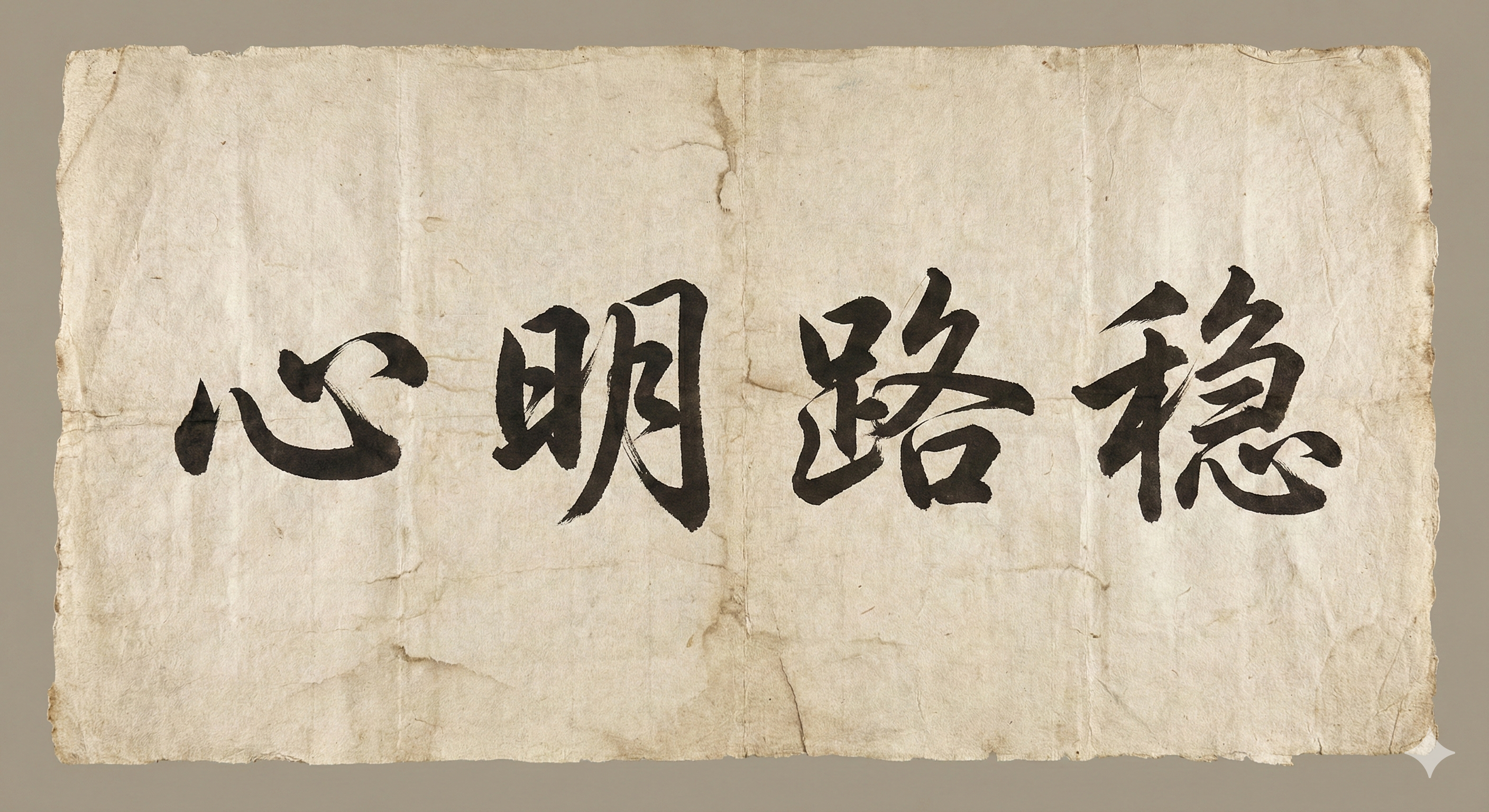
Image Healing: Mandala Stability Guidance 46
Looking at the intricate patterns of a mandala, do you feel as if a part of it is staring at you? Actually, that's just a reflection in a mirror. We project our inner anxieties onto the outside world, mistaking them for the gaze of others. Take a deep breath and withdraw those projections. Every stroke of the mandala exists only to exist, not to judge. When you stop guessing the "thoughts" of the image, you stop judging your own heart.
Traditional mandalas typically feature a harmonious and intricately varied circular structure, symbolizing the wholeness of the universe and the cycle of life. By viewing mandala images, individuals can perceive inner peace and strength, achieving psychological balance.
◉ Gaze at the mandala twice, while taking deep breaths.

Lesson 36: Stop Using Fact-Checking Charts to Fill in the Blanks“
Objective: To help you transform the question of "whether others are thinking about me" into a distinguishable and observable image exercise.
Steps: Draw the left and right columns:
Write "What I think" on the left; write "Real evidence" on the right; draw the scene you most often imagine on the left (e.g., someone frowning, looking at their phone, or whispering).
On the right, use simple symbols to represent "no evidence," "just an expression," and "they might be thinking about their own things." After completing this, write a reminder: The truth is always quieter than imagination.
Please log in before submitting your drawings and feelings.
○ 36. Stop Imagining Things: A Guide to Journaling
① What did I imagine today?
② What is the real evidence?
③ Have I projected my past experiences into the present?
④ Is there a more balanced explanation?
⑤ After diaphragmatic breathing or a short pause, do I feel any different?
⑥ Tomorrow's practice: Reduce one mental exercise and bring your attention back to your body.
Please log in to use.
You can't control what other people think, but you can train yourself not to be controlled by your own imagination.
May you start today and refocus your attention on yourself.