

Lesson 50: A blank mind when speaking
Duration:70 minutes
Topic Introduction:
For many anxious people, a "blank mind" is not a lack of content, but rather a momentary "freeze-up" of the brain.
This kind of freeze is mostly not a problem of intelligence or ability, but a typical neurological reaction:
When you feel noticed, expected of, or evaluated, your brain prioritizes processing security threats and pauses language functions.
This lesson will help you understand the mechanisms behind freezing and learn gentle exercises for restoring thinking.
Why did I suddenly lose my voice?
- The nervous system enters a state of "freezing":When under excessive stress, the brain temporarily shuts down the language and expression areas.
- Overly focused on "I need to perform well":Language is consumed by anxiety and cannot flow smoothly.
- Fear of being misunderstood or rejected:It's not that you lack content, but rather that you're afraid of "saying the wrong thing."
- Excessive self-monitoring:Speaking while simultaneously scrutinizing oneself leads to an excessive linguistic load.
- Triggered by past experience:Past humiliation, criticism, or embarrassment may trigger the body to go into defensive mode.
Lesson 50: My mind goes blank when I speak 🎧 Click to watch/listen to the reading
Have you ever experienced this darkest moment: a prepared speech, or something in your most familiar field, suddenly becomes a blank, static screen the instant you're called upon, as if the power cord has been unplugged? The carefully constructed edifice of logic collapses, your mouth hangs open, your throat tightens, but you can't find a single suitable word. Time seems to stretch on endlessly, and all you can hear is the deafening pounding of your own heart, screaming in despair, "It's over, I'm such an idiot." This extreme "brain blank" is one of the most devastating experiences of social anxiety. First, stop attacking yourself. This isn't because you're stupid, unprepared, or have lost your language skills. In fact, it's a perfectly normal physiological defense mechanism called the "freeze response." When intense anxiety strikes, your amygdala misjudges the situation and sounds the highest level of survival alarm. To cope with this so-called "life-threatening" situation, a large amount of blood and oxygen is diverted from the prefrontal cortex, responsible for higher-level thinking, logic, and language organization, and transported to the limbs to prepare for fight or flight. In other words, the "CPU" controlling your speech has been forced to shut down due to overheating protection. At this moment, the more you force yourself to "remember quickly," the more you add pressure to an already overloaded system, leading to a more complete crash. The only secret to dealing with mental blanks is not to fight them, but to "reboot." When a blank occurs, stop struggling immediately and allow yourself to pause. You can casually take a sip of water or honestly tell the audience, "Sorry, I'm suddenly a little stuck; let me gather my thoughts." Trust me, this won't embarrass you; instead, it will break the tension and show your sincerity and composure. Even just taking a deep breath for five seconds, giving your brain a chance to breathe, will allow blood to slowly return, and the spark of thought will reignite. Remember, in this world, no one expects you to be as fluent and never stumble as artificial intelligence. The beauty of human communication lies precisely in those genuine pauses, reflections, and breaths. Allow yourself occasional blanks, because you are a living, breathing person, not a perfect machine.
▲ AI Interaction: In what situations do you usually "suddenly become speechless"?
Freezing is not a failure, but a response that needs to be understood.
You're not "unable to speak," your body is protecting you.
When you allow yourself to slow down, your brain will gradually return to an expressive state.
Click the button below to practice your "unfreeze" language startup skills with the AI.
When language is frozen, the body often becomes as stiff as a stone.
Music can help you transition from "alert mode" back to "flow mode".
Close your eyes and let your shoulders and neck relax slowly in rhythm with the melody.
○ Eastern Healing Tea: Osmanthus Oolong Tea Over a Gentle Heat
Recommended drinks:Osmanthus Oolong
Recommended reasons:The fragrance of osmanthus helps reduce tension, while the mildness of oolong tea helps the body return to a state of fluidity.
practice:Steep in 90℃ water for 1-2 minutes. The aroma is mild and helps to ease tension before speaking.
○ Qi-tonifying and Vitality-strengthening Astragalus and Jujube Vitality Porridge
When you are physically and mentally exhausted and feel "empty" inside, your body desperately needs a gentle, upward lifting force.
The combination of astragalus's qi-tonifying power and jujube's warm sweetness not only warms the stomach but also awakens dormant vitality, injecting strength and energy back into a weakened body and mind.
Nourishing Blood
fullness
Open Recipe
◉ Qi-tonifying and exterior-strengthening Astragalus and Jujube Porridge (ID 50)
Astragalus and jujube porridge is a classic medicinal dish that revitalizes both body and mind. When the body feels like a deflated balloon, with weak voice and shortness of breath, astragalus provides an upward-lifting, energy-boosting effect, while jujubes offer a warm, sweet taste. This porridge has a sweet, smooth texture and a subtle herbal aroma, helping us recover dissipated energy and leaving us feeling full and grounded from the inside out.
Tonify Qi and Raise Yang Nourishes blood and calms the mind Warm and Strengthening
I. Recommended Dietary Therapy and Reasons
Recommended dishes:Astragalus and Jujube Porridge (ID 50)
Recommended reasons: Prolonged overwork or recovery from illness can easily lead to a state of "qi deficiency," manifesting as lethargy and sensitivity to wind and cold. Astragalus is known as the "king of qi tonics," and combined with the blood-nourishing properties of red dates, it can gently boost the body's immunity and energy levels. This is a deep nourishment for a tired body, helping you regain your vitality.
2. Recipe and Method
Recipe (1–2 servings):
- Rice (or millet) 80 g
- 15–20 g of sliced raw astragalus (key ingredient)
- 5-8 red dates (pitted)
- 1000–1200 ml of clean water
- Two slices of ginger (optional, to enhance the warming effect).
- One small piece of dried tangerine peel (optional, to prevent greasiness)
practice:
- Decoction of Astragalus membranaceus:For ease of consumption, it is recommended to first wash the astragalus slices, put them in a pot with water and bring to a boil, then simmer for 20 minutes. Remove the astragalus residue and keep only the broth to cook porridge. (Alternatively, the astragalus can be placed in a non-woven bag and cooked with the rice).
- Prepare the ingredients:Rinse the rice thoroughly; remove the pits from the red dates and cut them open (removing the pits not only improves the taste but also reduces the heatiness); slice the ginger.
- Cook together:Put rice, red dates, ginger (and dried tangerine peel) into the astragalus water.
- Slow cook:Bring to a boil over high heat, then reduce to low heat, cover, and simmer for 30–40 minutes.
- Reduce the sauce:Stir occasionally to prevent sticking to the bottom. Once the rice porridge is soft, thick, and fragrant with the sweet aroma of red dates, turn off the heat. No sugar is needed, as the red dates are already sweet.
3. Small rituals for body and mind
When washing astragalus, give thanks to these herbs for embodying the energy of heaven and earth, ready to serve your body.
While cooking porridge, I smelled the unique aroma of herbs and dates, and imagined that this warm current was repairing the "leaky" parts of my body.
With each sip of porridge, you can silently repeat, "I am being recharged," and feel the warmth rising from the center of your abdomen.
4. Dietary Therapy Experience Record
- Pay attention to whether your previously cold hands and feet start to warm up after you finish drinking the porridge.
- Observe whether your voice sounds more confident than before, and whether your breathing becomes deeper and smoother.
- Record whether the fatigue in the afternoon has lessened and whether the mental state is more energetic.
V. Instructional Videos (approximately 3–5 minutes)
◉ Video Title:Astragalus and Jujube Porridge: A Replenishing and Energy-Boosting Breakfast
6. Precautions
- Do not use if you have a cold or fever:Astragalus has the effect of "strengthening the exterior". If you have a cold, fever or internal heat (such as sore throat), eating astragalus will "lock" the pathogens in your body and worsen your condition.
- Use with caution if you have yin deficiency and excessive fire.If you are prone to hot palms, dry mouth, or irritability, this porridge may be too warming and nourishing. It is recommended to reduce the amount of astragalus or consult a doctor.
- Menstrual period precautions:If menstrual flow is excessive during menstruation, it is not advisable to take large amounts of astragalus, so as to avoid excessive blood circulation due to excessive qi.
hint:This recipe is suitable for daily conditioning of those with Qi deficiency, and is especially suitable for consumption in the morning; please stop consuming it if you have acute inflammation or special conditions.
Lesson 50: Chinese Calligraphy - Suggestions for Writing Running Script
In this lesson, we confront the fear of a "blank mind." This moment is usually caused by anxiety triggering a "freezing reaction." The most exquisite technique in calligraphy is called "the brush breaks, but the intention continues"—even when the brush tip leaves the paper, the momentum in the air remains continuous. This teaches us that pauses in speech are not the end, but rather preparation for a better connection next time.
Writing Instructions:
Practice "aerial relay". After writing a character, don't hold your hand still. Instead, draw an arc in the air and let it land smoothly at the starting point of the next character.
If you suddenly "get stuck" halfway through writing, keep breathing and gently pause the pen tip on the paper (like a comma). This is called "crouching the tip," which is to build up momentum for the next step, rather than becoming stagnant.
This "discontinuity" is permissible; as long as the intention remains unbroken, the flow of energy is continuous.
Written words:
Peace and tranquility remain unchanged
Motivational words:
Blank space is not an abyss of error, but rather a space to breathe. Let your thoughts pause, so that you can go further.
Writing Tips:
When you feel your hand movements become sluggish, try writing with a lighter touch, creating fine, continuous lines between characters. This subtle sense of connection helps the brain rediscover the flow of information.
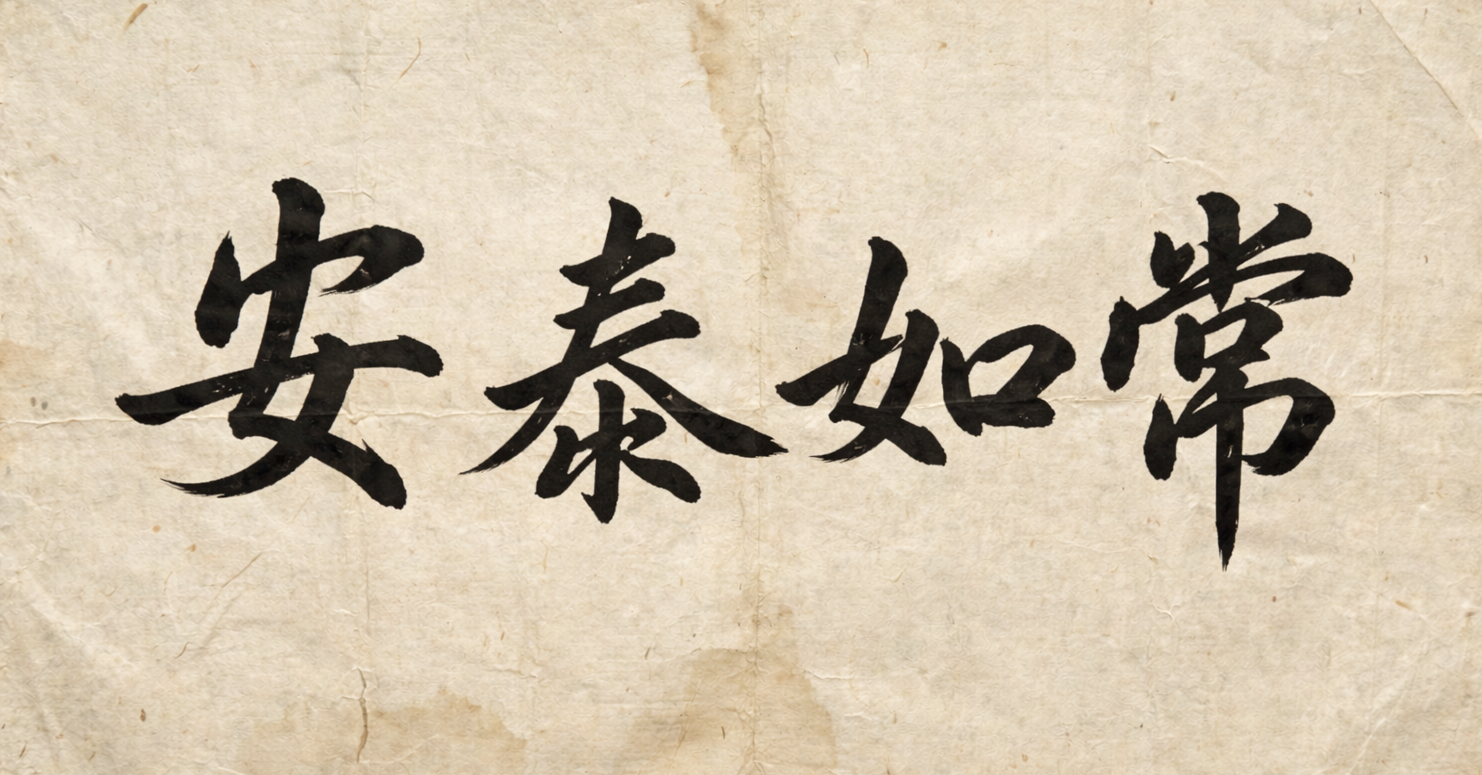
Image Healing: Mandala Stability Guidance 50
When you feel your mind go blank, as if you've fallen into the uncolored blank spaces of a mandala, don't panic. That blank space isn't a cliff, but the source of light. In graphics, blank spaces are used to make colors more vivid. In conversation, blank spaces are used to make the following words more powerful. Rest in this moment of stillness and trust that your inner wisdom will automatically fill the void.
Traditional mandalas typically feature a harmonious and intricately varied circular structure, symbolizing the wholeness of the universe and the cycle of life. By viewing mandala images, individuals can perceive inner peace and strength, achieving psychological balance.
◉ Gaze at the mandala twice, while taking deep breaths.

Lesson 50: The "Language Flow Map" When Speech Freezes“
Purpose:
When you suddenly stop speaking and your mind goes blank, your speech doesn't disappear; it's just temporarily frozen.
Through painting, the "frozen" state is transformed into a "reflow".
Drawing steps (2 steps only):
① In the center of the drawing paper, use soft, blurred circles or hazy color blocks as the "frozen language core".
Don't emphasize the shape; keep it vague and undefined to symbolize the stagnation of the present moment.
② Starting from the core, use slow, curved lines or smudges to spread outwards to the surrounding area.
The lines don't have to be neat; they can extend naturally, symbolizing that language and thoughts are beginning to thaw and flow.
Key points:
Let your body see, "I'm not speechless, I just need a little time to thaw."“
Painting is not about completing a pattern, but about experiencing the process of language moving from frozen to flowing.
Please log in before submitting your drawings and feelings.
○ 40. Language Freeze · Log Guidance Suggestions
① What situation today made me "suddenly go blank"?
② What is my brain worried about when it's blank?
③ What changes did my body experience after viewing the mandala? (Rating 0–10)
④ Would you be willing to take a deep breath before speaking next time?
⑤ What is one bodily response I learned today?
⑥ Tomorrow's mini-practice: Before engaging in a conversation, say "Let me think about it."
Please log in to use.
You are not blank; you are protecting yourself. When you slow down, language will return.