

Lesson 51: Worried about someone suddenly asking me a question
Duration:70 minutes
○ Core Knowledge: Why do unexpected questions make people tense up instantly?
For people with anxiety-sensitive constitutions, being "suddenly asked questions" is not a normal situation, but a stimulus that quickly triggers the body's alarm.
The brain immediately jumps to the worst predictions: "I will say something bad," "Others will think I'm weird," "I will make a mistake on the spot."
This automated threat assessment draws attention to oneself, causing a brief freeze or silence.
- Suddenness = Loss of preparation time:An anxious brain is most afraid of being caught off guard.
- Increased sense of being watched:Attention is focused inward, causing the language channel to temporarily close.
- Past experiences are awakened:Situations where you were criticized or misunderstood will replay in an instant.
- Setting excessively high expectations of oneself:The fear is "not answering well enough," not the question itself.
Lesson 51: Worried about someone suddenly asking me a question (Click to listen to the reading)
The fear of being suddenly asked a question is a very typical yet often overlooked experience of social anxiety. You might not be listening to the content at a party, meeting, or class, but rather constantly scanning the people around you, worrying whether their gaze will fall on you next, or whether a question will suddenly be thrown your way. When this anticipation arises, your body tenses up, your heart races, your breathing becomes shallow, and your brain begins to rehearse how you would answer if asked. This anxiety isn't because you actually don't know the answer, but because you're afraid of being forced to expose yourself unprepared. Being suddenly asked a question means losing control, having your rhythm interrupted, and having to react instantly under the gaze of others—these are precisely the most sensitive triggers for social anxiety. Psychologically, your brain interprets a sudden question as a social risk assessment; it's as if a poor answer will lead to rejection, belittlement, or being remembered for the moment of failure. Thus, the nervous system activates a defense mechanism in advance, keeping you constantly on guard. However, this constant alertness makes it harder to concentrate and more likely to cause your mind to go blank when actually asked the question. It needs to be understood that this worry doesn't indicate a lack of ability, but rather a high sensitivity to unpredictability. Many people with social anxiety aren't afraid of expressing themselves, but rather afraid of being forced to express themselves immediately. You might need more time to organize your thoughts than to react immediately. The anxiety persists because you assume you must be ready at any moment, unable to pause, think, or say, "I need some time." In reality, being suddenly asked a question isn't an assessment, nor do you need to give a perfect response every time. The key to alleviating this fear isn't preparing for all possible questions in advance, but changing your understanding of your right to respond. You have the right to ask the question to be repeated, the right to pause, the right to give a partial answer, and even the right to not know for the time being. When you allow these choices to exist in your mind, your body's alertness will gradually decrease. You don't need to be on call at all times to be accepted, nor do you need to prove your worth with quick reactions. True security comes from knowing that even if you're called on, even if you're nervous, even if your answer is incomplete, you are still allowed to exist. As this understanding gradually enters your body, the fear of being suddenly asked a question will slowly recede into the background.
▲ AI Interaction: Press the "Pause" Button for Yourself“
When someone suddenly asks, "What do you think?" your brain might instantly go on an alarm.
We always think that we must give a perfect answer within 0.1 seconds, otherwise it is a failure.
In fact, a calm pause is more powerful than a flustered answer.
Try simulating a few scenarios where the AI asks unexpected questions.
We can practice saying, "That's a good question, let me think about it," to regain control of the rhythm.
Click the button below to practice "buffering techniques" with AI, so you won't be led by the nose by unexpected situations.
○ Music therapy
When suddenly called out by name, my brain feels like it's being shone with a bright light.
Music can act as a "buffer layer," helping you break free from tension and return to your body's rhythm.
○ Oriental Healing Tea - White Peony Tea
Recommended reasons:It has a mild and slightly sweet taste, which is suitable for relieving throat constriction and dryness when you are nervous.
practice:Steep 3g of tea leaves in 85℃ water for 2–3 minutes. Sip the tea before answering to help stabilize your condition.
○ Ginseng Sticky Rice Porridge, a powerful tonic for replenishing vital energy
When the body is recovering from a serious illness, extremely tired, or feels "depleted of energy," ordinary food may not be enough to support it.
The powerful qi-tonifying properties of ginseng combined with the warm and sticky texture of glutinous rice can quickly replenish the body's lost energy, making it a deeply nourishing and heart-strengthening warm porridge.
Warming the spleen and stomach
Cardiac Resuscitation
Open Recipe
◉ Revitalizing Ginseng and Glutinous Rice Porridge (ID 51)
Ginseng and glutinous rice porridge is a "rescue" type of nourishing and warming porridge. Glutinous rice is warm in nature and sweet in taste, entering the spleen and stomach meridians, and has excellent effects in replenishing qi and warming the spleen and stomach; ginseng is the "king of herbs," which can greatly replenish vital energy and promote the production of body fluids. When the two are combined, not only is the taste soft, glutinous, and fragrant, but it also provides the body with a deep and powerful sense of support, making it suitable for consumption when the body is extremely weak and cold, short of breath and weak, or when hands and feet are cold in winter.
Powerful Qi replenishment Warming and tonifying the spleen and lungs Deep Repair
I. Recommended Dietary Therapy and Reasons
Recommended dishes:Ginseng and glutinous rice porridge (ID 51)
Recommended reasons: If you feel your voice is weak, you break out in a cold sweat with the slightest movement, or you always feel a deep chill in your body, this may be a sign of insufficient vital energy. Ginseng can directly replenish the body's "original energy," while glutinous rice can retain this energy and prevent it from being lost. This porridge is like watering withered roots with warm water, helping the body to regain its vitality.
2. Recipe and Method
Recipe (1 serving):
- Glutinous rice (sticky rice) 50–80 g
- Ginseng (sliced raw or white ginseng) 3 g (about 5–8 slices)
- 3 red dates (pitted)
- 800–1000 ml of clean water
- Add a little rock sugar (ginseng has a bitter taste, so adjust the seasoning accordingly).
*Note: If you are usually prone to heat in your body, you can use American ginseng instead of ginseng.
practice:
- soak:Wash the glutinous rice and soak it for 1–2 hours in advance. This will make the porridge softer, more glutinous, and easier to digest.
- Stewing medicinal herbs:Place the ginseng slices and pitted red dates into a clay pot, add water, bring to a boil over high heat, then reduce to low heat and simmer for 15 minutes to allow the medicinal properties to be extracted.
- Rice:Add the soaked glutinous rice and bring to a boil again.
- Slow cooking:Turn the heat to the lowest setting, cover, and simmer for 30–40 minutes. Stir occasionally during this time, as glutinous rice is very sticky and can easily burn at the bottom.
- Remove from heat:Once the porridge has thickened and clings to a spoon, and the aroma of rice and ginseng is intertwined, add a little rock sugar and let it dissolve. The ginseng slices can be chewed or discarded.
3. Small rituals for body and mind
When adding ginseng slices, do so with reverence, thanking them for the earth's energy accumulated over many years, which is now at your disposal.
When stirring glutinous rice porridge, feel its thick, stringy texture; it's a symbol of "aggregation" and "protection." Imagine it's mending your broken and tired energy field.
When you eat it, feel a warm current flowing from your stomach to your limbs and bones, and tell yourself, "My vitality is returning."“
4. Dietary Therapy Experience Record
- Record how long it takes for the cold hands and feet to improve after consuming the product.
- Observe whether you no longer feel "completely drained" in the afternoon as usual.
- Pay attention to your sleep quality at night; do you sleep more soundly because your body is warm?
V. Instructional Videos (approximately 3–5 minutes)
◉ Video Title:Ginseng and Glutinous Rice Porridge: A Nourishing and Warming Porridge for the Cold Winter
VI. Important Notes
- Incompatible combinations:“"Eat ginseng, but not radishes, and don't drink tea." Radishes are considered to deplete qi (vital energy), and tea can counteract the medicinal properties of ginseng, thus negating its qi-tonifying effects. It is recommended to avoid these foods within two hours before and after consumption.
- Those with excess heat constitution should not use this method:People with high blood pressure, high fever, sore throat, inflammation, or who are prone to getting a sore throat should not consume this product, as it may exacerbate their condition.
- Digestive problems:Glutinous rice is sticky and difficult to digest. It is recommended that the elderly, children, or those with extremely weak spleen and stomach (bloating and indigestion) replace glutinous rice with regular rice, or just drink porridge.
hint:This recipe has strong medicinal effects and is recommended for consumption when the body is obviously weak or when taking tonics in winter. It is not advisable to consume large quantities every day.
○ Suggestions for Seal Carving Practice - Lesson 51: Worried about being suddenly asked questions
The seal carving practice in this lesson aims to help you develop composure in the face of unexpected situations. When confronted with a sudden question, we are prone to wanting to run away like a startled rabbit. Seal carving, however, requires steady wrist strength and immense patience. This "spirit of metal and stone" can help us maintain our balance when faced with challenges and prevent us from being swayed by external forces.
- Introduction to the characteristics of seal carving:
Seal carving emphasizes that "within a small space, there is a world." No matter how hard the external environment (stone) is, the carving knife must advance according to its own rhythm. This process of resisting resistance trains our ability to maintain thinking under pressure. - Written words (seal text):
Intentionally or unintentionally - Psychological Intention:
Unexpected questions are often misinterpreted by our brains as "hostile attacks." Writing "May good intentions prolong life" subconsciously implants a new idea: the other person's question may simply be out of curiosity or for communication, not intended to be difficult. It transforms "defense" into "acceptance." - Knife skills:
Practice the "pushing knife technique." When you encounter resistance from a rock (like facing a difficult problem), don't back down or frantically hack away. Stabilize your wrist and use your fingertips to gradually push forward. Learn to enjoy the process of "slowly overcoming resistance." - Emotional transformation:
Transform the panic of "having to answer within one second" into the composure of "deliberating carefully before making a cut" when carving seals. Tell yourself: I have the right to pause, I have the right to think, I have the right to slow down.
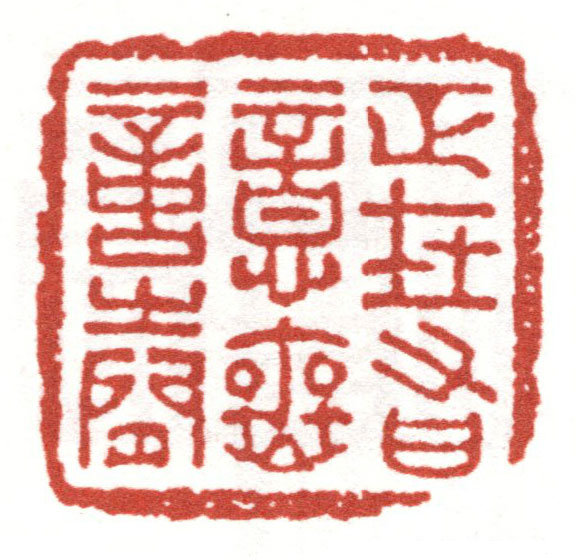
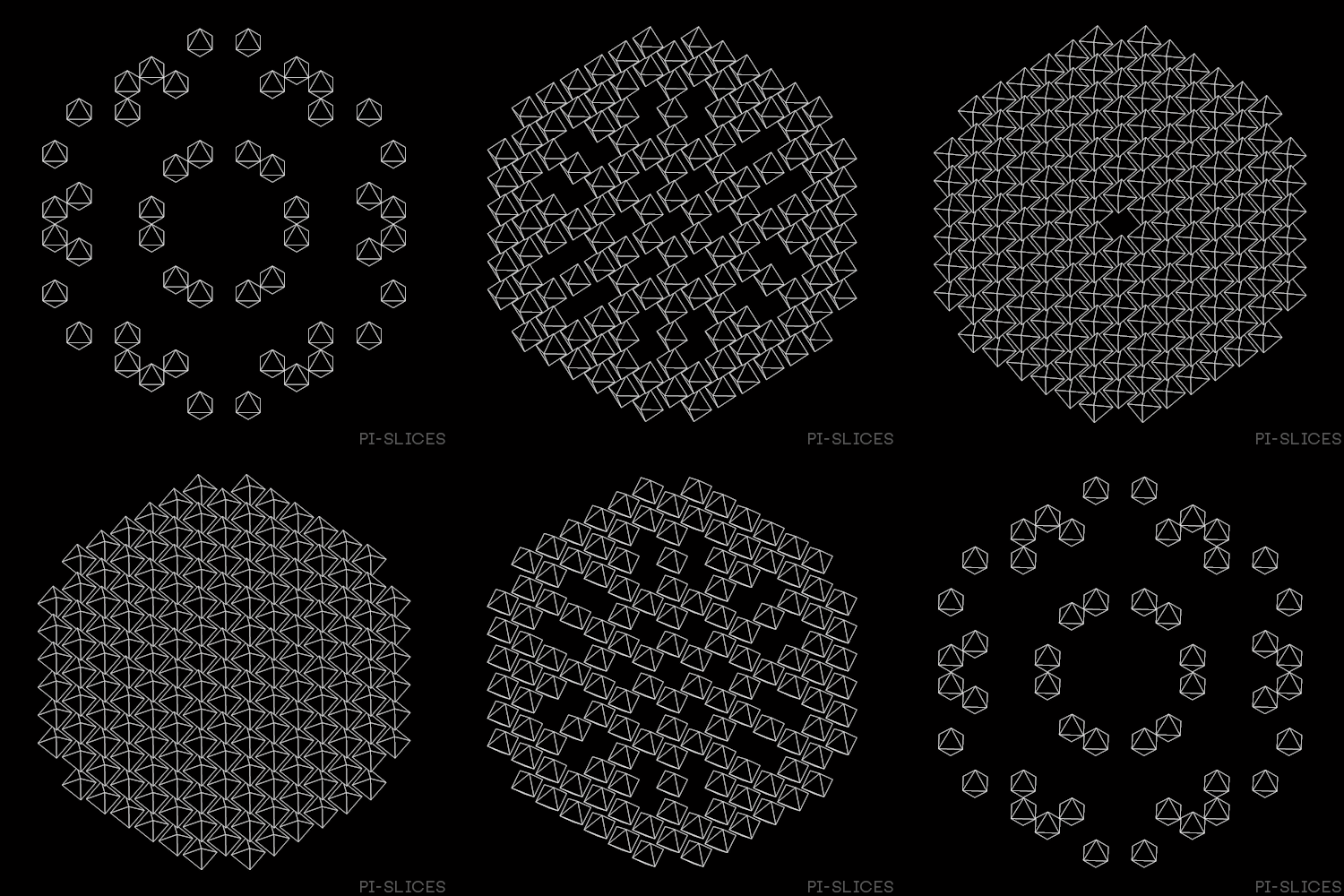
Image Healing: Mandala Stability Guidance 51
Imagine the center of the mandala as a deep well. Suddenly, a pebble is thrown in (that unexpected problem). The pebble will create ripples, but this won't destroy the well or dry it up. There's no need to flick the pebble back, nor to make the ripples disappear immediately. Watch it fall, echo, and then the surface naturally returns to calm. You have enough inner space to accommodate these unexpected visitors.
Traditional mandalas typically feature a harmonious and intricately varied circular structure, symbolizing the wholeness of the universe and the cycle of life. By viewing mandala images, individuals can perceive inner peace and strength, achieving psychological balance.
◉ Gaze at the mandala twice, while taking deep breaths.
Lesson 51: The "Steady State" Where the Center Isn't Pulled Away“
Purpose:
When suddenly asked a question, the brain is instantly pulled away by external stimuli.
Painting helps you rediscover the feeling that "I can stay at the center of my own world".
Drawing steps (two):
① Draw a soft, stable small circle or light-colored core in the center of the paper. Symmetry is not required.
It is "myself," symbolizing maintaining inner stability when faced with stimuli.
② Add some subtle lines or transparent layers to the outer ring to symbolize that external stimuli approach but do not penetrate the center.
The lines become lighter closer to the core, indicating that "the stimulus to me has weakened."
Key points:
I don't pursue beauty, I only experience: when the outside world moves, I don't have to move with it.
Please log in before submitting your drawings and feelings.
○ 51. Log-based guidance suggestions
① Record the most recent situation in which you were suddenly asked a question: Which part of your body tensed up first?
② What is the first thought that pops up automatically? Write down a milder alternative explanation.
③ If this happened again, what small action would you be willing to take for yourself? (For example, inhale, pause for 1 second, and then answer)
Please log in to use.
Being asked questions is an exchange, not an assessment. You can calm yourself down first, and then answer.