

Lesson 53: Social Anxiety ≠ Introverted Personality
Duration:70 minutes
○ Core Knowledge: Introversion is a mode of energy management; anxiety is a fear response.
Many people who are troubled by this often say, "I'm too introverted, so I'm bad at socializing."“
But this is a huge misconception. **Introversion** and **social anxiety** are completely different things.
- Introverts focus on "sources of energy":Introverts recharge when they're alone and deplete their energy when they're socializing. They may be very good at socializing, but they need some quiet time alone afterward.
- Anxiety focuses on "fear evaluation":Anxious people are those who "want to socialize but are afraid to," or who are constantly worried about "whether I am doing the right thing" or "what others think of me" when they are socializing.
- Essential difference:Introverts enjoy solitude; anxious people may still be ruminating on their "mistakes" in social situations when they are alone.
- The dangers of misconceptions:If you perceive anxiety as a personality flaw, you'll try to "change yourself," which actually increases stress.
The key to healing lies in:Embrace your introverted traits (which are your gift) while dealing with your anxiety (which is a changeable response).
Lesson 53: Social Anxiety Is Not the Same as Introversion – Where Does It Come From? (Click to listen to the reading and view the content)
Many people are labeled as introverted when they first realize they are nervous in social situations. Over time, they even begin to believe this explanation, as if all their discomfort stems from an innate trait. However, social anxiety is not the same as introversion; they originate from completely different psychological mechanisms. Introversion is an energy orientation. Introverts recover their energy in solitude and tire more easily in crowded environments, but they are not necessarily afraid of communication or worried about being judged. The core of social anxiety, however, is not fatigue but fear—a heightened alertness to being rejected, belittled, or excluded. From a developmental perspective, many people with social anxiety have experienced environments of high evaluation pressure, ignored emotions, or magnified mistakes during their upbringing. When expressing oneself brings risk, silence becomes safer, and the brain associates social interaction with threat. Over time, this reaction is misunderstood as a personality trait. In reality, you may crave connection and understanding; it's just that your body sounds the alarm before you act. Equating social anxiety with introversion has a hidden consequence: giving up the possibility of change, as if personality cannot be adjusted and can only be accepted. But social anxiety is an understandable and retrainable state, not a fixed version of yourself. From a neurological perspective, it is a result of learning history, not a personality defect. Once you realize this, you can stop attributing your mistakes to others and stop negating yourself because of anxiety. You don't need to become an extrovert or force yourself to be social; what you need is to let your body relearn that current interactions are not the same as past dangers. Differentiating between introversion and social anxiety is not about labeling yourself, but about returning fears that are not part of your personality to the experience itself. When you stop explaining fears as personality, change truly begins.
▲ AI Interaction: Stop the Pretense of "Forced Extroversion"
Do you often force yourself to "talk more," only to feel completely drained when you get home?
Social anxiety often stems from the thought, "I don't accept my introversion."
We mistakenly believe that only becoming a "socially anxious person" is a form of recovery, but in fact, accepting "social anxiety" can also make us feel comfortable.
Try talking to AI about those exhausting moments when you're "forcing yourself to be cheerful."
We can work together to develop a "social energy protection plan".
Click the button below to explore "low-energy social interaction" with AI and become that comfortable introvert again.
○ Music therapy
When we stop forcing ourselves to be "extroverted," our tense bodies will naturally relax.
This piece of music uses a dialogue between the cello and piano, which is deep and steady, helping you to sink into an inner quiet space and experience that "introversion is also a kind of power".
○ Eastern Healing Tea - Aged Ripe Pu-erh
Recommended reasons:Ripe Pu-erh tea is mild and mellow, with excellent stomach-warming and calming effects. Introverts are often rich in inner life and sensitive, and a cup of warm black tea can provide a sense of "earthly" security.
practice:Take 5-7g and steep in boiling water. Discard the first infusion to rinse the tea, and begin drinking from the second infusion. Enjoy the warmth and comfort of the tea as it glides down your throat.
○ Stomach-soothing and sleep-aiding: Golden Millet & Pumpkin Porridge
This is a bowl of "gentle embrace" with a golden hue.
Millet is hailed as the "most nourishing grain," and the rice oil that forms on its surface can act as a protective film to cover damaged gastric mucosa; the natural sweetness of pumpkin can soothe a constricted stomach and intestines.
Drinking a bowl of this at dinner not only warms your stomach but also calms your mind, paving the way for a good night's sleep.
Natural sleep aid
Gold Soothing
Open Recipe
◉ Pumpkin and Millet Porridge (ID 53) - Nourishing for the Stomach and Promoting Sleep
Pumpkin and millet porridge is a classic "healing" breakfast or dinner. Its golden color is visually appealing and symbolizes warmth and hope. The "rice oil" produced after cooking millet nourishes yin and blood, while pumpkin is rich in pectin. The combination of these two ingredients greatly reduces the burden on the digestive system, allowing the body to relax in a soothing way. It is especially suitable for people prone to stomach pain or tightness due to anxiety.
Repairing gastric mucosa Tryptophan helps with sleep Warming and nourishing the spleen and stomach
I. Recommended Dietary Therapy and Reasons
Recommended dishes:Pumpkin and millet porridge (ID 53)
Recommended reasons: Traditional Chinese medicine believes that "yellow foods nourish the spleen," and both pumpkin and millet are typical foods that nourish the spleen and stomach. Modern nutrition science has found that millet is rich in tryptophan, which helps regulate sleep and mood. When you feel lonely and cold late at night, or have a poor appetite due to stress, this bowl of porridge can provide the most basic and carefree comfort.
2. Recipe and Method
Recipe (1–2 servings):
- 50-60 g of yellow millet (be sure to choose fresh, new millet).
- 150g of old pumpkin (peeled, deseeded, and cut into small pieces)
- 800–1000 ml of clean water
- Add about 10 goji berries (before removing from heat).
- (Optional) A little brown sugar or rock sugar (pumpkin is sweet, so it is not necessary to add it).
practice:
- Preparation of materials:Peel the pumpkin and cut it into small cubes of 1-2 cm (the smaller the cubes, the easier they are to cook and dissolve into the porridge); simply rinse the millet 1-2 times, do not over-rub to avoid nutrient loss.
- Boiling water (key):Add water to the pot and bring it to a boil.hint:Millet must be added to boiling water; this makes it easier to cook into a thick "millet oil" and prevents it from sticking to the bottom.
- Boiling:Once the water boils, add the millet and diced pumpkin. Bring it to a boil again over high heat, skimming off any foam.
- Slow cook:Turn the heat to medium-low, cover the pot with the lid, leaving a small gap (to prevent overflow), and simmer for 20–25 minutes. Stir occasionally with a spoon during cooking.
- Let stand:When the pumpkin is soft and mushy and the rice porridge is thick, add goji berries and turn off the heat.The most important step:After turning off the heat, do not serve immediately. Cover and let it sit for 5–10 minutes. A thick layer of "rice oil" will form on the surface, which is the most nutritious part.
3. Small rituals for body and mind
Observe the golden color rolling in the pot, and imagine that the sun's energy is concentrated in this bowl of porridge.
When you see the layer of calm, rice-oil-like substance forming on the surface, tell yourself, "My body also has the ability to self-repair and form a protective layer."“
When you take your first bite of porridge, feel the gentle, smooth texture that requires no chewing, completely relaxing your jaw and stomach.
4. Dietary Therapy Experience Record
- Record whether there is a warm and comfortable feeling in the stomach after consumption, and whether bloating or dull pain is relieved.
- If consumed at dinner, observe whether the body's tension decreases before falling asleep that night.
- Savor the natural sweetness of pumpkin and practice appreciating the true flavor of ingredients without adding sugar.
V. Instructional Videos (approximately 3–5 minutes)
◉ Video Title:Pumpkin and Millet Porridge: The Secret to Making a Thick Layer of Rice Oil
6. Precautions
- Old rice doesn't produce oil:To achieve the best stomach-soothing effect, you must buy new millet from the current year. Old millet not only tastes bad, but also has very little rice oil.
- Those with a cold constitution:Pumpkin and millet porridge is generally mild, but if you have an extremely weak constitution (easily get diarrhea from eating cold food), you can add two slices of ginger when cooking the porridge to neutralize it.
- Blood sugar control:While pumpkin and millet are healthy, the more thoroughly they are cooked, the higher their glycemic index (GI). Diabetics should not overcook them and should limit their intake.
hint:This is a basic dish that can "rebuild trust with your stomach".
○ Seal Carving Practice Suggestions · Lesson 53: Social Anxiety ≠ Introverted Personality
This lesson's seal carving practice aims to redefine the concept of "introversion." Introversion draws energy from solitude, while social anxiety stems from a fear of judgment. Seal carving is a highly focused "solo art," requiring no verbal clamor yet leaving behind the resounding echo of metal and stone. This is precisely the shining moment for introverts—quiet, yet brimming with power.
- Introduction to the characteristics of seal carving:
In seal carving, the principle of "treating white space as black" applies. The blank spaces (where there are no characters) on a seal carry equal weight as the red lines (where there are characters). This is similar to "silence" and "expression" in social interactions; the silence of an introvert is not an awkward absence, but rather a meaningful use of space. - Written words (seal text):
May you live a long and healthy life. - Psychological Intention:
Many introverts are exhausted by forcing themselves to pretend to be extroverts. The phrase "still waters run deep" affirms one's inner depth. It doesn't need to be as noisy as a waterfall; beneath the calm surface often lies a deeper, more profound capacity than any commotion. - Knife skills:
Practice "leaving the red." When carving away excess stone, carefully preserve the framework of the lines. This symbolizes protecting your core "introverted" qualities amidst the noisy demands of external "extroverted standards," and not flattening the framework that supports you in order to please others. - Emotional transformation:
Transform the self-criticism of feeling ashamed for not being talkative into the comfort of enjoying solitude while holding a carving knife. Tell yourself: Introversion is my talent, not a disease that needs to be cured.
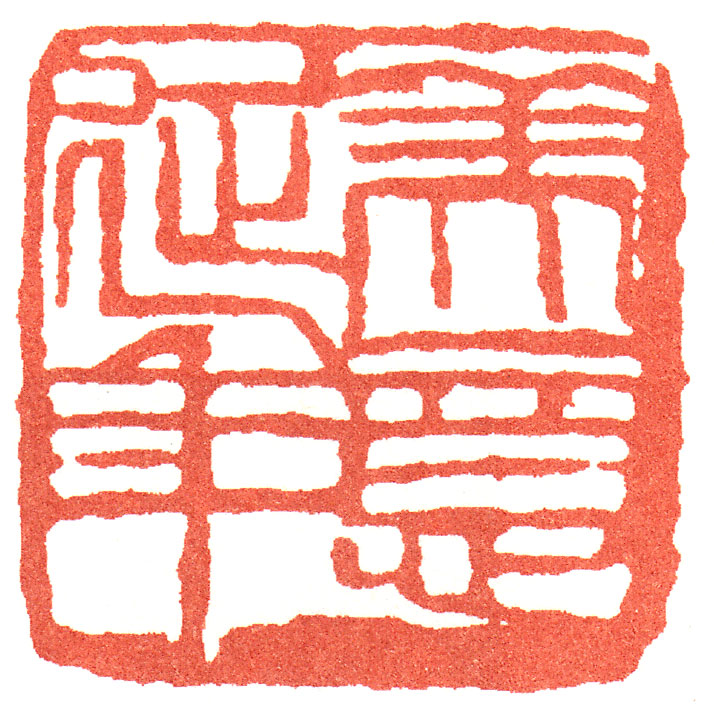
Image Healing: Mandala Stability Guidance 53
Imagine the center of a mandala as a serene seed, needing no effort to prove its existence, but simply to quietly take root. The outer circle's vibrancy represents the world's rhythm, while the inner circle's tranquility is yours. Introversion is not isolation, but rather building a garden within. When you reside peacefully at your center, you don't need to force yourself to revolve around the outer circle; your stillness itself is a form of attraction.
Traditional mandalas typically feature a harmonious and intricately varied circular structure, symbolizing the wholeness of the universe and the cycle of life. By viewing mandala images, individuals can perceive inner peace and strength, achieving psychological balance.
◉ Gaze at the mandala twice, while taking deep breaths.

Lesson 53: Depicting My "Inner Garden"“
Purpose:
Visualization helps to affirm the beauty and value of "introverted space" and eliminate feelings of shame about one's personality.
Drawing steps (two):
① Draw a closed or semi-closed "private space" (such as a garden, tree hole, or room) on a piece of drawing paper.
Use colors that make you feel most comfortable and relaxed (usually cool or earth tones).
② Draw 1-2 elements representing "nourishment" in this space (such as a book, a cup of tea, or a cat).
Experience the peaceful and fulfilling joy of being alone here.
Key points:
This painting reminds you that your introverted nature is your safe haven, not a wall that needs to be torn down.
Please log in before submitting your drawings and feelings.
○ 53. Log-based guidance suggestions
① List three things that you feel are good at because you are an introvert (e.g., listening, observing, focusing).
② Have you ever felt exhausted from forcing yourself to be "extroverted"? How did your body feel at that time?
③ If you fully accept your own personality, how many times a week would you ideally socialize?
Please log in to use.
Introversion is not a flaw, but a quiet strength. You don't need to change your personality, you just need to soothe your fears.