

Lesson 4: Establish a rhythm and regain a sense of control
Duration:70 minutes
Topic Introduction:Anxiety often makes us feel like our lives are out of control and our rhythms are disrupted. This course will guide you through regular sleep and rest, breathing exercises, and body rhythm exercises, gradually regaining a sense of control and stabilizing your inner peace through the establishment of rhythm.
○ The importance of establishing rhythm
- Anxiety comes from "chaos":
Irregular schedules, chaotic plans, and inconsistent pace of life can easily induce anxiety. - Small rhythms bring stability:
Getting up, eating, and exercising at fixed times is the starting point for rebuilding a sense of control. - Body rhythms affect emotions:
For example, breathing rhythm and walking rhythm can directly affect the brain's excitement state.
Lesson 4: Establishing Rhythm and Regaining Control 🎧 Click to watch/listen to the reading
Generalized anxiety disorder is like having an overly diligent drummer in your head, constantly pounding away at a pace so fast you don't even have time to catch your breath. This drummer's intentions are good—to remind you of potential risks—but it doesn't discriminate between situations, turning life into an endless march.
The so-called "rhythm and anxiety regulation" means learning to change your rhythm so that your mind and body can keep up with a gentler and more soothing beat.
First, the rhythm of your body directly affects your mood. For example, if you walk briskly and breathe shallowly, your brain will think, "Something's wrong! Get ready to react!" and anxiety will naturally escalate. Conversely, if you deliberately slow down and breathe deeply and evenly, your body will send a "safe" signal to your brain. This is like handing a drummer a cup of hot tea backstage, which will make him slow down his playing.
Secondly, the rhythm of life is also crucial. Many anxious people are used to filling their days with tasks, leaving themselves no "buffer zone." The result is like a song that's all climaxes, with no intro or interlude; by the end, everyone is exhausted. Learning to schedule short breaks for yourself—even just five minutes of stretching, daydreaming, or making tea—is like adding a "speed bump" to your brain.
Another useful technique is to use external rhythms to help you tune your frequency. For example, listening to music with a steady beat, doing rhythmic exercise (jogging, Tai Chi, yoga), or even using rhythmic breathing (inhale for four beats, pause for one beat, exhale for six beats) can all help your nervous system switch from "alarm mode" to "relaxation mode".
Adjusting your pace isn't about always going at a slow pace, but about finding a rhythm that suits you: being able to accelerate when you need to sprint and slow down when you need to recover. In this way, life is like a well-arranged piece of music, with its ups and downs, its highs and lows, providing both motivation and space to breathe.
When you learn to master rhythm, you'll discover that anxiety doesn't have to disappear completely; it can blend into the melody of life, becoming a drumbeat that propels you forward, rather than noise that makes you panic. In this way, you're not just a listener to life, but the conductor of your own life.
▲ AI interaction: Are you willing to start with a small rhythm and reorganize your life?
Life is like a song, it needs rhythm.
Anxiety often makes us feel like we are being pushed around.
Try setting a simple rhythm: wake up, take a walk, and write down three small things.
As the rhythm is established, the sense of control will return little by little.
You will find that you can lead your life instead of being led by life.
Click the button below to explore a daily rhythm design plan that suits you with AI and regain a sense of order and psychological stability.
Sometimes the mind is filled with voices of blame and denial.
Play a gentle song and think of it as another voice whispering to you.
The melody will answer for you: "I deserve to be understood, and I'm trying."
Let music be a gentle substitute for your heart.
Oriental Healing Tea Biluochun Tea
Recommended drinks:Biluochun tea
Recommended reasons:The refreshing fragrance invigorates the mind, aids concentration, and helps one enter a wakeful rhythm at a fixed time each day.
practice:3g Biluochun tea, brew with 85°C warm water for 3 minutes, then add more water to drink.
Hummus
Since ancient Greece, pulses have been considered a source of nourishment. Hummus, a smooth spread made from cooked chickpeas, tahini, olive oil, and lemon juice, provides a blend of fiber, plant-based protein, and minerals, ensuring stable energy without a blood sugar spike. Enjoy it with vegetable sticks as a side dish or spread on whole-wheat pita for a portable sandwich. It can be refrigerated for 2–3 days and eaten on the go, making it a perfect nutritional safe-haven for busy schedules.
High in fiber
Meal preparation friendly
Healing Recipes
/home2/lzxwhemy/public_html/arttao_org/wp-content/uploads/cookbook/hummus.html(Please confirm that hummus.html has been uploaded)
Lesson 4: Chinese Calligraphy: Regular Script - Central Axis and Structural Sense
Regular script is not simply a combination of strokes, but rather an overall structure unfolding around a "central axis." This lesson trains students in the overall grasp of the center of gravity of the characters.
Writing Instructions:
Before putting pen to paper, observe the center position of the character and let the left and right strokes expand around the central axis.
Avoid making one side too heavy or the other too light, and maintain overall balance.
Written words:
Heshun Ankang
Motivational words:
When you have an axis in your heart, external deviations will no longer easily sway you.
Writing Tips:
After writing a character, look at it for three seconds, without judging its quality, just feel whether it is "standing in the center".
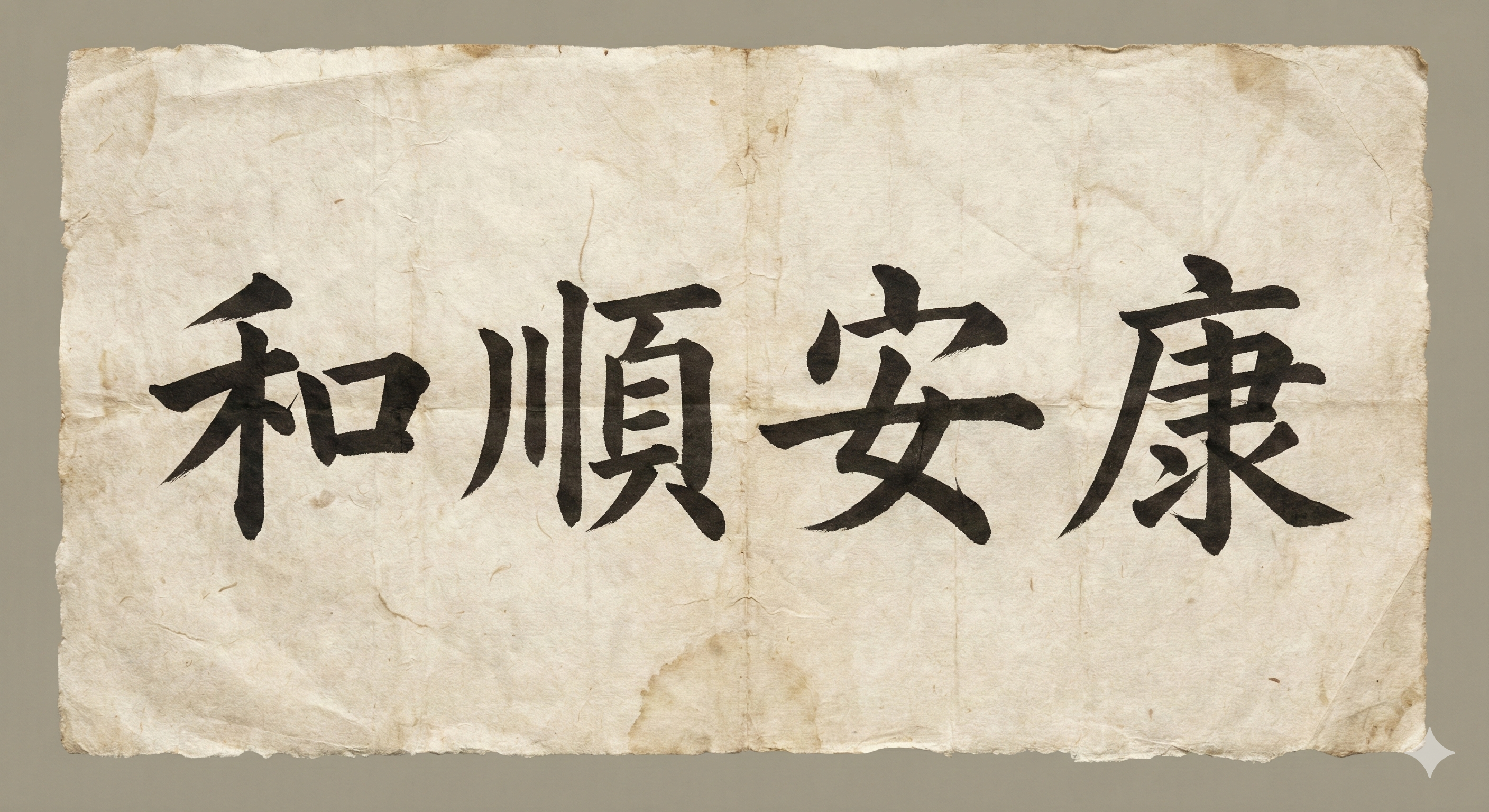
Image Healing: Mandala Stability Guidance 04
Look at those intricate patterns, rings like the rings of a heart. Each layer represents a moment in your life. Anxiety is merely an unsoothed memory within that ring; as you gaze upon it, it begins to soften. Don't push it away; let it return to the whole. When it becomes part of the circle again, you become whole again. Breathing, in this moment, is the vessel for rest.
Traditional mandalas typically feature symmetry and complex geometric structures, symbolizing the wholeness of the universe and the cycle of life. By drawing traditional mandalas, individuals can perceive inner peace and strength, achieving psychological balance.
◉ Please stare and watch twice.
Lesson 4: The Lines of Life's Rhythm
Purpose: To visually represent the tension and relaxation of life's rhythm, helping to recognize adjustable aspects and rebuild a sense of control.
Steps: Plot your daily energy changes using a curve, from morning to night. Peaks can be represented by sharp lines, and troughs by flat or broken lines. Use different colors to mark work, rest, meal, and relaxation times. If the graph feels too dense, add "breathing zones" in the blank spaces—write down the small, quiet moments you want to reconnect with.
Please log in before submitting your drawings and feelings.
○ 4. Establish a rhythm and regain a sense of control. Journal guidance suggestions
① Today’s worries are divided into two columns: controllable/uncontrollable (at least 3 items in each column).
② Break down each “controllable item” into small actions of ≤5 minutes (three-step method).
③ Record your daily rhythm: the actual time you wake up/eat/exercise/work or study/rest/go to bed.
④ Find out the time period and inducements when you are most likely to lose control, and write down a "rhythm anchor point" (such as stretching for 2 minutes after getting up).
⑤ Set a “time box”: focus on small tasks and start times tomorrow that can be completed in 20 minutes.
⑥ Today’s sense of control (0–10 points) and reasons; triggers for tomorrow’s review (e.g., review after dinner).
Please log in to use.
Starting with a little bit of rhythm, you will feel again that the flow of life can be guided and shaped by you.