

Lesson 5: What is “Negative Self-Talk”?
Duration:70 minutes
Topic Introduction:"I'm not good enough," "Others are better than me," "I always mess up"—these recurring voices in your head are classic examples of "negative self-talk." They aren't facts, but rather automatic speech that reflects cognitive biases. This lesson will teach you how to identify, respond, and reshape this inner voice.
○ Common patterns of negative self-talk
- Inner Critic:Do you tell yourself “I’m not worthy” or “I can’t do it”?
- Catastrophizing:Do you always feel that "if you fail, it's all over"?
- Labeled cognition:Use one sentence to completely deny yourself: "I am useless."
Lesson 5: What is "Negative Self-Talk"? 🎧 Click to watch/listen to the reading.
Negative self-talk is like having a perpetually critical "toxic commentator" living in your head, always ready to interrupt your live life—"Look, you messed up again," "Everyone else is better than you," "This is definitely going to go wrong." Over time, this voice will fatten up your anxiety, allowing generalized anxiety disorder to grow like a weed.
The first step in recognizing it is learning to distinguish between "me" and "it." Many people take these criticisms as their true thoughts, but they are more like a mixture of past experiences, stress, and anxieties. You can try pressing "pause" in your mind and asking, "Wait, is this really true, or is my inner nagging fan making up a story?"“
There are several common negative dialogue patterns:
1. Catastrophizing – exaggerating minor issues into the end of the world, such as "being late for the meeting today = the end of my career".
2. Overgeneralization – overgeneralizing from one failure, such as “I have no hope in this life.”
3. Mind reading – You think everyone is talking badly about you, but they might actually be thinking about what to have for dinner.
After identification comes the process of transformation. Transformation is not about pretending everything is perfect, but about responding to yourself with more balanced and friendly language. For example, when a "harsh commentator" says "You're terrible," you can reply: "I was a bit disorganized today, but that doesn't mean I'm always like this; I'm improving."“
A good approach is to adopt a "friend's perspective": imagine that these words are spoken to you by your best friend, and how you would comfort and encourage them. Borrow that gentle tone for yourself.
Humor can also be used to deflect negative thoughts. For example, "I'm sure I'll embarrass myself" can be replaced with "Great, at least someone can be the star of the show today." Humor can give a tense mind a break.
With consistent practice, you'll find that negative self-talk is no longer the main theme of your life, but merely an occasional minor noise. You can even laugh and turn off its microphone, allowing yourself to live in a gentler inner narration. In this way, anxiety won't disappear immediately, but it will be much quieter, and you'll have more strength to cope with the various rhythms of life.
▲ AI interaction: Would you like to try a new relaxation exercise?
“I’m not good enough”, “I’m bound to fail” – these voices sound familiar.
They are negative self-talk.
But they do not represent the truth, they are just echoes of anxiety.
Try replacing these phrases with gentler versions: “I’m learning” and “I’ve tried my best.”
A gentle voice will gradually drown out the critical voice.
Click the button below to explore CBT introductory exercises suitable for you with AI and receive personalized suggestions based on your pace.
○ Review learning and build a "self-care system" · Music guidance
During this period of study, you have already learned how to take care of yourself.
Music is like a warm medicine chest that is always at hand.
When you feel stressed or tired, put aside your thoughts and listen for a few minutes.
The musical notes will remind you: taking care of yourself is actually very simple.
Oriental Healing Tea Biluochun Tea
Recommended drinks:Biluochun tea
Recommended reasons:The refreshing aroma helps clear the mind and relieve repetitive, anxious inner speech.
practice:Take 3 grams of Biluochun and brew it with 80℃ water for 2 minutes. You can add water 2 to 3 times before drinking.
Whole-Wheat Pita
Whole grains are a cornerstone of the Greek diet, and the modern Mediterranean diet advocates replacing refined grains with whole grains. Whole-wheat pita, baked until puffed up, creates a "pocket" that can be filled with salad, refried beans, or grilled fish, easily combining three nutritional elements. The high fiber and slow-release carbohydrates help stabilize blood sugar and maintain satiety. It can be made in bulk and frozen for quick meals from breakfast to dinner.
Stabilize blood sugar
Versatile and convenient
Healing Recipes
/home2/lzxwhemy/public_html/arttao_org/wp-content/uploads/cookbook/whole-wheat-pita.html(Please confirm that whole-wheat-pita.html has been uploaded)
Lesson 5: Chinese Calligraphy - Regular Script - The Boundary Between the Beginning and Ending Strokes
Regular script emphasizes that each stroke has a beginning and an end. The beginning and ending of a stroke are not only technical movements, but also training in the sense of boundaries.
Writing Instructions:
The beginning of a stroke should be clear and unambiguous; the ending stroke should be decisive and clean.
Every stroke should be clearly visible, showing where it begins and ends.
Written words:
A broad mind leads to a broad path
Motivational words:
A clear beginning and a definite end are themselves a kind of inherent order.
Writing Tips:
When finishing a stroke, deliberately slow down to feel the "end" before moving on to the next stroke.
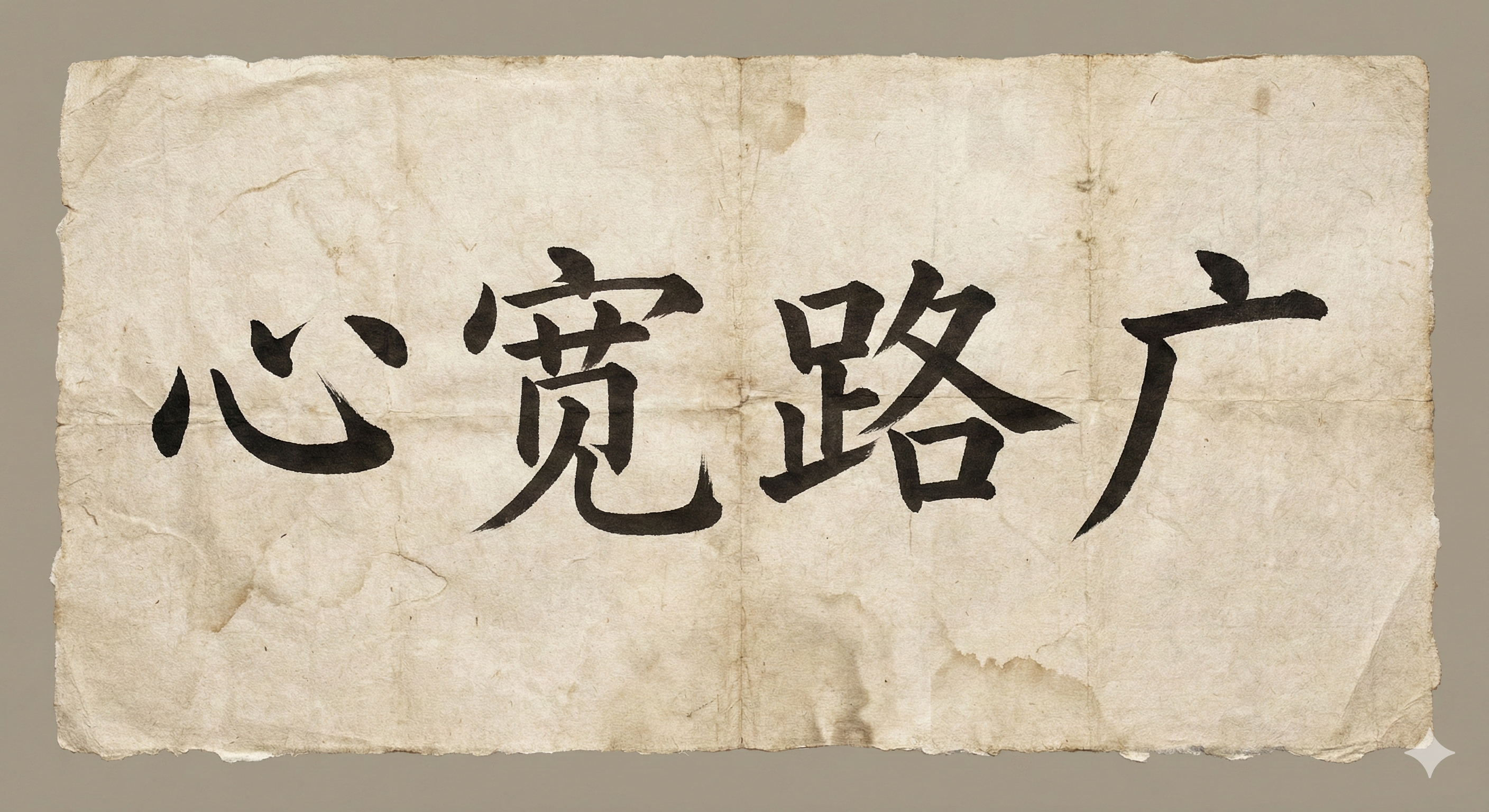
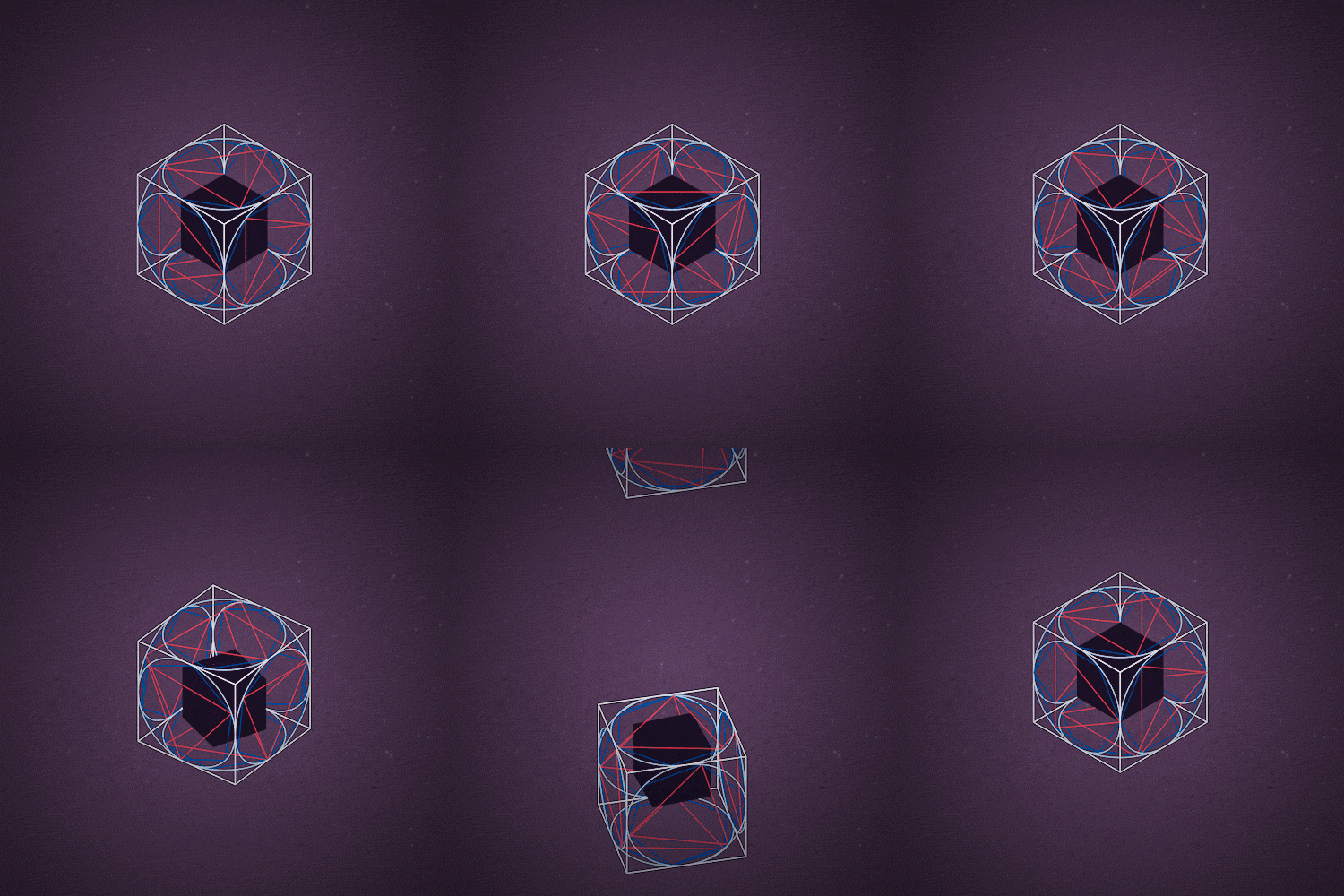
Image Healing: Mandala Stability Guidance 05
Colors flow like a river of emotions. The color of anxiety is among them; it's not dirty, it's not bad, it's just misunderstood. Let your eyes follow its movement, let your heart expand in acceptance. When you stop resisting any color, emotions will find their place in the circle. Wholeness is better than perfection; allowance brings peace.
Traditional mandalas typically feature symmetry and complex geometric structures, symbolizing the wholeness of the universe and the cycle of life. By drawing traditional mandalas, individuals can perceive inner peace and strength, achieving psychological balance.
◉ Please stare and watch twice.
Lesson 5: The Shadow of Dialogue
Objective: To become aware of how "negative self-talk" occurs, and to transform the aggression of language into observable images.
Steps: Write a frequently used self-critical statement in the center of the image, surrounding it with dark gray or sharp lines. Then draw an "observer's circle," surrounding the statement in a soft color, symbolizing that you are not equal to it. Finally, add a gentle response on the outer layer, such as "I am learning" or "I don't need to be perfect."
Please log in before submitting your drawings and feelings.
○ 5. What is “negative self-talk”? Journaling guidance suggestions
① Write down the three most harsh self-criticisms today one by one.
② Label each cognitive error: catastrophizing/mind reading/black and white/should-ism…
③ Write “evidence – counter-evidence – a gentler alternative statement”.
④ Take the “Friend’s Perspective Test”: What would I say if a friend treated me like this?
⑤ Record the changes in physical sensation and emotional scores after the replacement sentence (0–10).
⑥ Choose the most powerful self-statement and set it as tomorrow’s reminder and specific usage scenario.
Please log in to use.
The words you speak to yourself are more important than any other voice in the world. May you practice speaking with both tenderness and strength.